
Tumescent Infiltration Cannulas Manufactured in Our Own Factory
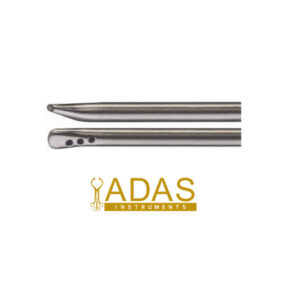
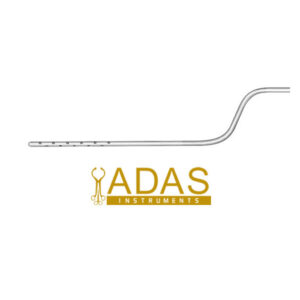
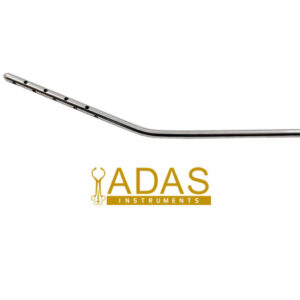
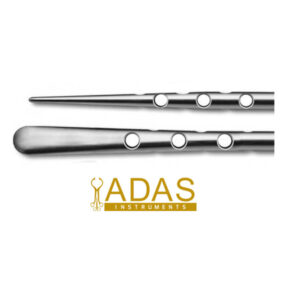
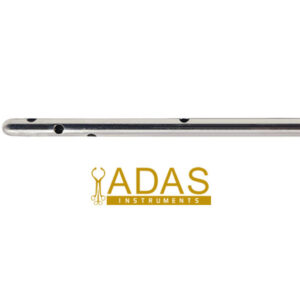
Aesthetic surgeons, dermatologic surgeons, day case units and surgical distributors use this group to lay down Klein solution evenly before aspiration begins. Coverage starts at short facial infiltrators and runs through long abdominal, flank and thigh shafts, with closed blunt tips, open distal tips and staggered side port arrangements. Tube is drawn to gauge in house, ports are punched and then hand finished, hubs are brazed or machined from solid, and every completed shaft is flow tested for even distribution across all holes before it is polished, straightness checked and passed to final inspection.
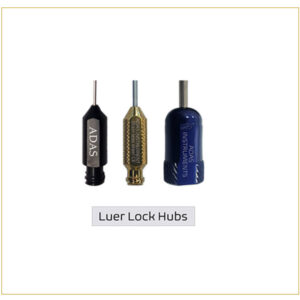
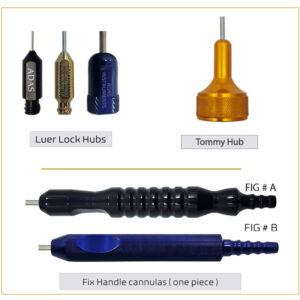
Typical working diameters run from 1.2 mm to 3 mm, with lengths from 15 cm to 30 cm and port counts from a single distal eye up to twelve staggered holes. Hubs are Luer lock for syringe delivery or barbed for pump tubing. Shafts carry a satin finish and hubs a matt finish to cut theatre glare. Items are reusable and autoclavable at 134 degrees C, and mixed size trays are boxed in aluminium cases.
Popular Products in Tumescent Infiltration Cannulas
Choosing the Right Tumescent Infiltration Cannulas
Selecting a port pattern for even wetting
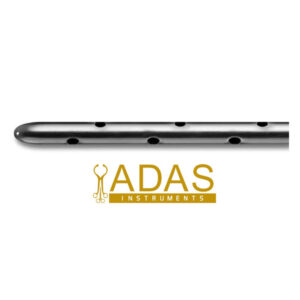
Hole layout governs how quickly a plane fills and how uniform the anaesthesia becomes. Many staggered side ports spread fluid over a wide field and shorten infiltration time in large areas such as the abdomen and thighs. Fewer ports, or a single distal eye, give tighter control where the plane is thin, for example the neck, arms and face. Carrying both styles on one tray avoids compromise between speed and precision.
Deciding shaft length and gauge by area
Length should let the tip reach the far edge of the treatment zone from a single access point without dragging the skin. Shorter 15 cm to 20 cm shafts suit face, neck, arms and submental work. Longer 25 cm to 30 cm shafts cover abdomen, back and thighs. Finer gauges reduce entry trauma but slow flow at a given pump pressure, so pair gauge choice with the delivery system you actually use.
Patency checks and flushing between cases
Solution residue and fat can block small side ports quickly. Flush each shaft with cool water directly after use, then pass a fine cleaning stylet through the lumen and check that every hole flows before the ultrasonic cycle. Autoclave at 134 degrees C and dry fully so the hub joint stays sound. A cannula that shows uneven jets on test should be set aside, since blocked ports cause patchy anaesthesia.
Why Buy Tumescent Infiltration Cannulas from ADAS Instruments
- Direct from source. Pricing comes from our own bench, with no importer stage added.
- Certified production. Work is carried out to ISO 13485 and the range carries CE marking.
- Material choice. German surgical grade stainless tube, paired with stainless or aluminium hubs.
- Private label ready. Brand marking, your part numbers and boxes are handled at the factory.
- Bespoke geometry. Port count, spacing and tip form can be made to a sample or sketch.
- Courier shipping. Orders move by DHL or FedEx, usually landing within 3 to 5 working days.
Frequently Asked Questions
How many side ports should an infiltration cannula have?
It depends on the field. Large areas benefit from ten to twelve staggered ports, which distribute solution rapidly and reduce passes. Delicate zones are easier to control with two to four ports or a single distal eye. Most surgeons keep both types on the tray. We can supply any port count and spacing you specify, including patterns copied from a cannula you already use.
Can the same cannula be used with a pump and a syringe?
Only if the hub suits both. Luer lock hubs connect directly to syringes and to pump lines fitted with a Luer adaptor, while barbed hubs accept peristaltic tubing. State the pump model and tubing bore when you enquire and we will fit the correct hub, or supply the same shaft in two hub versions so one set covers both delivery methods.
Are these instruments autoclavable?
Yes. All tumescent infiltration cannulas are reusable and withstand steam sterilisation at 134 degrees C. They are shipped non sterile for processing in your own department. Because the lumen is narrow, flush and brush before the load dries, verify that every port flows, then dry thoroughly before packing so no moisture is trapped at the hub joint.
Do you accept wholesale and distributor orders?
Yes. Wholesale, distributor and hospital tender enquiries are welcome, and OEM work is available with your logo, catalogue codes and packaging at low minimum quantities. We can quote per line item or as a mixed tray in an aluminium sterilisation box. Send a target specification or a sample cannula and we will confirm pricing, lead time and courier options.
Request a Quote or a Custom Instrument
Tell us the pattern, size and finish you need and we will send a factory price list the same working day. Email adas.surgical@gmail.com. Wholesale, distributor and hospital tender enquiries are welcome.
Guides and Care
Written in our Sialkot workshop, for surgeons choosing and looking after tumescent infiltration cannulas.