
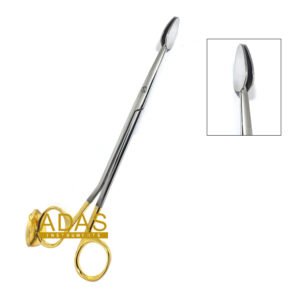

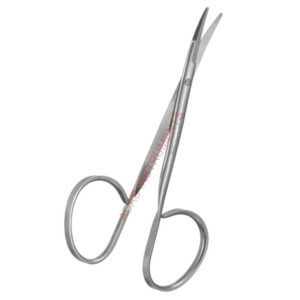

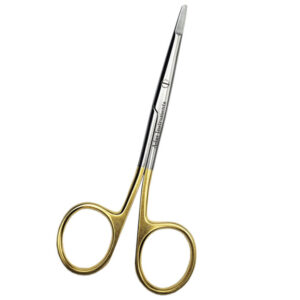
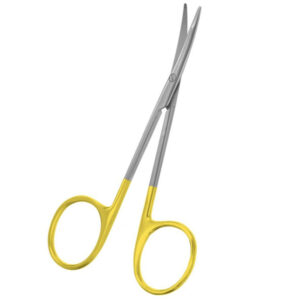
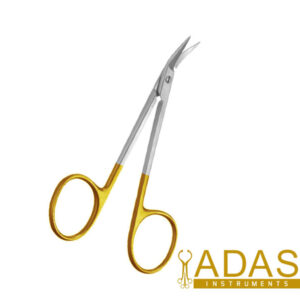
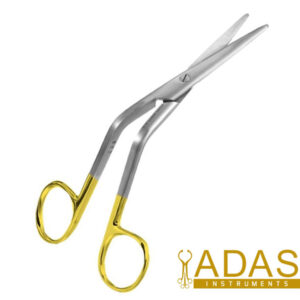
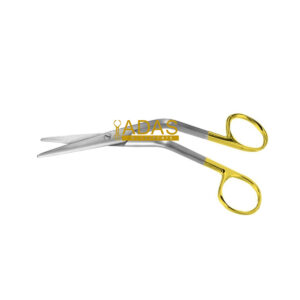
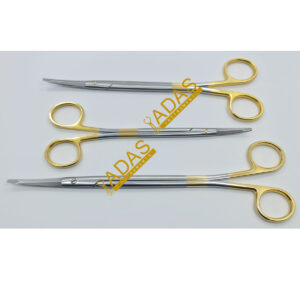
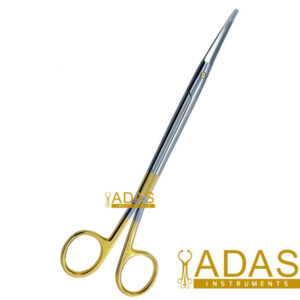
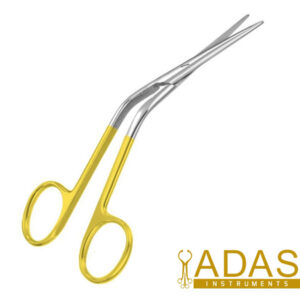
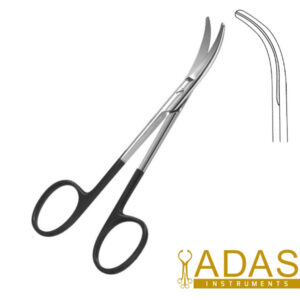
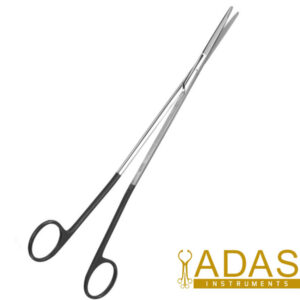
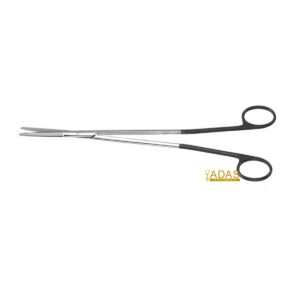
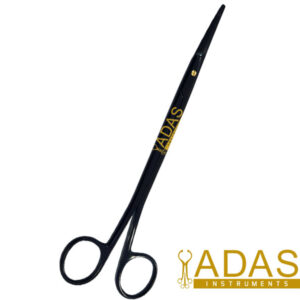
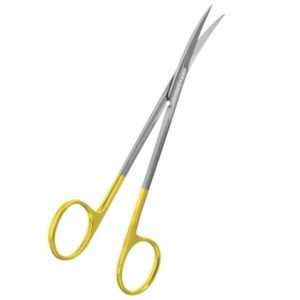
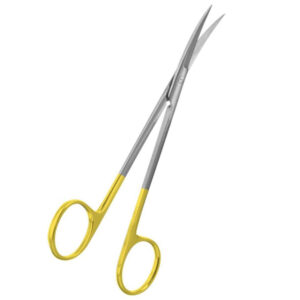
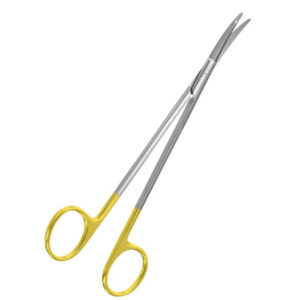
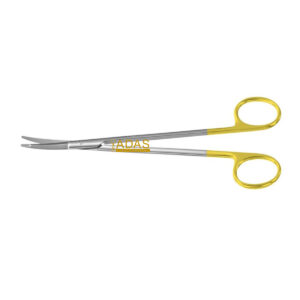
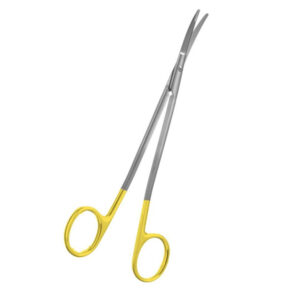
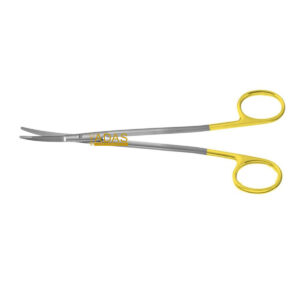
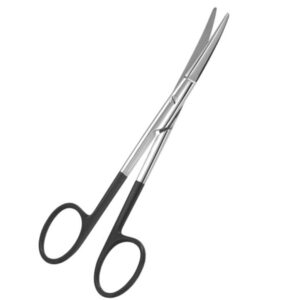

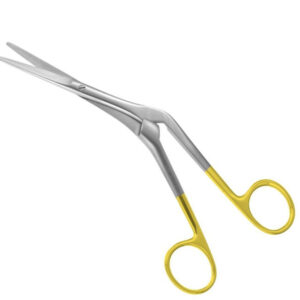
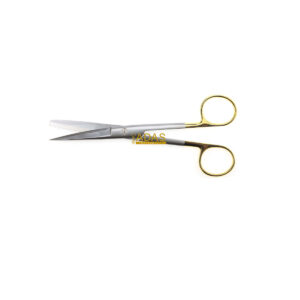
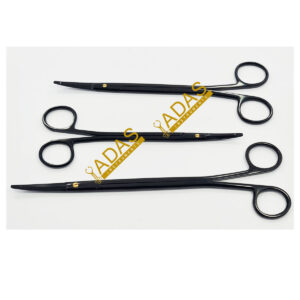
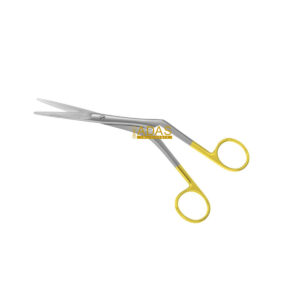
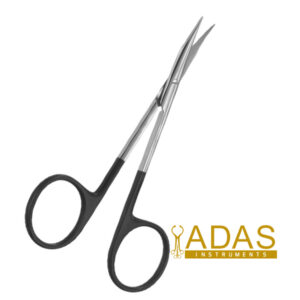
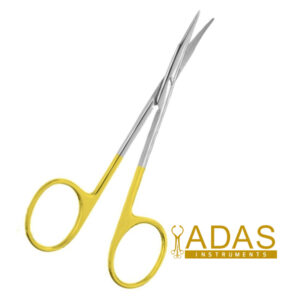
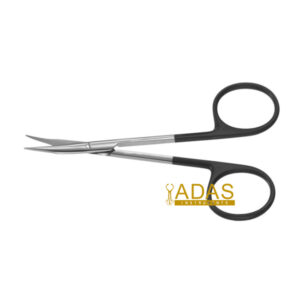
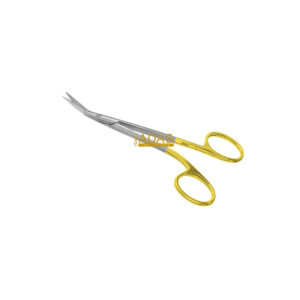
What are plastic surgery scissors?
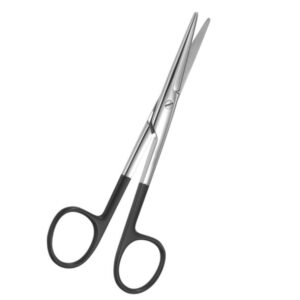
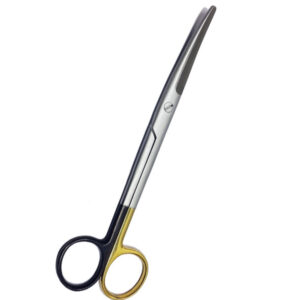
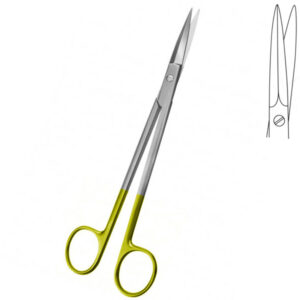
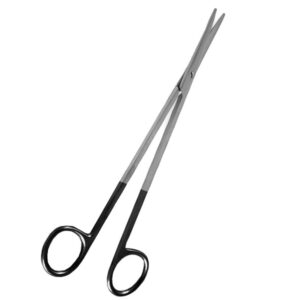
Plastic surgery scissors are the cutting instruments used where tissue is thin, mobile and visible afterwards, so the cut has to be clean and the surrounding tissue has to be left alone. They differ from general theatre scissors in three ways: the blades are finer, many are made to spread a tissue plane rather than only to cut it, and the patterns are named for the surgeons who designed them for one specific job. Adas Instruments manufactures all 31 patterns below in Sialkot from German surgical stainless steel, and ships worldwide to surgeons, distributors and hospital groups.
How to choose the right pattern
The question is not which scissor is best. It is which tissue you are working on and whether you are cutting or spreading. Every one of these plastic surgery scissors patterns does one job well rather than every job adequately.
| If you are | Choose from | Why |
|---|---|---|
| Dividing fascia or heavy suture | General surgical scissors | Thick beveled blades that will not deflect |
| Opening a delicate tissue plane | General surgical or fine scissors | Blunt tips spread before they cut |
| Working on eyelid, digit or fine flap | Fine and micro scissors | Short slim blades, control at the tip |
| Cutting under a microscope | Micro scissors with spring handles | The hand stays still, the tips move in fractions of a millimetre |
| Undermining a facelift flap | Facelift and rhytidectomy scissors | Long blades shaped to travel under skin |
| Trimming eyelid skin and muscle | Blepharoplasty scissors | Short, fine and made for the exact tissue |
| Shaping cartilage or working in the nose | Nasal and rhinoplasty scissors | Angled and narrowed to reach inside the nasal airway |
General surgical scissors
The four patterns that belong on every tray. If you are building a plastic surgery scissors set from nothing, start here and add the procedure specific patterns afterwards.
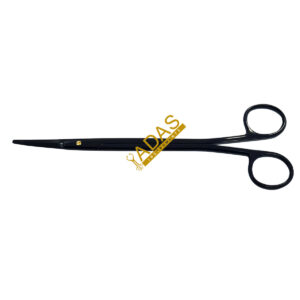
- Metzenbaum Scissors Razor Edge. The blunt dissection scissor. Long shanks, short blades, for opening tissue planes without cutting them.
- Mayo Scissors Razor Edge. The heavy cutter. Thick beveled blades for fascia, tough tissue and suture.
- Operating Scissors Sharp Blunt. One sharp point, one rounded point. The safe choice for suture removal and dressings.
- Joseph Dissecting Scissors. Fine general dissection, the pattern most used in facial soft tissue work.
Fine and micro scissors
For work where a general purpose blade is simply too wide.
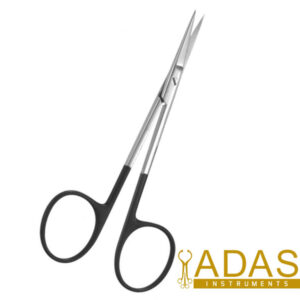
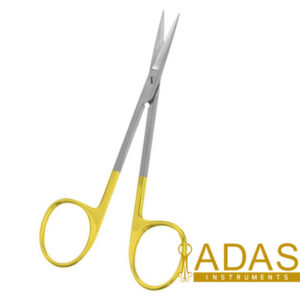
- Iris Scissors Sharp. Short straight blades and sharp points. The fine cutting scissor of the tray.
- Iris Scissors Razor Edge. The same pattern with a razor honed edge for cleaner cuts on thin tissue.
- Stevens Tenotomy Scissors. Slim tapered blades that spread a plane as safely as they cut it.
- Stevens Scissors Razor Edge. The razor edge version of the same fine dissecting pattern.
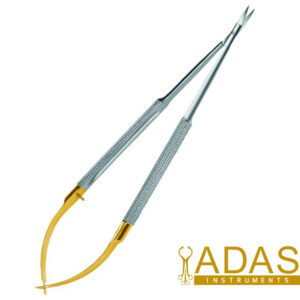
- Castroviejo Micro Scissors. Spring handles for cutting under the microscope, held like a pen.
Facelift and rhytidectomy scissors
Long blades made to travel under a skin flap and separate it cleanly. Nine patterns, each shaped for a slightly different plane.
- Kaye Facelift Scissors. The reference pattern for facelift undermining.
- Kaye Freeman Facelift Scissors. The Kaye blade with the Freeman handle profile.
- Kaye Rhytidectomy Dissecting Scissors. Shaped for the deeper rhytidectomy plane.
- Freeman Gorney Scissors. The classic facelift dissector, single instrument.
- Freeman Gorney Facelift Dissecting Scissors. The dissecting version with a longer blade.
- Freeman Groney Facelift Set of 3. Three graduated lengths in one set.
- Freeman Groney Facelift Dissecting Scissors Set of 3. The dissecting patterns as a matched set of three.
- Gorney Platysma Scissors. Made for the platysma and neck plane specifically.
- Trepsat Facelift Dissection Scissors. A finer facelift dissector for the superficial plane.
Blepharoplasty scissors
Eyelid tissue is the thinnest on the body and the result is the most visible. These four are made for it.
- Kaye Blepharoplasty Scissors. The standard blepharoplasty pattern.
- Kaye Blepharoplasty Scissors Ribbon Fingers. Flat ribbon rings for a lighter grip through long lists.
- Ragnell Blepharoplasty Scissors. Blunt flat blades for spreading in the eyelid plane.
- Blepharoplasty Scissors Curved. The curved blade for following the lid contour.
Nasal and rhinoplasty scissors
Nine patterns for working inside the nasal airway and on cartilage. See the full rhinoplasty instruments range for the osteotomes, rasps and elevators that go with them.
- McIndoe Cartilage Scissors Serrated. Serrated blades that grip cartilage instead of pushing it away.
- Fomon Dorsal Scissors. Angled for the nasal dorsum.
- Cottle Dorsal Scissors. The Cottle profile for dorsal work.
- Fomon Lateral Scissors. Angled for the lateral wall.
- Converse Scissors 10cm. Short and fine for tip work.
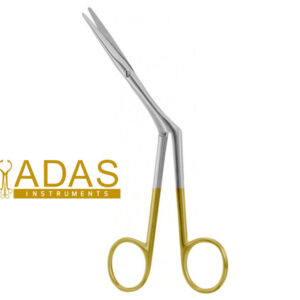
- Knight Nasal Scissors. Angled on flat for septal and turbinate work.
- Heymann Nasal Scissors Turbinectomy. The turbinectomy pattern with long shanks.
- Walter Nasal Scissors. A general nasal dissecting scissor.
- Septal Nasal Scissors Angled. Angled specifically for the septum.
Blade and edge options
Every pattern on this page can be ordered in four different edges. The edge matters as much as the blade shape, and it is the part most buyers overlook.
| Option | What it means | When to specify it |
|---|---|---|
| Standard edge | Two matched ground blades | General use, best value, easiest to resharpen |
| SuperCut | One razor honed blade, one micro serrated | Thin mobile tissue that a standard edge pushes away |
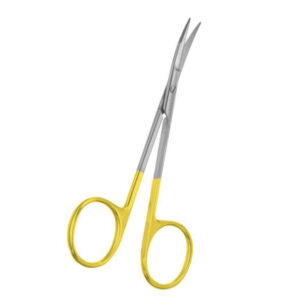
| Tungsten carbide | Carbide inserts, gold ring handles | Instruments used in most lists, longest edge life |
| Tungsten carbide SuperCut | Carbide plus the SuperCut edge | Where both sharpness and durability matter |
Buying from the manufacturer
We make every pair of plastic surgery scissors on this page ourselves. That means we can quote a matched set for a named procedure, laser mark your brand and catalogue number for private label, and hold specification for repeat orders. Tell us the procedure rather than the catalogue number if you are not sure which pattern you need.
Browse the wider plastic surgery instruments catalogue for the retractors, forceps, dissectors and markers that go on the same tray.
Frequently asked questions
What is the difference between plastic surgery scissors and general surgical scissors?
Finer blades, more patterns, and many designed to spread tissue rather than only cut it. A general theatre scissor is built to divide fascia. A plastic surgery scissor is built to work on tissue that will be visible after healing.
Which scissors should a new plastic surgery tray start with?
Metzenbaum for blunt dissection, Mayo for heavy cutting, operating scissors for dressings and suture, and iris scissors for fine work. Add the procedure specific patterns after that.
Are these instruments autoclavable?
All of them. Every pattern of plastic surgery scissors we make is fully autoclavable at 134 C for 3 minutes and is supplied non sterile for you to process.
Can I order under my own brand?
Yes. We manufacture for distributors and hospital groups and laser mark your brand, catalogue number and regulatory details on request.