
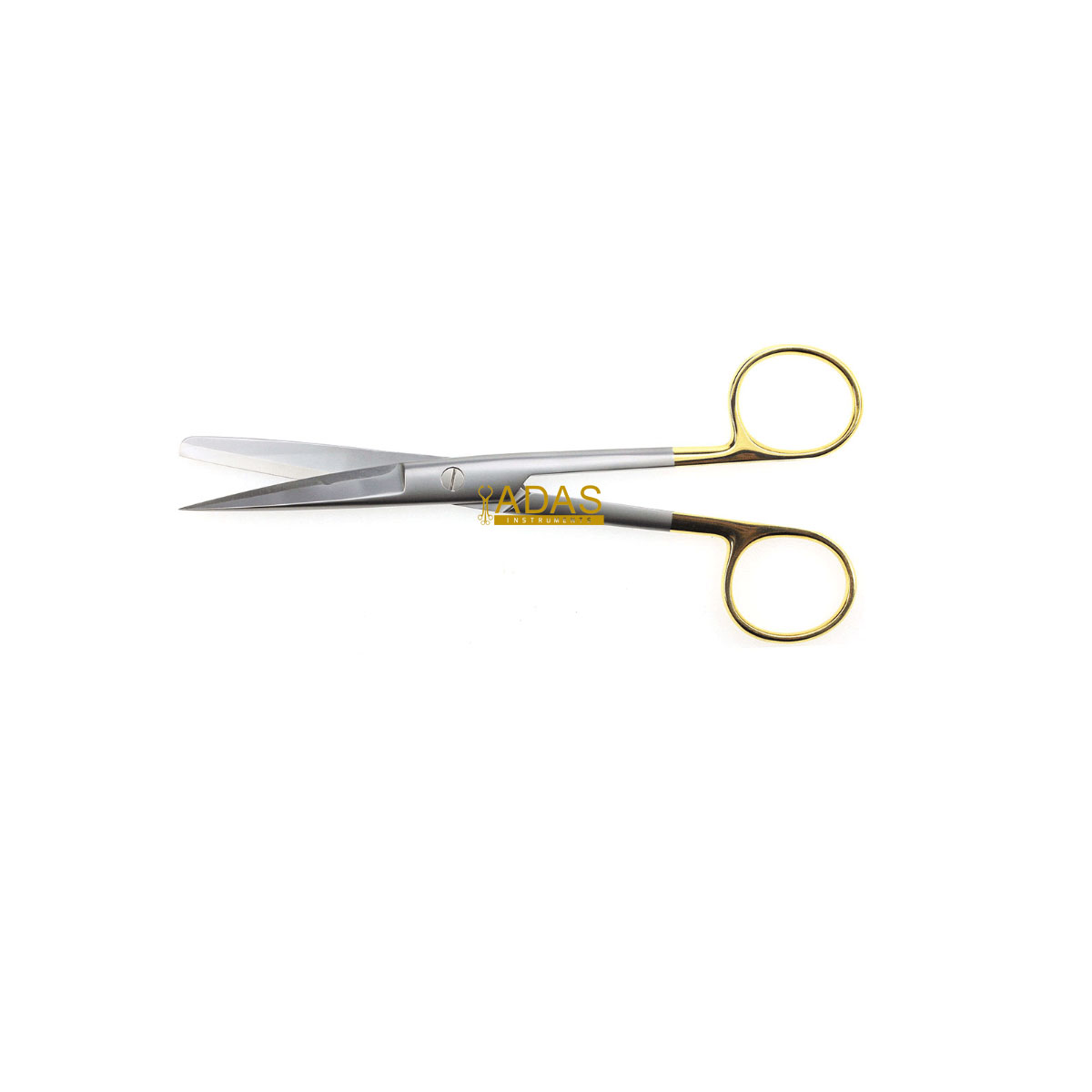
Operating Scissors Sharp Blunt, 14 cm and 16 cm, Straight or Curved
Price range: $ 8.50 through $ 27.00
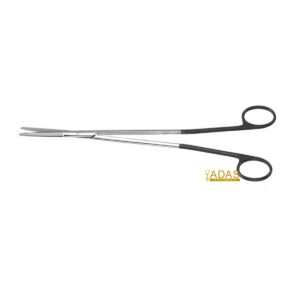
Sharp blunt operating scissors in 14 cm and 16 cm, straight or curved tip, with a choice of four blade types. One pointed blade to enter tissue or slide under a suture, one rounded blade to protect the skin beneath it.
- Standard, SuperCut and tungsten carbide blades
- Ring handle, box joint, satin non glare finish
- Fully autoclavable at 134 C
- Made in our own workshop in Sialkot
- OEM and private label available

What are operating scissors used for?
Operating scissors are the general purpose cutting instrument of the surgical tray, used for dividing superficial tissue, cutting dressings and gauze, trimming drains and tubing, and removing sutures. The sharp blunt pattern is the most ordered version: one pointed blade to enter tissue or slide under a stitch, one rounded blade that will not catch the skin underneath. Adas Instruments manufactures these surgical operating scissors in Sialkot in 14 cm and 16 cm, straight or curved, with a choice of four blade types.
Why the sharp blunt pattern is the one to buy
- One instrument, two jobs. The sharp point does the entering and the blunt point protects whatever is underneath. It is why sharp blunt outsells sharp sharp and blunt blunt combined.
- Safe suture removal. The blunt tip slides under a stitch against the skin while the sharp blade cuts. No lifting, no nicking the patient.
- Heavier build than fine scissors. These are made to cut dressing material and tubing all day without losing their set. Fine dissecting scissors are not.
- Four blade types. Standard for general wards, SuperCut for cleaner cuts on soft material, tungsten carbide where the instrument is used constantly, and tungsten carbide SuperCut for both.
- Made in our own workshop. Forged, hand ground, hardened and inspected by us. We are the manufacturer, not a reseller.
Clinical applications
These are the everyday uses our customers order operating scissors for.
| Setting | What it is used for | Usual size |
|---|---|---|
| General surgery | Superficial dissection, dividing fascia and subcutaneous tissue | 16 cm |
| Suture removal | Blunt tip under the stitch, sharp blade cuts. The most common use | 14 cm |
| Dressings and bandaging | Gauze, padding, adhesive tape and cast padding | 14 cm |
| Emergency and first aid | Trimming tubing, drains and IV lines at the bedside | 14 cm |
| Basic instrument sets | The workhorse cutting instrument on laparotomy and minor trays | 16 cm |
| Veterinary and teaching | Training labs and small animal practice | 14 cm |
Size chart
| Overall length | Imperial | Tip option | Best suited to |
|---|---|---|---|
| 14 cm | 5 1/2 in | Straight tip or curved tip | Suture removal, dressings, minor procedure trays |
| 16 cm | 6 1/4 in | Straight tip or curved tip | Theatre use, heavier dressing material, more reach |
Straight operating scissors are the default for cutting dressings and removing sutures because the blades sit flat against the skin. Curved operating scissors are chosen for tissue work, where the curve lets you see the tips and follow the contour of the wound. Both are available in every blade type.
Blade type guide
| Blade type | What it is | Choose it when |
|---|---|---|
| Standard | Two matched ground blades | General ward and clinic use, best value |
| Standard SuperCut | One razor honed blade, one micro serrated | Cleaner cuts on soft or mobile material |
| Tungsten carbide | Carbide inserts, gold ring handles | High volume use, longest edge life |
| Tungsten carbide SuperCut | Carbide inserts plus the SuperCut edge | Both sharpness and durability required |
Technical specifications
| Specification | Detail |
|---|---|
| Instrument | Operating scissors, sharp blunt pattern |
| Lengths | 14 cm and 16 cm |
| Tip options | Straight tip or curved tip |
| Blade types | Standard, standard SuperCut, tungsten carbide, tungsten carbide SuperCut |
| Material | German surgical stainless steel, AISI 420 grade |
| Handle | Ring handle, box joint |
| Finish | Satin, non glare |
| Sterilisation | Fully autoclavable, 134 C for 3 minutes |
| Reusable | Yes, supplied non sterile |
| Origin | Manufactured by Adas Instruments, Sialkot, Pakistan |
| OEM and private label | Available, laser marking on request |
Care and sterilisation
- Rinse in cool water immediately after use. Dried blood is the main cause of pitting.
- Clean ultrasonically with a neutral pH detergent, joint fully open.
- Pay attention to the pivot screw. Debris collects there and stiffens the action.
- Lubricate the joint with instrument milk before each autoclave cycle.
- Autoclave at 134 C for 3 minutes and dry completely before storage.
- Check the set of the blades every few months. If they cut at the tip but not the heel, they need adjustment.
Frequently asked questions
What does sharp blunt mean on operating scissors?
One blade ends in a point and the other in a rounded tip. The sharp blade enters tissue or slides under a suture, the blunt blade protects the surface beneath it. The alternatives are sharp sharp for cutting only and blunt blunt where nothing may be punctured.
Which size should I order?
14 cm suits suture removal, dressings and minor procedure trays. 16 cm gives more reach and cutting power for theatre use and heavier dressing material. Departments that order once usually take the 14 cm.
Should I choose the straight or the curved tip?
Straight for dressings and suture removal, curved for tissue. If the instrument will live on a dressing trolley, order straight.
Are these the same as Mayo scissors?
No. Mayo scissors have thicker, beveled blades for cutting heavy fascia and sutures. Operating scissors are lighter and more versatile, and only the sharp blunt pattern is safe for suture removal against skin.
Can I order these in bulk or under my own brand?
Yes. We supply distributors, hospital groups and instrument set builders, and we laser mark your brand and catalogue number on request. Contact us for volume pricing.
Related instruments
See the complete plastic surgery scissors range, or browse all plastic surgery instruments.
- Mayo Scissors Razor Edge, the heavier instrument for fascia and thick suture.
- Metzenbaum Scissors Razor Edge, for blunt dissection of delicate tissue planes.
- Iris Scissors Sharp, when the work is too fine for a general purpose blade.
| Weight | 0.045 kg |
|---|---|
| Select Size | 14 cm / 5.5", 16cm / 6 1/4" |
| Tip options | Curved Tip, Straight Tip |
| Blade Type | Standard, Standard Supercut, Tungsten Carbide, Tungsten Carbide Supercut |
Be the first to review “Operating Scissors Sharp Blunt, 14 cm and 16 cm, Straight or Curved”
Shipping & Delivery Policy
Processing Time: In-stock items are dispatched within 24-48 hours. For custom or out-of-stock items, production time is approximately 10-15 days.
Global Delivery Estimates
We partner with world-class couriers (DHL, FedEx) to ensure fast, tracked delivery.
- USA & Canada: 3-5 Business Days
- Europe & UK: 4-6 Business Days
- Rest of World: 5-7 Business Days
*We offer Air Cargo and Sea Freight options for bulk wholesale orders.
Customs & Duties
International buyers are responsible for any customs duties or taxes imposed by their country. Adas Instruments is not responsible for delays caused by customs clearance.
Lost Packages & Insurance
If your package is lost in transit, please contact us immediately. We offer full support and replacements for confirmed lost shipments. Note: You must report non-delivery within 3 weeks to be eligible for an insurance claim.
Related products

Reviews
There are no reviews yet.