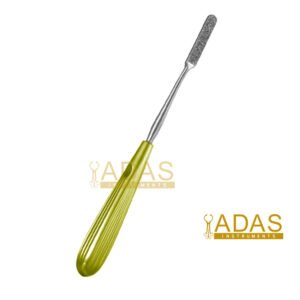
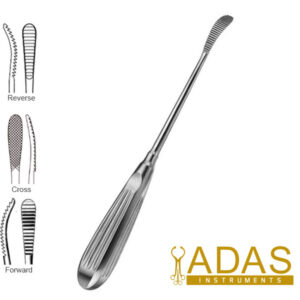
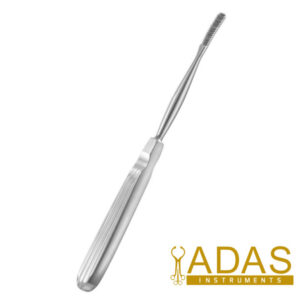
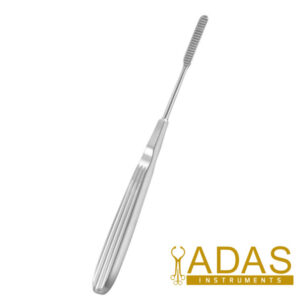
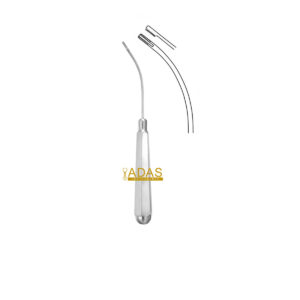
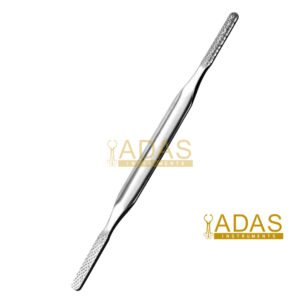
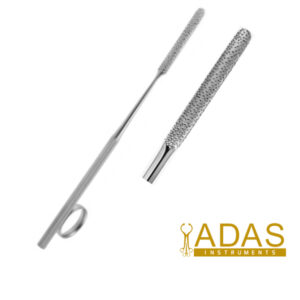
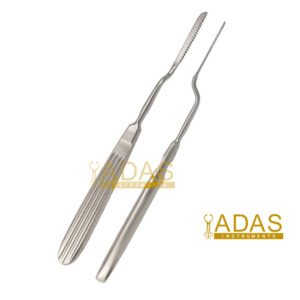


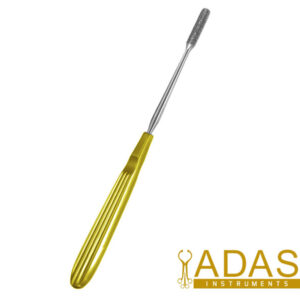
Raspatories and Saws Manufactured in Our Own Factory
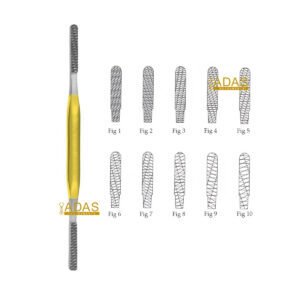
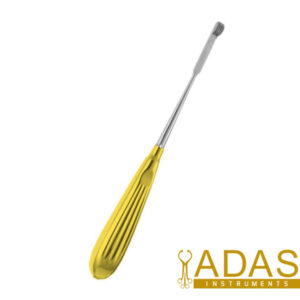
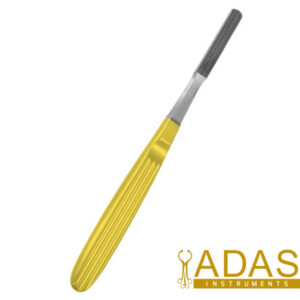
Orthopedic theatres, craniomaxillofacial units, rhinoplasty surgeons and veterinary practices buy here, along with distributors filling standing bone instrument orders. Coverage begins with single and double-ended raspatories in curved, straight, sharp and blunt versions, moves through wide periosteal elevators used for shaft exposure, and finishes with hand saws carrying fixed or detachable blades plus Gigli handles for wire work. Forging, milling, hardening and tempering happen on site, so edge geometry and hardness remain under our own control. Teeth are cut and set at the bench, and each saw is checked for blade tension and straight tracking before release.
Working lengths commonly fall between 14 cm and 24 cm, with blade widths from 2 mm on fine nasal elevators up to 20 mm on broad periosteal patterns. Handle bodies come flat, round, hexagonal or knurled for grip when gloves are wet. Edges are finished sharp for periosteum or rounded where only lifting is intended, and tungsten-carbide inserts can be specified on selected cutting patterns. Instruments are reusable, autoclavable at 134 degrees C and sold singly or as osteotomy sets.
Popular Products in Raspatories and Saws
Also available in this category: Peet Cottle Nasal Rasp (Flat Diamond Coated), Rhinoplasty Dorsal Rasp, Peet Nasal Rasp Diamond Coated, Rhinoplasty Finishing Rasp, Glabella Nasal Raspatory, Tungsten Carbide Webster Bone Rasp, McIndoe Nasal Rasp Tungsten Carbide (TC), Rhinoplasty Bone File, Fomon Nasal Raspatory, Double-Ended Tungsten Carbide Rasp.
Choosing the Right Raspatories and Saws
Sharp Edge or Blunt Edge on a Raspatory
A sharp edged raspatory cuts through periosteum and strips it in one pass, which suits fresh bone and cortical exposure. A blunt or rounded edge lifts tissue away without dividing it, which is safer over thin nasal bones, around neurovascular structures and in pediatric cases. Many surgeons carry both, or choose a double-ended instrument with one sharp and one blunt end so the tray stays compact without losing options.
Blade Length, Width and Tooth Pitch on Saws
Blade length should reach across the bone with room to run the stroke freely, so measure the widest cut you make rather than the average. Coarse tooth pitch clears chips quickly in cancellous bone, while a finer pitch leaves a smoother surface on cortical bone and small facial osteotomies. Detachable blade saws let you keep several pitches on one frame, which is usually cheaper than stocking multiple fixed-blade instruments.
Single-Ended Versus Double-Ended Elevators
Double-ended elevators such as the Freer and Cottle patterns save tray space and let the surgeon change from lifting to cutting by reversing the instrument. Single-ended patterns give a longer, better balanced handle and take a stronger grip, which helps on femoral, tibial and mandibular exposure where force is applied. For high volume rhinoplasty lists, double-ended tools are usually preferred; heavy orthopedic sets lean toward single-ended designs.
Why Buy Raspatories and Saws from ADAS Instruments
- Direct from the forge. Prices reflect our own forging and grinding, not a chain of intermediaries.
- Certified production. Built under ISO 13485 control and CE marked for regulated markets.
- Hardened correctly. German surgical grade stainless steel, heat treated in house so edges hold their geometry.
- Private label ready. Your logo, part numbers and box artwork applied on modest order quantities.
- Copy an existing tool. Send a worn instrument, photo or drawing and we reproduce the pattern faithfully.
- Fast dispatch. DHL and FedEx typically place orders in the USA, UK, Europe, Australia and the Gulf within 3 to 5 working days.
Frequently Asked Questions
What is the difference between a raspatory and a periosteal elevator?
The terms overlap in daily use. A raspatory generally has a sharper, often narrower blade meant to cut and scrape periosteum from bone, while a periosteal elevator carries a broader, blunter face used to lift and reflect the layer intact. Freer and Cottle patterns sit between the two and are supplied with one sharp and one blunt end so both actions are covered.
Can the blades on your bone saws be replaced?
On detachable blade patterns, yes. The frame is designed so the blade is unclamped, replaced and re-tensioned without tools, and spare blades in different tooth pitches can be ordered with the saw. Fixed-blade saws such as the classic amputation patterns are not replaceable, but they can be resharpened and reset by hand, and we accept instruments back for that service.
How should raspatory edges be maintained?
Clean immediately after use so blood and bone debris do not dry on the edge, then inspect the bevel under magnification before each processing cycle. Avoid abrasive pads that round the cutting angle. Autoclave at 134 degrees C and store where edges cannot knock against other instruments. When the bevel finally dulls after long service, the edge can be reground to the original angle.
What is the minimum order for a custom raspatory or saw pattern?
Minimums are low, which is the point of buying from a working factory rather than a trading house. Send a drawing, a clear photograph with dimensions or a physical sample, and we prepare a sample piece for approval before any batch is cut. Once the sample is signed off, repeat orders run against your catalog codes with your branding applied.
Request a Quote or a Custom Instrument
Tell us the pattern, size and finish you need and we will send a factory price list the same working day. Email adas.surgical@gmail.com. Wholesale, distributor and hospital tender enquiries are welcome.