
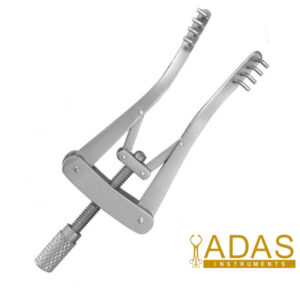
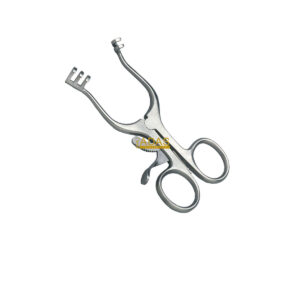
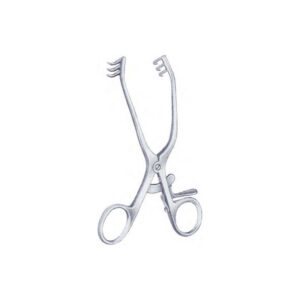
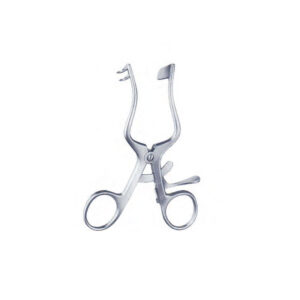
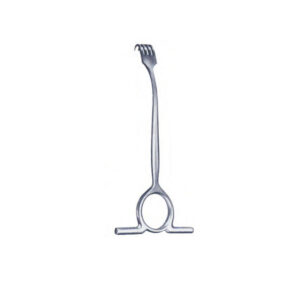
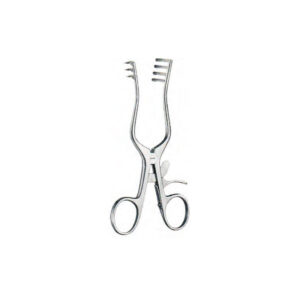
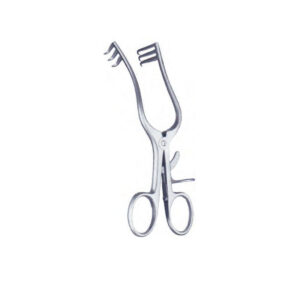
Self Retaining Retractors Manufactured in Our Own Factory
Hospitals equipping orthopedic and spinal trays, ENT and neurosurgery units, aesthetic clinics running facelift and breast lists, veterinary theatres and tender buyers all specify from this group. The range moves from small two-prong spring retractors used in eyelid and hand surgery, through mid-size ratcheted patterns for hip, knee and mastoid exposure, to hinged frames that open a laparotomy and accept additional blades. Arms are forged, milled and hardened in our own plant, ratchet teeth are cut on dedicated tooling, and every instrument is opened and closed through its full travel by hand before polishing and final inspection.
Overall lengths commonly run from 8 cm to 30 cm, with prong depths from 8 mm to 40 mm and spreads reaching 150 mm on the larger frames. Prongs are offered sharp, blunt or semi-sharp in two, three, four and five point arrangements, with hinged or fixed blades. Ratchet bars can be supplied graduated so the spread is repeatable. All retractors are reusable, autoclavable at 134 degrees C and sold loose or as a matched set.
Popular Products in Self Retaining Retractors
Choosing the Right Self Retaining Retractors
Blade Depth and Spread
Prong depth should reach the layer you want held and no further, since an over-deep blade catches structures beneath the field. Shallow 8 mm to 12 mm prongs suit skin and subcutaneous work in facelift and hand surgery. Depths of 20 mm to 30 mm hold muscle in hip, knee and spinal exposure. Check maximum spread as well, because a retractor that opens wider than the wound simply lifts out of the tissue.
Sharp Prongs or Blunt Prongs
Sharp prongs bite and stay put, which is what you want in dense fascia, periosteum and thick scalp where a blunt tip slides. Blunt prongs sit against tissue without penetrating and are safer over vessels, nerve, bowel and thin skin flaps. Semi-sharp patterns split the difference for muscle. Many departments stock the same Weitlaner or Beckman pattern in both prong types so the choice is made at the table.
Ratchet, Spring and Frame Types
Ratcheted retractors hold a set opening and free both hands, which suits long exposures. Simple spring retractors apply constant gentle tension and are quicker to place and remove for short procedures. Hinged frames such as the Balfour open in more than one axis and take detachable center blades for deep abdominal work. Consider how easily the ratchet releases under load, as a stiff release wastes time during closure.
Why Buy Self Retaining Retractors from ADAS Instruments
- Factory floor prices. Retractors are forged and finished in our plant, so nothing is added by a trading company.
- Quality certified. Production is ISO 13485 certified and the range carries CE marking.
- Ratchets that hold. German surgical grade stainless steel, hardened and hand set for reliable locking.
- Branded to order. Your logo, reference numbers and packaging applied even on modest quantities.
- Custom spreads and depths. Send a drawing, photograph or sample and we build the retractor to those dimensions.
- Tracked delivery. DHL and FedEx serve the USA, UK, Europe, Australia and the Gulf, normally within 3 to 5 working days.
Frequently Asked Questions
How do I choose prong depth on a self retaining retractor?
Choose the depth that matches the tissue layer being held. Shallow prongs of 8 mm to 12 mm are correct for skin and subcutaneous planes in facelift, hand and minor procedures. Depths of 20 mm to 30 mm are needed to hold muscle in orthopedic and spinal exposure. Anything deeper than the wound risks catching structures underneath, so measure the working depth before selecting a pattern.
Should I order sharp or blunt prongs?
Sharp prongs anchor in dense fascia, periosteum and scalp where blunt tips would slip out under tension. Blunt prongs are the safer choice next to vessels, nerves, bowel and thin skin flaps, and in pediatric work. Since the answer changes by procedure rather than by surgeon, many theatres hold the same pattern in both prong types and let the operator decide at the table.
Can the center blade on a frame retractor be changed?
Yes. Frame patterns such as the Balfour are supplied with a detachable center blade that unclips from the frame, and blades of different depths can be ordered separately and swapped for the case in hand. Fixed blade versions are also available where interchangeability is not required. Tell us the blade depths you use and we will supply the frame with the matching set.
Do you accept hospital tender and distributor orders?
Yes. Tender, wholesale and distributor enquiries come straight to the factory. We quote against your specification, supply matched sets in cases, and mark each retractor with your own catalog reference and brand. Custom spreads, prong counts and blade depths can be built from a drawing or sample, and minimum order quantities on specials are kept deliberately low.
Request a Quote or a Custom Instrument
Tell us the pattern, size and finish you need and we will send a factory price list the same working day. Email adas.surgical@gmail.com. Wholesale, distributor and hospital tender enquiries are welcome.
Adas Instruments manufactures self-retaining retractors in German surgical stainless steel — Weitlaner, Gelpi, Plester, Jansen and West patterns with blunt or sharp prongs, all with locking ratchets that hold exposure without an assistant.
What is the difference between a Weitlaner and a Gelpi retractor?
Both are ratcheted self-retaining retractors. The Weitlaner has multi-pronged rake ends that spread the wound edges over a broad area, making it the general-purpose choice for superficial exposure. The Gelpi has single sharp points that anchor deep in tissue, giving narrow, deep exposure for spine, ear and small-incision work. Most surgical trays carry both.
Note: the Weitlaner retractor is often written phonetically as “wheatlander retractor” in searches; both names refer to the same instrument.

