

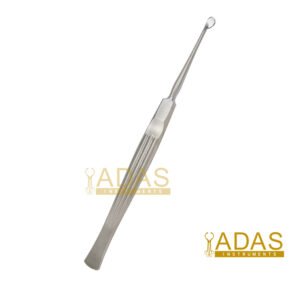
Scalpel handles, graft knives and fixed blade ENT knives
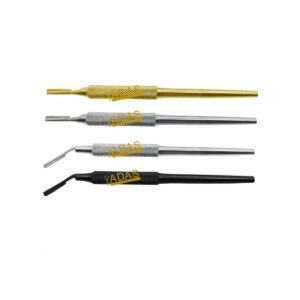
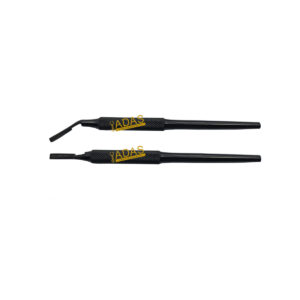
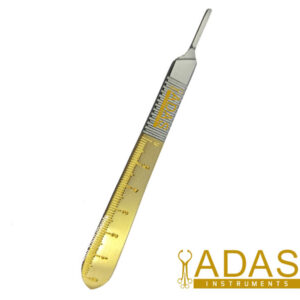
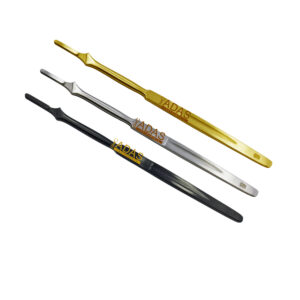
This category holds three different kinds of instrument and it is worth separating them before you order, because they are not alternatives to each other. A scalpel handle is a reusable handle that a disposable blade clips onto. A skin graft knife is a frame that takes a long graft blade and a guard that sets how thick a sheet of skin it shaves. A fixed blade ENT knife has its edge built in, sharpened rather than replaced. We make all three.
Which handle takes which blades
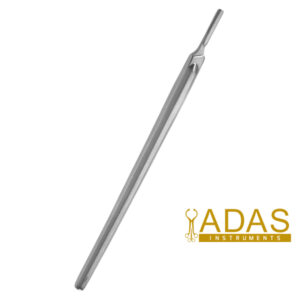
This is the question almost everybody arrives with, and the answer is short. A handle number is a FITTING, not a size. A number 3 fitting takes the 10 series blades and a number 4 fitting takes the 20 series, and the two do not interchange in either direction. A number 7 handle is a different shape of handle that uses the number 3 fitting, so it takes the same blades as a standard number 3.
| Handle | Fitting | Blades it takes | What it is for | Do we make it |
|---|---|---|---|---|
| Number 3, flat | Number 3 | 10, 11, 12, 15 | The standard small pattern, on more trays than any other handle | Yes |
| Number 3, round | Number 3 | 10, 11, 12, 15 | Rolls between the fingers, so a cut can follow a curve | Yes |
| Barron octagonal | Number 3 | 10, 11, 12, 15 | Eight flats, so it indexes to an angle and holds it | Yes |
| Number 7 | Number 3 | 10, 11, 12, 15 | Long slim neck, for a deep or narrow field | Yes |
| Number 4 | Number 4 | 20, 21, 22, 25 | The larger fitting, for broader cuts | No, not at present |
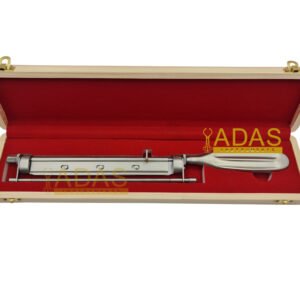
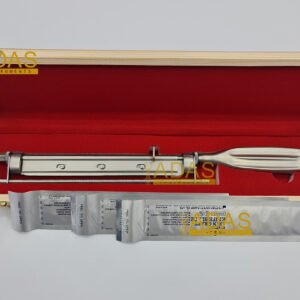
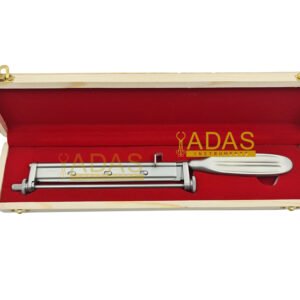
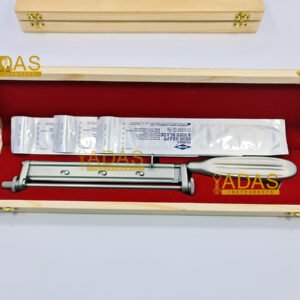
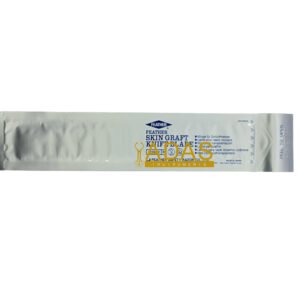
| Humby graft knife | Graft blade | Graft blades only | Shaves a split thickness skin graft, roller bar sets the depth | Yes |
| Watson graft knife | Graft blade | Graft blades only | The modified Humby, fixed front guard | Yes |
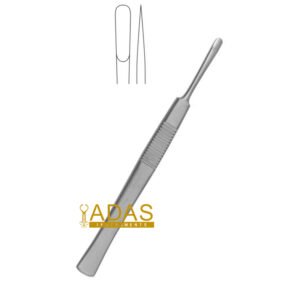
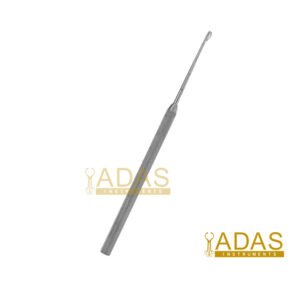
| Cronin, Cottle and Freer knives | Fixed blade | None, the edge is part of it | Named ENT knives for nasal mucosa and cartilage | Yes, all three |
What we do not make, said plainly
We do not currently make a number 4 handle, and we do not sell the disposable blades themselves except the graft blades for the Humby and the Watson. We do not make disposable one piece scalpels, and we do not make powered dermatomes. If you need a number 4 fitting or a box of number 10 blades, we are not the supplier for that part of the tray and it is quicker to say so here than to let you find out at checkout.
Prices, and where we are and are not cheaper
On the graft knives the gap is very large: our Watson is 110 dollars against about 1,575 to just over 2,000 dollars from the catalogue houses, and our Humby is 90. On the Barron octagonal handle we are 12 dollars against about 45. On a plain number 3 handle we are 7.50 dollars and the open market is about the same, so there is no saving to claim and we do not claim one. Everything here is made in our own workshop and sold direct, which is the only reason the first two numbers look the way they do.
Ordering, OEM and warranty
Order a single instrument for one tray or in quantity for a hospital list or a distributor line. We do OEM work under your own brand and your own item numbers and will hold a run to your pattern rather than ours if you send us a sample. Stock items ship from our own workshop; backorder items take 10 to 12 working days to make. Every instrument carries a three year replacement warranty against manufacturing defects, and the graft blades are a consumable rather than a warranted part.