
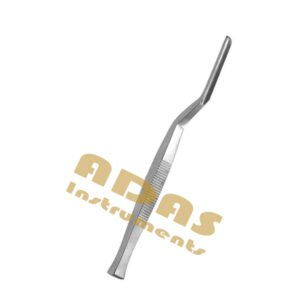
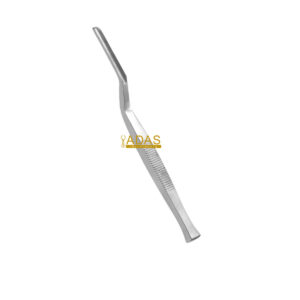
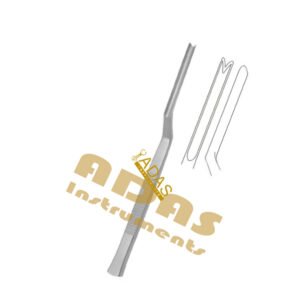
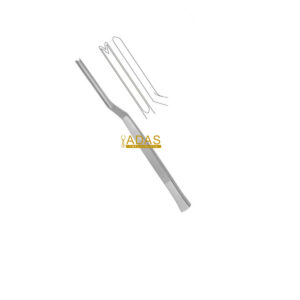

Osteotomes, Chisels and Gouges Manufactured in Our Own Factory
Rhinoplasty surgeons, oral and maxillofacial teams, hand surgeons and orthopaedic theatres all draw on this section, as do distributors assembling complete bone sets. Blade widths begin at 2 mm for delicate lateral nasal cuts and rise to 25 mm and beyond for orthopaedic use. Handles are supplied in solid steel with fluted, octagonal or flat grips, and the impact end is shaped to spread mallet force rather than mushroom under it. Forging, heat treatment, edge grinding and finishing are carried out inside our own works, which lets us control hardness at the edge and check bevel angle on every piece before packing.
Blade widths are graduated in millimetre steps so a set covers its range without gaps. Straight, curved and guarded profiles are stocked, with left and right guards on the nasal patterns. Bevels are ground single or double sided according to the instrument, and edges are finished by hand. Satin polish on the shafts reduces glare under theatre lights. Items are reusable and autoclavable at 134 degrees C, and are sold individually or in graduated racks.
Popular Products in Osteotomes, Chisels and Gouges
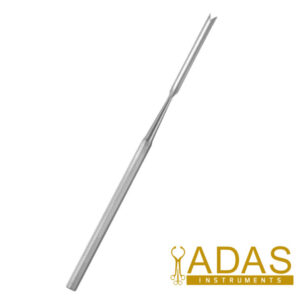
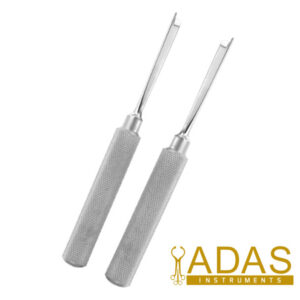
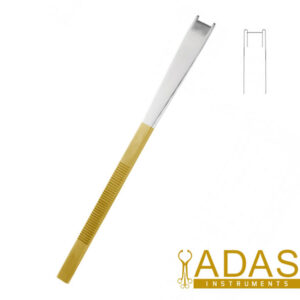
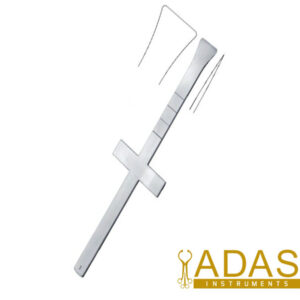
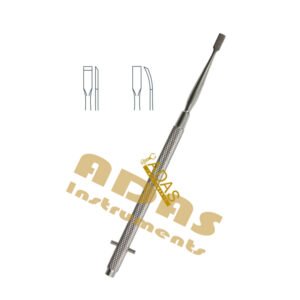
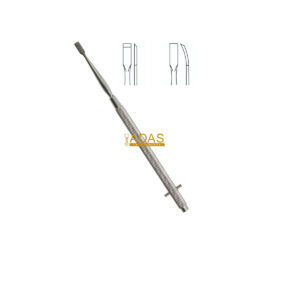
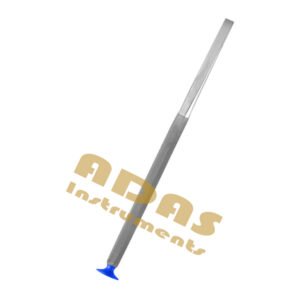
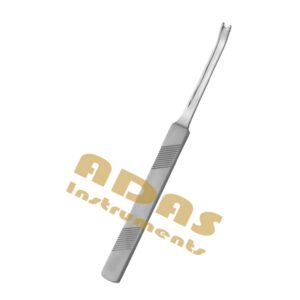
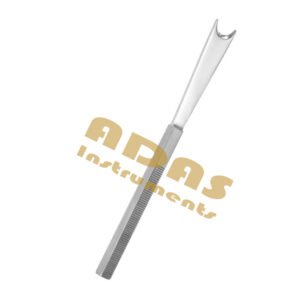
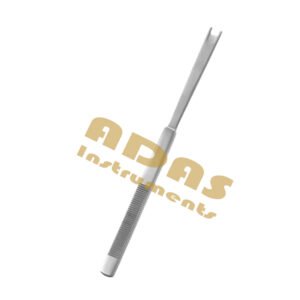
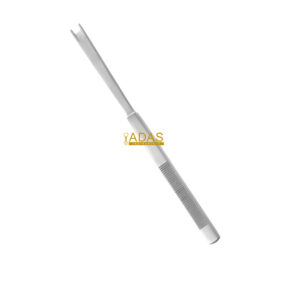
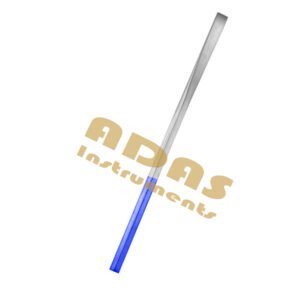
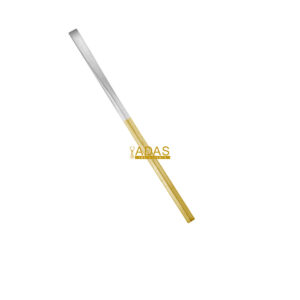
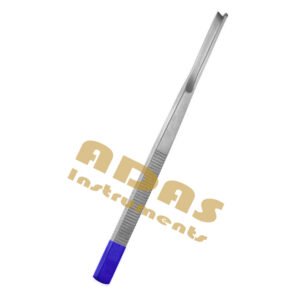
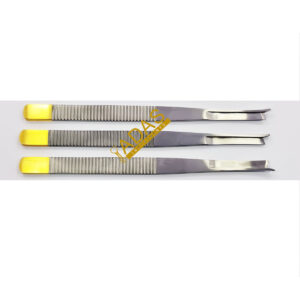
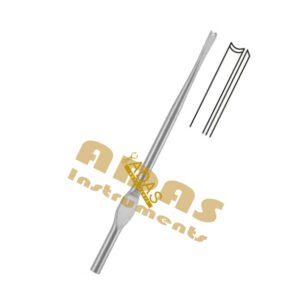
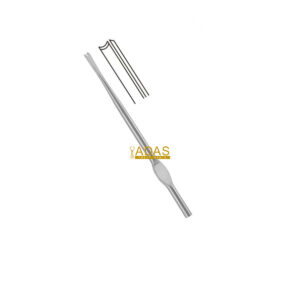
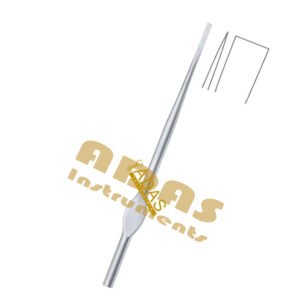
Also available in this category: Ballenger Hajek Septum Chisel, Freer Septum Gouge | Atraumatic Concave Blade | Nasal Bone Scraping, Cottle Chisel Fishtail, Graduated 16mm Nasal Osteotome for Rhinoplasty, Freer Septum Chisel | Straight and Curved 4mm Tip | Rhinoplasty Tool, Cottle Nasal Osteotome 18cm, Graduated German Steel Bone Tool.
Osteotomes, Chisels and Gouges by Section
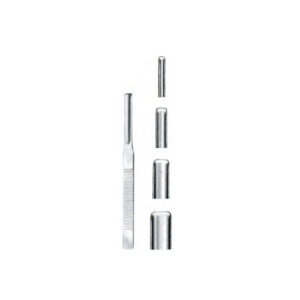
Bone cutting instruments, grouped by the section of the cutting edge.
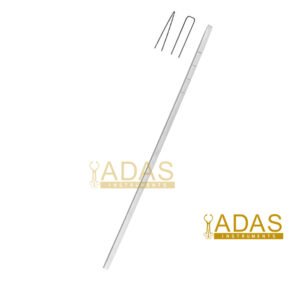
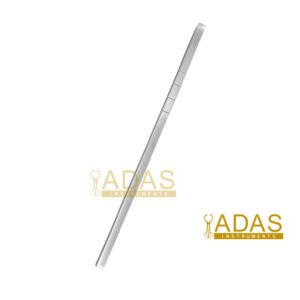
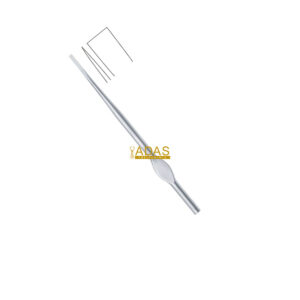
French Pattern Osteotome, the French section for nasal bone cuts.
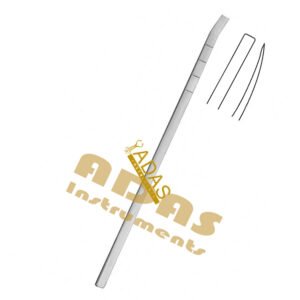
Trautmann Ear Gouge, a gouge for cortical bone at the mastoid.
All are made by Adas Instruments in Sialkot, Pakistan, and can be supplied singly or built into a set to a purchaser specification.
Choosing the Right Osteotomes, Chisels and Gouges
Choosing Blade Width for Nasal Osteotomies
Lateral osteotomies in rhinoplasty are usually cut with 2 mm to 4 mm blades, narrow enough to follow the intended line without splintering the bony pyramid. Medial and transverse cuts often take 4 mm to 6 mm. Guarded patterns protect the mucosa and give a tactile reference along the bone, which many surgeons prefer for the lateral cut. Two widths plus one guarded pattern on the tray will cover most primary cases comfortably.
Osteotome, Chisel or Gouge
The three are not interchangeable. An osteotome is bevelled on both faces and splits bone along a line, which is why it dominates nasal and orthopaedic cutting. A chisel carries a single bevel with one flat face, so it shaves and trims a cortical surface flat. A gouge has a curved cross section and scoops a channel or lifts a curved graft. Choosing the wrong geometry forces the surgeon to work against the instrument.
Edge Care and Mallet Discipline
Edges dull from contact with retractors and other instruments in the tray more often than from bone itself. Store each piece in a rack or blade guard rather than loose, and never lever with an osteotome, since the edge chips and the shaft can take a set. Strike with a controlled mallet rather than the heaviest one available. Have edges reground before they visibly roll, and retire any piece with a mushroomed impact end.
Why Buy Osteotomes, Chisels and Gouges from ADAS Instruments
- Works price, direct. Bone instruments come straight from the forge and grinding shop that makes them.
- Documented compliance. Produced under ISO 13485 certification and supplied CE marked.
- Heat treated properly. German surgical grade stainless, hardened so the edge lasts under mallet impact.
- Branding for resellers. Private label engraving, packaging and catalogue codes with low order minimums.
- Bespoke widths and curves. We manufacture from your drawing, photograph or a sample instrument.
- Global despatch. Orders travel by DHL or FedEx, commonly 3 to 5 working days to the USA, UK, Europe, Australia and the Gulf.
Frequently Asked Questions
What is the difference between an osteotome and a chisel?
An osteotome is ground with a bevel on both faces, so it wedges into bone and splits it along a controlled line. A chisel has a single bevel and one flat face, which makes it the right tool for paring and smoothing a cortical surface. Surgeons performing rhinoplasty osteotomies want the osteotome geometry, while contouring and graft trimming often calls for a chisel instead.
Which widths should a rhinoplasty set contain?
A practical set runs from 2 mm to about 12 mm in one and two millimetre steps, covering lateral, medial and transverse cuts as well as dorsal reduction. Include at least one guarded lateral pattern and one curved osteotome. Beyond that, surgeons add widths according to technique. We can supply the group as a graduated rack or as individual widths chosen from your own list.
How are the cutting edges maintained?
Edges are reground on a fine wheel and finished by hand once they begin to roll or show nicks. Protect them between cases with blade guards and a rack, keep bone dust out of the bevel during cleaning, and avoid stacking osteotomes loose against heavier instruments. Correctly hardened stainless takes several regrinds before the geometry is lost and replacement becomes the better option.
Can you make an osteotome to my own drawing?
Yes. Custom manufacturing from a drawing, a dimensioned photograph or a physical sample is routine work for us. Specify blade width, bevel type, shaft length, curve and handle style, and we will produce a sample for approval before running the batch. Custom bone instruments can be laser marked with your own brand and catalogue reference for distribution under your name.
Request a Quote or a Custom Instrument
Tell us the pattern, size and finish you need and we will send a factory price list the same working day. Email adas.surgical@gmail.com. Wholesale, distributor and hospital tender enquiries are welcome.