
Killian-Claus Nasal Septum Gouge | V-Shape Blade | 5mm Tip Width
$ 32.00
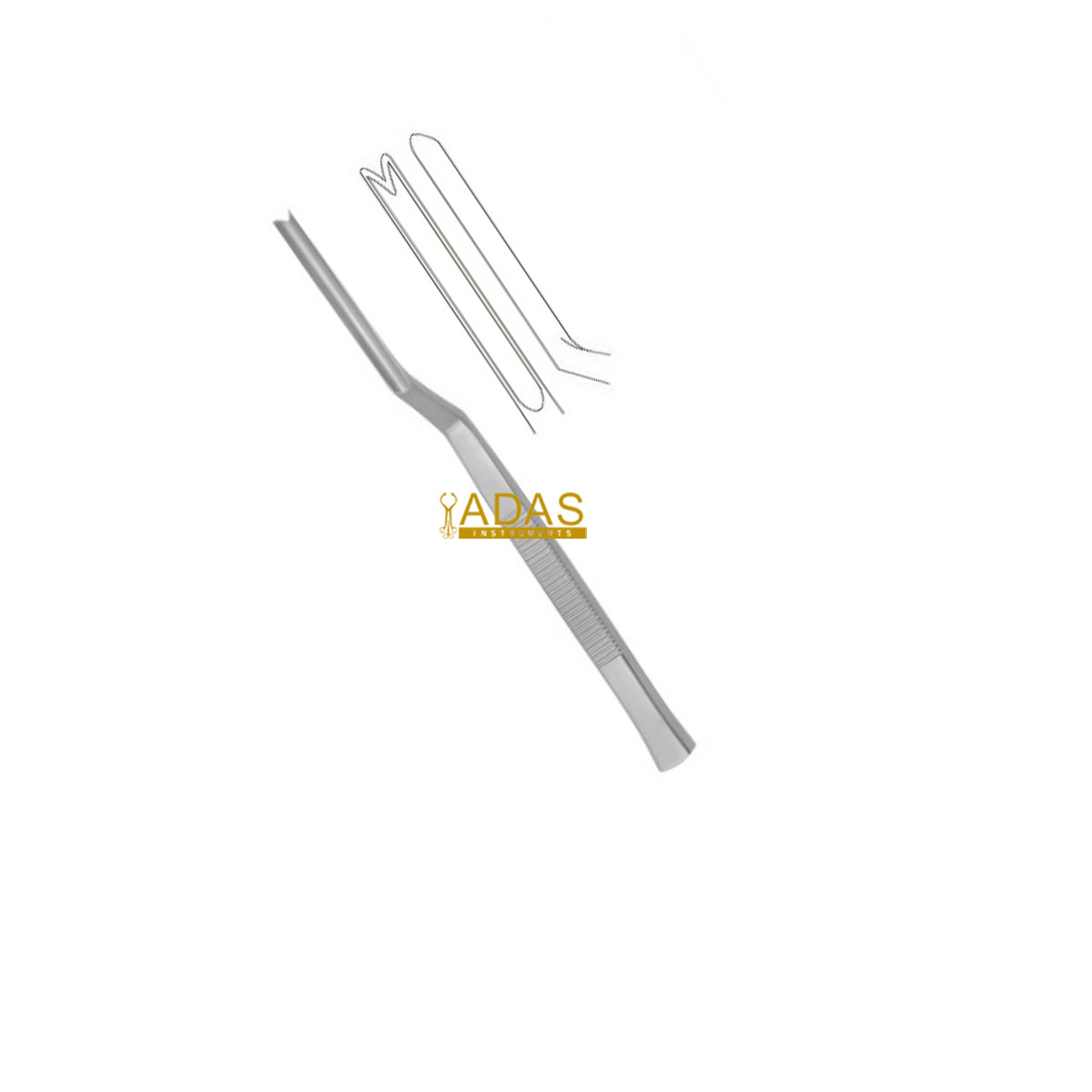
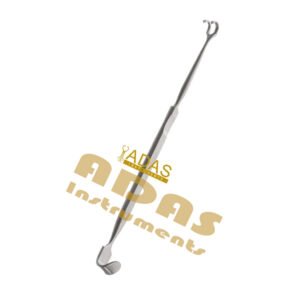
Killian-Claus nasal septum gouge is a rhinology instrument used in septoplasty, rhinoplasty and submucous resection to carve and scoop bone away from the nasal septum, taking down maxillary crest deviations and septal spurs without tearing the mucosa lying over them. The shaft is bayonet shaped, which drops the handle out of the line of sight so the surgeon looks into the deep nasal field rather than over the top of their own hand. The 5mm V-shape edge sits down onto a bony ridge and centers itself there, so the blade stays where it was placed when the mallet taps it.
Key Features
- 5mm V-shape cutting edge, notched so it self centers on a ridge
- Bayonet shaped shaft, handle offset clear of the sightline
- 160mm overall length
- Flat handle end built to take controlled mallet taps
- Square profile grip with horizontal ridges, stops the instrument rotating in the hand
- High quality medical grade stainless steel, fully autoclavable
- Three year replacement warranty against manufacturing defects
- Item code AM-81.06
Available on backorder

What the Killian-Claus nasal septum gouge is
The Killian-Claus nasal septum gouge is the instrument a surgeon reaches for when the bony part of the nasal septum has to come down rather than be pushed aside. It carves and scoops bone, and it is normally bought for taking a deviation off the maxillary crest or removing a septal spur, in septoplasty, rhinoplasty and submucous resection.
It is a gouge and not a chisel, and the difference matters at the bench as much as in the nose. A chisel splits along a line. A gouge has a notch, so it takes a controlled bite and carries the bone away inside the blade instead of driving it forward into whatever is behind. That is why a Killian-Claus nasal septum gouge can work against a ridge with mucosa still lying over the far side of it.
Surgeons search for it in more than one way and all of them mean this tool: killian nasal gouge is the commonest, and killian claus septum gouge is the form catalogues print. Adas Instruments makes it as a single piece, 5mm V shape edge on a 160mm bayonet shaft.
Key design features of the V shape septum gouge
The 5mm V shape cutting edge
The edge is notched into a V rather than ground flat. Set the V down across a bony ridge and it finds the top of that ridge on its own and holds there, which is what stops the blade skating sideways off the crest when the mallet lands. On a flat edge the surgeon has to hold the line by hand. On this one the geometry holds it.
A bayonet shaft that gets the hand out of the way
The shaft steps sideways twice and comes back parallel, so the handle finishes offset from the blade. Looking down the nose the surgeon sees the blade and the septum, not the back of their own fist. In a cavity a few millimeters wide and centimeters deep, that is the difference between working by feel and working by sight.
A handle end made to be hit
The far end of the handle is flat and square so a mallet has a true face to strike. The grip carries horizontal ridges on a square section, which stops the hand sliding forward and stops the instrument rolling between taps, so the V stays pointed where it was put.
One piece, nothing to come loose
There is no joint, no screw and no moving part anywhere on it. An instrument struck with a mallet many times a year lasts longer with nothing in it to work loose, and there is no box lock or hinge for tissue and cleaning solution to sit in.
Which Killian-Claus nasal septum gouge to order
One blade width and one length, deliberately: the 5mm V spans a crest deviation without overhanging the floor of the nose, and 160mm is the length that reaches the posterior septum from outside the nostril with the handle still clear of the face.
| Feature | This instrument |
|---|---|
| Blade width | 5mm |
| Edge shape | V shape, notched, self centering on a ridge |
| Overall length | 160mm |
| Shaft | Bayonet, handle offset clear of the sightline |
| Handle | Square section with horizontal ridges, flat mallet face at the end |
| Supplied as | Single instrument, item code AM-81.06 |
If a narrower bite is wanted for a thin spur, the plain Killian pattern with a concave edge is the one to look at rather than a narrower V, because the V only earns its keep on a ridge it can straddle.
Where the Killian-Claus nasal septum gouge is used
Every row below is a procedure this instrument is bought for. It is a nasal and septal instrument, and it is worth saying plainly that it is not a dental chisel and not a workshop gouge, because both of those share the words.
| Procedure | What the gouge does there |
|---|---|
| Septoplasty | Takes down a deviated maxillary crest and removes septal spurs |
| Submucous resection of the septum | Removes the bony segment once the mucoperiosteum is lifted |
| Rhinoplasty, septal work | Trims the bony septum back to plane before the dorsum is set |
| Septal graft harvest | Frees a bony strip at its base so it can be lifted out |
| Revision nasal surgery | Reduces a residual ridge left by earlier surgery |
In all of these the gouge is driven by short mallet taps rather than pushed by hand, after a Freer elevator has lifted the mucoperiosteum clear of the bone.
What it cuts, and what it has to leave alone
A septum gouge earns its place by what it does not touch. The point of a V edge and a bayonet shaft is that bone comes away while the lining over it stays whole, because a tear in the mucosa on both sides of the septum in the same place is what causes a perforation later.
| Tissue | What happens to it |
|---|---|
| Bony septum, maxillary crest | Carved and removed. This is the target |
| Septal cartilage at the junction | Scored and divided where it meets the bone |
| Mucoperiosteum over the target | Lifted clear first with an elevator, then protected by the far wall of the notch |
| Mucosa on the opposite side | Must stay whole. A tear on both sides in one place is what leads to a perforation |
| Cribriform plate above | Never a target. The gouge is driven along the crest, not upward |
That last row is the reason a gouge is preferred to a rongeur on the crest. A rongeur bites through whatever is between its jaws. A gouge only removes what is in front of its edge.
How it compares with the rest of the septum family
Five septum instruments sit beside each other here and the two Killians are the pair most often confused. The honest answer: the Claus is the notched version of the Killian, not a different instrument.
| Instrument | Edge | Where it is the right choice |
|---|---|---|
| Killian-Claus nasal septum gouge | 5mm V notch | Taking a bony ridge down without sliding off it |
| Killian septum gouge | 5mm concave trough | Lifting a strip of bone or cartilage out whole for a graft |
| Freer septum gouge | Concave, 4mm or 6mm | Shaving soft cancellous bone and lifting membrane off the base |
| Freer septum chisel | Flat, 4mm, single bevel | Cutting a clean line through bone or cartilage |
| Ballenger Hajek septum chisel | Flat, mallet driven | Dividing tough septal cartilage and thin bone |
Buying one instrument for both jobs, the Claus is the more forgiving of the two because the notch does some of the aiming. Building a set, both go in, because the plain concave edge is better for lifting a graft out in one piece.
Killian-Claus nasal septum gouge materials and finish
The gouge is made from high quality medical grade stainless steel, hardened at the blade and left slightly softer through the shaft so the tool takes a mallet without the edge chipping or the shaft taking a permanent bend. The steel itself is made to a German specification.
The finish is a satin matt rather than a mirror polish. Inside a nasal cavity lit by a headlamp a mirror finish throws the light straight back at the surgeon, and the satin surface scatters it instead. It also shows blood and bone dust clearly, which matters when the instrument is being checked before it goes back in.
Caring for a Killian-Claus nasal septum gouge
Rinse the blade under cool running water as soon as the case is finished. Bone dust sets hard inside a V notch, so a soft nylon brush along it at the sink saves a much longer clean later.
Ultrasonic clean in a neutral pH enzymatic solution, rinse in deionized water, then dry fully before pouching. Tap water left standing on a blade is the usual cause of pitting.
Autoclave at 134 degrees Celsius. Store the gouge with the edge clear of other instruments, on a rack or in a tray with a tip guard, because the V edge is the part that decides whether the instrument still works and it is also the easiest part to blunt against another blade.
Ordering a Killian-Claus nasal septum gouge, and wholesale
It is sold as a single instrument, item code AM-81.06, with a 5mm V shape blade and a 160mm bayonet shaft. Adas Instruments grinds and finishes it in our own workshop, so a set can be ordered with matching finish and matching handle pattern across the whole septum family.
Wholesale and distributor pricing is available on quantity, and larger orders can be laser marked with a hospital or practice reference at no separate tooling charge. Tell us the quantity and the marking and we will quote both.
Item code AM-81.06. Every instrument carries a three year replacement warranty against manufacturing defects. Stock items ship from our own workshop. Backorder items take 10 to 12 working days to make. Production is controlled under an ISO 13485 quality management system.
Frequently asked questions
What is a Killian-Claus nasal septum gouge used for
It is used to carve and remove bone from the nasal septum, most often a deviation on the maxillary crest or a septal spur, during septoplasty, rhinoplasty and submucous resection. The V shape edge locks onto the ridge being taken down so the blade does not slide off it under the mallet.
What is the difference between a Killian and a Killian-Claus gouge
They are the same instrument with a different edge. The plain Killian has a concave edge, a smooth trough. The Killian-Claus has a V notch cut into that edge, which makes it self centering on a bony ridge. The concave Killian is better for lifting a strip of bone or cartilage out whole for a graft; the Claus is better for taking a ridge down.
Why is the shaft bayonet shaped
So the handle sits to one side of the blade instead of directly behind it. That keeps the surgeon’s hand out of the line of sight down the nostril, which is the only view they have of a septum that may be six centimeters deep.
What is the tool surgeons use to cut nasal bone
For the septum specifically it is usually one of three: a gouge, which scoops, a chisel, which splits along a line, or an osteotome, which is heavier and used on the nasal bones themselves rather than on the septum. This instrument is the first of the three.
Is the Killian-Claus septum gouge autoclavable
Yes. It is a solid one piece stainless instrument with no joints, and it is designed for repeated steam sterilization at 134 degrees Celsius. Dry it fully before pouching, because trapped moisture rather than the autoclave itself is what marks an instrument over time.
Related products and categories
Browse the full range of osteotomes, chisels and gouges, or see the wider set of rhinoplasty instruments this instrument belongs to.
| Weight | 0.09 kg |
|---|
Be the first to review “Killian-Claus Nasal Septum Gouge | V-Shape Blade | 5mm Tip Width”
Shipping & Delivery Policy
Processing Time: In-stock items are dispatched within 24-48 hours. For custom or out-of-stock items, production time is approximately 10-15 days.
Global Delivery Estimates
We partner with world-class couriers (DHL, FedEx) to ensure fast, tracked delivery.
- USA & Canada: 3-5 Business Days
- Europe & UK: 4-6 Business Days
- Rest of World: 5-7 Business Days
*We offer Air Cargo and Sea Freight options for bulk wholesale orders.
Customs & Duties
International buyers are responsible for any customs duties or taxes imposed by their country. Adas Instruments is not responsible for delays caused by customs clearance.
Lost Packages & Insurance
If your package is lost in transit, please contact us immediately. We offer full support and replacements for confirmed lost shipments. Note: You must report non-delivery within 3 weeks to be eligible for an insurance claim.
Related products
Reviews
There are no reviews yet.