
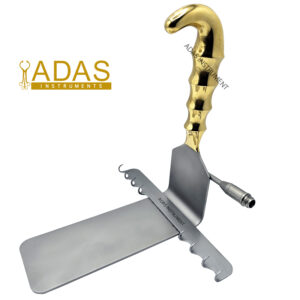
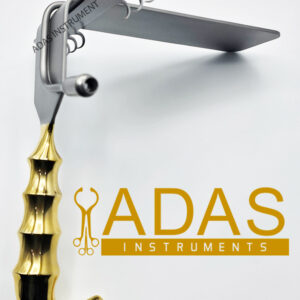
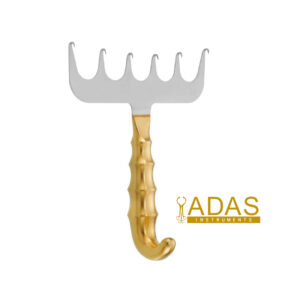
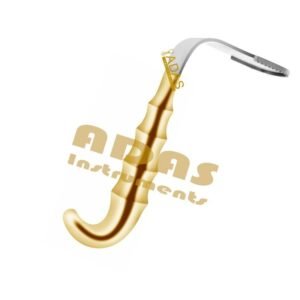
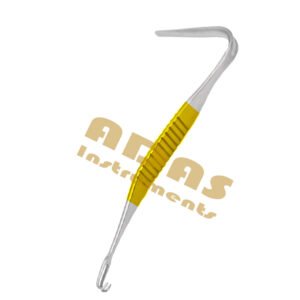
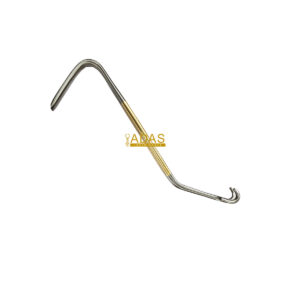
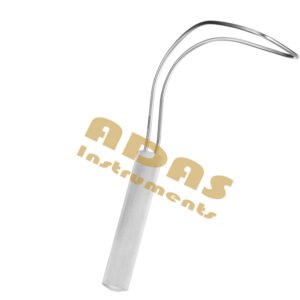
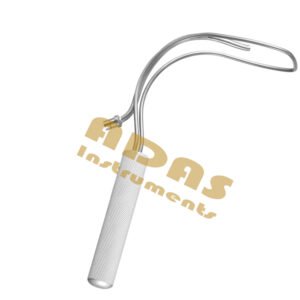
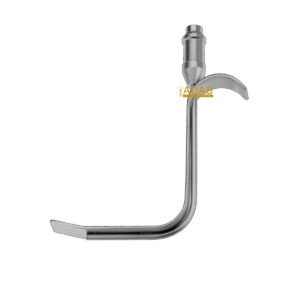
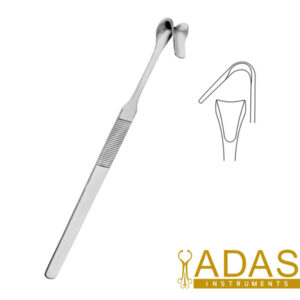
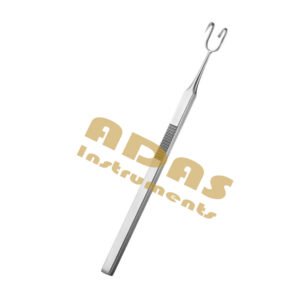
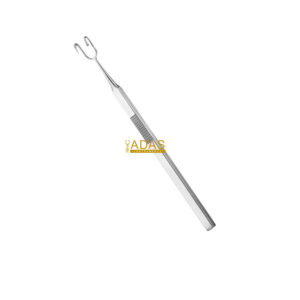
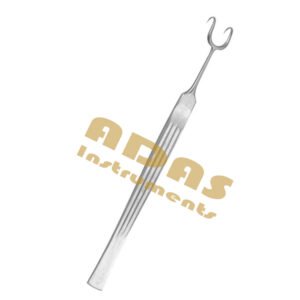
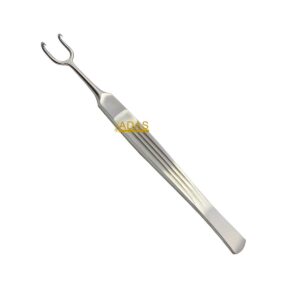
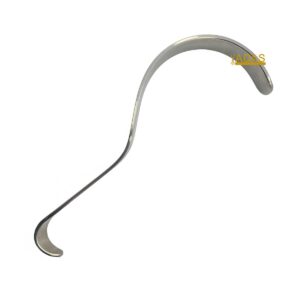
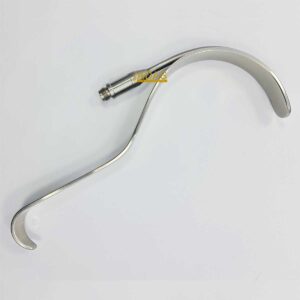
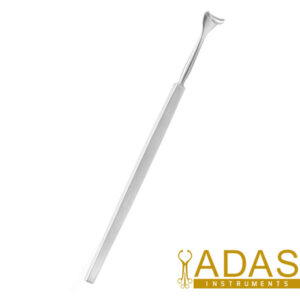
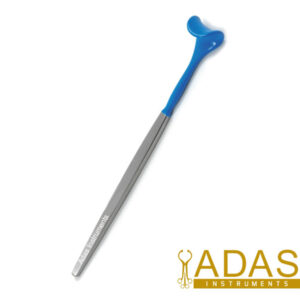
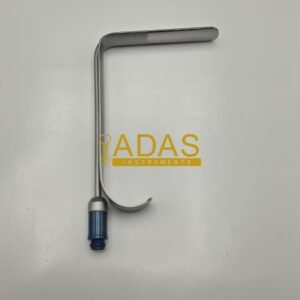
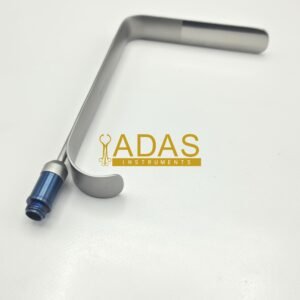
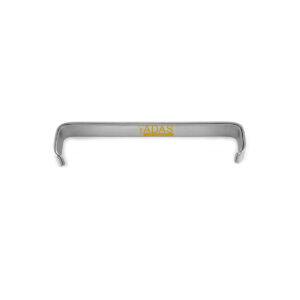
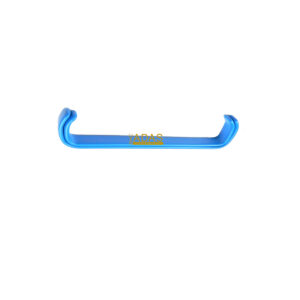
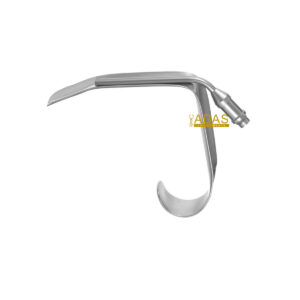
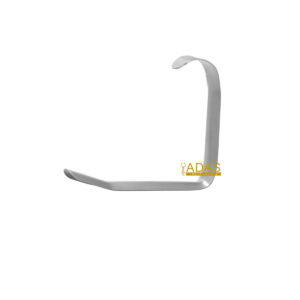
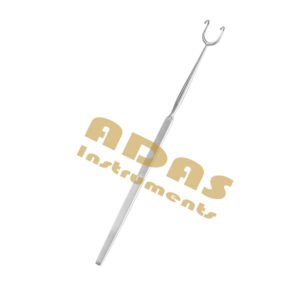
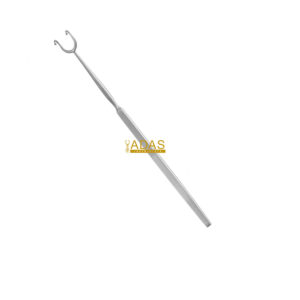
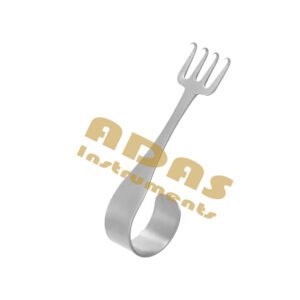
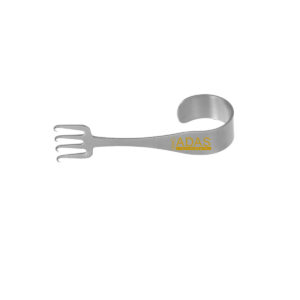

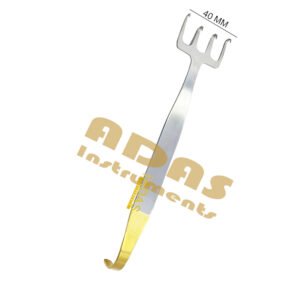
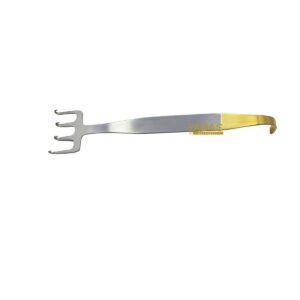
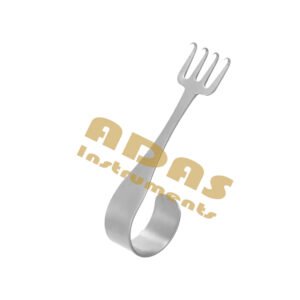
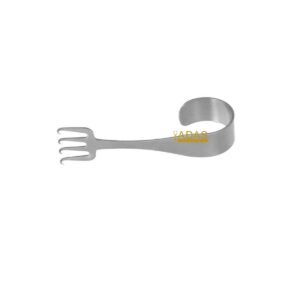


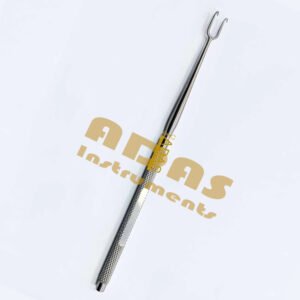
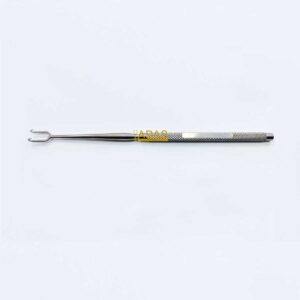

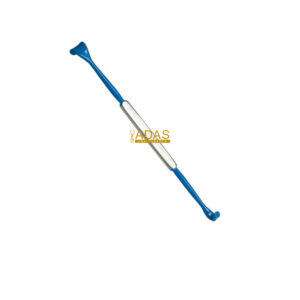

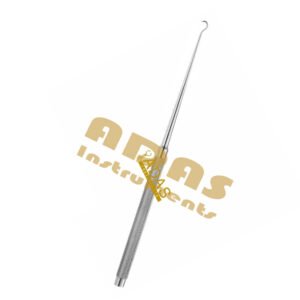
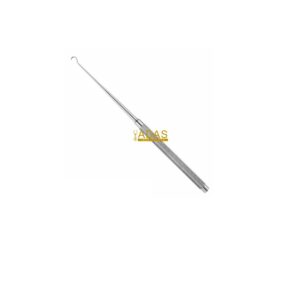
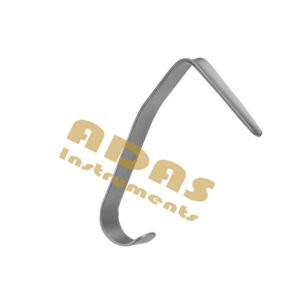
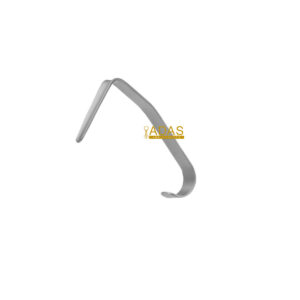
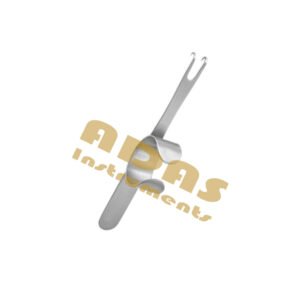
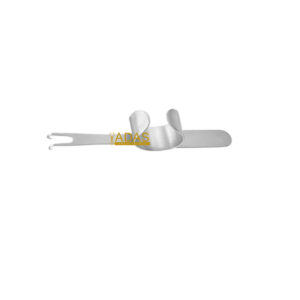
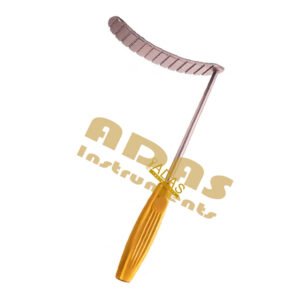
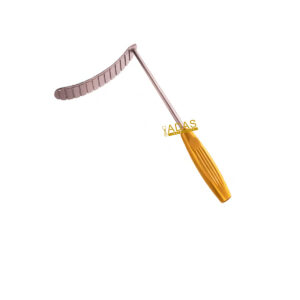
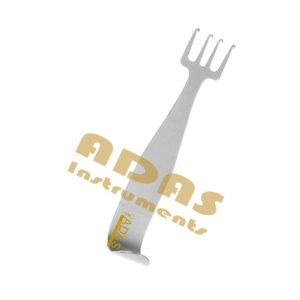
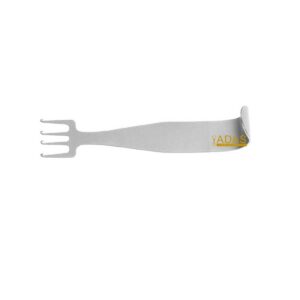

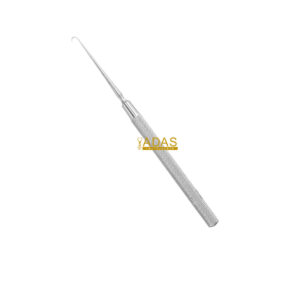
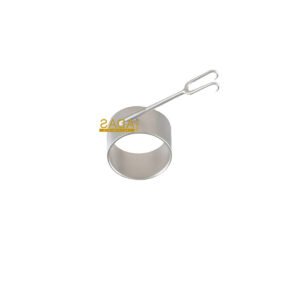
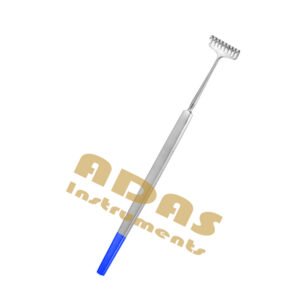
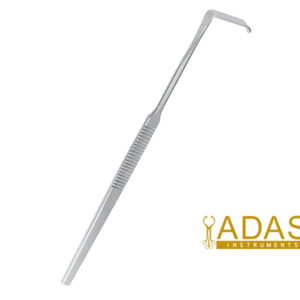
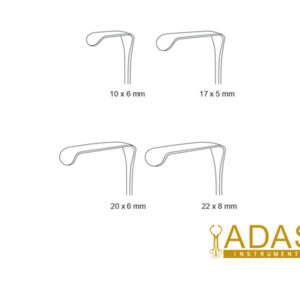
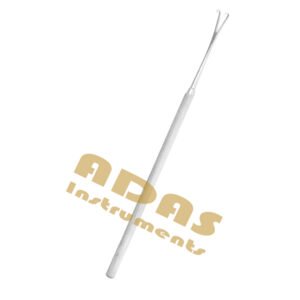
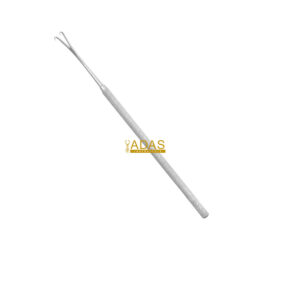
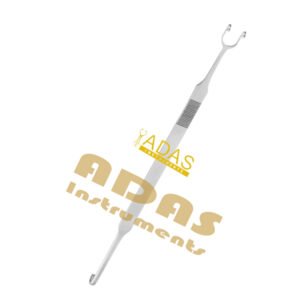
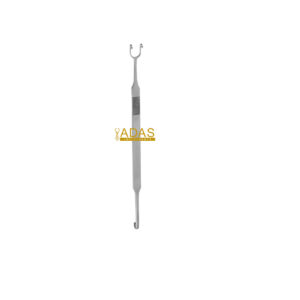

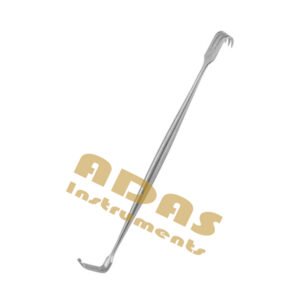
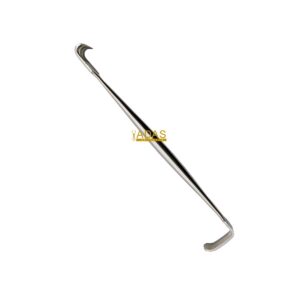
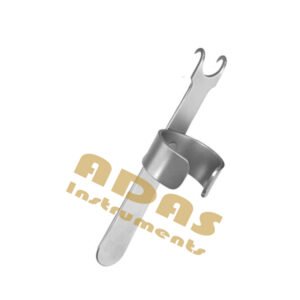
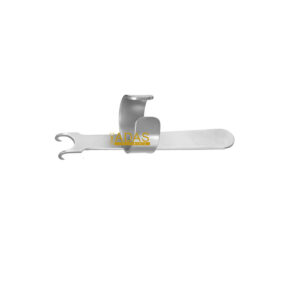
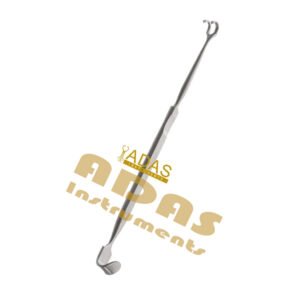
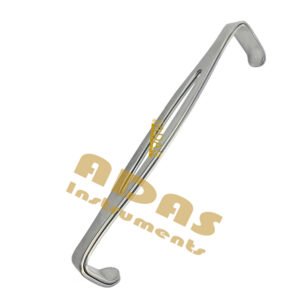
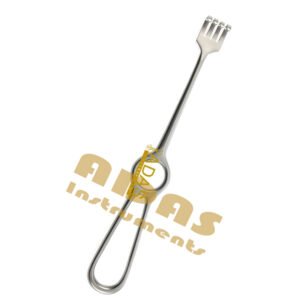


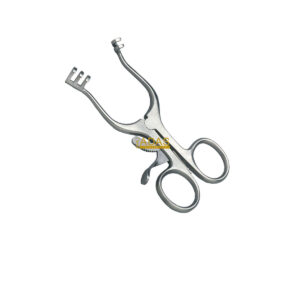
This category holds the handheld hooks and retractors Adas Instruments makes for plastic surgery, facial plastic surgery and ENT work, 49 patterns in all. A retractor holds tissue out of the line of work. It does not cut and it does not grasp, and it comes out the moment the exposure is no longer needed.
Surgical retractor types, and which one a job needs
Buyers comparing surgical retractor types are usually deciding two things: whether the instrument is held by an assistant or holds itself, and whether it ends in a blade, a hook or a rake. Those two answers narrow 49 patterns down to about three.
| Type | How it is held | What it is for | A pattern in this category |
|---|---|---|---|
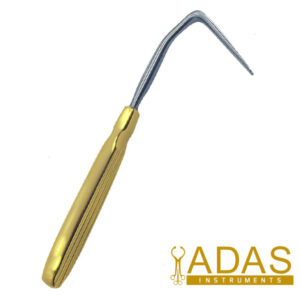
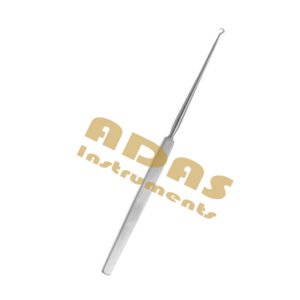
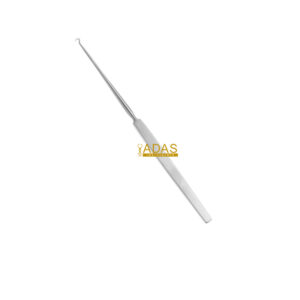
| Skin hook | Handheld, one or two prongs | Holding a skin edge on a point rather than on a blade | Gillies skin hook |
| Blade retractor | Handheld | Holding soft tissue back on a flat or contoured face | Aufricht nasal retractor |
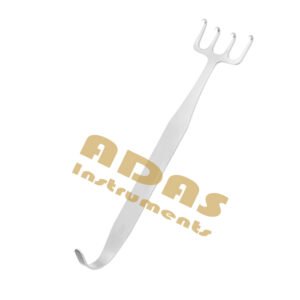
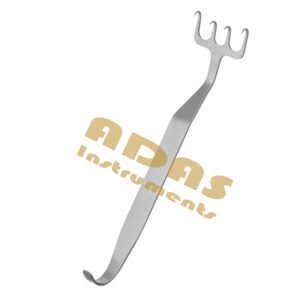
| Rake retractor | Handheld, prongs in a row | Spreading the pull across a wound edge | Freeman rake retractor |
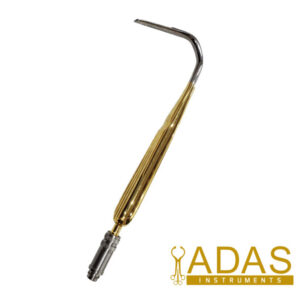
| Double ended retractor | Handheld, a working end at each end | Two jobs in one instrument, so one fewer hand in the field | Neivert nasal retractor |
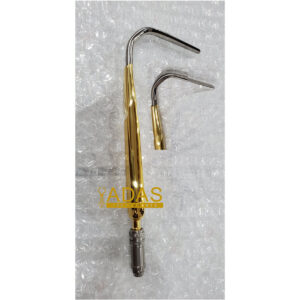
| Malleable retractor | Handheld, bent to shape | Exposure where the shape of the field is not fixed | Ribbon retractor, malleable |
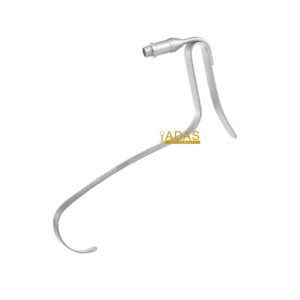
| Self retaining retractor | Locks open on its own frame | Holding exposure without an assistant | self retaining retractors |
Everything on this page is handheld apart from the last row. A handheld retractor needs a pair of hands for as long as the exposure lasts, which is the trade it makes for being small enough to work through an opening measured in millimeters.
The families in this category
The 49 patterns fall into eight groups. Most surgeons come here for one group and never look at the other seven, so the table names the group and gives a starting point in each.
| Family | What the group covers | Where to start |
|---|---|---|
| Skin hooks | Single and double prong hooks for skin edges and fine tissue | Guthrie skin hook |
| Nasal retractors | Rhinoplasty and septoplasty exposure, dorsum to nostril | Aufricht nasal retractor |
| Nasal hooks and alar retractors | The nostril rim, the ala and the columella | Cottle alar nasal retractor |
| Face lift and flap retractors | Raising and holding a flap in facial work | Freeman face lift retractor |
| Breast retractors | Exposure in breast and chest wall procedures | Marx breast retractor |
| Abdominal and body retractors | Deeper exposure in body contouring and general work | Deaver retractor |
| General surgical retractors | The patterns that turn up on almost every tray | US Army retractor |
| Specialty retractors | Lid, tracheal and other single purpose patterns | Desmarres lid retractor |
The abdominal and body group is the part of this category that has grown most recently. Alongside the deaver retractor it now carries the ribbon retractor malleable in six blade widths, the volkman retractor in one to four prongs, sharp or blunt, the yancoskie abdominoplasty retractor on a flat 150 mm head, and the saldanha abdominal retractor with its fiberoptic option. Each of those pages links back to this category, so the route works in both directions.
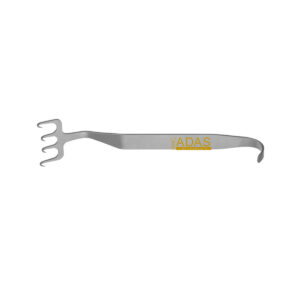
The general surgical group is the part of this category most likely to be replacing a worn set rather than choosing a pattern for the first time. It runs from the senn miller retractor, small and double ended with a rake at one end, up through the mini langenbeck retractor in four blade sizes and the farabeuf double end retractor in 12 cm and 15 cm, to the us army retractor in the Army Navy pattern and its insulated version for work with cautery in the wound. Each of those pages links back to this category.
How these instruments are made
Every pattern in this category is made to order from high quality medical grade stainless steel, satin finished so the operating light does not reflect off the working face into the eye. Blade edges are rolled rather than left square, because a retractor is meant to hold tissue and not to mark it. Every instrument carries a three year replacement warranty against manufacturing defects.
Breast retractors
Nine of the 49 patterns in this category are made for the breast, and they are the part of the range where the choice is least obvious, because a breast retractor has to solve two problems at once: hold a heavy flap without marking it, and let the surgeon see into a closed pocket reached through an opening smaller than the pocket itself.
Blade width answers the first. Breast tissue is dense and heavy, and pressure is force divided by area, so a wide blade spreads a load that a narrow one concentrates on a thin line of flap. Light and suction answer the second. The dissection is done with an electrocautery pencil inside a closed space, the plume fills that space in seconds, and a lit blade in smoke shows less than an unlit one in clear air, which is why the lighted patterns carry a suction channel beside the light rather than instead of it.
| Pattern | Blade | What it is for |
|---|---|---|
| Marx breast retractor | 125 or 140 mm x 30 mm, solid | The widest plain blade we make for the breast. Load spread across 30 mm instead of a thin line |
| Breast Engler retractor | 65 x 12 mm, narrow | An opening a 30 mm blade will not turn in. Plain, fiber optic or suction |
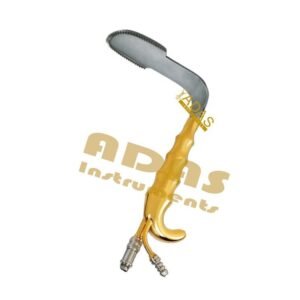
| ADAS LumaPocket breast retractor | 90, 110 or 140 mm x 27 mm | Fiber optic light and a suction channel on one blade, so the cautery smoke does not blind the light |
| Sculpo mammaplasty retractor | 25 mm x 18 cm | A channel through the blade that holds an endoscope, and a stopcock for irrigation or suction |
| Tebbetts breast retractor | Flat and angled | Smooth or toothed, built around a different dissection sequence |
| Tebbetts double end breast retractor | Two working ends | Two blade shapes on one instrument |
| C circular breast retractor | C shaped | Wraps the tissue rather than lifting it flat, holding a pocket open from inside its edge |
| Insulated C circular breast retractor | C shaped, coated | A non conductive coating, for cautery working against the blade itself |
| ADAS OmniView breast retractor | Lighted | Our other lighted breast pattern. Compare the two blade shapes against your own approach |
If you are ordering one, start with the reach your approach needs. A transaxillary or periareolar incision wants the 12 mm Engler. An inframammary approach on an open field wants the 30 mm Marx. A deep pocket where you cannot see the far wall wants the LumaPocket, and an endoscope stack wants the Sculpo.
Self retaining and specialty retractors
The last group in the category is the one that does not fit the nose, the face or the breast. Four of the five are held by hand and one holds itself, and that is the first question to settle, because a self retaining instrument is what you reach for when there is no second pair of hands in the field.
| Pattern | What holds it open | Where it is used |
|---|---|---|
| Weitlaner retractor | A ratchet on the handle, self retaining | The one an assistant does not have to hold. 2×3 and 3×4 prongs, sharp or blunt |
| Jackson vaginal retractor | Held by hand | A heavy right angled flat blade for displacing the vaginal walls |
| Tracheal retractor | Held by hand | Sharp or blunt prongs, for the small field over the trachea |
| Desmarres lid retractor | Held by hand | A rolled blade in 10, 12 and 14 mm for everting an eyelid |
| Kawamoto double ended insulated retractor | Held by hand, both ends | Three blade pairs on a coated instrument, for cautery close to the blade |
For the wider self retaining family, including the frame and ring patterns, see self retaining retractors.
Related categories
These categories link back to this one, so the pair works in both directions.
- Self retaining retractors, for the patterns that lock open on a ratchet and free the assistant hand.
- Hemostats and grasping forceps, for the clamping and holding instruments that work alongside these.
- Plastic surgery instruments, the parent category this one sits under.
Frequently asked questions
What are the different types of surgical retractors?
By how they are held, handheld or self retaining. By what they end in, a blade, a hook, a rake or a ring. And by the field they were cut for, which is why a nasal retractor is short and narrow and an abdominal retractor is neither. The table above sets out the six types carried here.
What is the difference between a hook and a retractor?
Where the load sits. A hook holds on one or two points and is used on a skin edge or a small piece of tissue. A retractor holds on a blade and spreads the load across a face, which is what lets it hold a body of tissue without marking it. Most sets carry both, because they are used at different moments.
Which retractor should I order for rhinoplasty?
An Aufricht for lifting the skin envelope off the dorsum in an open approach, a Cottle alar for localized work at the nostril, and a Neivert where a blade also has to be steadied on a line. Sets that do revision work usually carry the fiber optic Aufricht as well, because the field gets darker as it gets deeper.
Adas Instruments supplies hospitals, surgical centers and distributors across the United States, Latin America, Europe and Asia. Bulk and wholesale pricing is available, and instruments held on backorder ship in 10 to 12 working days.