ADAS OmniView Breast Retractor | Fiber Optic, Suction and 4 or 10 mm Scope Channel
Price range: $ 275.00 through $ 325.00
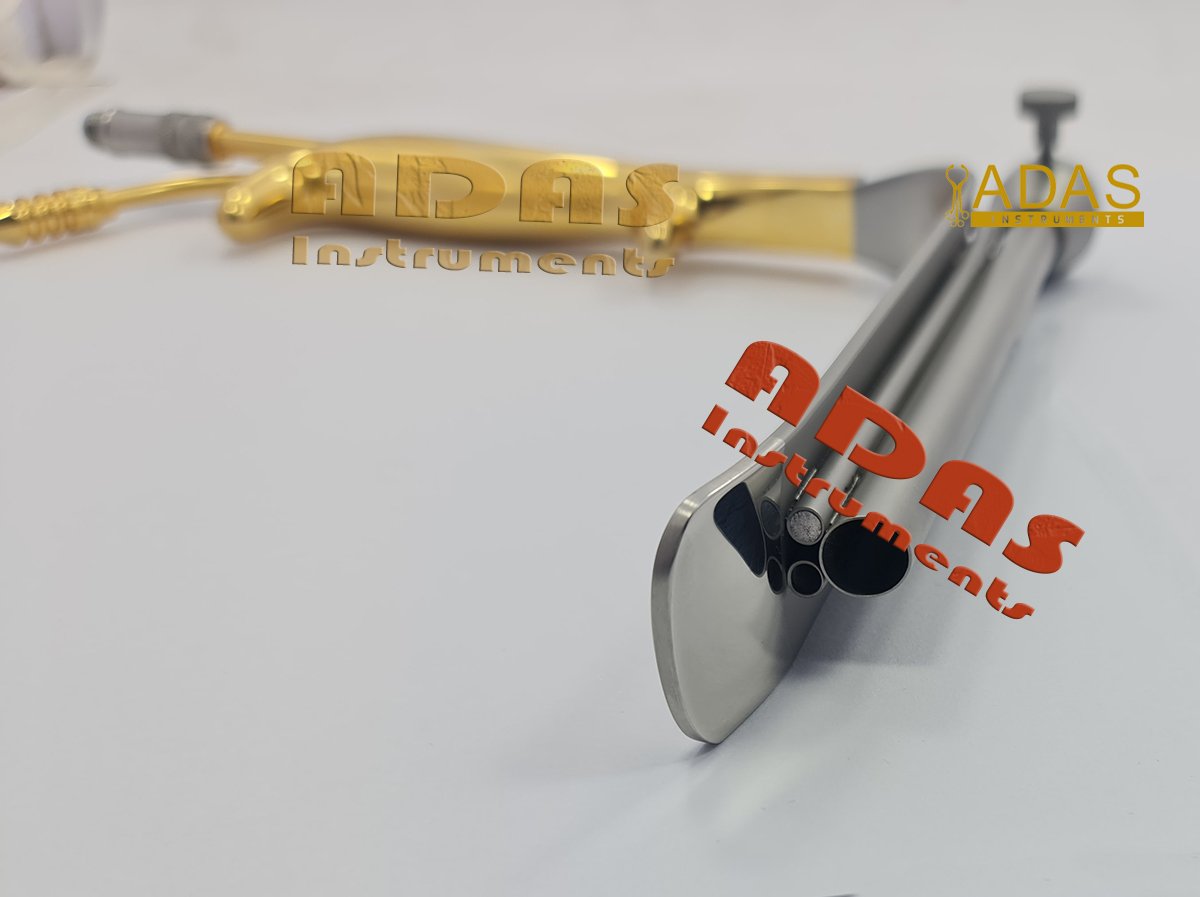
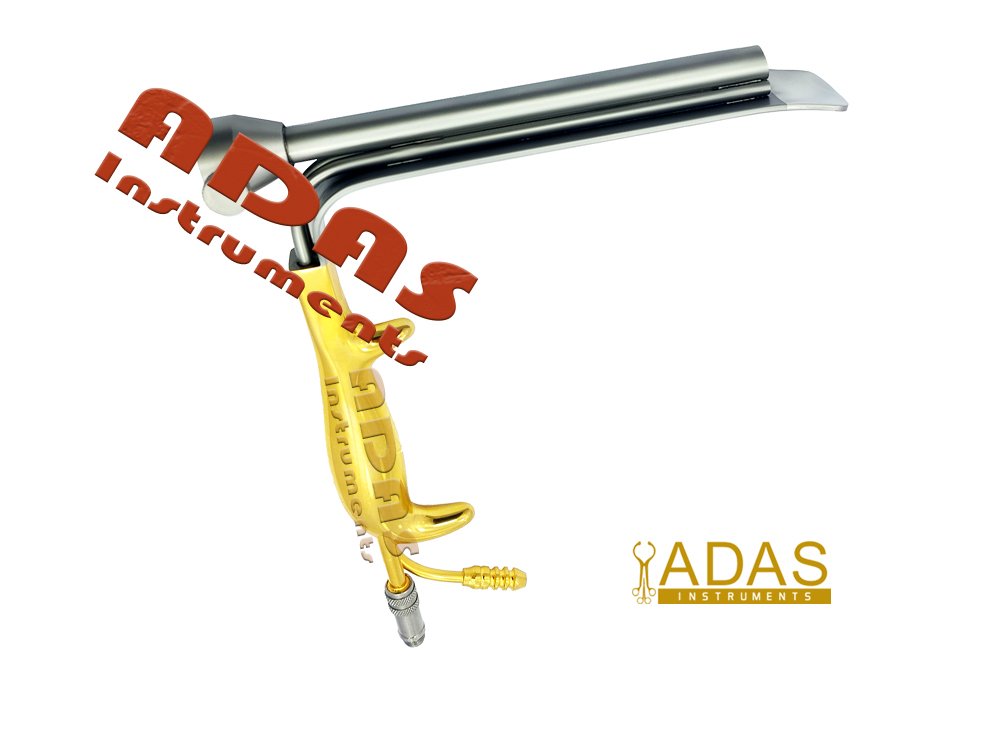
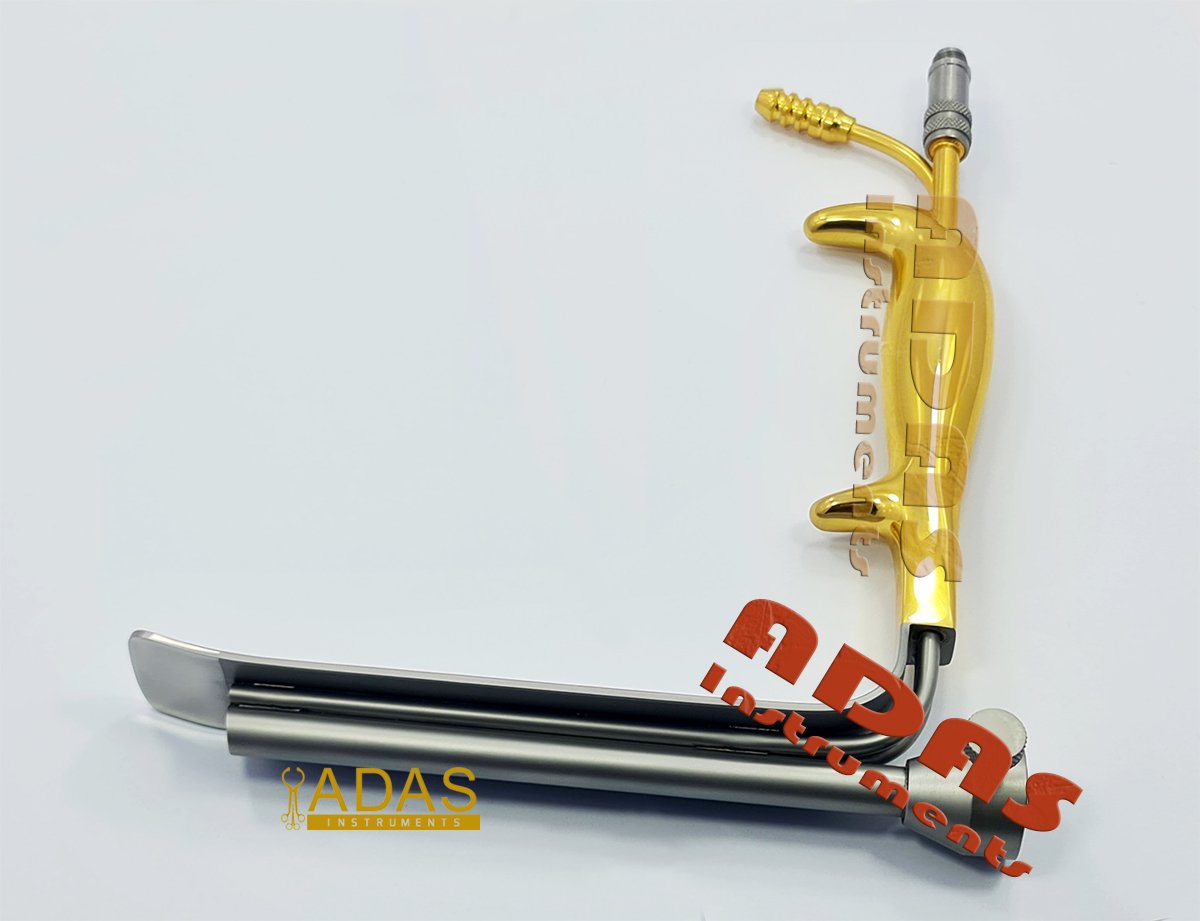
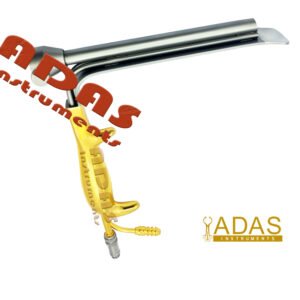
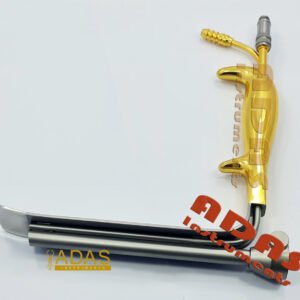
The ADAS OmniView breast retractor carries three things on one blade: a fiber optic light, a suction channel, and a channel that seats an endoscope at 4 mm or 10 mm. That last one is what makes it different from everything else in this category, because a scope held in a channel under the blade keeps looking where the blade is looking, instead of drifting every time the retractor moves. Three blade sizes, 25, 30 and 35 mm wide on a 17 cm blade.
Key Features
- Endoscope channel in the blade, 4 mm or 10 mm
- Fiber optic light guide and suction channel on the same blade
- Three blade sizes: 25, 30 and 35 mm wide, all on 17 cm
- Scope, light and smoke clearance in one instrument and one hand
- Cut from high quality medical grade stainless steel and fully autoclavable
- Three year replacement warranty against manufacturing defects
- Item code AP-100.100

What an ADAS OmniView breast retractor is
Put a scope and a retractor into a breast pocket as two separate instruments and they spend the whole case disagreeing. The retractor moves, the view moves with it but not in the same direction, and somebody has to keep re-aiming a camera at a space that keeps changing shape.
The OmniView answers that by giving the blade a channel for the scope. The endoscope seats underneath the blade and travels with it, so the view stays registered on the thing the blade is holding open. Google’s own account of endoscopic plastic retractors describes the same design and the same reason: a dedicated built in channel seats and stabilizes the scope so the view stays perfectly registered as the retractor moves.
Ours takes a 4 mm or a 10 mm scope, and it carries a fiber optic light and a suction channel as well. The suction is not an extra on an instrument like this, it is a necessity: electrocautery inside a closed pocket makes smoke that has nowhere to go, and a suction channel on the blade clears it without a second instrument in the wound, and in a closed optical pocket the first thing smoke does is settle on the scope lens. Clearing it with the retractor means the scope does not have to come out and go back in.
It is listed as a fiber optic breast retractor and as a breast retractor with light source, and in the plural alongside its cousins as one of the endoscopic retractors. The phrase that describes it exactly, and the one Google suggests first on its own seed, is breast retractor endoscope channel: that channel is the thing no other instrument in this category has.
The ADAS OmniView breast retractor is our own design and our own name. That is worth saying plainly rather than implying a pedigree it does not have: this is not a published eponym like the Tebbetts or the Ferreira, it is an instrument we make, and the three blade widths exist because we were asked for them.
Key design features
The endoscope channel
A channel in the blade seats the scope at 4 mm or 10 mm and holds it there. The value is not that it carries the scope, it is that the scope and the blade move as one thing, so the picture does not swing every time the retraction changes. It is the only instrument in this category with a scope channel on it.
Light and suction as well
A fiber optic guide lights the pocket from the working end and a separate suction channel clears the plume. On a scope instrument the suction matters twice over, because smoke that settles on a lens means withdrawing the scope, cleaning it and starting the view again.
Three blade widths on one length
25 mm, 30 mm and 35 mm, all on a 17 cm blade. Length is held constant and width is the variable, because on a scope retractor the blade width sets how much of the pocket roof is held up and therefore how much of it the camera can see at once.
One hand, three jobs
Scope, light and smoke clearance on one instrument means one hand doing what three used to. In a transaxillary or endoscopic approach, where the opening is small and the assistants are already crowded around it, that is the whole argument for the instrument.
Which blade width and which scope channel to order
Two decisions. The channel follows whatever scope the theater already runs.
| Choice | Options | How to decide |
|---|---|---|
| Blade width | 25 mm x 17 cm | A narrower pocket, or a narrower field of view |
| Blade width | 30 mm x 17 cm | The middle choice and the common one |
| Blade width | 35 mm x 17 cm | The widest view, where the pocket allows it |
| Scope channel | 4 mm or 10 mm | Match it to the endoscope your theater already owns |
Where it is used
This is an endoscopic instrument. On an open case most of what it carries is wasted.
| Procedure | Why the scope channel matters | Note |
|---|---|---|
| Transaxillary breast augmentation | The pocket is reached and inspected through one small opening | The main use |
| Endoscopic breast surgery | The whole case is run off the picture | Match the channel to your scope |
| Implant exchange with inspection | The pocket has to be looked at as well as held | Order the wider blade |
| Open augmentation | Not needed. The light and suction still earn their place | A simpler lit retractor is the cheaper answer |
What it holds back, and what it must not do
Three channels in one blade is three things that can be blocked, and one of them holds somebody else’s expensive equipment.
| The task | What this retractor does | What it must not do |
|---|---|---|
| Holding the scope | Seats a 4 mm or 10 mm scope and keeps the view registered | It is not a scope holder on its own. It does not lock the scope and it should not be used to lever one |
| Clearing the lens | Suction takes plume before it settles | It is not a lens cleaner and it will not clear a smear |
| Lighting | Carries light from a source on the field | It is not a light source and has no battery |
| Working near cautery | Nothing. This is bare steel | It is NOT insulated. If the pencil works against the blade, use an insulated retractor instead |
How it compares with the rest of the family
Only two instruments in this category are built around a scope, and they are built around it differently.
| Instrument | Scope channel | Light | Suction | Blade |
|---|---|---|---|---|
| ADAS OmniView, this page | Yes, 4 or 10 mm | Yes | Yes | 25, 30, 35 mm on 17 cm |
| Emory endoscopic plastic retractor | Yes, size not published by us | No | No | 20 and 25 mm, 12 and 15 cm |
| Tebbetts breast retractor | No | Yes | Yes | Four sizes, toothed tip |
| Ferreira fiber optic and suction | No | Yes | Yes | Four sizes, blunt tip |
Materials and finish
Every ADAS OmniView breast retractor we make is cut from high quality medical grade stainless steel. The steel itself is made to a German specification. We do not publish a grade number. The number on a certificate tells a surgeon nothing about whether three separate channels in one blade still run clear after two hundred autoclave cycles, and the answer to that is in the making rather than in the alloy.
All three channels are formed into the blade rather than added to the outside of it. That matters more here than on a two channel instrument: a tube clamped onto the outside of a blade that is already carrying a scope would make the whole assembly too thick for the opening it is meant to go through.
There is no sharp external edge anywhere along the outline, and that includes the mouth of the scope channel, which is the one opening on this instrument that a scope is pushed into and pulled out of repeatedly.
Caring for it
Flush all three channels, and flush the suction one first and immediately, before anything in it dries. The scope channel needs flushing too even though nothing was suctioned through it: blood gets in there past the scope and dries into a film that makes the next scope stiff to seat.
Dry the light guide with air before the instrument goes into the autoclave. Then autoclave with the rest of the tray and store it flat, with nothing in the scope channel.
Ordering and wholesale
The ADAS OmniView breast retractor is made by Adas Instruments in our own workshop and sold direct, which is why the price sits where it does against the catalog houses. Order one for a single tray, or in quantity for a hospital list or a distributor line. We do OEM work under your own brand and your own item numbers. Send us a sample and we will hold a run to your pattern rather than ours. Stock items ship from our own workshop. Backorder items take 10 to 12 working days to make. Every instrument carries a three year replacement warranty against manufacturing defects. Production is controlled under an ISO 13485 quality management system.
Frequently asked questions
What is the endoscope channel on the OmniView retractor for?
It seats the scope under the blade so the two move together. The view stays registered on what the blade is holding instead of swinging every time the retraction changes, which is the thing that makes endoscopic pocket work slow.
What size scope does it take?
4 mm or 10 mm, and the channel is specified when you order. Match it to the endoscope your theater already owns rather than the other way round.
What blade sizes does the OmniView come in?
Three widths, 25 mm, 30 mm and 35 mm, all on a 17 cm blade. Width is the variable because on a scope retractor the width sets how much of the pocket the camera sees at once.
Does it have a light and suction as well?
Yes, both, on the same blade as the scope channel. The suction matters twice over on a scope instrument, because smoke that settles on a lens means taking the scope out and starting the view again.
Is the OmniView an eponym like the Tebbetts or the Ferreira?
No. It is our own design and our own name, not a published pattern named after a surgeon. We say so rather than letting the name imply a pedigree it does not have.
Related products and categories
The other scope instrument in this category is the Emory endoscopic plastic retractor, which has a channel and no plumbing. For a lit and plumbed blade with no scope channel, the Ferreira breast augmentation retractor or the Ferreira retractor with a fiber optic port.
The rest of this family sits under breast dissectors and spreaders, and every lit instrument we make is under fiber optic instruments.
| Weight | 0.15 kg |
|---|---|
| Endo-Channel Size | 4 MM, 10 MM |
| Blade Size | 25 mm X 17 cm, 30 mm X 17 cm, 35 mm X 17 cm |
Shipping & Delivery Policy
Processing Time: In-stock items are dispatched within 24-48 hours. For custom or out-of-stock items, production time is approximately 10-15 days.
Global Delivery Estimates
We partner with world-class couriers (DHL, FedEx) to ensure fast, tracked delivery.
- USA & Canada: 3-5 Business Days
- Europe & UK: 4-6 Business Days
- Rest of World: 5-7 Business Days
*We offer Air Cargo and Sea Freight options for bulk wholesale orders.
Customs & Duties
International buyers are responsible for any customs duties or taxes imposed by their country. Adas Instruments is not responsible for delays caused by customs clearance.
Lost Packages & Insurance
If your package is lost in transit, please contact us immediately. We offer full support and replacements for confirmed lost shipments. Note: You must report non-delivery within 3 weeks to be eligible for an insurance claim.
Related products