
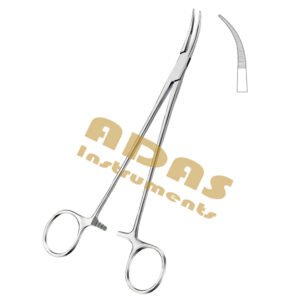
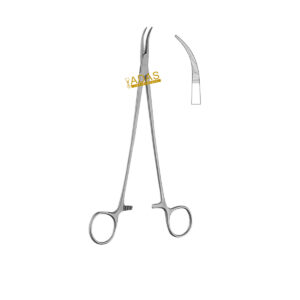
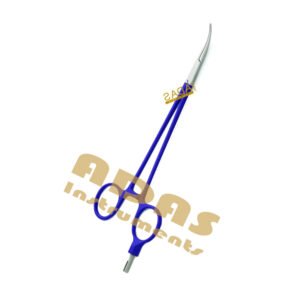
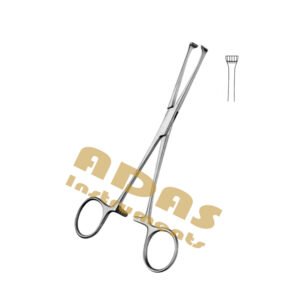
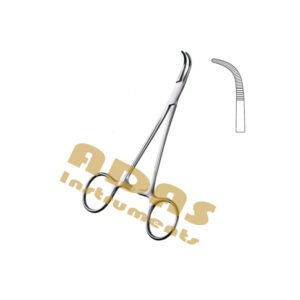
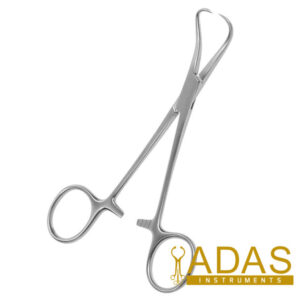
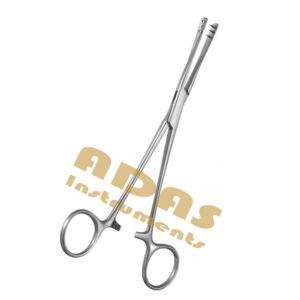
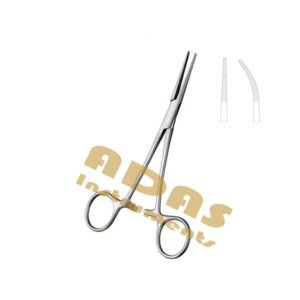
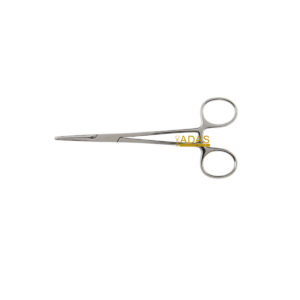
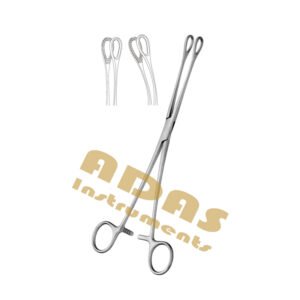
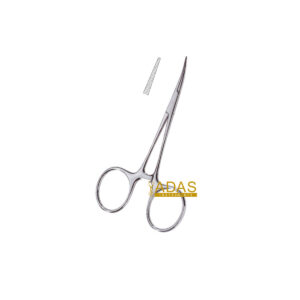
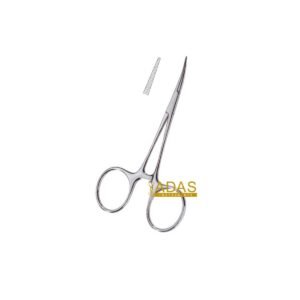
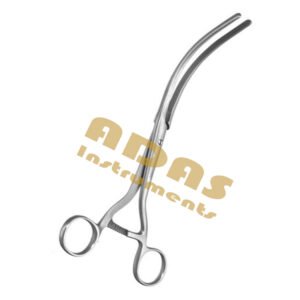
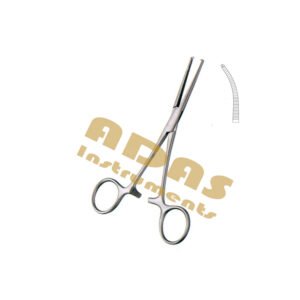
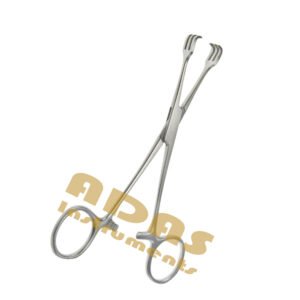
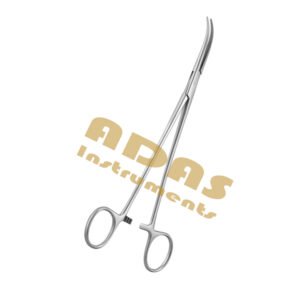
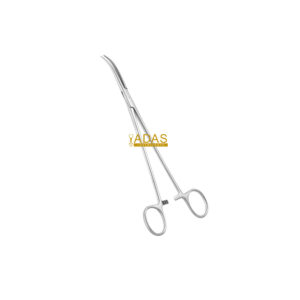
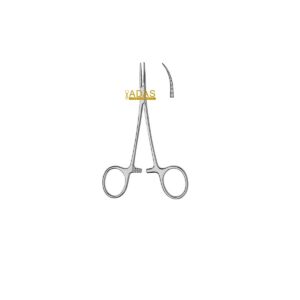
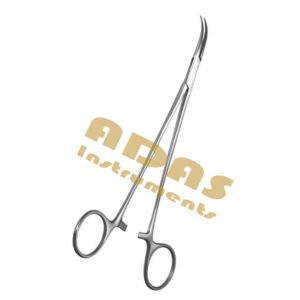
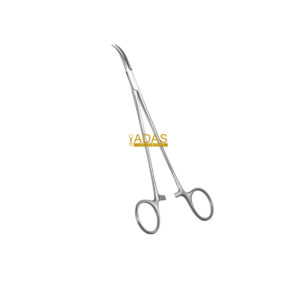
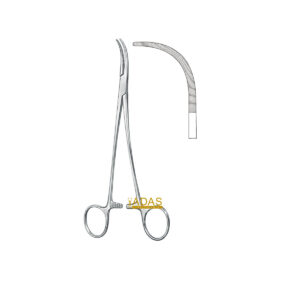
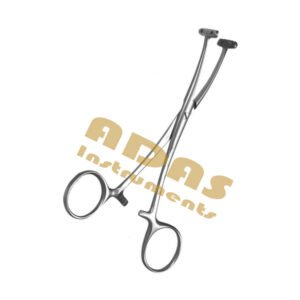
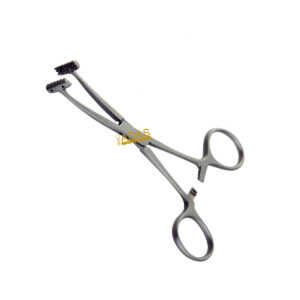
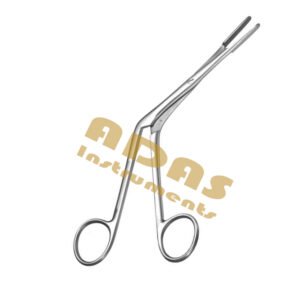
This category holds the hemostatic and grasping forceps Adas Instruments makes for plastic, reconstructive and general surgery, 19 patterns in all. A hemostat closes on a vessel and stays closed on a ratchet; a grasping forceps holds tissue while something is done to it. The two are built the same way and used for different reasons, which is why they sit together here.
Hemostatic forceps and grasping forceps, the difference
A hemostatic forceps is a clamp. It is placed on a bleeding vessel, the ratchet holds it shut, and it stays on the field until the vessel is tied or sealed. A grasping forceps holds tissue, and the jaw is cut for what it has to hold: teeth for tissue that would otherwise slip, a plain serrated jaw for tissue that must not be punctured, a ring for a swab.
The jaw is the thing to read, not the handle. Every pattern below has the same ringed handle and the same ratchet, and they behave completely differently because of what happens in the last two centimeters.
The patterns in this category
| Pattern | Jaw | What it is used for | Page |
|---|---|---|---|
| Crile artery forceps | Fully serrated, straight or curved | General hemostasis on vessels of moderate size | Crile artery forceps |
| Halsted mosquito forceps | Fine, fully serrated | The smallest vessels, where a Crile jaw is too much | Halsted mosquito forceps |
| Kocher forceps | Serrated with 1×2 teeth at the tip | Holding tough tissue that would slip from a plain jaw | Kocher clamp forceps |
| Allis tissue forceps | Short teeth along the tip | Holding tissue that is going to be removed | Allis tissue forceps |
| Adson hemostatic forceps | Fine, curved | Hemostasis in a shallow field, insulated version available | Adson hemostatic forceps |
| Mixter forceps | Right angled | Passing a tie behind a vessel | Baby Mixter artery forceps |
| Foerster sponge forceps | Ring jaw, serrated | Holding a swab or prepping skin | Foerster sponge forceps |
| Backhaus towel clamp | Two sharp curved points | Holding drapes to the field | Backhaus towel clamp |
Choosing by the job in front of you
Most of the time the choice is made in a second, by what the tissue is doing rather than by what the instrument is called.
| If the job is | Reach for | Why |
|---|---|---|
| Stopping bleeding from a small vessel | A mosquito pattern | The smallest jaw in the group, so the least tissue is caught with the vessel |
| Stopping bleeding from a larger vessel | Crile or Kelly | A longer serrated jaw holds across more of the vessel |
| Holding tissue you intend to remove | Allis | The teeth hold, and the marks they leave are on tissue that is going out |
| Holding tissue you intend to keep | A plain serrated jaw | No teeth, so nothing is punctured |
| Holding tough fascia or a fibrous edge | Kocher | The 1×2 teeth stop it slipping |
| Passing a tie behind a vessel | Mixter | The right angle is the whole instrument |
How these instruments are made
Every pattern in this category is made to order from high quality medical grade stainless steel. Jaws are matched and closed against the light before an instrument leaves the bench, because a hemostat whose jaw tips meet unevenly will let a vessel slip however good the ratchet is. Every instrument carries a three year replacement warranty against manufacturing defects.
Related categories
These categories link back to this one, so the pair works in both directions.
- Hooks and retractors, for the instruments that open the field these are used in.
- Self retaining retractors, for exposure that holds itself while both hands are on a clamp.
- Plastic surgery instruments, the parent category this one sits under.
Frequently asked questions
What is a hemostatic forceps used for?
Clamping a bleeding vessel and holding it closed until it can be tied, sealed or released. The ratchet on the handle is what holds it, so the surgeon can let go and move on. It is the reason the instrument exists and the reason every pattern here has a ratchet.
What is the difference between a Kelly and a Crile forceps?
How far the serrations run. A Crile jaw is serrated along its whole length, a Kelly jaw only part way. In practice the Crile holds more evenly across a vessel and the Kelly is often chosen where a little more tip control is wanted. Both are ratcheted and both are used for the same job.
Are grasping forceps and tissue forceps the same thing?
Not quite. Grasping forceps here means the ringed, ratcheted instruments on this page, which lock shut. Thumb or dressing forceps are the tweezer shaped ones that close under finger pressure and have no lock at all. Both hold tissue; only one of them holds it after you let go.
Adas Instruments supplies hospitals, surgical centers and distributors across the United States, Latin America, Europe and Asia. Bulk and wholesale pricing is available, and instruments held on backorder ship in 10 to 12 working days.