
Types of Hemostats and Surgical Forceps: Names, Uses and Pictures
Jul
Hemostats and surgical forceps are the most-used instruments in any operating room, and also the most confused. Surgeons, nurses and students constantly ask what the difference is between a Crile and a Kelly, or what mosquito forceps are actually for. This guide answers those questions with the names, uses and pictures of each instrument, based on the forceps we manufacture at Adas Instruments in German surgical stainless steel.
Hemostats vs Thumb Forceps: The Two Big Families
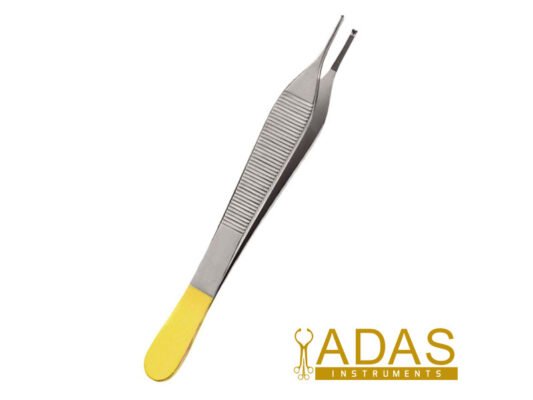
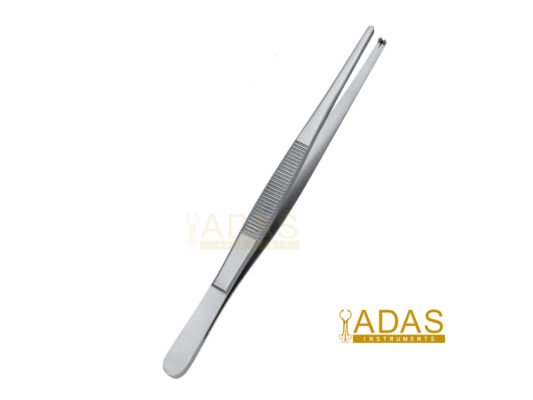
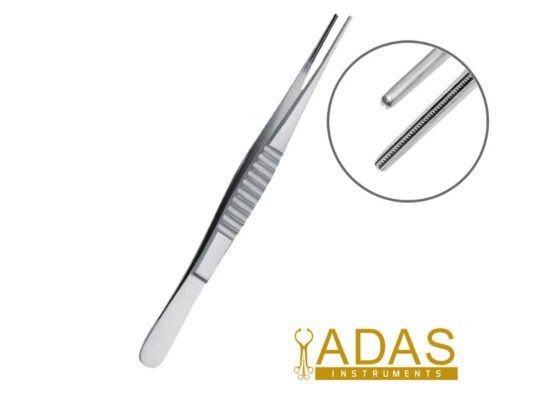
All “forceps” fall into two families. Thumb forceps (pickups), like the Adson forceps are tweezer-style instruments squeezed between thumb and finger to grasp tissue. Hemostatic forceps (hemostats) are ring-handled, ratcheted instruments that lock closed, designed to clamp blood vessels and hold them without continuous hand pressure. Everything below in this guide belongs to the hemostat/ring-handle family unless noted.
Types of Hemostats
|
|
|
One more naming note before the list: in American operating rooms hemostats go by several nicknames. You will hear them called snaps, stats, or simply Kellys for the mid-size pattern. They are all the same family of instruments below.
1. Halsted Mosquito Forceps
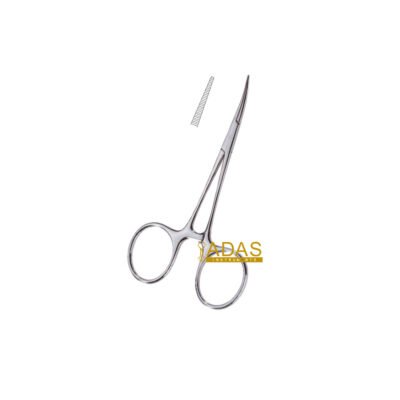
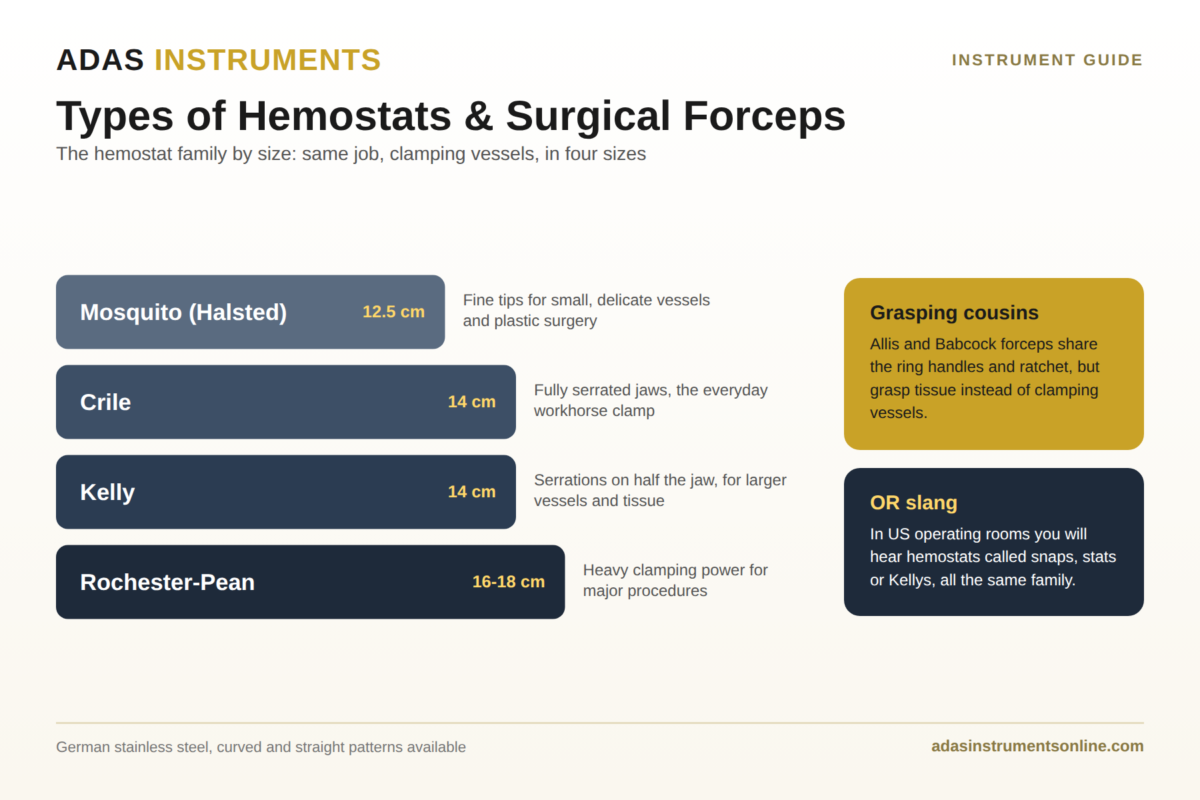
What are mosquito forceps used for? The mosquito is the smallest standard hemostat (12–12.5 cm) with fine, fully serrated jaws. It clamps small, superficial vessels and delicate bleeding points in plastic, hand, facial and pediatric surgery, and doubles as a holder for suture ends during tying. Available straight and curved.
2. Crile Forceps
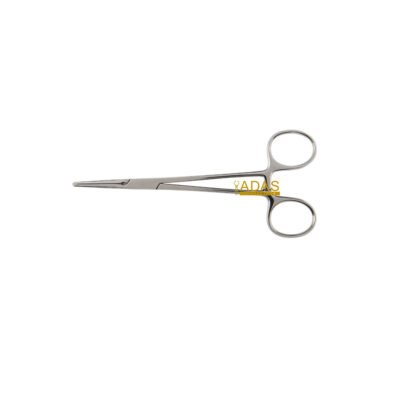
What are Crile forceps used for? The Crile (14 cm) is the general-purpose mid-size hemostat. Its jaws carry transverse serrations along the full length, giving a secure grip when clamping vessels and small tissue bundles before ligation or cautery. Every basic surgery set carries several, straight and curved.
3. Kelly Forceps
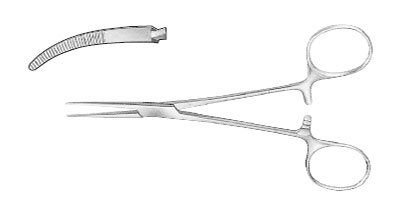
The Kelly looks almost identical to the Crile, same length, same ring handles and ratchet, but its serrations cover only the distal half of the jaws. The smooth section near the hinge lets it grasp slightly larger tissue with less crushing.
4. Rochester-Péan Forceps
 |
|
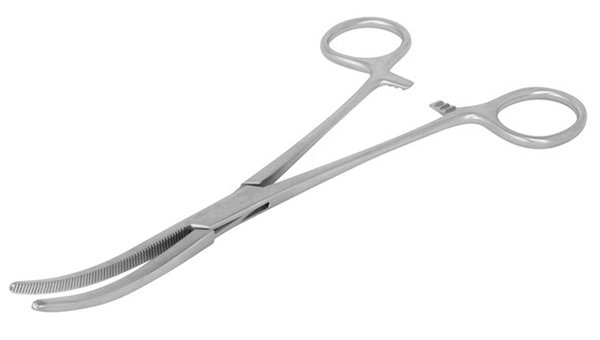
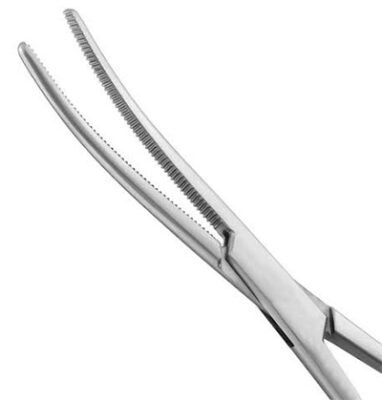
The larger workhorse (16–24 cm) with full-length serrations, used to clamp bigger vessels and thick tissue pedicles in abdominal, gynecological and general surgery.
Crile vs Kelly Forceps: What Is the Difference?
The only real difference is the serration pattern: Crile jaws are serrated along their entire length; Kelly jaws are serrated on the distal half only. In practice the two names are often used interchangeably in the OR, but on a tray-count sheet they are distinct items. If you need maximum vessel grip, choose the Crile; for hold-and-release work on bulkier tissue, the Kelly’s part-smooth jaw is slightly gentler.
Other Forceps People Ask About
Allis Tissue Forceps
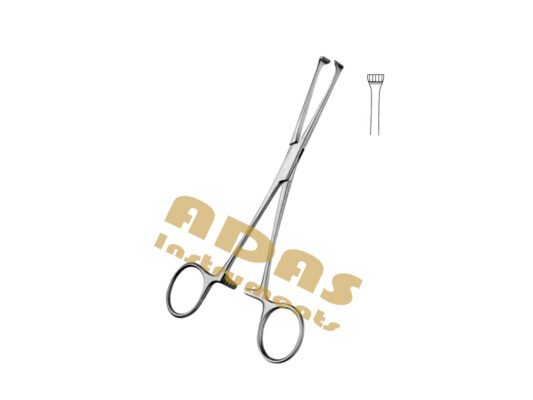
What are Allis forceps used for? The Allis is a ring-handled, ratcheted grasping forceps whose jaws end in short interlocking teeth. It holds firm tissue that will be removed with the specimen, fascia, breast tissue, tumors, because its grip is secure but traumatic. It should never be used on skin edges or delicate structures that stay in the body.
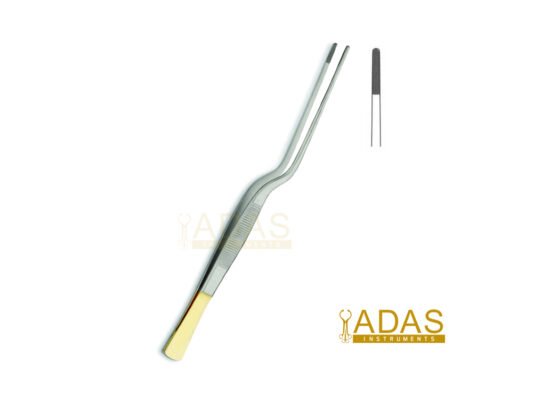
What are bayonet forceps used for? Bayonet forceps are thumb forceps with a stepped, Z-shaped shaft. The offset keeps the surgeon’s hand out of the line of sight when packing the nose, placing dressings deep in the ear canal, or working down a narrow cavity, which is why they are standard in ENT and neurosurgery trays.
Foerster Sponge Forceps
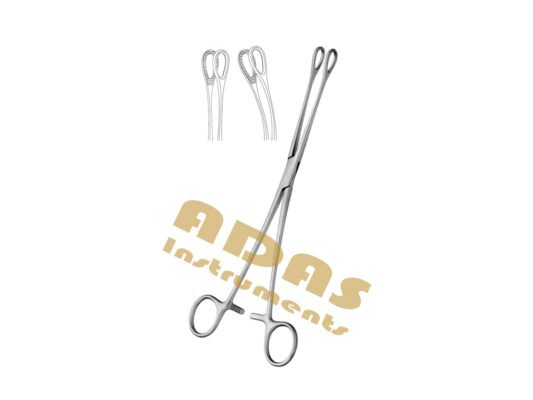
Ring-jawed forceps for holding prep sponges and atraumatic grasping are covered in detail on our Foerster sponge forceps page.
Crile-Wood Needle Holder (Not a Hemostat!)
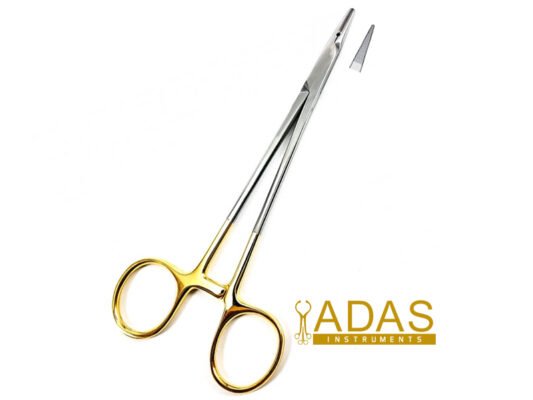
What is a Crile-Wood needle holder used for? Despite sharing the Crile name, this is a needle holder, not a hemostat: its short, cross-hatched (often tungsten-carbide) jaws are built to lock onto curved suture needles without twisting. The slim jaw suits medium and fine needles in plastic, cardiovascular and general surgery. Never clamp vessels with a needle holder, the cross-hatched jaws damage tissue and the jaws lose alignment.
Quality and Care
All Adas forceps and hemostats are forged from German surgical stainless steel, individually inspected for jaw alignment and ratchet action, and are fully autoclavable. Browse the complete range in our plastic surgery instruments section or shop, or contact us for wholesale pricing, we ship worldwide to the USA, Europe, Latin America and Asia.
Frequently Asked Questions
What are the main types of hemostats?
From smallest to largest: Halsted mosquito (12.5 cm, fine vessels), Crile (14 cm, general purpose, fully serrated), Kelly (14 cm, half-serrated), and Rochester-Péan (16 cm+, large vessels and pedicles). All come straight or curved.
Are hemostats and artery forceps the same thing?
Yes, “hemostat,” “artery forceps” and “hemostatic forceps” all describe the same ring-handled, ratcheted clamping instruments. Specific patterns (Negus, Overholt, mosquito) are variations for particular depths and angles.
Curved or straight hemostat, which should I choose?
Curved jaws follow tissue planes and improve visibility of the tip, so most surgeons prefer curved for vessel work; straight jaws grip suture ends and tubing more securely on the flat.
