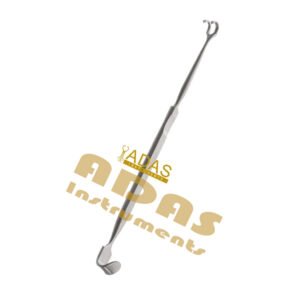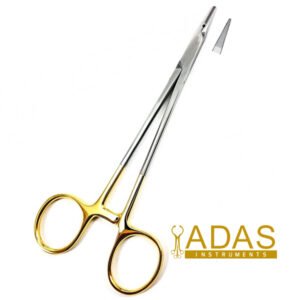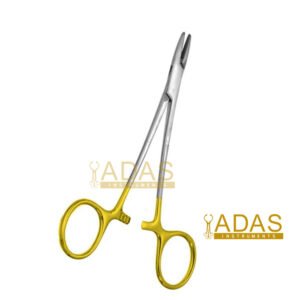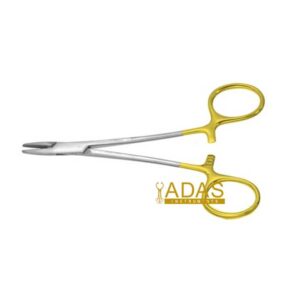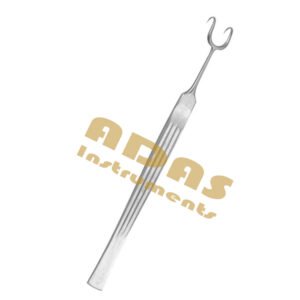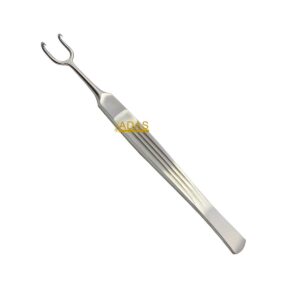
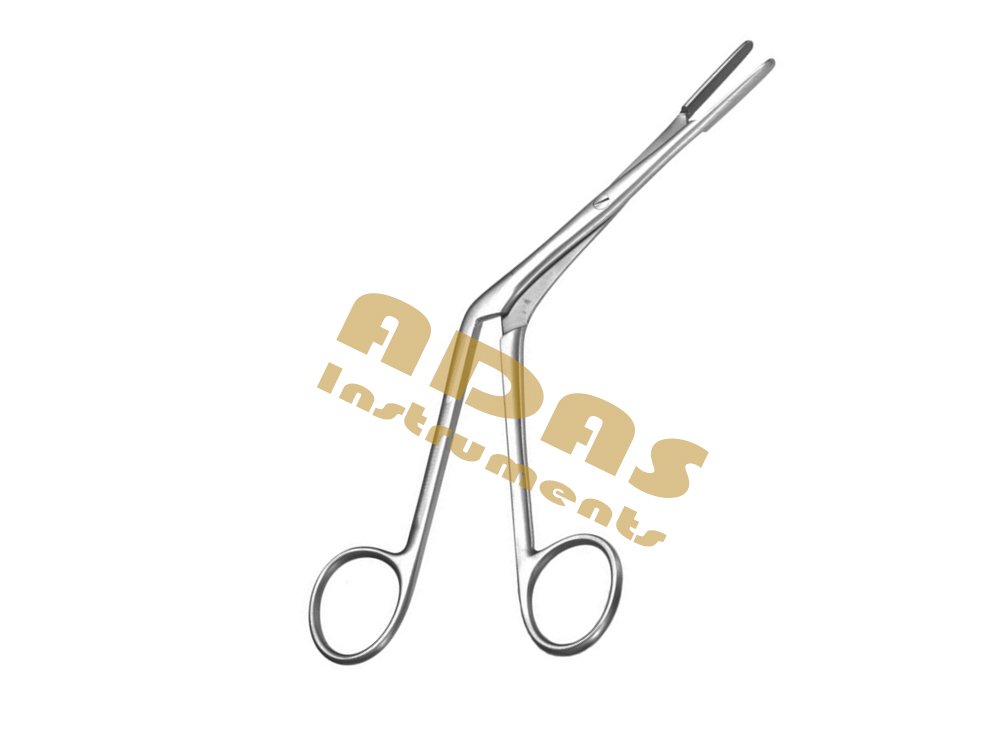
Sheen-Killian Septum Forceps, Angled Flat Serrated Jaws
$ 45.00
Killian septum forceps are nasal instruments used in septoplasty and rhinoplasty to take hold of septal cartilage, mucosal flaps and loose fragments and keep them still while the surgeon works. The Sheen pattern sets the flat jaws at an angle, so the shanks and the hand stay out of the line of sight in a space no wider than a nostril. The serrations are fine rather than toothed, which is what lets the jaws hold a mucoperichondrial flap without tearing it.
Key Features
- Flat jaws set at an angle, for the upper and the back part of the septum that a straight forceps cannot see past
- Fine serrations across the flat of the jaw, no teeth
- Ring handles, and a wide opening joint so the jaws clear a thick piece of cartilage
- For grasping, holding and repositioning. It does not cut and it does not crush
- Used in ENT, rhinology, facial plastic and maxillofacial surgery
- High quality medical grade stainless steel, autoclavable and made to be used again
- Three year replacement warranty against manufacturing defects
1 in stock (can be backordered)

What the Killian septum forceps is
Killian septum forceps are nasal instruments used in septoplasty and rhinoplasty to take hold of septal cartilage, mucosal flaps and loose fragments and to keep them still while the surgeon works. The jaws are flat and carry fine serrations across the flat, and the Sheen pattern sets those jaws at an angle to the shank.
The angle is the reason the pattern exists. A nostril is a few centimeters of working space with the surgeon looking straight down it, and a forceps in line with the shank puts the hand and the rings in that sight line. Setting the jaw off the axis moves the hand out of the way and leaves the upper and the back of the septum visible while it is being held.
It is worth saying plainly what this instrument does not do, because the septum forceps name is shared by at least six different jobs. The Killian grasps and holds. It does not straighten a deviated septum the way an Asch does, it does not reduce a nasal bone the way a Walsham does, and it does not cut or nibble the way a Jansen Middleton does.
Key design features of the Killian septum forceps
Four features, and all four follow from the size of the space it works in.
- Angled flat jaws. Set off the axis of the shank, for the upper and the back part of the septum that a straight forceps cannot see past.
- Fine serrations, no teeth. Cartilage and mucosa are held across the flat of the jaw. Teeth would perforate a flap that has to stay whole.
- Wide opening joint. The jaws part far enough to take a thick piece of cartilage in one go.
- Slim intranasal profile. The shanks are narrow along their whole length, because everything forward of the hand is inside the nose.
Killian septum forceps patterns and build
Two patterns share the name. The Sheen is the angled one and is what ships from this page.
| Pattern | Jaw form | Serration | Joint | Item code |
|---|---|---|---|---|
| Sheen-Killian, angled | Flat jaws set at an angle to the shank | Fine, across the flat of the jaw | Wide opening | AA-50.50 |
| Killian, straight | Flat jaws in line with the shank | Fine, across the flat of the jaw | Wide opening | listed separately |
Lengths are confirmed at the time of order. Catalogues across the trade list this family in more than one length and we would rather state the figure for the instrument you are buying than print a range that may not match it.
Killian septum forceps uses by specialty
Almost all of it is nasal work, and almost all of that is one of two operations.
| Specialty | What it is used for |
|---|---|
| Septoplasty | Taking hold of the septal cartilage once the flap is raised, and holding it still while it is scored or trimmed |
| Rhinoplasty | Holding harvested septal cartilage while a graft is cut from it |
| Rhinology | Retrieving a loose fragment from the septal pocket without enlarging the opening |
| Facial plastic surgery | Repositioning a deviated segment and holding it where it is wanted |
| Maxillofacial surgery | Holding tissue in the narrow nasal corridor where a straight forceps blocks the view |
| ENT clinics | Handling small pieces of cartilage and mucosa at the chairside |
What the jaws hold, and what they do not
The last two rows matter more than the first five, because they are where the instrument gets misused.
| Structure | How the jaw takes it |
|---|---|
| Septal cartilage | The hold the pattern exists for. Flat serrated jaws take a piece of cartilage without splitting it |
| Mucoperichondrial flap | Held across the flat of the jaw rather than pinched, which is why the serrations are fine and not toothed |
| Loose cartilage fragments | Picked up and drawn out through the opening already made |
| Small bone fragments | Held and withdrawn. The jaw grips them, it does not break them up |
| A graft being shaped | Steadied while the blade works, so the graft is cut and not pushed |
| Bone that has to be removed | NOT this instrument. It does not cut. A through cutting forceps does that work |
| Blood vessels | NOT this instrument. It has no place in hemostasis |
How the Killian septum forceps compares with other septum patterns
Four instruments carry the septum name and do four different jobs. Reading the row is cheaper than ordering the wrong one.
| Pattern | How it differs | When you reach for it instead |
|---|---|---|
| Asch septum straightening forceps | Broad blunt blades that both enter the nostrils and STRAIGHTEN a displaced septum | Reducing a septal deformity, not holding tissue |
| Walsham septum straightening forceps | One blade inside the nose and one outside, for reducing fractured NASAL BONES | A nasal bone fracture. It is not a septal cartilage instrument at all |
| Jansen Middleton septum forceps | Cupped, double action and THROUGH CUTTING, so it nibbles bone and cartilage away | Removing septal bone and cartilage, which the Killian cannot do |
| Killian nasal speculum | A speculum, not a forceps. It opens the nostril and holds it open | Seeing into the nose. The same surname, a different job |
Killian septum forceps materials and finish
Made from high quality medical grade stainless steel, satin finished so nothing reflects back up the nostril at the surgeon. The steel itself is made to a German specification. The serrations are cut into a hardened face, because they are the surface that does the holding and the surface that wears.
Killian septum forceps care and sterilization
Open the jaws before cleaning and before sterilizing. Clean with a soft brush under running water, working along the serrations and into the joint, then rinse in deionized water and dry fully before autoclaving. Dried blood and cartilage sit in the serration grooves and they are the usual reason a jaw stops holding. Store with the jaws open and check that they still meet flat before the instrument goes back into the set.
Ordering Killian septum forceps and wholesale
Adas Instruments makes this pattern to order and supplies hospitals, surgical centers and distributors across the United States, Latin America, Europe and Asia. Bulk and wholesale pricing is available, and instruments held on backorder ship in 10 to 12 working days. Every instrument carries a three year replacement warranty against manufacturing defects. Certifications: CE. Production is controlled under an ISO 13485 quality management system.
Frequently asked questions
What are Killian septum forceps used for?
Grasping and holding septal cartilage, mucoperichondrial flaps and loose fragments during septoplasty and rhinoplasty. The jaws hold the tissue still while it is scored, trimmed, repositioned or drawn out, and the Sheen angle keeps the surgeon’s hand out of the line of sight down the nostril.
What are nasal septum forceps used for in surgery?
The name covers several different instruments. Some hold tissue, some straighten a deviated septum, some reduce a fractured nasal bone and some cut bone and cartilage away. Before ordering, look at the jaw in the photograph rather than at the words septum forceps, because the jaw is what tells you which of those four jobs the instrument does.
What is the difference between Killian and Asch septum forceps?
The Killian holds and the Asch straightens. A Killian has flat serrated jaws that take hold of cartilage and keep it still. An Asch has broad blunt blades that both pass into the nostrils, sit either side of the septum and are used to elevate and straighten a displaced piece of cartilage or bone.
What are Walsham septum forceps used for?
Reducing a fractured nasal bone, not working on the septal cartilage. One blade goes inside the nose and the other stays outside, usually covered with rubber tubing to protect the skin, and the bone is pressed back into position between them. It is a different instrument from this one despite the shared septum name.
Do Killian septum forceps cut the septum?
No. There is no cutting surface on the jaw and no double action in the handle. It grasps, holds and repositions. The cutting is done by a separate instrument, most often a through cutting Jansen Middleton, and putting cutting force through a Killian jaw will spring it out of alignment.
Related products and categories
Buyers who order the killian septum forceps usually order alongside it the asch septum straightening forceps, the jansen middleton septum forceps and the walsham septum straightening forceps. The whole family sits in hemostats and grasping forceps, and this pattern is also listed under rhinoplasty instruments.
| Weight | 0.065 kg |
|---|
Shipping & Delivery Policy
Processing Time: In-stock items are dispatched within 24-48 hours. For custom or out-of-stock items, production time is approximately 10-15 days.
Global Delivery Estimates
We partner with world-class couriers (DHL, FedEx) to ensure fast, tracked delivery.
- USA & Canada: 3-5 Business Days
- Europe & UK: 4-6 Business Days
- Rest of World: 5-7 Business Days
*We offer Air Cargo and Sea Freight options for bulk wholesale orders.
Customs & Duties
International buyers are responsible for any customs duties or taxes imposed by their country. Adas Instruments is not responsible for delays caused by customs clearance.
Lost Packages & Insurance
If your package is lost in transit, please contact us immediately. We offer full support and replacements for confirmed lost shipments. Note: You must report non-delivery within 3 weeks to be eligible for an insurance claim.
Related products