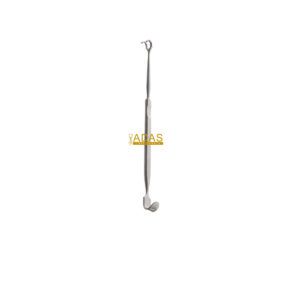
Tracheal Retractor, Sharp or Blunt Prongs
$ 14.00
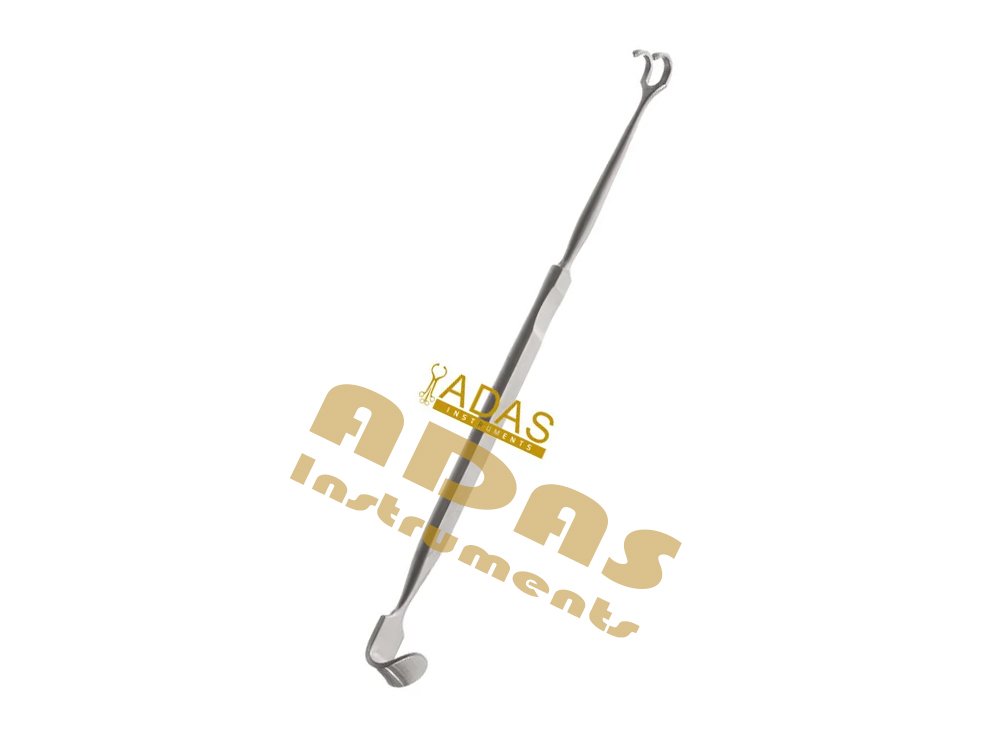
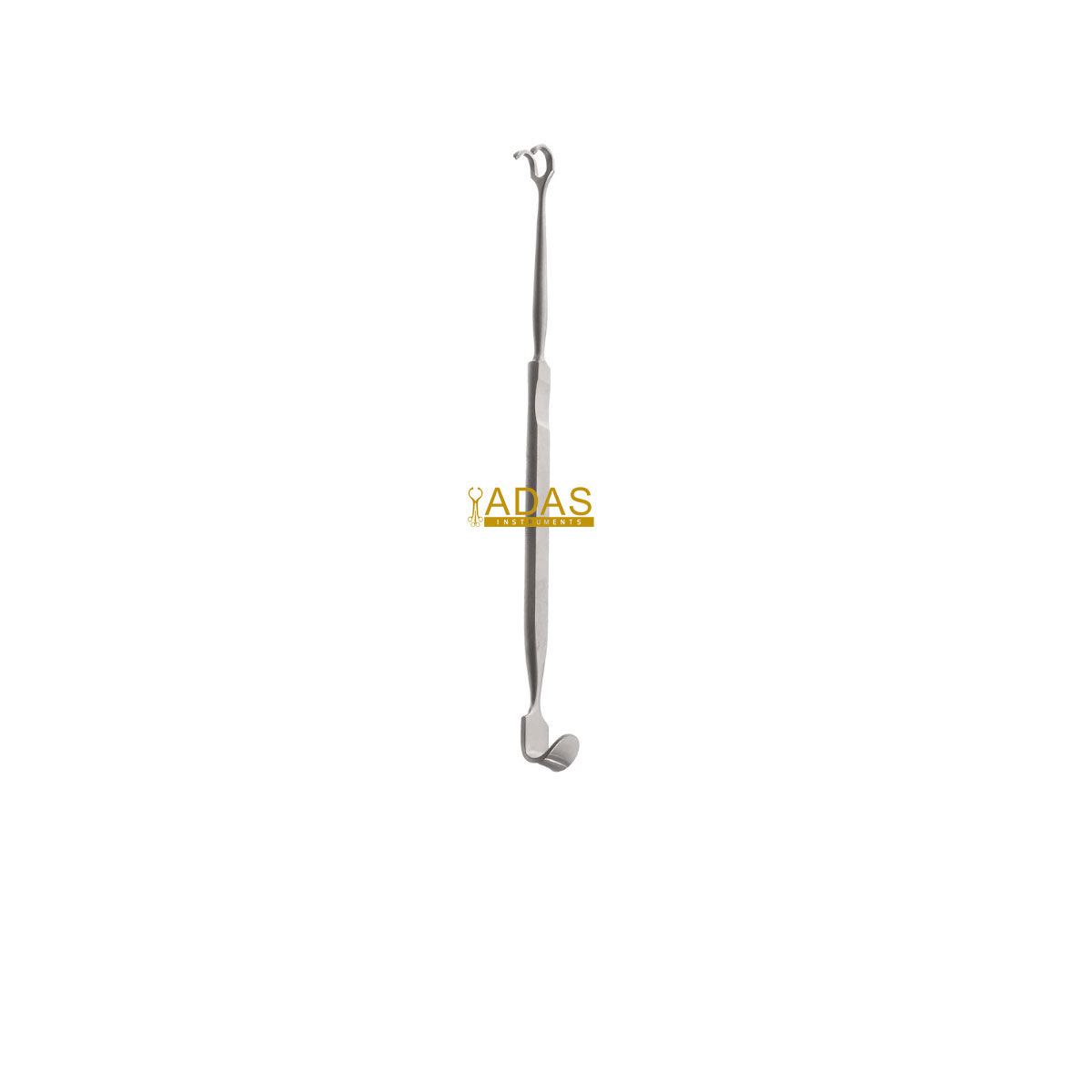
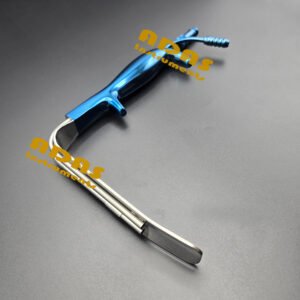
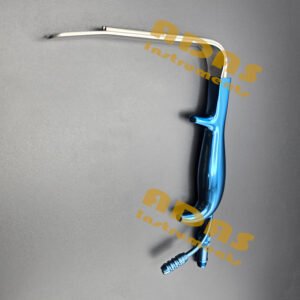
Tracheal retractors are handheld retractors used during tracheostomy and thyroid surgery to hold back the skin, the strap muscles and the pretracheal fascia so the front wall of the trachea can be seen and opened safely. The prongs do the holding and our own record offers them sharp or blunt, which is the only decision that matters on this instrument: sharp where the tissue is tough and must not slip, blunt where the airway and the vessels beside it are close enough that nothing should be pierced. It is an ENT, head and neck, thyroid and general surgical instrument, and it is the plain pattern rather than one of the named variants.
Key Features
- Sharp or blunt prongs, from our own record
- Holds back skin, strap muscles, cervical soft tissue and pretracheal fascia
- Exposes the tracheal rings, the anterior tracheal wall and the cricothyroid membrane
- Better exposure is what keeps the recurrent laryngeal nerve and the neck vessels out of harm
- Used in tracheostomy, thyroid surgery and airway procedures
- Satin finished, so the light does not reflect back out of a deep narrow neck wound
- High quality medical grade stainless steel, autoclavable and made to be used again
- Three year replacement warranty against manufacturing defects. Item code AP-40.20

What the tracheal retractor is
The tracheal retractor is a handheld pronged retractor used during tracheostomy and thyroid surgery. It holds back skin, strap muscles and pretracheal fascia so the front wall of the trachea can be seen and opened.
This is the plain pattern. The trachea family is full of surnames, and we publish most of them, but this page is the one that is not named after anybody. If your set specifies a Lukens or a Bose or a News, order that. If it just says tracheal retractor, this is it.
Our own record offers the prongs sharp or blunt, and on this instrument that choice is not a matter of taste. There is a cartilage tube and two carotid sheaths within a few millimeters of the prong tips.
Key design features of this trachea retractor
Three features, and the first one is the only ordering decision on the page.
- Sharp or blunt prongs. From our own Tip options attribute. Sharp holds tough fascia and a thick neck without creeping. Blunt holds without piercing, which is what you want when the prongs are sitting next to an airway.
- A handheld shaft. Nothing locks. An assistant holds it and can change the angle the moment the surgeon asks, which matters in an airway that is being opened.
- Satin finish. A neck wound in a tracheostomy is narrow and deep and the light comes in almost straight down. A polished shaft would reflect it back out.
Tracheostomy retractor sizes and prong options
Two rows of this table are ours, and the last two say plainly that they are not.
| What | Option | Where it comes from | Item code |
|---|---|---|---|
| Prong tip | Sharp prongs, or blunt end prongs | Our own Tip options attribute | AP-40.20 |
| Pattern | The plain pattern, not one of the named variants | Our own product record | AP-40.20 |
| Finish | Satin | Our own product record | |
| Overall length | Not carried | Others publish 145 mm to 175 mm. Not repeated here as ours | |
| Prong count | Not carried | Named variants publish 1, 2 and 3 prong versions. Not repeated here as ours |
Our record carries the prong tip and no dimensions at all. Published figures for this class put the overall length somewhere between 145 mm and 175 mm and the named variants publish one, two and three prong versions. Neither is repeated here as ours.
Tracheal retractor uses, by procedure
Two operations account for most of it and both of them are in the neck.
| Procedure | What the tracheal retractor is used for |
|---|---|
| Tracheostomy | Holding skin, fat and strap muscles clear while the trachea is reached |
| Emergency airway access | Steady exposure of the anterior tracheal wall under time pressure |
| Thyroidectomy | Holding the strap muscles off the gland and off the airway |
| Thyroid lobectomy | The same job in a smaller field |
| Cricothyroidotomy | Exposure of the cricothyroid membrane |
| Head and neck surgery | Anterior neck dissection where the airway is in the field |
| Tracheal resection and reconstruction | Holding the field while the airway is worked on |
What the prongs hold, and what they protect
The protecting column on this instrument is indirect, and it is worth being exact about why.
| Structure | What this instrument does with it |
|---|---|
| Skin and subcutaneous fat | HOLDS. The first layer off the neck |
| Strap muscles | HOLDS. This is the layer the instrument exists for |
| Pretracheal fascia | HOLDS, and blunt prongs are the safer choice here |
| Cervical soft tissue | HOLDS |
| The anterior tracheal wall | EXPOSES. The target, not the thing held |
| Tracheal rings and the cricothyroid membrane | EXPOSES |
| The recurrent laryngeal nerve | PROTECTS, indirectly. Better exposure is the whole protection |
| The carotid sheath and neck vessels | PROTECTS, by keeping the field open and visible |
| The thyroid gland | NEITHER. Held by a different instrument in the same operation |
A tracheal retractor does not shield the recurrent laryngeal nerve the way a malleable blade shields bowel. It protects it by holding the field open and still, so the nerve stays visible and nobody works blind near it. That is a real protection and it is a different kind from a blade.
How this pattern compares with the named trachea retractors
Three of the seven rows are our own pages, and the last row is not a retractor at all.
| Pattern | How it differs | When you reach for it instead |
|---|---|---|
| Iterson tracheal hook retractor | A hook rather than a retractor blade or rake | When you want to hook and lift a ring rather than hold a layer back |
| Lukens trachea retractor | A named pattern with its own prong geometry | When your set is specified by pattern name |
| Jackson retractor | The surname is used for a trachea pattern AND for a vaginal blade | Read the description before ordering by the surname alone |
| Sklar tracheal retractor | Straight, single ended, three blunt hooked prongs | Hooking and holding cricoid cartilage before the incision |
| Bose tracheal retractor | Left and right orientations | Targeted access to one lateral tracheal structure |
| News tracheal retractor | Curved, single ended, sharp tip | Laryngology and deeper throat tissue |
| Trousseau tracheal dilator | A DILATOR, not a retractor. It opens the tracheal incision | The next step after this instrument, not a substitute for it |
Materials and finish
Made from high quality medical grade stainless steel, satin finished so the light does not come back out of a narrow neck wound. The steel itself is made to a German specification. The prongs are ground and polished as a set, and on the sharp version the points are finished so they penetrate cleanly rather than tearing.
Care and sterilization
Clean with a soft brush under running water, working between the prongs and around their base. Rinse in deionized water and dry fully before autoclaving. Store on a rack or under a tip guard. Check the prong tips before every case: a blunted sharp prong slips, and a burred blunt prong is no longer blunt, and in this field both of those matter.
Ordering and wholesale
Adas Instruments makes the tracheal retractor to order and supplies hospitals, surgical centers and distributors across the United States, Latin America, Europe and Asia. State whether you want sharp or blunt prongs. Bulk and wholesale pricing is available, and instruments held on backorder ship in 10 to 12 working days. Every instrument carries a three year replacement warranty against manufacturing defects. Certifications: CE. Production is controlled under an ISO 13485 quality management system.
Frequently asked questions
What is a tracheal retractor used for?
Holding skin, strap muscles and pretracheal fascia back during tracheostomy and thyroid surgery so the anterior wall of the trachea can be seen and opened. It is used in ENT, head and neck, thyroid and general surgery.
How is a tracheal retractor used in tracheostomy?
After the skin incision, the layers over the airway are separated and this instrument holds them apart while the surgeon works down to the tracheal rings. It stays in the wound, held by an assistant, until the airway is open and the tube is in. A dilator, not a retractor, is what opens the tracheal incision itself.
Should the prongs be sharp or blunt?
Blunt is the usual choice in this field, because the prongs are working within millimeters of the airway and the great vessels of the neck. Sharp is for a thick neck or tough fascia where a blunt prong will creep out of the tissue. Both are carried on our own record.
Is a tracheal retractor the same as a tracheal hook?
No. A hook has a single curved point and it is used to lift and steady a tracheal ring or the cricoid. A retractor has prongs or a blade and it holds a whole layer of tissue back. They are used in the same operation, often within a minute of each other, and they are not substitutes.
Is this a Jackson, a Lukens or a Bose?
None of them. This is the plain pattern. We publish the named ones as separate products, and the comparison table above links to the ones we carry, because ordering a Bose when the set specified a Lukens is a mistake nobody notices until the tray is open.
Related products and categories
Buyers who order the tracheal retractor usually look next at the iterson tracheal hook retractor, the lukens trachea retractor and the jackson retractor. The whole family sits in hooks and retractors, and this pattern is also listed under ENT instruments.
| Weight | 0.05 kg |
|---|---|
| Tip options | Blunt End Prong, Sharp Prongs end |
Be the first to review “Tracheal Retractor, Sharp or Blunt Prongs”
Shipping & Delivery Policy
Processing Time: In-stock items are dispatched within 24-48 hours. For custom or out-of-stock items, production time is approximately 10-15 days.
Global Delivery Estimates
We partner with world-class couriers (DHL, FedEx) to ensure fast, tracked delivery.
- USA & Canada: 3-5 Business Days
- Europe & UK: 4-6 Business Days
- Rest of World: 5-7 Business Days
*We offer Air Cargo and Sea Freight options for bulk wholesale orders.
Customs & Duties
International buyers are responsible for any customs duties or taxes imposed by their country. Adas Instruments is not responsible for delays caused by customs clearance.
Lost Packages & Insurance
If your package is lost in transit, please contact us immediately. We offer full support and replacements for confirmed lost shipments. Note: You must report non-delivery within 3 weeks to be eligible for an insurance claim.
Related products
Reviews
There are no reviews yet.