
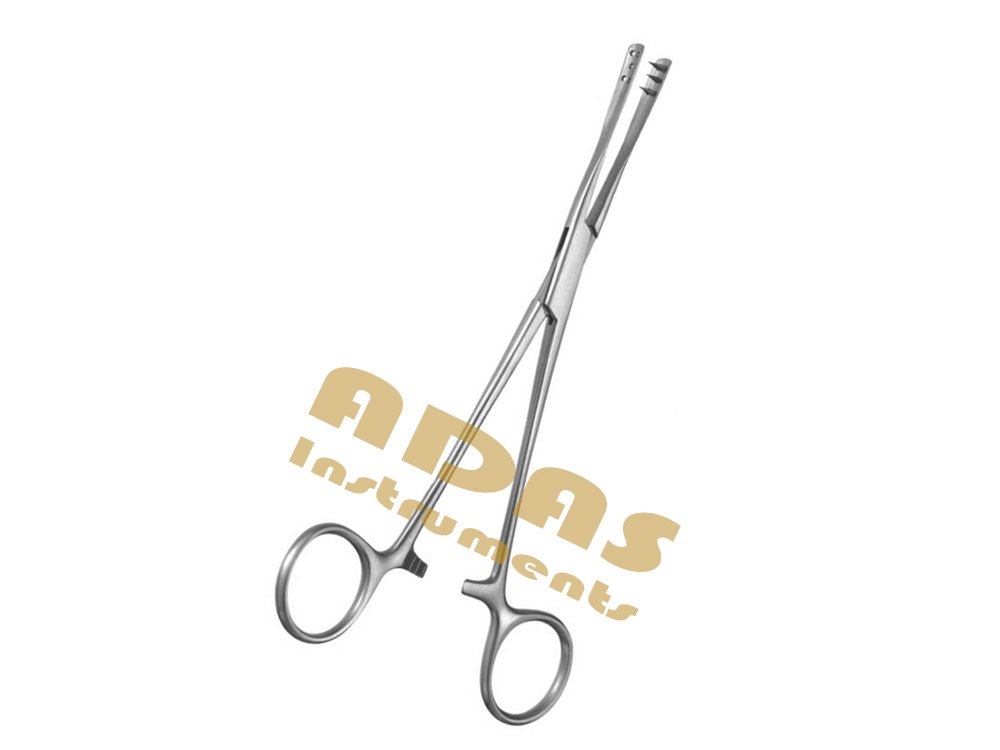
Brand Tendon Grasping Forceps, Interlocking Jaws
$ 34.00
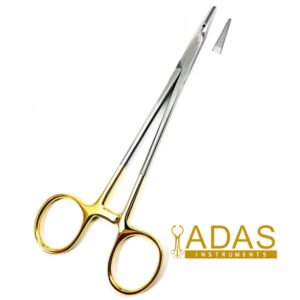
Brand tendon grasping forceps hold and pass a tendon graft without crushing the fibers that make it work. The jaws meet the way an alligator clip does, teeth interlocking rather than pressing flat, and a ratchet at the finger rings keeps that hold steady while both hands are busy elsewhere. The pattern takes its name from the hand surgeon Paul Brand, which is worth knowing because it was drawn around tendon surgery rather than borrowed from another instrument.
Key Features
- Alligator pattern jaws whose teeth interlock instead of pressing flat
- Ratchet lock at the finger rings for a hold that does not need a hand on it
- Serrated gripping face sized to a tendon rather than to tissue
- Used to retrieve, hold and pass a tendon graft during repair and transfer
- High quality medical grade stainless steel, fully autoclavable
- Three year replacement warranty against manufacturing defects
- Item code AA-31.81
Available on backorder

What the Brand tendon grasping forceps is
Brand tendon grasping forceps hold and pass a tendon graft without crushing the fibers that make it work. The jaws meet the way an alligator clip does, teeth interlocking rather than pressing flat, and a ratchet at the finger rings holds that grip without a hand on the instrument. Catalogues also list the pattern as Brand tendon holding forceps and as a tendon grasper.
The pattern takes its name from the hand surgeon Paul Brand. That is worth knowing for one practical reason: the jaw was drawn around tendon work rather than borrowed from a tissue instrument, which is why the teeth are the size they are.
Key design features of the Brand tendon grasping forceps
Three things decide whether a tendon instrument works, and a tendon is unforgiving about all three.
- Interlocking alligator jaws. The teeth pass between each other, so the tendon is trapped rather than squeezed.
- Serrated gripping face. Sized to a tendon, which is why the same jaw is wrong for soft tissue.
- Ratchet lock. A graft under tension has to stay held while both hands do something else.
- Box joint. The halves pass through each other, keeping the teeth meshed after repeated sterilization.
Brand tendon grasping forceps specification
The table below is short on purpose, and the reason is in the note under it.
| Detail | Specification |
|---|---|
| Pattern | Brand, alligator style interlocking jaws |
| Jaw | Interlocking teeth with a serrated gripping face |
| Lock | Ratchet at the finger rings |
| Finish | Satin matte |
| Length | Not stated on this page. See the note below |
| Item code | AA-31.81 |
This product carries no length or size attribute in our own catalogue, so no length is quoted on this page. Rival listings show a 5 inch pattern, and we do not repeat that figure because we have not measured the instrument that ships against it. If a specific overall length matters to your set, ask us before you order and we will measure and confirm it.
Brand tendon grasping forceps uses by specialty
Four tables in this catalogue usually run to six rows. This one runs to four, because a tendon instrument has four honest uses and padding the list would not help anyone choose.
| Specialty | What it is used for |
|---|---|
| Hand surgery | Holding a tendon graft during transfer and repair |
| Orthopedic surgery | Retrieving a tendon end that has retracted into its sheath |
| Reconstructive surgery | Passing a graft through a prepared tunnel without losing hold of it |
| Sports injury repair | Holding the cut ends steady while the repair suture is placed |
What the jaws hold
This is a grasping instrument and not a needle holder, so there is no suture gauge to quote. What matters is the structure the jaw is sized for, and the last row is the one that stops the instrument being misused.
| Structure | How the jaw takes it |
|---|---|
| Tendon and tendon graft | Teeth interlock around it, so the hold is a set of anchored points rather than a flat crush |
| Retracted tendon ends | Taken at the very end, which is often all there is to hold |
| Dense connective tissue | Held without sliding, the same way a tendon is |
| Soft tissue and vessels | NOT this instrument. The teeth are sized for a tendon and will mark anything softer |
How the Brand tendon grasping forceps compares with other patterns
The useful comparisons here are all inside our own tendon range, because the three instruments do three different jobs and are easy to confuse when they are ordered by name alone.
| Pattern | How it differs | When you reach for it instead |
|---|---|---|
| Tendon braiding forceps | Built to hold several tendon strands together while they are braided | Braiding and weaving rather than simple holding and passing |
| Carol tendon pulling forceps | Made to draw a tendon through a tunnel over a distance | Pulling a graft through, rather than gripping it in place |
| Allis tissue forceps | Rows of teeth across a fenestrated jaw, a general tissue grasper | Fascia and tissue being excised, where a tendon jaw is too fine |
Brand tendon grasping forceps materials and finish
The instrument is made from high quality medical grade stainless steel, hardened at the jaw so the teeth keep their shape and stay meshed. A tooth that wears round stops anchoring, and on a tendon that failure shows up as a graft slipping at the worst moment. The finish is satin rather than mirror, which cuts glare under operating lights. The steel itself is made to a German specification. The finished instrument carries the CE mark.
Brand tendon grasping forceps care and sterilization
Rinse under cold running water immediately after use and pay attention to where the teeth mesh, because tendon debris lodges there and dries hard. Use a soft brush, never wire. Open the jaws fully for ultrasonic cleaning and for autoclaving so the box joint drains and steam reaches the ratchet. Dry completely, then store with the ratchet released so the spring is not held under load.
Ordering Brand tendon grasping forceps and wholesale
Adas Instruments supplies hospitals, clinics and distributors across the United States, from stock and to order. Wholesale quantities and instrument set builds are quoted on request. Backorder items dispatch in 10 to 12 working days. Item code AA-31.81, and every instrument carries a three year replacement warranty against manufacturing defects. Production is controlled under an ISO 13485 quality management system.
Frequently asked questions
What are Brand tendon grasping forceps used for?
Holding a tendon or a tendon graft and passing it, without crushing the fibers. In practice that means retrieving a tendon end that has retracted, holding the cut ends while a repair suture goes in, and feeding a graft through a prepared tunnel.
What are grasping forceps used for?
Taking hold of a structure and keeping it there while something else is done to it. The family is wide, and the jaw decides the job: a tendon jaw is toothed and fine, a tissue jaw is toothed and broad, and an atraumatic jaw is smooth. Ordering by family name alone is how the wrong instrument ends up on the tray.
What is a tendon tunneling forceps used for?
Drawing a tendon graft through a tunnel made under the skin or through tissue. It is a related job rather than the same one: a tunneling or pulling pattern is built to travel a distance, while this pattern is built to take a firm hold and keep it.
Is there another name for alligator forceps?
Alligator describes the jaw action rather than one instrument, so several patterns are called alligator forceps, including this one. For this product the names to search are Brand tendon grasping forceps, Brand tendon holding forceps and tendon grasper.
Does this forceps crush the tendon?
Not if it is in good condition. The teeth interlock rather than meeting face to face, so the tendon is anchored at points instead of being pressed flat. A jaw with worn teeth stops interlocking and starts crushing, which is the reason to check the mesh before every set is packed.
Related products and categories
Buyers who order the brand tendon grasping forceps usually order alongside it the pitanguy flap grasping forceps, the backhaus towel clamp and the adson hemostatic forceps. The whole family sits in hemostats and grasping forceps, and this pattern is also listed under facelift and neck lift instruments.
| Weight | 0.06 kg |
|---|
Be the first to review “Brand Tendon Grasping Forceps, Interlocking Jaws”
Shipping & Delivery Policy
Processing Time: In-stock items are dispatched within 24-48 hours. For custom or out-of-stock items, production time is approximately 10-15 days.
Global Delivery Estimates
We partner with world-class couriers (DHL, FedEx) to ensure fast, tracked delivery.
- USA & Canada: 3-5 Business Days
- Europe & UK: 4-6 Business Days
- Rest of World: 5-7 Business Days
*We offer Air Cargo and Sea Freight options for bulk wholesale orders.
Customs & Duties
International buyers are responsible for any customs duties or taxes imposed by their country. Adas Instruments is not responsible for delays caused by customs clearance.
Lost Packages & Insurance
If your package is lost in transit, please contact us immediately. We offer full support and replacements for confirmed lost shipments. Note: You must report non-delivery within 3 weeks to be eligible for an insurance claim.
Related products


Reviews
There are no reviews yet.