
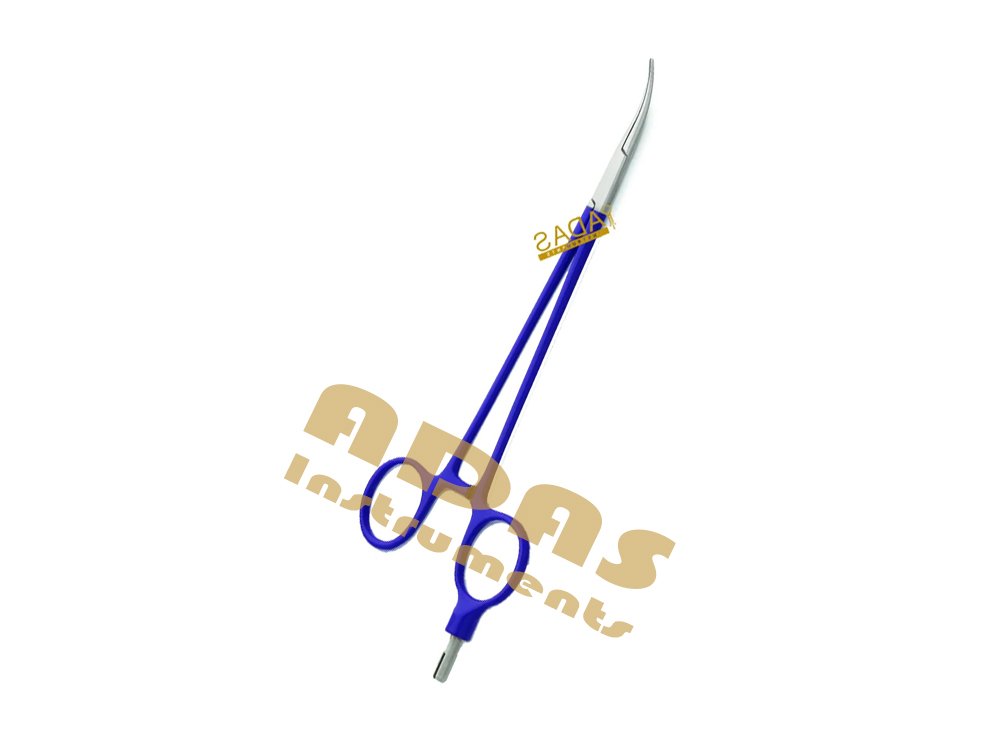
Adson Hemostatic Forceps, Curved, Insulated
$ 75.00
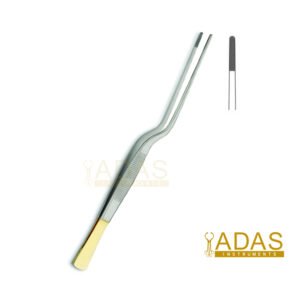
Adson hemostatic forceps, curved and insulated, combine the clamping pattern of an Adson hemostat with an insulating layer along the shaft, so a small blood vessel can be held closed in a field where an energy device is in use. The insulation is the working part of the design: it stops current tracking out of the shaft into whatever it touches, which is what lets the jaws stay on a vessel while coagulation happens beside them. It is chosen most in confined fields such as breast, neck and oral surgery, where there is little clearance between the clamp and the tissue that must not be burned.
Key Features
- Insulating layer along the shaft, to stop current tracking to nearby tissue
- Curved jaws with transverse serrations
- Built on the Adson hemostatic pattern, so the jaw behaves the same way
- Ring handles with a ratchet lock
- Box joint to keep the jaw tips in line
- High quality medical grade stainless steel under the insulation
- Item code AE-71.20
Available on backorder

What the Adson hemostatic forceps curved insulated is
The adson hemostatic forceps curved insulated combines the clamping pattern of an Adson hemostat with an insulating layer along the shaft, so a small blood vessel can be held closed in a field where an energy device is in use. Catalogues also carry it as an insulated hemostatic forceps, an insulated adson hemostat, an adson hemostatic clamp and an Adson diathermy forceps.
The insulation is the working part of the design. Current that reaches a bare shaft can track out of the instrument into whatever the shaft happens to be resting against, and in a small cavity that is often skin, mucosa or something sitting near a nerve. A coated shaft keeps the current where it is meant to be, which is what lets the jaws stay on a vessel while coagulation happens beside them.
Key design features of the insulated hemostatic forceps
- Insulating layer along the shaft. The feature the whole pattern exists for.
- Curved serrated jaw, no teeth. The same jaw behavior as the uninsulated Adson.
- Slim profile. Built for cavities where there is little clearance around the instrument.
- Ring handles with a ratchet lock. Set the hold and let go.
- Box joint. The halves pass through each other, so the tips stay in line.
Hemostatic forceps curved insulated sizes and build options
One build. The chart is the variation list, so what is shown is what ships.
| Build | Tip | Shaft | Item code |
|---|---|---|---|
| Curved, insulated | Curved, serrated, no teeth | Insulating layer along the shaft | AE-71.20 |
We do not state a polarity on this page. The insulation protects the shaft; whether an instrument is used on a monopolar or a bipolar circuit depends on how it is connected, and the published descriptions of this pattern across the trade disagree with each other. Rather than repeat a claim we cannot stand behind, we ask you to confirm the circuit with us before ordering.
Where the insulated Adson hemostat is used
What these uses share is an energy device working close to a clamp, in a space too small to keep them apart.
| Specialty | What it is used for |
|---|---|
| General surgery | Holding a bleeding point while an energy device works next to it |
| Plastic and reconstructive surgery | Flap work where the shaft passes close to skin that must not be marked |
| Oral and maxillofacial surgery | Small cavities where there is no clearance around the instrument |
| Breast surgery | Subcutaneous hemostasis with cautery in use nearby |
| Dermatologic and minor procedure surgery | Office procedures where electrosurgery and clamping happen together |
What the jaws hold
This is a clamp and not a needle holder, so there is no suture gauge to quote.
| Structure | How the jaw takes it |
|---|---|
| Small blood vessels | Serrated curved jaw closes flat, with no tooth to puncture the wall |
| Bleeding mucosal tissue | Held without tearing, in a field where cautery is in use |
| Subcutaneous arterioles and small venules | Taken singly, close to the surface |
| Soft tissue near nerve structures | The insulated shaft is the reason this is possible at all |
How the adson hemostatic clamp compares with other patterns
The comparison that matters is against its own uninsulated sibling, because the two are the same instrument apart from one layer.
| Pattern | How it differs | When you reach for it instead |
|---|---|---|
| Adson hemostatic forceps, uninsulated | The same jaw and the same reach, with a bare shaft | No energy device in the field, and nothing to insulate against |
| Crile artery forceps | Heavier fully serrated jaw, shorter, uninsulated | Superficial work on a heavier vessel |
| Allis tissue forceps | Toothed grasper for tissue, not a vessel clamp | Holding a tissue edge rather than closing a vessel |
| Insulated bipolar forceps | A two pole instrument that delivers current itself | Coagulating with the instrument rather than clamping with it |
Insulated hemostatic forceps materials and finish
The instrument is made from high quality medical grade stainless steel under the insulation, hardened so the serrations keep their shape and the ratchet keeps its bite. The steel itself is made to a German specification. The finished instrument carries the CE mark.
The insulating layer is a coating, and a coating is a wear part. Check it before every use: a chip or a crack in the shaft coating is the one fault that matters on this pattern, because it puts the instrument back to being an uninsulated clamp without looking any different.
Insulated hemostatic forceps care and sterilization
Rinse under cold running water straight after use. Use a soft brush, never wire, and never an abrasive pad on the shaft, because that is the coating. Open the jaws fully for ultrasonic cleaning and for autoclaving so the box joint drains. Dry completely, then store with the ratchet released. Inspect the coating each time the instrument is set out.
Ordering the insulated Adson hemostatic forceps and wholesale
Adas Instruments supplies hospitals, clinics and distributors across the United States, from stock and to order. Wholesale quantities and instrument set builds are quoted on request. Backorder items dispatch in 10 to 12 working days. Item code AE-71.20, and every instrument carries a three year replacement warranty against manufacturing defects. Production is controlled under an ISO 13485 quality management system.
Frequently asked questions
What are insulated Adson hemostatic forceps used for?
Clamping a small bleeding vessel in a field where an electrosurgical device is working close by. The insulated shaft is what makes that safe to do in a small cavity, where a bare shaft could pass current into skin, mucosa or tissue near a nerve.
Why is the shaft insulated?
To stop current tracking out of the instrument into whatever it is touching. In an open field a bare hemostat is not a problem. In a narrow cavity the shaft is resting against something the whole time, and that is where stray current does its damage.
What is the difference between insulated and non insulated Adson hemostatic forceps?
One layer, and nothing else. The jaw, the curve, the serrations, the ratchet and the reach are the same on both. Choose the insulated build when an energy device is in the field and the uninsulated one when it is not, because a coating is one more thing that can wear.
Are these forceps monopolar or bipolar?
We do not state a polarity for this listing, and we would rather say so than guess. The published descriptions of this pattern disagree across the trade, and an insulated shaft on its own does not settle it. Ask us before you order and we will confirm the circuit for the build you are buying.
What are the different types of hemostatic forceps?
They divide by jaw and by reach. Mosquito patterns have the smallest jaws, Crile and Kelly patterns are the general purpose middle, Kocher patterns add teeth for tough tissue, and the Adson pattern trades jaw size for shaft length so it can work at depth. Insulation is a separate choice that can sit on top of any of them.
Related products and categories
Surgeons who work with the insulated adson hemostat usually compare it against the adson hemostatic forceps, the allis tissue forceps and the halsted mosquito forceps. The whole family sits in hemostats and grasping forceps, and this pattern is also listed under breast surgery instruments.
| Weight | 0.065 kg |
|---|
Be the first to review “Adson Hemostatic Forceps, Curved, Insulated”
Shipping & Delivery Policy
Processing Time: In-stock items are dispatched within 24-48 hours. For custom or out-of-stock items, production time is approximately 10-15 days.
Global Delivery Estimates
We partner with world-class couriers (DHL, FedEx) to ensure fast, tracked delivery.
- USA & Canada: 3-5 Business Days
- Europe & UK: 4-6 Business Days
- Rest of World: 5-7 Business Days
*We offer Air Cargo and Sea Freight options for bulk wholesale orders.
Customs & Duties
International buyers are responsible for any customs duties or taxes imposed by their country. Adas Instruments is not responsible for delays caused by customs clearance.
Lost Packages & Insurance
If your package is lost in transit, please contact us immediately. We offer full support and replacements for confirmed lost shipments. Note: You must report non-delivery within 3 weeks to be eligible for an insurance claim.
Related products


Reviews
There are no reviews yet.