
Kocher vs Allis vs Babcock Forceps: How to Tell Them Apart
Nov
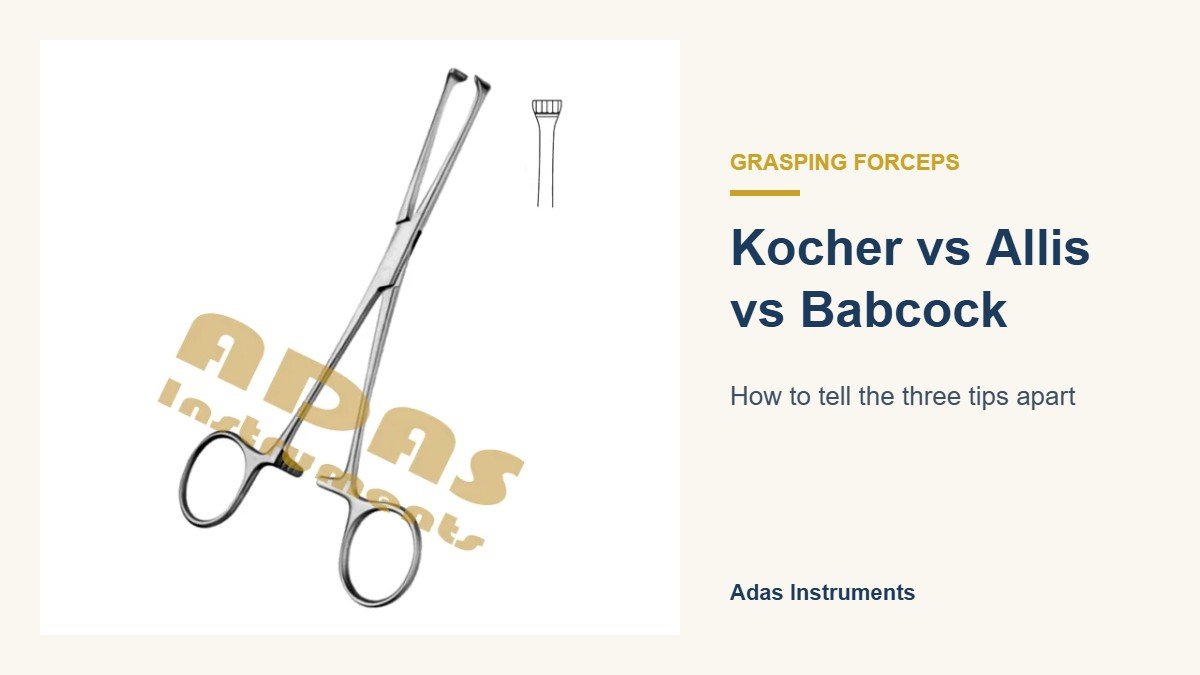
Three ring handled grasping forceps sit side by side on a general tray, and from across the room they look alike. The difference is at the tip. A Kocher bites with one tooth into two, an Allis grips with a row of short teeth, and a Babcock holds without any teeth at all. That tip decides which tissue each one is allowed to touch. The Kocher and Allis patterns are in our hemostats and grasping forceps range.
Kocher, Allis and Babcock forceps are ring handled, ratcheted grasping instruments used across general and gynecological surgery. The Kocher, also called an Ochsner clamp, has serrated jaws with 1×2 teeth for tough tissue. The Allis has short interlocking teeth across a narrow tip. The Babcock has a smooth, rounded, open tip that encircles bowel or a fallopian tube. Adas Instruments makes the Kocher from 14 to 25 cm and the Allis from 15 to 23 cm.
Key takeaways
- The Kocher grips hardest and does the most damage. Its 1×2 teeth belong on fascia and on tissue that is being removed.
- The Allis takes a small, firm bite with a row of short teeth, which suits fascia and the edge of tissue that will be cut away.
- The Babcock has no teeth. It wraps around bowel, the appendix or a fallopian tube and holds it without piercing the wall.
- Ochsner clamp and Kocher clamp are two names for the same pattern. American catalogs and theatre staff more often say Ochsner.
Kocher vs Allis vs Babcock: the tips side by side
Read across the table at the row that matters for your case. The tip and the trauma level are what separate them; everything else is shared.
| Kocher (Ochsner) | Allis | Babcock | |
|---|---|---|---|
| Tip | Serrated jaw with 1×2 teeth at the end | Narrow jaw with a row of short interlocking teeth | Rounded open loop, no teeth |
| Trauma to tissue | Highest | Moderate | Lowest |
| Typical tissue | Fascia, rectus sheath, large pedicles, tissue being removed | Fascia, tissue edges to be trimmed, breast tissue being excised | Bowel, appendix, fallopian tube, ureter |
| Ratchet | Yes | Yes | Yes |
| Adas sizes | 14 and 16 cm delicate, 25 cm standard | 15, 19 and 23 cm | Not in our current range |
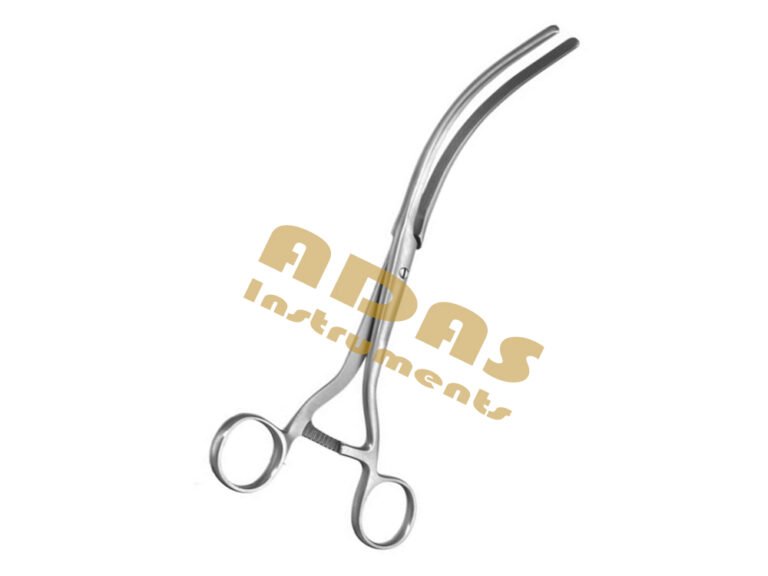
Kocher clamp, also called the Ochsner clamp
The Kocher is the heavy one. One sharp tooth on one jaw drops between two on the other, and serrations run down the jaw behind them, so once it is closed on fascia nothing slides out. That same bite crushes, which is why it stays off anything the surgeon wants to keep.
Is an Ochsner clamp the same as a Kocher? In practice, yes. The names come from two surgeons and describe the same toothed pattern, and many catalogs list it as Ochsner Kocher. Our Kocher clamp forceps is the 25 cm, 10 inch length at 85 dollars. For tighter spaces, the Kocher delicate artery forceps has a lighter, tapered jaw in 14 and 16 cm, from 12 dollars.
If a general tray has room for only one heavy grasping clamp, we would choose a curved Kocher. It holds fascia and large pedicles that slip out of an ordinary hemostat.
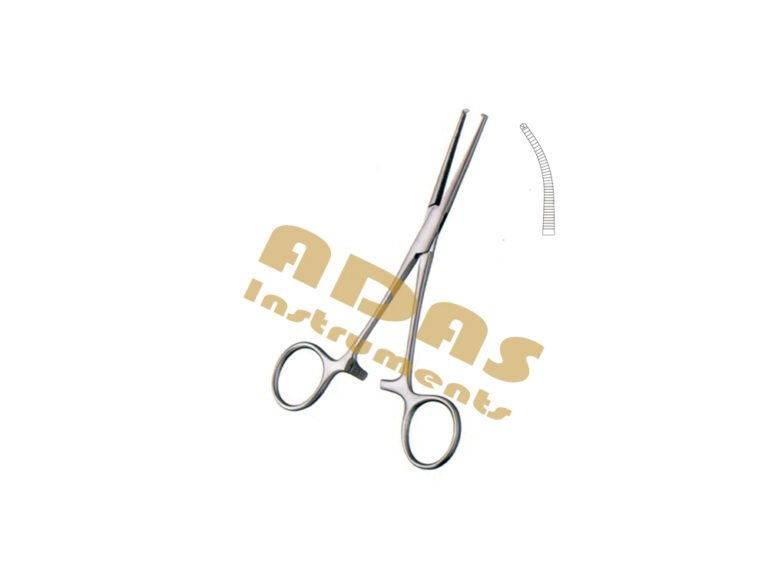
Allis tissue forceps
The Allis spreads its grip across a row of small teeth at the very tip of a narrow, slightly curved jaw. It takes a small bite and holds it firmly, with less crushing than a Kocher, though the teeth still mark the tissue. Surgeons use it on fascia, on the edge of a hernia sac, and on breast or other tissue that is being removed.
A quick check when a new Allis arrives: close it to the first ratchet click and hold it up to the light. The teeth should meet along the whole row with no gap at one side. A gap means the jaws are sprung, and the tip will tear tissue rather than hold it. Our Allis tissue forceps comes in 15, 19 and 23 cm, from 15 dollars.
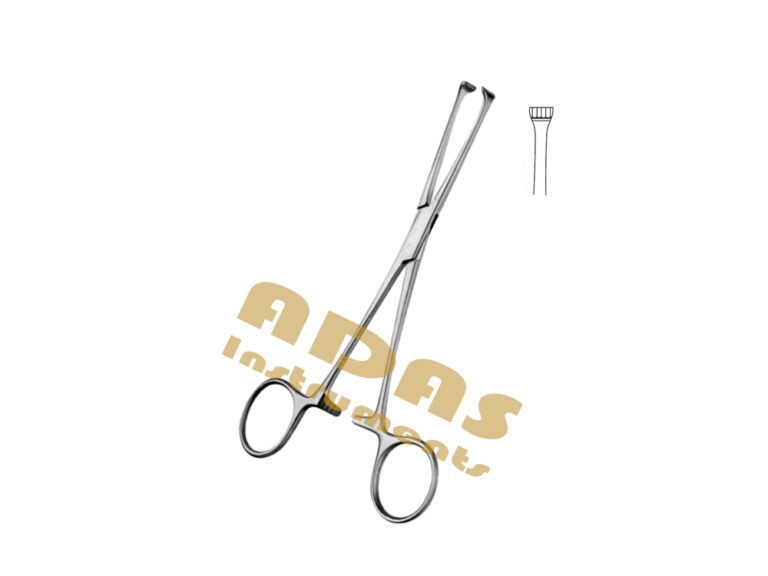
Buy Kocher and Allis forceps direct from the maker
Kocher clamps in 14, 16 and 25 cm from 12 dollars, Allis tissue forceps in three lengths from 15 dollars. Wholesale pricing for hospitals and distributors, branded or plain.
Babcock forceps
The Babcock is the gentle one. Its jaws end in a rounded, open loop with fine ridges and no teeth, so it closes around a tube of tissue instead of biting into it. That is why it is the clamp for bowel, the appendix during an appendectomy, a fallopian tube during tubal ligation, and the ureter.
Adas Instruments does not list the Babcock at present. If you need it for a set, contact us and we will quote it.
Which one to pick
- Tough tissue that is coming out, or a large pedicle: Kocher.
- A firm hold on fascia or on an edge that will be trimmed: Allis.
- Bowel, tube or anything that must stay intact: Babcock.
- A bleeding vessel: none of the three. Use a hemostat, as set out in our types of hemostats guide.
Frequently Asked Questions
What is the difference between Kocher and Allis forceps?
Both are ratcheted grasping forceps, but the Kocher has heavy serrated jaws with 1×2 teeth at the tip and crushes what it holds, while the Allis has a row of short teeth on a narrow tip and takes a smaller, less crushing bite.
Is an Ochsner clamp the same as a Kocher clamp?
Yes. Ochsner and Kocher are two names for the same toothed clamp, and many catalogs list it as Ochsner Kocher. American theatre staff usually say Ochsner, while European catalogs more often say Kocher.
What is Babcock forceps used for?
Babcock forceps hold delicate tubular structures without piercing them: bowel, the appendix, a fallopian tube or the ureter. The rounded open tip has no teeth, so it wraps around the tissue rather than biting into it.
Can Allis forceps be used on bowel?
Surgeons avoid Allis forceps on bowel that is being kept, because the teeth mark and can tear the wall. On bowel or other tissue that must stay intact, a Babcock is the usual choice.
