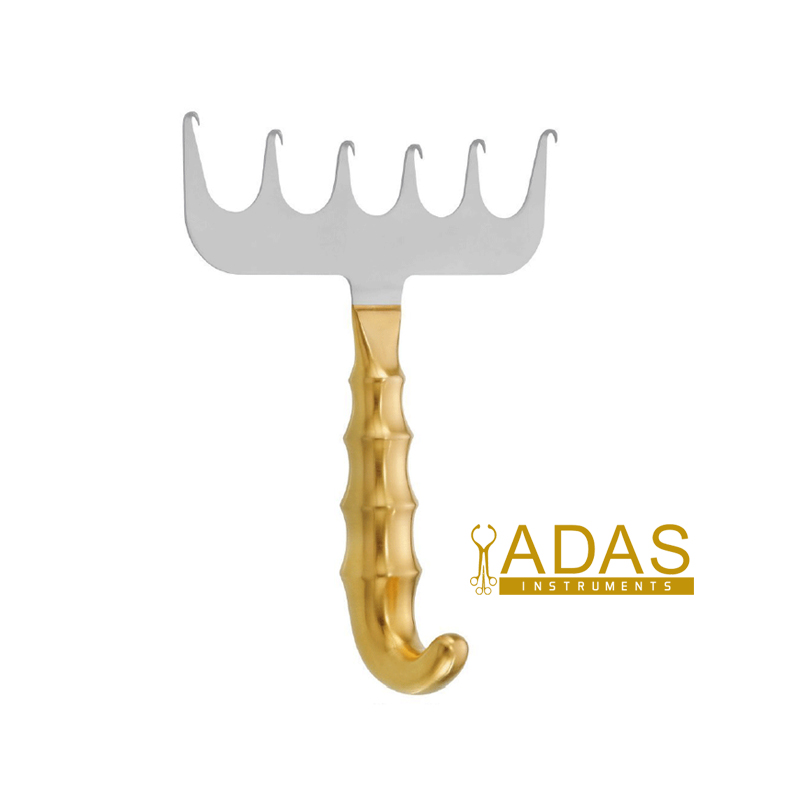
Yancoskie Abdominoplasty Retractor, 6 Offset Sharp Prongs, 150 mm
$ 38.00
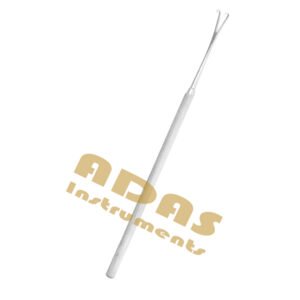
Yancoskie abdominoplasty retractors hold a raised abdominal skin and fat flap back on six sharp prongs spread across a wide flat head. The head is 150 mm across and squared off rather than curved, which spreads the pull evenly over a broad front instead of concentrating it, and the prongs are offset so the assistant hand stays out of the surgeon line of sight. It is used in abdominoplasty and body contouring, on the deep abdominal wall, the fascia and the rectus muscles during plication.
Key Features
- Six sharp prongs across a 150 mm head, from our own record
- A flat squared off head rather than a curved rake
- Offset prongs that keep the holding hand out of the line of sight
- Built for the thick subcutaneous layer of an abdominal flap
- Used in abdominoplasty, body contouring and rectus plication
- High quality medical grade stainless steel, autoclavable and made to be used again
- Three year replacement warranty against manufacturing defects
Available on backorder

What the yancoskie abdominoplasty retractor is
The yancoskie abdominoplasty retractor holds a raised abdominal skin and fat flap back on six sharp prongs across a wide flat head. Our own record gives the head as 150 mm, which is six inches of working width and considerably more than any facial rake.
The head is squared off rather than curved, and that is the design choice worth understanding. A curved rake concentrates its pull toward the middle. A flat head of this width spreads the load evenly along the whole edge, so a heavy abdominal flap is lifted as one piece instead of being drawn into a point and sagging either side of it.
The prongs are offset, which does one job and does it for the surgeon rather than the assistant: it carries the holding hand out of the line of sight between the surgeon and the abdominal wall.
Key design features of this abdominoplasty retractor
Four features, and all four follow from the size of the tissue it is built for.
- Six sharp prongs. Enough holds to carry a heavy flap. Sharp, because subcutaneous fat is what they have to grip.
- A 150 mm head. From our own record. Six inches of working width.
- A flat, squared off head. Even load along the whole edge rather than a curve that pulls to the center.
- Offset prongs. The holding hand stays out of the surgeon line of sight.
Yancoskie abdominoplasty retractor size
Two rows here are ours and the table says which.
| What | Figure | Where it comes from | Item code |
|---|---|---|---|
| Prongs | 6, sharp, offset | Our own product name | AP-76.15 |
| Head width | 150 mm, which is 6 inches | Our own product name | AP-76.15 |
| Head shape | Flat and squared off, not curved | Family standard | |
| Overall length | Not carried | Others publish about 19 cm. Not repeated here as ours | |
| Product attributes | NONE on file | A gap in our own data. Both figures above are read off the product name |
The 150 mm and the six prongs come from our own product name. This item carries no product attribute table at all, which is stated here rather than covered over. Published figures add an overall length of about 19 cm, and that is not repeated here as ours because it has not been measured here.
Where a tummy tuck retractor is used
A tummy tuck retractor of this width has one home operation and a short list of relatives.
| Procedure | What the yancoskie abdominoplasty retractor is used for |
|---|---|
| Abdominoplasty | Holding the raised flap through the whole dissection. The home operation |
| Rectus plication | Holding the flap clear and steady while the muscles are brought together |
| Body contouring | Wide flap traction on the trunk |
| Flap undermining | Keeping tension on the flap as the plane is developed |
| Reconstructive abdominal surgery | Large flaps raised and held |
| Panniculectomy | Heavy tissue that needs six holds rather than four |
| Back and flank contouring | Wide flaps elsewhere on the trunk |
What the prongs hold, and what they do not
Six sharp points on a wide flat head have a narrow brief, and it is worth saying where they stop.
| Structure | How the prongs take it |
|---|---|
| Abdominal skin and fat flaps | The tissue this pattern exists for |
| Thick subcutaneous fat | What the sharp points are for. Fat needs a bite, not a face |
| The flap edge over 150 mm | Held straight, which four prongs would not manage |
| Trunk flaps generally | Same problem, same answer |
| The abdominal wall itself | NOT held by this. It is what you are trying to SEE |
| Viscera | NOT this instrument. Use a Deaver or a malleable ribbon |
| Thin or facial skin | NOT this one. Far too wide. Use a facelift rake |
How this 6 prong abdominal flap retractor compares with the rest of the family
Five of the six rows are instruments we make. The comparison a buyer actually faces for a 6 prong abdominal flap retractor is the first row, against the Saldanha.
| Pattern | How it differs | When you reach for it instead |
|---|---|---|
| Saldanha abdominal retractor | Four or eight prongs, fiberoptic option, shaped to protect perforators | Lipoabdominoplasty, where the vessels underneath must survive |
| Deaver retractor | A deep curved blade, no prongs | Organs rather than a flap |
| Ribbon retractor malleable | A flat blade bent by hand | Shielding what is under the flap rather than lifting the flap |
| Volkman retractor | One to four prongs, sharp or blunt | Superficial tissue, far smaller fields |
| Freeman rake retractor 40 mm | Four sharp prongs on a 40 mm head | A facelift or breast flap, a quarter of the width |
| Miller rake retractor | Nine blunt prongs on 15 mm | Superficial work where nothing may be pierced |
Materials and finish
Made from high quality medical grade stainless steel, satin finished so the operating light does not reflect off a 150 mm face into the surgeon eye. The steel itself is made to a German specification. The six prongs are ground and polished as a set, because on a head this wide a single prong sitting proud takes the whole load of a heavy flap on one point.
Care and sterilization
Clean with a soft brush under running water, working between all six prongs and along the offset bend where fat collects, then rinse in deionized water and dry fully before autoclaving. Store on a rack or under a tip guard. Check the six prongs against a straight edge as a set: with six of them one bent out of line is easy to miss and it will be the one that tears.
Ordering and wholesale
Adas Instruments makes this pattern to order and supplies hospitals, surgical centers and distributors across the United States, Latin America, Europe and Asia. Item code AP-76.15. Bulk and wholesale pricing is available, and instruments held on backorder ship in 10 to 12 working days. Every instrument carries a three year replacement warranty against manufacturing defects. Certifications: CE. Production is controlled under an ISO 13485 quality management system.
Frequently asked questions
What is a yancoskie abdominoplasty retractor used for?
Holding a raised abdominal skin and fat flap back during a tummy tuck so the surgeon can see and work on the abdominal wall underneath. The main reason it is needed is plication, where the rectus muscles are brought together and the flap has to be held clear and steady for a long stretch of the operation.
Why does a yancoskie abdominoplasty retractor have six prongs?
Because of what it is lifting. An abdominal flap is thick, heavy and wide, and four prongs across 150 mm would leave long unsupported spans between them where the tissue sags and tears. Six spreads the same load over six holds and keeps the edge of the flap straight.
What does offset mean here?
That the prongs are carried off the line of the handle rather than straight in line with it. The effect is geometric: the hand holding the instrument sits to one side of the line between the surgeon eye and the abdominal wall, instead of in the middle of it. On a long case that is the difference between seeing the plication and guessing at it.
Yancoskie or saldanha?
Yancoskie for straightforward abdominoplasty where a wide even lift is what is wanted. Saldanha where the case is a lipoabdominoplasty and the perforating vessels underneath have to survive, because that pattern is shaped around protecting them and comes with a fiberoptic option for working deep under the flap.
How wide is the yancoskie abdominoplasty retractor?
150 mm, which is six inches, and that figure comes from our own product name. What our record does not carry is an overall length or a product attribute table, which is worth saying plainly. Published figures for the pattern put the length at about 19 cm and we will measure and confirm before a bulk order ships.
Related products and categories
Buyers who order the yancoskie abdominoplasty retractor usually order alongside it the saldanha abdominal retractor, the volkman retractor and the deaver retractor. The whole family sits in hooks and retractors, and this pattern is also listed under abdominoplasty instruments.
| Weight | 0.150 kg |
|---|
Be the first to review “Yancoskie Abdominoplasty Retractor, 6 Offset Sharp Prongs, 150 mm”
Shipping & Delivery Policy
Processing Time: In-stock items are dispatched within 24-48 hours. For custom or out-of-stock items, production time is approximately 10-15 days.
Global Delivery Estimates
We partner with world-class couriers (DHL, FedEx) to ensure fast, tracked delivery.
- USA & Canada: 3-5 Business Days
- Europe & UK: 4-6 Business Days
- Rest of World: 5-7 Business Days
*We offer Air Cargo and Sea Freight options for bulk wholesale orders.
Customs & Duties
International buyers are responsible for any customs duties or taxes imposed by their country. Adas Instruments is not responsible for delays caused by customs clearance.
Lost Packages & Insurance
If your package is lost in transit, please contact us immediately. We offer full support and replacements for confirmed lost shipments. Note: You must report non-delivery within 3 weeks to be eligible for an insurance claim.
Related products



Reviews
There are no reviews yet.