
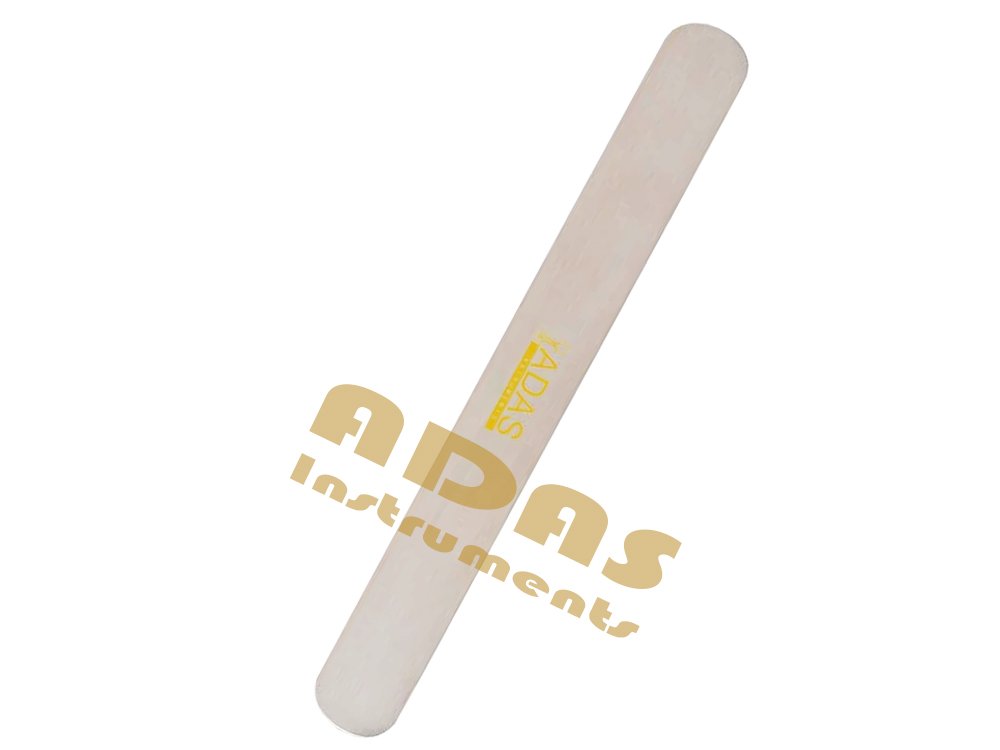

Ribbon Retractor Malleable, 6 mm to 25 mm, Bendable Blade
Price range: $ 8.00 through $ 15.00
Ribbon retractors are flat metal blades with no fixed shape at all. The surgeon bends the blade by hand into whatever curve the patient anatomy needs, it holds that shape under load, and it can be bent again during the same operation, which is the one thing no rigid retractor can do. Our own record carries six widths from 6 mm to 25 mm, and it is used to hold bowel and liver back, to shield vessels and to make deep abdominal exposure that no fixed blade would fit.
Key Features
- A flat malleable blade bent by hand and reshaped during surgery
- Six widths from our own record: 6, 9, 12, 18, 20 and 25 mm
- Holds its shape under retraction load, then bends again when needed
- Blunt smooth edges, so organs and vessels are shielded rather than gripped
- Used in abdominal, pelvic and retroperitoneal surgery
- High quality medical grade stainless steel, autoclavable and made to be used again
- Three year replacement warranty against manufacturing defects

What the ribbon retractor is
The ribbon retractor is a flat strip of steel with no fixed shape. That is not a description of what it looks like; it is the whole specification.
Every other retractor is made in one shape and you choose the one closest to the anatomy in front of you. This one is bent by hand on the table into whatever curve is actually needed, it holds that shape against the load of retraction, and it can be bent again an hour later when the exposure changes. It behaves less like a fixed instrument and more like a custom one made during the operation.
Our own record carries six widths, from 6 mm up to 25 mm, and the width is the only decision, because the shape is made in the operating room rather than at the order.
Key design features of this malleable retractor
Four features, and the first is the reason the other three matter.
- A malleable blade. Bent by hand, holds its shape under load, reshaped as often as needed.
- Six widths. 6, 9, 12, 18, 20 and 25 mm, all in our own record.
- Blunt, smooth edges. It shields organs and vessels rather than gripping them, and nothing on it can pierce.
- A satin finish. A flat blade is a mirror. A satin face keeps the operating light out of the surgeon eye.
Ribbon retractor malleable sizes
All six rows of this table are our own product record.
| Blade width | Typical use | Where it comes from | Item code |
|---|---|---|---|
| 6 mm | Between structures, and in small or pediatric fields | Our own product record | AP-61.16 |
| 9 mm | Narrow retraction where a wide blade will not pass | Our own product record | AP-61.16 |
| 12 mm | General purpose narrow | Our own product record | AP-61.16 |
| 18 mm | General purpose wide | Our own product record | AP-61.16 |
| 20 mm | Holding a broad front of bowel | Our own product record | AP-61.16 |
| 25 mm | The widest we hold, for maximum shielding | Our own product record | AP-61.16 |
Six widths and nothing else to decide, which is unusual on a page in this category. Other catalogs publish widths out to 75 mm and occasionally 100 mm; those are not repeated here as ours because we do not hold them. Our record gives no length, and that is the one figure worth asking for.
Where a malleable retractor is used
A malleable retractor goes wherever the anatomy is the wrong shape for everything else in the tray.
| Specialty | What the ribbon retractor is used for |
|---|---|
| Abdominal surgery | Holding bowel and liver clear, in a shape bent to the patient |
| Pelvic surgery | Deep narrow exposure where a fixed curve will not sit |
| Retroperitoneal surgery | Shielding structures behind the peritoneum |
| Breast surgery | Holding tissue during dissection with a blade shaped to the chest wall |
| Plastic and reconstructive surgery | Protecting a flap or a graft bed |
| Organ protection | Laid over viscera as a shield rather than used to pull |
| Any case where nothing else fits | The honest reason it is in most trays |
What the blade holds, and what it does not
A blade that bends has a particular set of strengths, and a matching set of things it is wrong for.
| Structure | How the blade takes it |
|---|---|
| Bowel | Held on a broad blunt face, in a curve bent to suit |
| The liver | Shielded and held back |
| Vessels | Protected. Nothing on this instrument can pierce |
| Organs generally | Shielded, which is as common a use as retracting |
| An awkward deep corner | What the pattern exists for |
| Skin and flaps | NOT this one. A blade cannot grip. Use a rake |
| Heavy sustained lifting | A Deaver is stiffer and better at it |
How this malleable ribbon retractor compares with the rest of the family
Five of the six rows are instruments we make. The comparison that matters for a malleable ribbon retractor is the first one, against the fixed curve of a Deaver.
| Pattern | How it differs | When you reach for it instead |
|---|---|---|
| Deaver retractor | One fixed deep curve, stiffer and faster to place | When the standard curve suits the anatomy |
| Saldanha abdominal retractor | Four or eight prongs, fiberoptic option | A skin and fat flap rather than viscera |
| Yancoskie abdominoplasty retractor | Six sharp prongs on a flat 150 mm head | An abdominal flap in a tummy tuck |
| Volkman retractor | One to four prongs, sharp or blunt | Superficial skin and soft tissue |
| Freeman flap retractor | A small fixed curved blade, 13 or 24 mm | A facial or breast flap |
| Balfour self retaining retractor | Holds itself open | A long case where nobody should have to hold anything |
Materials and finish
Made from high quality medical grade stainless steel, satin finished, and on this instrument the alloy choice is a real engineering compromise rather than a boast: the steel has to bend by hand and then not spring back, which is the opposite of what most surgical steel is asked to do. The steel itself is made to a German specification. Every edge and both ends are rolled, because a flat blade is handled along its whole length.
Care and sterilization
Clean with a soft brush under running water along both faces, then rinse in deionized water and dry fully before autoclaving. Store flat, not stacked under weight. Bend it back to straight before it goes away rather than leaving it in the last shape it held, because a blade stored in a tight curve for months becomes harder to straighten and will start to favor that bend.
Ordering and wholesale
Adas Instruments makes the bendable blade retractor patterns to order and supplies hospitals, surgical centers and distributors across the United States, Latin America, Europe and Asia. Item code AP-61.16. State the width, or order the set. Bulk and wholesale pricing is available, and instruments held on backorder ship in 10 to 12 working days. Every instrument carries a three year replacement warranty against manufacturing defects. Certifications: CE. Production is controlled under an ISO 13485 quality management system.
Frequently asked questions
What is a ribbon retractor used for?
Holding bowel, liver and abdominal contents back, shielding organs and vessels, and making deep exposure in shapes no fixed blade would fit. It is used in abdominal, pelvic and retroperitoneal surgery, and it is often the instrument reached for when the standard curved blades have all been tried and none of them sits right.
What does malleable actually mean on a ribbon retractor?
That the blade can be bent by hand, with moderate pressure and no tools, into a shape the surgeon chooses, and that it will hold that shape while it is being pulled against. It is not flexible in the sense of springy. It stays where it is put, and it can be put somewhere else.
What widths does the ribbon retractor malleable come in?
Six, all from our own record: 6, 9, 12, 18, 20 and 25 mm. Narrow blades go between structures, wide blades hold a broad front of bowel. Most operating rooms keep several widths rather than one, because the width is the only thing that cannot be changed on the table.
Ribbon retractor or deaver retractor?
Deaver when the standard deep curve suits the anatomy, because a fixed blade is stiffer and faster to place. Ribbon when it does not, or when the exposure keeps changing through the case. Most abdominal sets carry both, and they are not substitutes so much as answers to different problems.
How many times can it be bent?
Many, within reason. It is made to be reshaped through a case and across cases. What shortens its life is being bent hard over a sharp edge, being levered as a pry bar, or being stored under weight in a tight curve. Bend it by hand, bend it back before storage, and it will outlast the habit of replacing it.
Related products and categories
Buyers who order the ribbon retractor malleable usually order alongside it the yancoskie abdominoplasty retractor, the saldanha abdominal retractor and the volkman retractor. The whole family sits in hooks and retractors, and this pattern is also listed under breast surgery instruments.
| Weight | 0.08 kg |
|---|---|
| Select Size | 12 mm, 18 mm, 20 mm, 25 mm, 6 mm, 9 mm |
Be the first to review “Ribbon Retractor Malleable, 6 mm to 25 mm, Bendable Blade”
Shipping & Delivery Policy
Processing Time: In-stock items are dispatched within 24-48 hours. For custom or out-of-stock items, production time is approximately 10-15 days.
Global Delivery Estimates
We partner with world-class couriers (DHL, FedEx) to ensure fast, tracked delivery.
- USA & Canada: 3-5 Business Days
- Europe & UK: 4-6 Business Days
- Rest of World: 5-7 Business Days
*We offer Air Cargo and Sea Freight options for bulk wholesale orders.
Customs & Duties
International buyers are responsible for any customs duties or taxes imposed by their country. Adas Instruments is not responsible for delays caused by customs clearance.
Lost Packages & Insurance
If your package is lost in transit, please contact us immediately. We offer full support and replacements for confirmed lost shipments. Note: You must report non-delivery within 3 weeks to be eligible for an insurance claim.
Related products


Reviews
There are no reviews yet.