
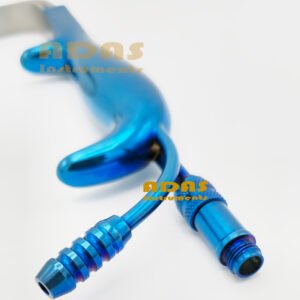
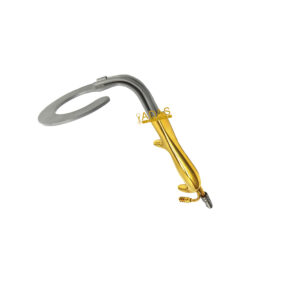
C Circular Breast Retractors | 2 and 4 in Blades, Fiber Optic and Suction Options
Price range: $ 75.00 through $ 195.00
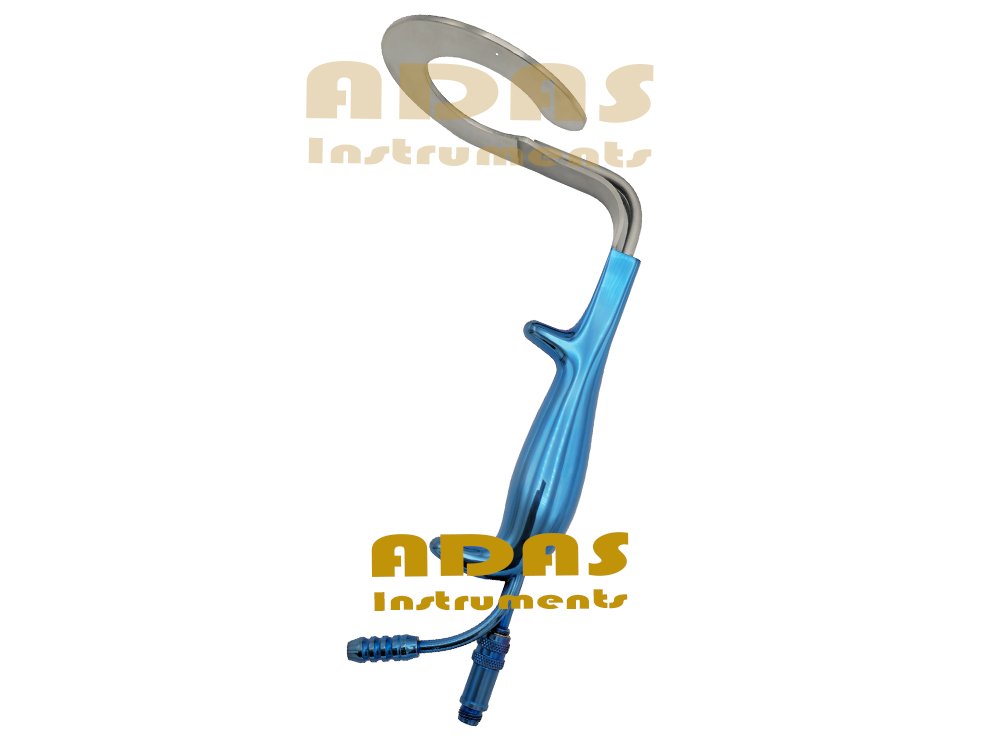
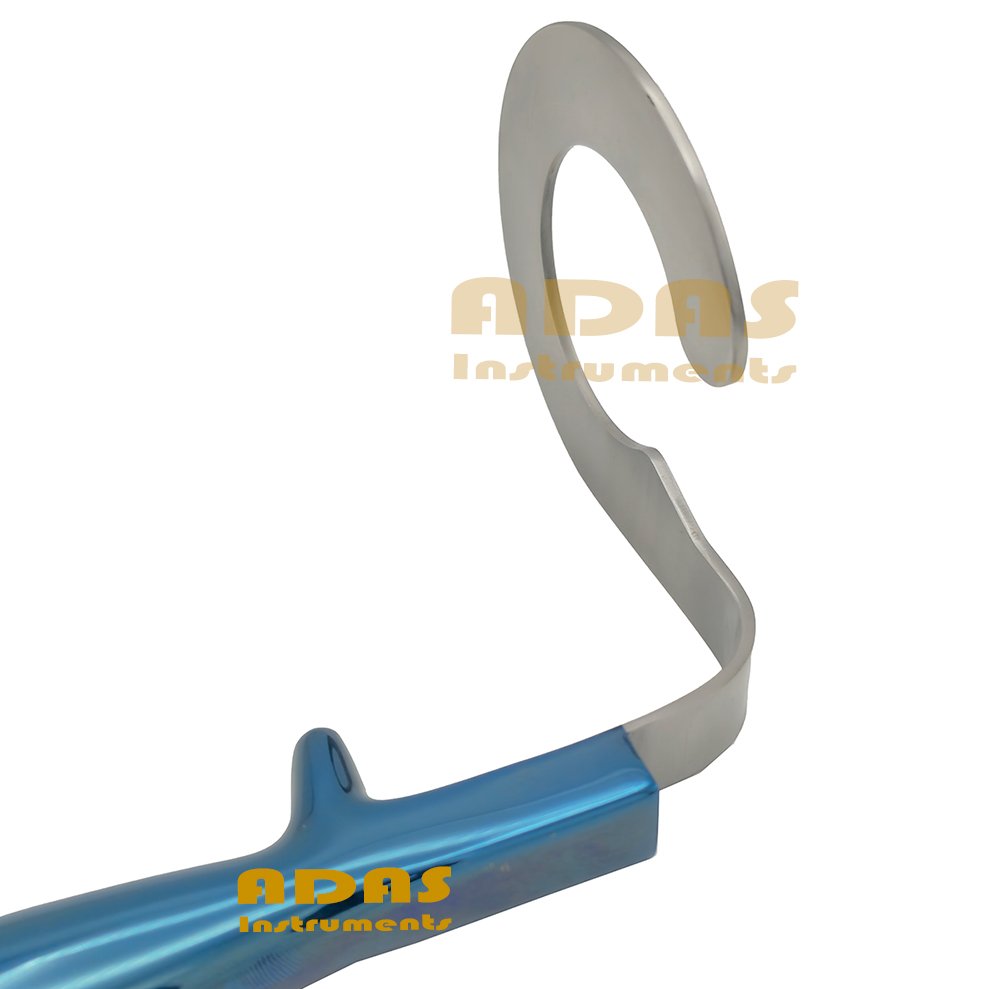
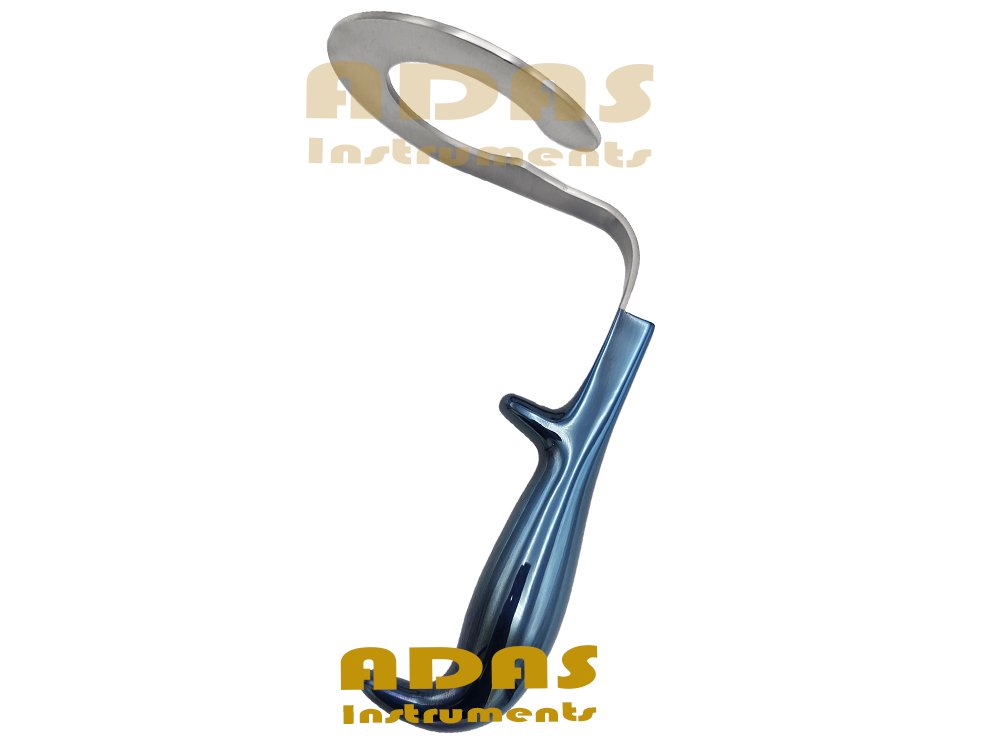
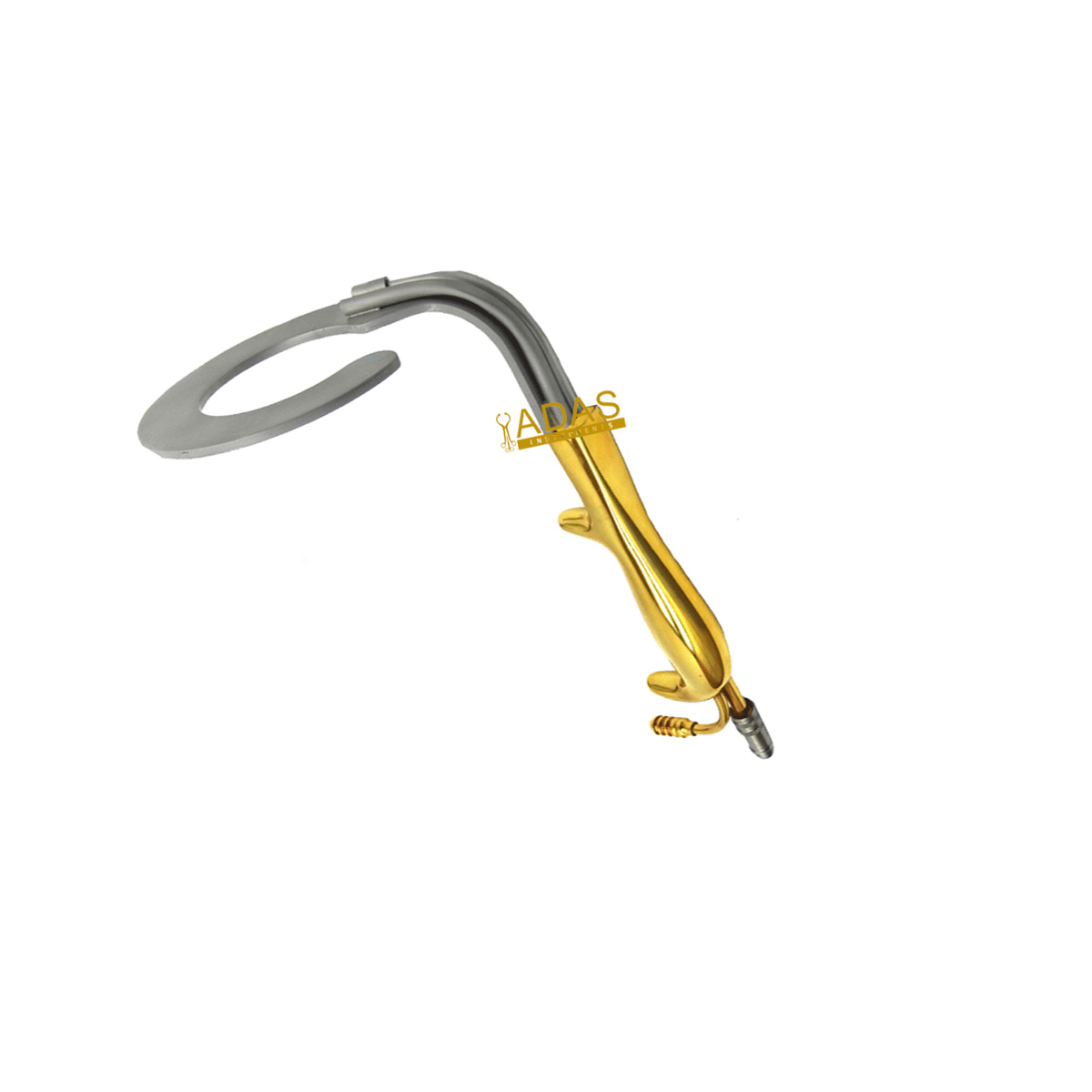
C circular breast retractors, also listed as the Stanger C breast retractor, are rigid semi circular blades shaped to sit around the curve of the breast rather than flat against it. Google’s own explanation of why that matters is the best one: unlike flat or right angled retractors, the C shape holds the breast back to create a large optical cavity inside the pocket while the incision stays conservative. Ours come with a 2 in regular blade or a 4 in extended blade, and take a fiber optic light, a suction tube, both, or neither.
Key Features
- Rigid C arc, shaped to the curve of the breast
- Blade: 2 in regular, or 4 in extended
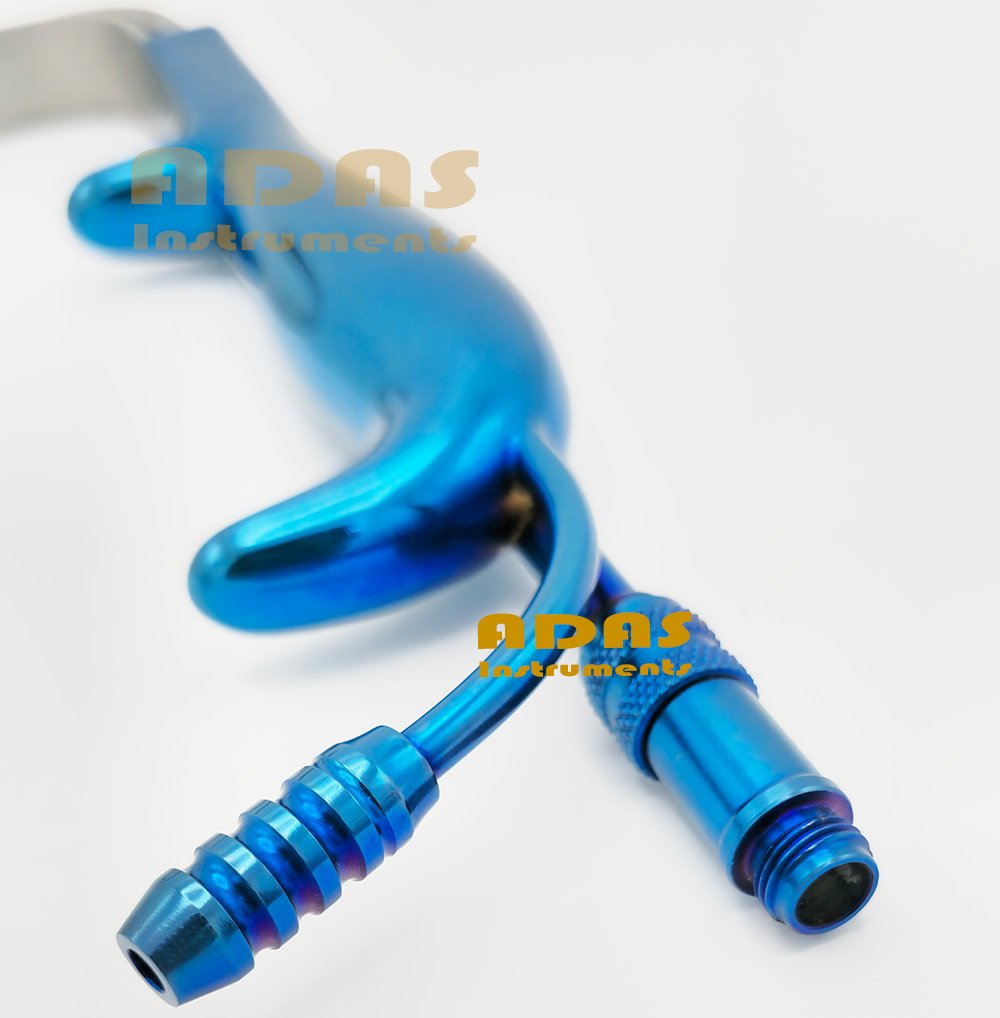
- Attachments: fiber optic and suction, fiber optic only, suction only, or neither
- Creates a wide view through a small incision
- Cut from high quality medical grade stainless steel and fully autoclavable
- Three year replacement warranty against manufacturing defects
- Item code AP-202.120

What C circular breast retractors are
C circular breast retractors answer a problem of geometry. A breast is a curve, and most retractors are not. A flat or right angled blade pressed against a curved surface holds one line of it and lets the rest fall back, which is why the view through a small incision closes up the moment the blade is loaded.
The C circular pattern is the answer to that geometry. The blade is a rigid arc, shaped to fit around the breast rather than across it, so it holds the whole curve at once. Google’s own description of the class, which also records the alias Stanger C breast retractor, puts the benefit this way: the C shape controls and holds back breast flesh to create a large optical cavity inside the breast pocket while requiring only a conservative, small incision. That sentence is the entire argument for the instrument.
Two blades and four attachment choices come off that one shape, and the family is sold as C circular breast retractors rather than as one instrument because the arc is the same in every version. Buyers also reach it by typing circular retractor surgery, which is the phrase Google suggests for the question this page answers.
The choices themselves are simple. A 2 in regular blade, or a 4 in extended one for a deeper pocket. And the arc can be ordered bare, with a fiber optic light, with a suction tube, or with both, because electrocautery inside a closed pocket makes smoke that has nowhere to go, and a suction channel on the blade clears it without a second instrument in the wound.
It is also the page in this category that already earns something. Over the last three months Search Console records this page at an average position of 8.3, on page one, with a click on it. That is the best performing product page of the twelve being rebuilt, which is why the sizes and the attachment choices are set out in full below.
Key design features
The arc, and the optical cavity
The blade is a rigid semi circle, not a curve bent into a flat blade. Rigid is the point: a C that flexes under load stops being a C and the cavity closes. What the shape buys is a wide view through a small opening, which is the trade every breast incision is trying to make.
Two blade lengths
A 2 in regular blade for most work and a 4 in extended blade when the pocket is deeper than the arc can reach. The extended blade is not simply longer: a deeper arc holds a bigger cavity, and it is the one to order if your pockets tend to run deep or you are working through an axillary approach.
Four attachment choices
Fiber optic and suction together, fiber optic alone, suction alone, or a bare arc. The light mounts to the blade and lights the cavity the arc is holding open. The suction tube clears cautery plume out of it. Ordering the bare arc is a real choice and plenty of surgeons make it.
An ergonomic grip
The handle is shaped rather than round. A C retractor is held under constant steady load for long stretches with no ratchet and no self retaining mechanism to take over, so the shape of the grip is doing real work: it stops the instrument rotating in the hand as the load changes.
Which blade and which attachments to order
Two decisions, and the attachment one is where most of the price sits.
| Choice | Options | How to decide |
|---|---|---|
| Blade | 2 in regular | Most primary work. The common choice |
| Blade | 4 in extended | A deeper pocket, an axillary approach, a larger breast |
| Attachments | Fiber optic and suction | Cautery running inside a closed pocket, and no good light from outside |
| Attachments | Fiber optic only, suction only, or neither | Pick the one job the retractor should take off somebody else’s hands |
Where it is used
Anywhere the problem is the curve of the breast rather than the depth of the pocket.
| Procedure | What the arc gives | Note |
|---|---|---|
| Breast augmentation | A wide cavity through a small incision | The main use |
| Mammaplasty and reduction | Holds the whole curve while the lower pole is shaped | Order the 4 in blade |
| Implant exchange | A stable cavity in a pocket that has lost its shape | Fiber optic earns its place here |
| Reconstruction | Holds a flap over an expander without a point anywhere on it | The arc is blunt along its whole length |
What it holds back, and what it must not do
A rigid arc is a strong instrument and the right hand column is about what that strength can be misused for.
| The task | What this retractor does | What it must not do |
|---|---|---|
| Holding the curve | Holds the whole arc of the breast at once | It is not forced into a pocket smaller than the arc. The incision sets the blade, not the other way round |
| Making a cavity | Creates a wide view through a conservative incision | It is not a self retainer. There is no ratchet and it has to be held |
| Lighting and clearing | Takes a light and a suction tube on the blade | It is not a light source and not a sump |
| Working near cautery | Nothing. This version is bare steel | It is NOT insulated. For work beside an active pencil, order the insulated version |
How it compares with the rest of the family
Two C circulars and two other shapes, and the choice is about the geometry rather than the features.
| Instrument | Shape | Insulated | Best at |
|---|---|---|---|
| C circular, this page | A rigid C arc | No | A wide cavity through a small incision |
| Insulated C circular | The same arc | Yes | The same, with cautery working against the blade |
| Tebbetts breast retractor | An angled blade with teeth | No | Holding dense tissue that slips |
| Ferreira plain | A curved tapered right angle blade | No | Lifting a flap and the pectoral edge |
Materials and finish
Every C circular breast retractor we make is cut from high quality medical grade stainless steel. The steel itself is made to a German specification. We do not publish a grade number. The number on a certificate tells a surgeon nothing about whether an arc is still true to its own radius after two hundred autoclave cycles and a few hundred loadings, and the answer to that is in the making rather than in the alloy.
The arc is formed and then stress relieved, which is the step that keeps it from slowly opening out under repeated load. An arc that has crept a few degrees wider no longer sits around the breast the way it was shaped to, and it is a fault that arrives too gradually to notice on any one case.
There is no sharp external edge anywhere along the inside or the outside of the arc. On a C blade that is two long edges rather than one, and the inside edge is the one that matters, because it is the one lying against tissue.
Caring for it
If the light or suction attachment is fitted, take it off, flush the suction tube before anything in it dries, and flush and dry the light guide. The attachments are the only part of this instrument that can be put through a cycle wrong.
Wash the arc with a soft brush along both edges, inside and out. Autoclave with the rest of the tray and store it so that nothing is resting inside the arc, because the shape is the instrument and anything pressing on it from the inside is slowly opening it out.
Ordering and wholesale
Each C circular breast retractor is made by Adas Instruments in our own workshop and sold direct, which is why the price sits where it does against the catalog houses. Order one for a single tray, or in quantity for a hospital list or a distributor line. We do OEM work under your own brand and your own item numbers. Send us a sample and we will hold a run to your pattern rather than ours. Stock items ship from our own workshop. Backorder items take 10 to 12 working days to make. Every instrument carries a three year replacement warranty against manufacturing defects. Production is controlled under an ISO 13485 quality management system.
Frequently asked questions
What is a C circular breast retractor used for?
C circular breast retractors hold the breast back around its own curve during augmentation, mammaplasty, implant exchange and reconstruction. The C arc creates a wide view inside the pocket while the incision stays small.
Why is the blade shaped like a C?
Because a breast is a curve. A flat or right angled blade holds one line of that curve and lets the rest fall back; an arc holds the whole of it, which is what creates the wide optical cavity through a conservative incision.
Is this the same as a Stanger C breast retractor?
Yes. Google’s own answer for this class records the Stanger C name as an alternative for the C circular pattern, and it is the same instrument.
What blade sizes and attachments can I order?
A 2 in regular blade or a 4 in extended blade, and four attachment choices: fiber optic and suction, fiber optic only, suction only, or a bare arc.
Is the C circular retractor insulated?
Not this version. There is an insulated C circular in the same two blade sizes for work beside an active cautery pencil, and it is linked below.
Related products and categories
The same arc with insulation for electrosurgical work is the insulated C circular breast retractor. For a scope channel in the blade rather than an arc, the ADAS OmniView breast retractor, or the Emory endoscopic plastic retractor for one handed traction with a scope under the blade.
The rest of this family sits under breast dissectors and spreaders, and the wider set for the operation is under breast surgery instruments.
| Weight | 0.15 kg |
|---|---|
| Select Attachments | With Fiber & Suction, With Fiber optic, With Suction Tube, Without Fiber & Suction |
| Blade Size | 2" Regular Blade, 4" Extended Blade |
Be the first to review “C Circular Breast Retractors | 2 and 4 in Blades, Fiber Optic and Suction Options”
Shipping & Delivery Policy
Processing Time: In-stock items are dispatched within 24-48 hours. For custom or out-of-stock items, production time is approximately 10-15 days.
Global Delivery Estimates
We partner with world-class couriers (DHL, FedEx) to ensure fast, tracked delivery.
- USA & Canada: 3-5 Business Days
- Europe & UK: 4-6 Business Days
- Rest of World: 5-7 Business Days
*We offer Air Cargo and Sea Freight options for bulk wholesale orders.
Customs & Duties
International buyers are responsible for any customs duties or taxes imposed by their country. Adas Instruments is not responsible for delays caused by customs clearance.
Lost Packages & Insurance
If your package is lost in transit, please contact us immediately. We offer full support and replacements for confirmed lost shipments. Note: You must report non-delivery within 3 weeks to be eligible for an insurance claim.
Related products


Reviews
There are no reviews yet.