

Kawamoto Double Ended Insulated Retractor, Three Blade Pairs
$ 26.00
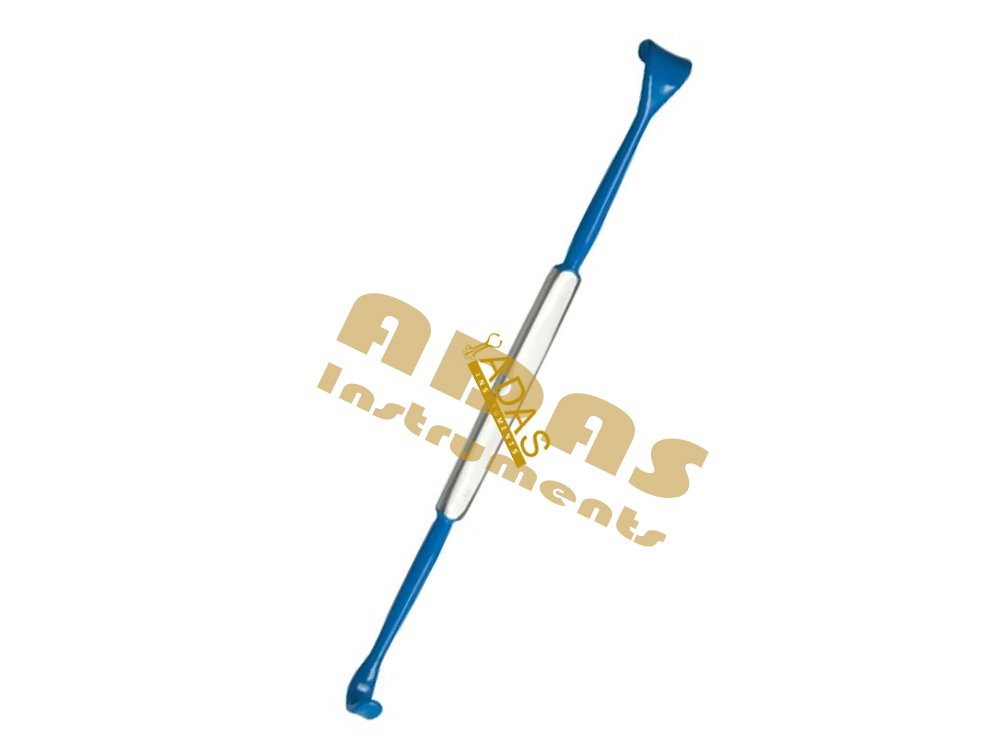
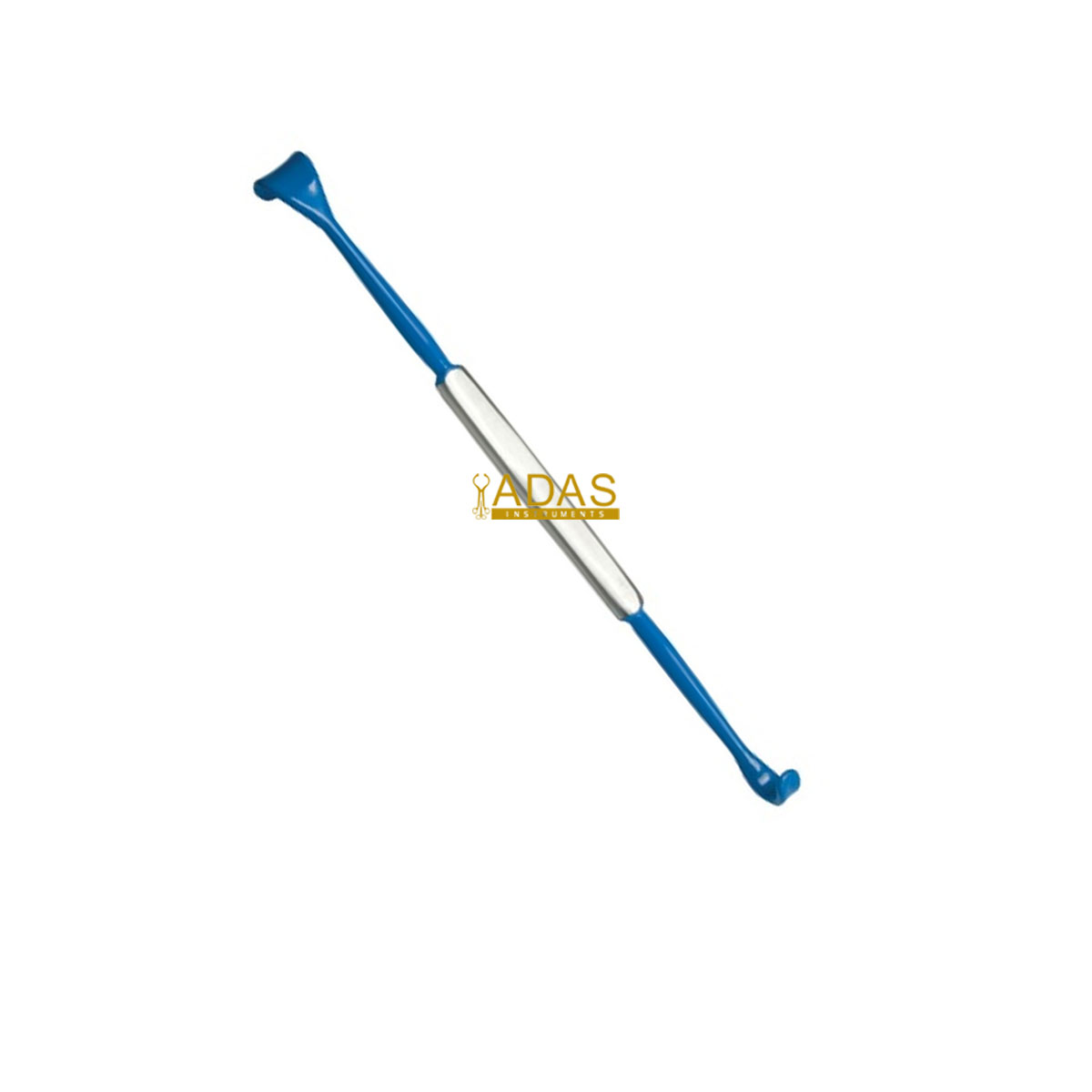
Kawamoto retractors are double ended, with a small curved blade at each end and a non conductive coating along both. The coating is the reason to buy this pattern rather than a plain one: facial and craniofacial work is done with an electrosurgery pencil in the wound, and a bare steel blade held against a skin flap is a route for current and heat into tissue that was only being held. Our own record carries three blade pairs, 14 and 16 mm, 8 and 10 mm, and 5 and 10 mm, which is why one instrument covers a wide flap and a narrow one in plastic, craniofacial and maxillofacial surgery.
Key Features
- Double ended, with a different blade width at each end
- Three blade pairs from our own record: 14 and 16 mm, 8 and 10 mm, 5 and 10 mm
- Non conductive coating on both blades, for work alongside electrocautery
- The coating is there to stop stray current and heat reaching a held skin flap
- Curved blade shape, the same idea as a Desmarres blade, for facial soft tissue
- Used in plastic, craniofacial, maxillofacial and reconstructive surgery, and in blepharoplasty
- High quality medical grade stainless steel, autoclavable and made to be used again
- Three year replacement warranty against manufacturing defects. Item code AP-43.14

What the double ended insulated retractor is
The double ended insulated retractor, catalogued as the Kawamoto pattern, has a small curved blade at each end and a non conductive coating along both of them.
The coating is the reason to buy this rather than a plain retractor. Facial and craniofacial work is done with an electrosurgery pencil inside the wound, and a bare steel blade held against a skin flap is a path for current and conducted heat into tissue that was only being held out of the way.
Our own record carries three blade pairs: 14 and 16 mm, 8 and 10 mm, and 5 and 10 mm. Two blade widths on one instrument is the second idea here, and it means one instrument covers a wide flap and a narrow one without anybody swapping it out.
Key design features of this insulated retractor
Four features, and the first two are the whole pattern.
- A non conductive coating on both blades. It is there to stop stray current and conducted heat reaching a retracted flap while cautery is working beside it.
- Double ended, with a different blade width at each end. One instrument, two widths, no swap.
- Three blade pairs on our own record. 14 and 16 mm, 8 and 10 mm, 5 and 10 mm.
- A curved blade face. The same idea as a Desmarres blade, sized and shaped for facial soft tissue rather than an eyelid.
Double ended retractor blade pairs and options
Six rows of this table are ours. Only the last one is not.
| What | Option | Where it comes from | Item code |
|---|---|---|---|
| Blade pair | 14 mm and 16 mm | Our own Tip options attribute | AP-43.14 |
| Blade pair | 8 mm and 10 mm | Our own Tip options attribute | AP-43.14 |
| Blade pair | 5 mm and 10 mm | Our own Tip options attribute | AP-43.14 |
| Ends | Two, a different blade width at each end | Our own product record | |
| Coating | Non conductive, on both blades | Our own product record | |
| Blade shape | Curved, the same idea as a Desmarres blade | Our own product record | |
| Overall length | Not carried | Others publish about 152 mm. Not repeated here as ours |
Our Tip options attribute carries all three pairings and they match the three configurations this pattern is published in everywhere else, which is worth saying because it is the first product in this category where an outside catalogue confirms our own attribute data exactly. The overall length is a different matter: our record does not carry one, so the figure other catalogues publish is not repeated here as ours.
Where a kawamoto retractor is used
One home procedure and a spread of neighbours, and the home procedure is the one that needs the coating.
| Procedure | What the double ended insulated retractor is used for |
|---|---|
| Transconjunctival blepharoplasty | The named use, and the reason the coating is there |
| Craniofacial surgery | Facial soft tissue and flap retraction with cautery in the field |
| Orthognathic surgery | Holding soft tissue off a jaw while it is cut and fixed |
| Maxillofacial surgery | Small flap work around the midface |
| Facelift and periorbital surgery | Holding a small flap where a large retractor will not fit |
| Reconstructive flap surgery | Controlled exposure of a small flap |
| Hand, foot and ankle surgery | A published use for this pattern outside the face |
| Microsurgery | Small fields where the blade width is measured in single millimeters |
What the blades hold, and what they protect
The protecting column on this instrument is not about pressure or tearing. It is about electricity.
| Structure | What this instrument does with it |
|---|---|
| Skin flaps | HOLDS, on the curved blade face |
| Facial soft tissue | HOLDS. The home tissue of this pattern |
| Subcutaneous tissue | HOLDS |
| Small operative flaps | HOLDS, and the narrow end exists for exactly this |
| Heat sensitive tissue | PROTECTS. This is the whole point of the coating |
| Skin edges near an active electrode | PROTECTS, from stray current and from conducted heat |
| Structures adjacent to cautery | PROTECTS |
| Bone | NEITHER. Not a bone retractor |
| Viscera | NEITHER. Not an abdominal instrument |
How this kawamoto insulated retractor compares with the rest of the family
Three of the seven rows are our own pages and the last three are this same instrument in its other blade pairs.
| Pattern | How it differs | When you reach for it instead |
|---|---|---|
| Desmarres lid retractor | ONE curved blade, and the shape this pattern borrows at both ends | The eyelid itself, rather than a facial flap |
| Morris retractor | A larger handheld blade, not insulated | A bigger flap, and a field with no cautery in it. Published sources note the two are used together |
| Insulated US army retractor | The same idea, a coated blade, on a much larger right angled pattern | A general surgical wound rather than a facial flap |
| Freeman flap retractor | A fixed curved blade with a fiberoptic option, not insulated | A deeper flap where light matters more than insulation |
| The 14 and 16 mm pair | The widest of our three pairs | Broad craniofacial exposure |
| The 8 and 10 mm pair | The middle pair | General facial flap work |
| The 5 and 10 mm pair | The narrowest blade we make in this pattern | A constrained entry point where 8 mm is already too wide |
Materials and finish
Made from high quality medical grade stainless steel with a non conductive coating on both blades, and the exposed steel is satin finished so the light does not come back out of a small facial wound. The steel itself is made to a German specification. The coating is applied over the full working length of each blade and is checked for continuity, because an insulated retractor with a gap in the layer gives the surgeon a false sense of safety, which is worse than a plain instrument honestly labelled.
Care and sterilization
Clean with a soft brush under running water, along the concave face of both blades. Do not use an abrasive pad or an aggressive brush on the coated surfaces. Rinse in deionized water and dry fully before autoclaving. Inspect the coating on both blades before every case and take the instrument out of service at the first chip, crack or worn patch. Store it in a tray where the blades are not knocking against other instruments, because that is how a coating fails.
Ordering and wholesale
Adas Instruments makes the double ended insulated retractor to order and supplies hospitals, surgical centers and distributors across the United States, Latin America, Europe and Asia. State the blade pair: 14 and 16 mm, 8 and 10 mm, or 5 and 10 mm. Bulk and wholesale pricing is available, and instruments held on backorder ship in 10 to 12 working days. Every instrument carries a three year replacement warranty against manufacturing defects. Certifications: CE. Production is controlled under an ISO 13485 quality management system.
Frequently asked questions
What is a kawamoto retractor used for?
Holding skin flaps and facial soft tissue out of the way in plastic, craniofacial, maxillofacial and reconstructive surgery, particularly where an electrosurgery pencil is working in the same wound. Transconjunctival blepharoplasty is the use it is named for most often.
Why is a double ended insulated retractor insulated?
To stop stray electrical current and conducted heat passing from an active electrode, through the steel of the retractor, into the tissue the retractor is holding. That tissue is usually a skin flap that has to survive, so a thermal injury from an instrument that was only holding it is a real complication and an avoidable one.
Which double ended insulated retractor blade pair should I order?
14 and 16 mm for broad craniofacial exposure. 8 and 10 mm for general facial flap work, which is the usual choice. 5 and 10 mm when the entry point is tight enough that 8 mm is already too wide. All three pairs are on our own record.
What is the insulated retractor coating made of?
We do not state a coating material or color on this page, because our own record does not carry one and we do not repeat somebody else specification as ours. What we do state is what the coating does, which is the part that decides whether the instrument is right for your case. Ask us and we will confirm the coating on the batch before the order goes into production.
How is a double ended insulated retractor different from a Desmarres lid retractor?
It borrows the curved blade shape and puts one at each end, insulates both, and sizes them for facial soft tissue instead of an eyelid. A Desmarres is single ended and its widths are 10, 12 and 14 mm for the lid. If the target is the eyelid itself, use the Desmarres. If it is a facial flap next to cautery, use this.
Related products and categories
Buyers who order the double ended insulated retractor usually look next at the desmarres lid retractor, the insulated us army retractor and the freeman flap retractor. The whole family sits in hooks and retractors, and this pattern is also listed under electrosurgery instruments.
| Weight | 0.06 kg |
|---|---|
| Tip options | 14mm – 16mm, 5mm – 10mm, 8mm – 10mm |
Be the first to review “Kawamoto Double Ended Insulated Retractor, Three Blade Pairs”
Shipping & Delivery Policy
Processing Time: In-stock items are dispatched within 24-48 hours. For custom or out-of-stock items, production time is approximately 10-15 days.
Global Delivery Estimates
We partner with world-class couriers (DHL, FedEx) to ensure fast, tracked delivery.
- USA & Canada: 3-5 Business Days
- Europe & UK: 4-6 Business Days
- Rest of World: 5-7 Business Days
*We offer Air Cargo and Sea Freight options for bulk wholesale orders.
Customs & Duties
International buyers are responsible for any customs duties or taxes imposed by their country. Adas Instruments is not responsible for delays caused by customs clearance.
Lost Packages & Insurance
If your package is lost in transit, please contact us immediately. We offer full support and replacements for confirmed lost shipments. Note: You must report non-delivery within 3 weeks to be eligible for an insurance claim.
Related products


Reviews
There are no reviews yet.