
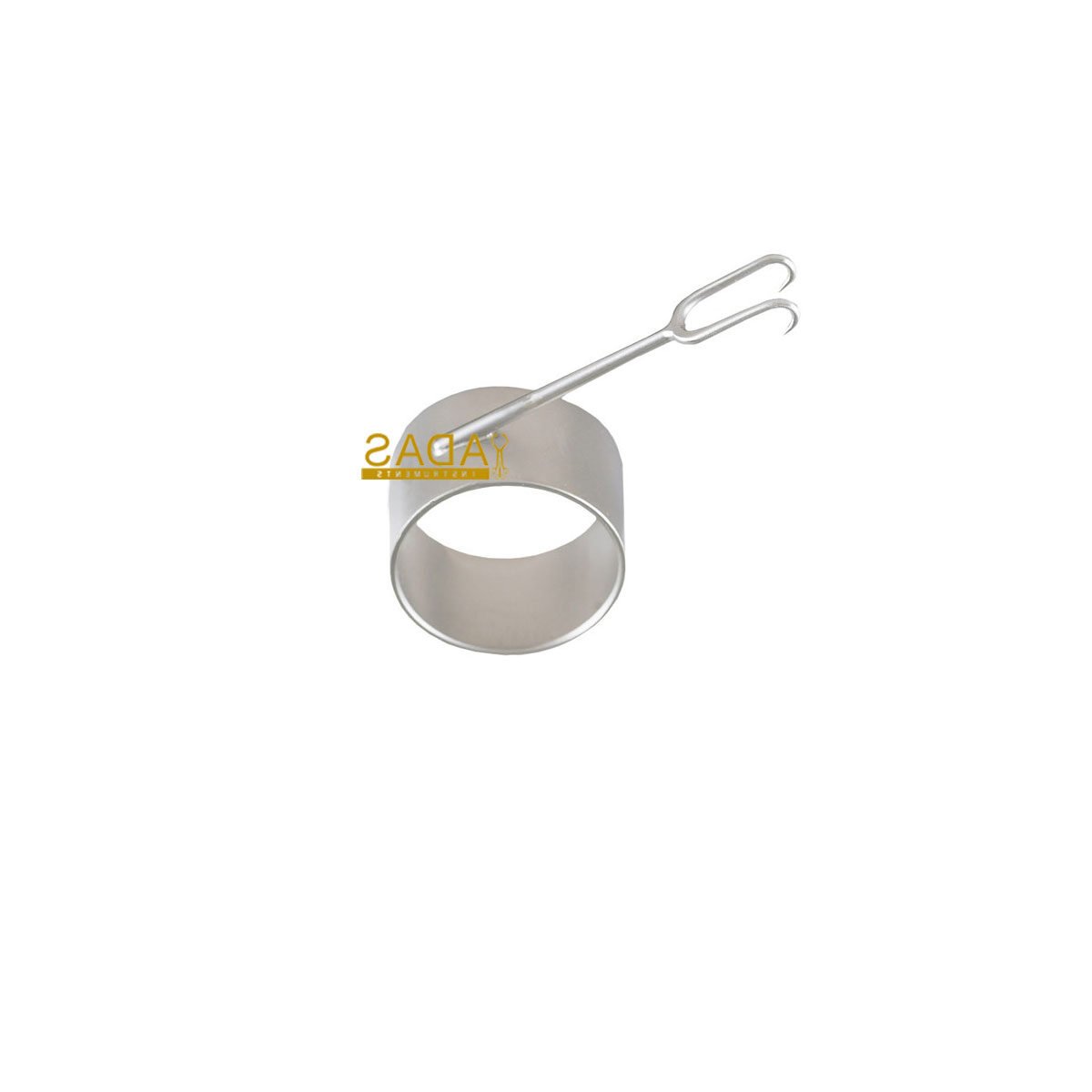
Millard Cottle Thumb Hook, Thumb Ring Grip
$ 18.00
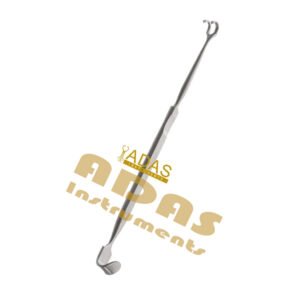
Millard Cottle thumb hooks are fine nasal retraction hooks worn on the thumb rather than gripped in the fist. The ring or thimble sits over the thumb and braces the instrument against the whole digit, which is what lets a surgeon hold steady traction on an alar margin for minutes at a time without the hand cramping. It is used in rhinoplasty and cleft lip repair, on the nostril rim and the skin flaps around it.
Key Features
- Thumb ring grip, so the instrument is worn rather than held
- Braces against the whole thumb, which steadies long periods of traction
- Used on alar margins, nostril rim tissue and nasal skin flaps
- Frees the rest of the hand while the hook stays in position
- Used in rhinoplasty, cleft lip repair, ENT and reconstructive nasal surgery
- High quality medical grade stainless steel, autoclavable and made to be used again
- Three year replacement warranty against manufacturing defects
Available on backorder

What the millard cottle thumb hook is
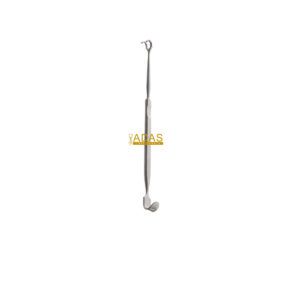
The millard cottle thumb hook is a fine nasal retraction hook that is worn on the thumb rather than gripped in the fist. A ring or thimble at the handle end takes the thumb, and the shaft runs forward from it to the prongs.
That changes where the effort goes. A hook held in the fingers is held by muscles that tire in a few minutes; a hook braced against the whole thumb is held by the arm. On an alar margin that has to stay under the same tension for the length of a step, that difference is the reason the pattern exists.
It carries two surgical names because two surgeons shaped it, Millard and Cottle, and catalogs write it both ways.
Key design features of this thumb hook
Four features, and the first one is the whole instrument.
- Thumb ring or thimble. A thumb hook is worn, not gripped, which is what steadies long traction.
- Fine prongs. Cut for the alar margin and the nostril rim, not for a body of tissue.
- Short shaft. The working end is close to the hand, so small movements stay small.
- The rest of the hand stays free. Fingers can hold something else while the hook stays put.
Millard cottle thumb hook size
This section is short, and it is short for a reason.
| Pattern | Grip | Prongs | What our record carries | Item code |
|---|---|---|---|---|
| Millard Cottle thumb hook | Thumb ring or thimble | Fine, single or double to order | No prong width and no overall length. Both are made to order | AP-56.100 |
Our own record carries no prong width and no overall length for this pattern. Other catalogs publish figures of their own, including prong widths in the 8 to 18 mm range, and none of them is repeated here as ours. Ask and it will be measured.
Where a cottle thumb hook is used
A cottle thumb hook is reached for wherever fine traction has to be held for a while.
| Specialty | What the millard cottle thumb hook is used for |
|---|---|
| Rhinoplasty | Holding the alar margin and nostril rim under steady fine traction |
| Cleft lip repair | Traction on a short asymmetric rim while it is released and fixed |
| ENT nasal surgery | Fine exposure through the nostril |
| Reconstructive nasal surgery | Holding rebuilt tissue while it is positioned |
| Facial plastic surgery | Skin flap traction around the nasal base |
| Revision rhinoplasty | Long steps where a gripped hook would drift |
| Teaching sets | A worn hook holds its position while a trainee looks away and back |
What the prongs hold, and what they do not
A fine hook has narrow limits and they are worth setting out rather than leaving to be found.
| Structure | How the prongs take it |
|---|---|
| Alar margins | The tissue this pattern exists for. Held on fine points under steady tension |
| Nostril rim tissue | Drawn back and kept there |
| Nasal skin flaps | Held in plane while the other hand works |
| Soft tissue edges | Taken on a small bite rather than a broad face |
| Columellar soft tissue | Held during exposure, though the weighted pattern suits a long hold better |
| Nasal mucosa | NOT this instrument. Sharp points go through mucosa. Use a blunt ball ended pattern |
| A body of tissue | NOT this instrument. Fine prongs take a small bite. Use a blade retractor |
How the thimble hook compares with the rest of the family
Four of the rows below are our own. This pattern and two of the others share the ring idea, which makes the thimble hook family the most distinctive group in this category.
| Pattern | How it differs | When you reach for it instead |
|---|---|---|
| Swivel ring double hook | A ring that turns, so the angle of pull changes | Dissection where the direction of traction keeps moving |
| Martinez Kilner nasal retractor | A ring handle with 7.5 mm prongs on an 11.5 cm shaft | Nasal tip and alar retraction with a known prong width |
| Gruber columella retractor with weight | Held by a weight, not by a hand | A long case where nobody should have to hold anything |
| Fomon ball end retractor | Blunt ball tips rather than sharp prongs | Mucosa and anything that must not be pierced |
| Kilner alae retractor | A plain handle rather than a ring | Alar rim work where a flat handle is preferred |
| Joseph skin hook | A general skin hook with a plain handle | Skin edges away from the nose |
Materials and finish
Made from high quality medical grade stainless steel, satin finished so the operating light does not reflect off the shaft into the surgeon eye. The steel itself is made to a German specification. The ring edge is rolled, because a ring worn against a thumb for an hour will mark it if the edge is left square.
Care and sterilization
Clean with a soft brush under running water, working the prongs, the junction of shaft and ring, and the inside of the ring itself where a glove leaves debris, then rinse in deionized water and dry fully before autoclaving. Store in a rack or a tip guard so nothing rests on the points. Check that the ring has not been bent out of round, because a ring that no longer fits the thumb turns a worn instrument back into a gripped one.
Ordering and wholesale
Adas Instruments makes this pattern to order and supplies hospitals, surgical centers and distributors across the United States, Latin America, Europe and Asia. Bulk and wholesale pricing is available, and instruments held on backorder ship in 10 to 12 working days. Every instrument carries a three year replacement warranty against manufacturing defects. Certifications: CE. Production is controlled under an ISO 13485 quality management system.
Frequently asked questions
What is a thumb hook used for?
Holding fine tissue under steady traction while the other hand works. In a nasal set it is used on the alar margin, the nostril rim and the skin flaps around them, in rhinoplasty and in cleft lip repair. The thumb ring is what lets the traction stay constant instead of drifting as the fingers tire.
Why wear the hook instead of holding it?
Because the muscles are different. A pinch grip is held by small muscles in the hand and they fatigue within minutes. A ring worn on the thumb transfers the load to the forearm, which can hold the same position far longer without the tip wandering.
Is it the same as a Cottle thumb hook?
Yes. Catalogs write this pattern as a Millard, a Cottle or a Millard Cottle thumb hook, and some list it as a thimble hook. They are the same instrument and all of those names bring you to this page.
Single prong or double prong?
Both exist. A single prong takes the smallest possible bite and suits fixing one point; a double prong holds a flap in its plane and stops it rotating. Tell us which you want when you order, because our own record does not specify one.
Can it be used on mucosa?
No. The prongs are sharp and sharp points go through mucosa rather than holding it. For a mucosal surface take a blunt ball ended pattern instead, which presses on the tissue and slides off before it tears.
Related products and categories
Buyers who order the millard cottle thumb hook usually order alongside it the swivel ring double hook, the gruber columella retractor with weight and the martinez kilner nasal retractor. The whole family sits in hooks and retractors, and this pattern is also listed under rhinoplasty instruments.
| Weight | 0.09 kg |
|---|
Be the first to review “Millard Cottle Thumb Hook, Thumb Ring Grip”
Shipping & Delivery Policy
Processing Time: In-stock items are dispatched within 24-48 hours. For custom or out-of-stock items, production time is approximately 10-15 days.
Global Delivery Estimates
We partner with world-class couriers (DHL, FedEx) to ensure fast, tracked delivery.
- USA & Canada: 3-5 Business Days
- Europe & UK: 4-6 Business Days
- Rest of World: 5-7 Business Days
*We offer Air Cargo and Sea Freight options for bulk wholesale orders.
Customs & Duties
International buyers are responsible for any customs duties or taxes imposed by their country. Adas Instruments is not responsible for delays caused by customs clearance.
Lost Packages & Insurance
If your package is lost in transit, please contact us immediately. We offer full support and replacements for confirmed lost shipments. Note: You must report non-delivery within 3 weeks to be eligible for an insurance claim.
Related products
Reviews
There are no reviews yet.