
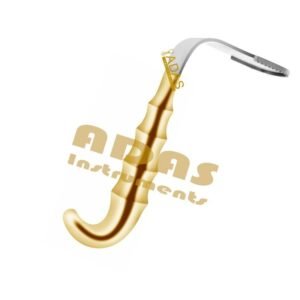
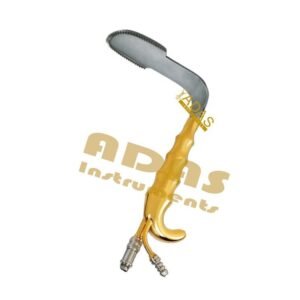
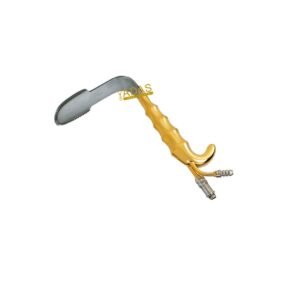
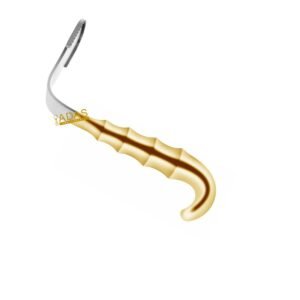
ADAS LumaPocket Breast Retractor, 90 to 140 mm, Fiber Optic and Suction Options
Price range: $ 80.00 through $ 175.00
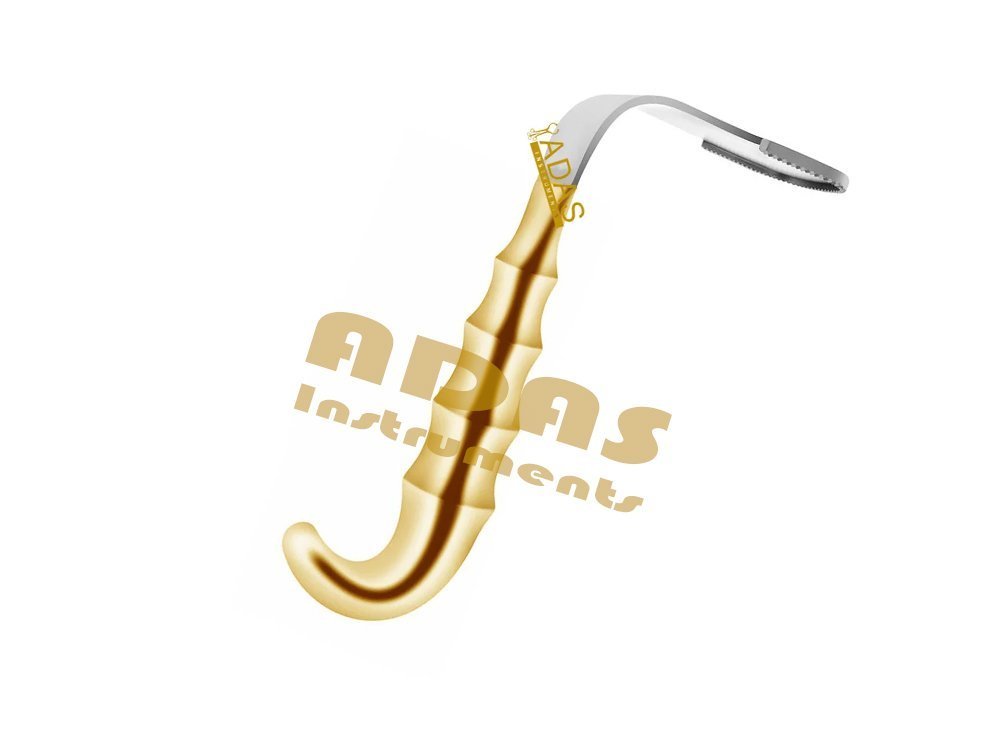
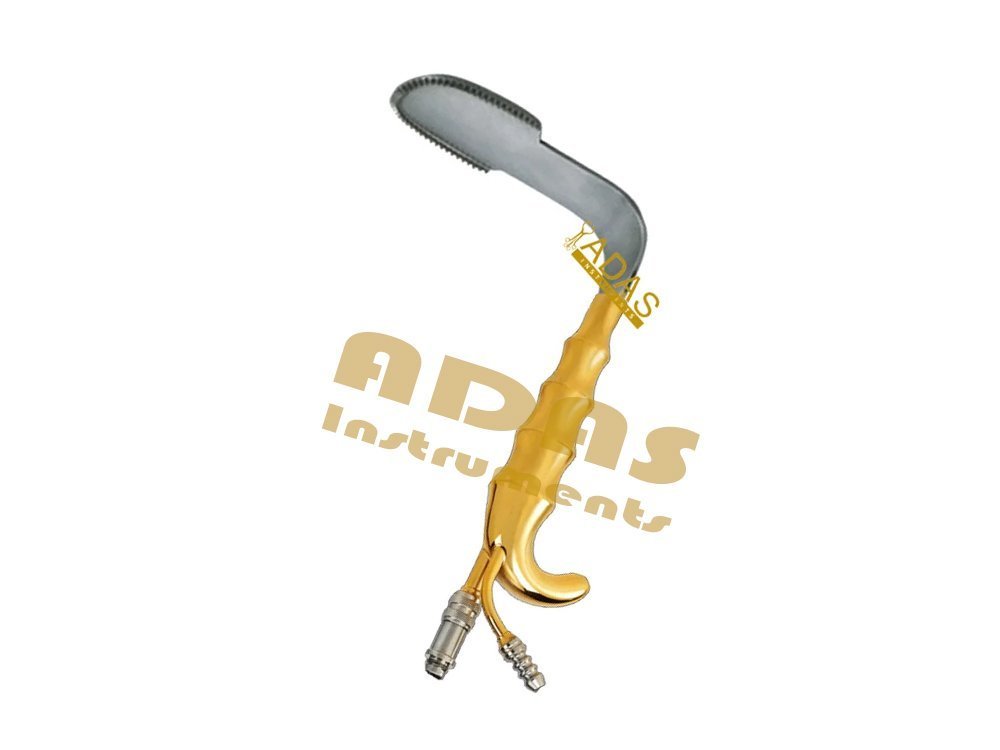
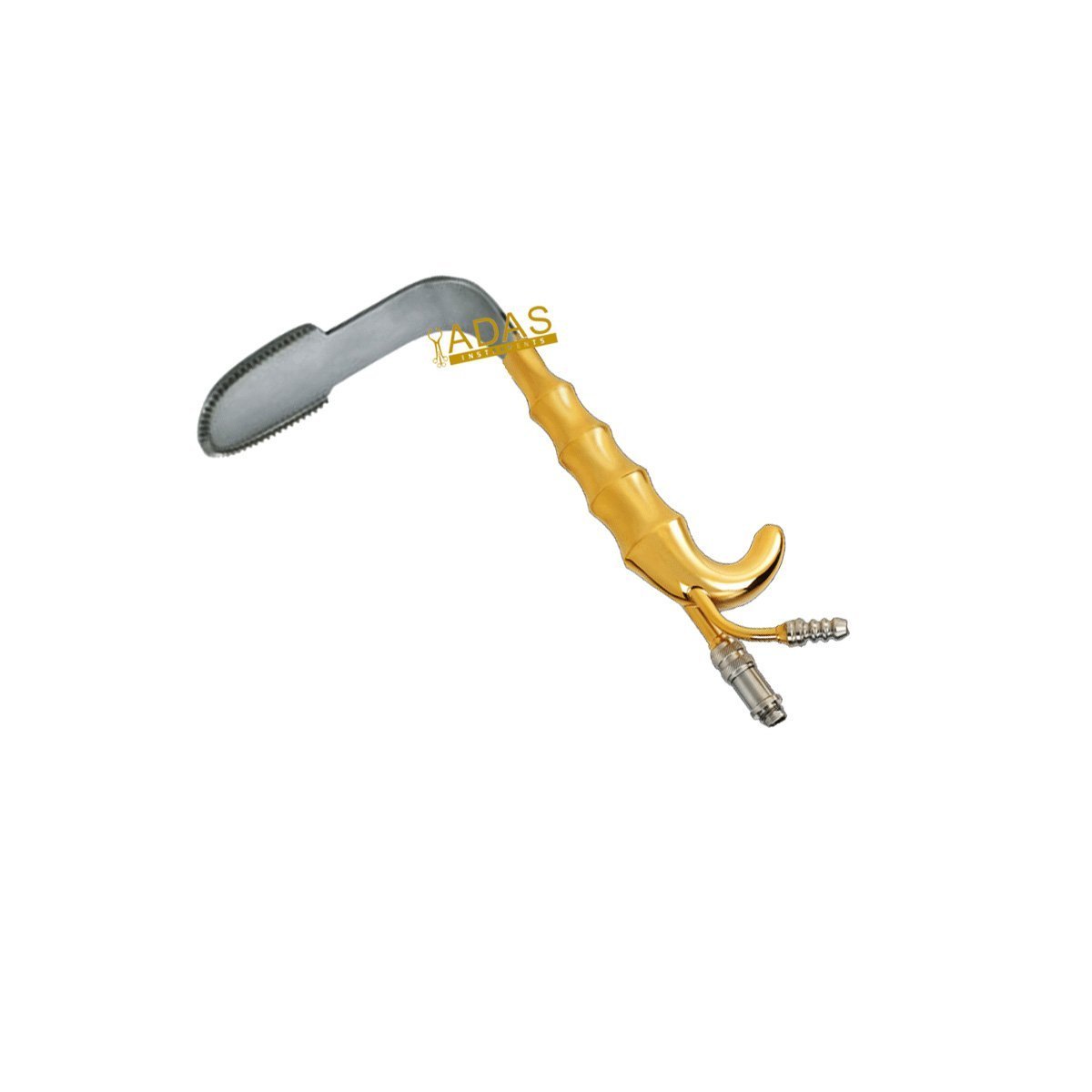
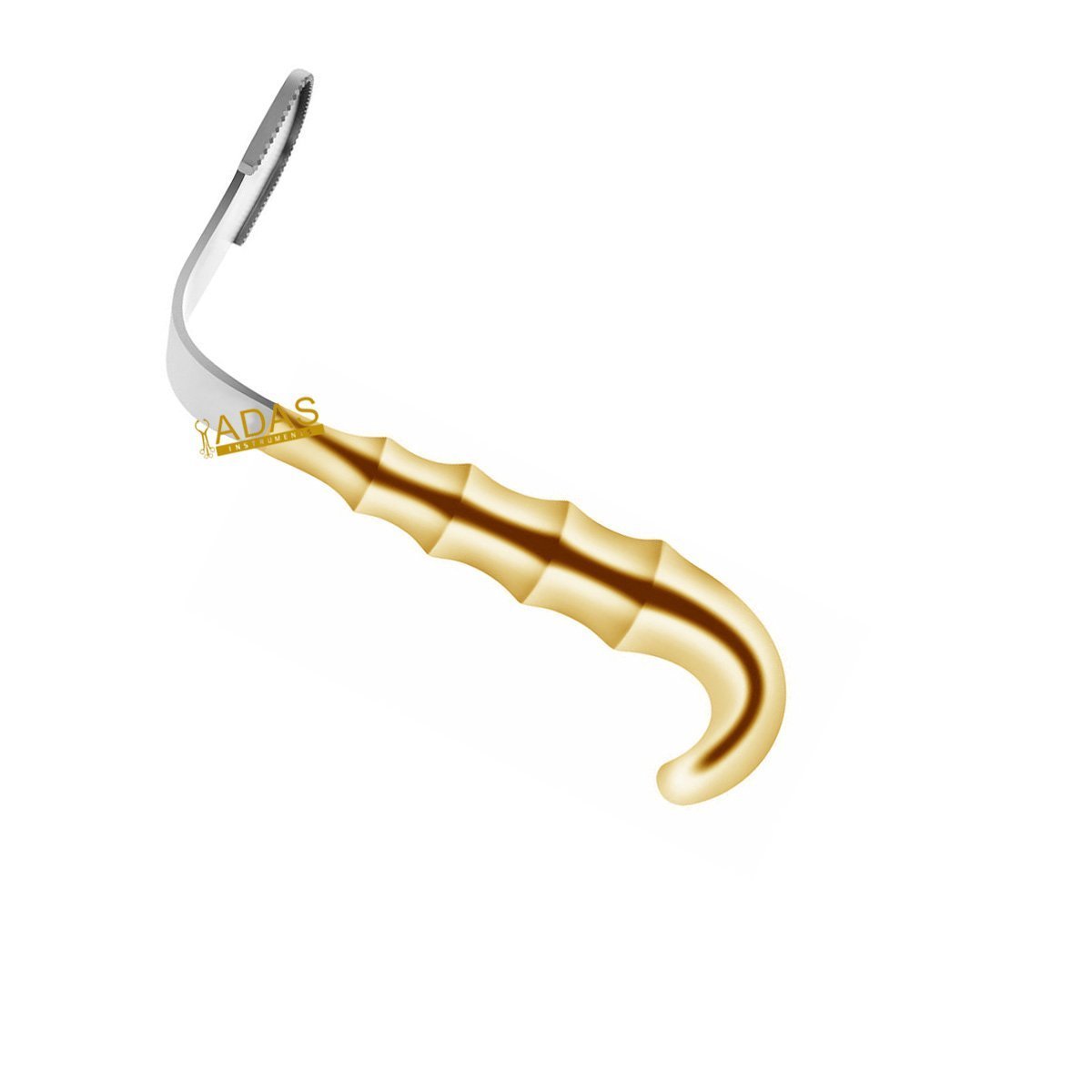
The ADAS LumaPocket breast retractor puts light and suction on the same blade, and the suction is there for smoke as much as for blood. Breast pocket dissection is done with an electrocautery pencil inside a closed space, the plume fills that space within seconds, and a surgeon working by fiber optic light through smoke can see less than one working with no light at all. Our own record carries four attachment combinations and three blade lengths, 90 mm, 110 mm and 140 mm, all at 27 mm wide, for transaxillary, inframammary and periareolar work.
Key Features
- Fiber optic light and a suction channel on one blade
- The suction clears electrocautery smoke, not only blood, so the light stays useful
- Four attachment options from our own record, including fiber and suction together
- Three blade lengths from our own record: 90 mm, 110 mm and 140 mm, all 27 mm wide
- Also supplied plain, with no fiber and no suction
- Used in transaxillary, inframammary and periareolar breast surgery
- High quality medical grade stainless steel, autoclavable and made to be used again
- Three year replacement warranty against manufacturing defects. Item code AP-201.160

What the lumapocket breast retractor is
The lumapocket breast retractor puts a fiber optic light and a suction channel on the same 27 mm blade, and the suction is there for smoke at least as much as for blood.
Breast pocket dissection is done with an electrocautery pencil inside a closed space. The plume fills that space in seconds, and a surgeon working by fiber optic light through smoke sees less than one working with no light at all, because the light scatters off the particles instead of reaching the far wall. Clearing the smoke is what makes the light worth having.
Our own record carries four attachment combinations and three blade lengths, 90 mm, 110 mm and 140 mm, all 27 mm wide. That is the whole ordering decision and the rest of this page is about making it.
Key design features of this lighted breast retractor with suction
Four LumaPocket features, and all four are on our own record.
- A fiber optic light channel. Light delivered at the working end of the blade, inside the pocket, which is the only place it is any use.
- A suction channel along the blade. It clears cautery plume and fluid without a second instrument in a small opening.
- Four attachment combinations. Fiber and suction together, fiber only, suction only, or plain with neither.
- Three blade lengths at one width. 90 mm, 110 mm and 140 mm, all 27 mm across, so reach changes and load spread does not.
Which breast retractor blade size to order
Seven rows of this LumaPocket table are ours. Only the last one is not.
| What | Option | Where it comes from | Item code |
|---|---|---|---|
| Blade size | 90 mm x 27 mm | Our own Blade Size attribute | AP-201.160 |
| Blade size | 110 mm x 27 mm | Our own Blade Size attribute | AP-201.160 |
| Blade size | 140 mm x 27 mm | Our own Blade Size attribute | AP-201.160 |
| Attachments | With fiber optic AND suction | Our own Select Attachments attribute | AP-201.160 |
| Attachments | With fiber optic only | Our own Select Attachments attribute | AP-201.160 |
| Attachments | With suction tube only | Our own Select Attachments attribute | AP-201.160 |
| Attachments | Plain, without fiber and without suction | Our own Select Attachments attribute | AP-201.160 |
| Overall length | Not carried | Our record carries the blade and not the handle |
Read the width first: it does not change. All three LumaPocket blades are 27 mm, so choosing between them is about how far into the pocket you need to be, not about how much tissue you are holding. The 90 mm is a periareolar or small pocket blade, the 110 mm is the general one, and the 140 mm is for a large breast or a transaxillary reach. Our record does not carry an overall length, so none is published here, and the millimeters above are the BLADE.
Where a breast retractor with light source is used
Every one of these is a closed pocket reached through an opening smaller than itself, which is the case the LumaPocket was drawn for.
| Procedure | What the lumapocket breast retractor is used for |
|---|---|
| Transaxillary breast augmentation | A long reach from a small axillary opening, lit from the blade |
| Inframammary breast augmentation | Pocket dissection under direct vision |
| Periareolar breast augmentation | A short incision and a deep pocket |
| Submuscular pocket dissection | Where cautery smoke has nowhere to go |
| Breast reconstruction | Flap and pocket work after mastectomy |
| Capsulectomy and revision surgery | Scarred pockets that need light more than width |
| Breast reduction | Deep planes on a large breast, using the 140 mm blade |
| Gynecomastia surgery | A flat chest pocket through a small incision |
What the lumapocket breast retractor holds, and what it clears
The LumaPocket has a third column job that most retractors do not: it takes things out of the field as well as holding things back.
| Structure | What this instrument does with it |
|---|---|
| Breast skin and fat flaps | HOLDS, across 27 mm of blade |
| The implant pocket wall | HOLDS and LIGHTS. The reason the pattern exists |
| Pectoral muscle | HOLDS, on a submuscular approach |
| Electrocautery smoke | CLEARS. The suction channel is for plume as much as for blood |
| Blood and irrigation fluid | CLEARS, through the same channel |
| The pocket interior | EXPOSES. A lit blade inside a closed space is the whole idea |
| Skin at the incision edge | PROTECTS, by sliding in rather than levering the edge |
| The nipple areola complex | PROTECTS on a periareolar approach |
| Tissue near the light post | PROTECTS. Follow the cable maker instructions on heat at the tip |
How this lighted breast retractor compares with the rest of the family
Six of the seven LumaPocket comparison rows are our own pages, which is worth saying plainly: we publish eight breast retractors and the comparison you actually need is between them, not against a competitor.
| Pattern | How it differs | When you reach for it instead |
|---|---|---|
| Breast Engler retractor | A 12 mm blade, narrower than this, same three option idea | An opening too small for a 27 mm blade to turn in |
| Marx breast retractor | A 30 mm solid blade with no light and no suction | A heavy flap in an open field where light is not the problem |
| Sculpo mammaplasty retractor | A channel that holds an endoscope instead of a light bundle | When you want a camera in the pocket rather than a lamp |
| ADAS OmniView breast retractor | Our other lighted breast pattern | Compare the two blade shapes against your own approach |
| Insulated C circular breast retractor | A C shaped blade with a non conductive coating | Cautery against the blade itself rather than smoke in the pocket |
| Tebbetts breast retractor | A flat angled blade, smooth or toothed | When the set specifies a Tebbetts |
| A plain fiber optic retractor | Light but no suction | A field with no cautery in it |
Lumapocket breast retractor materials and finish
The LumaPocket is made from high quality medical grade stainless steel, satin finished, and on a lit instrument the satin finish does a second job: a polished blade face throws the fiber optic light straight back at the surgeon instead of onto the tissue. The steel itself is made to a German specification. The light channel is finished inside as well as out, and the suction bore is smooth end to end, because a rough bore is where clot lodges.
Caring for a lumapocket breast retractor
Flush the LumaPocket suction channel through with a stylet or a channel brush until it runs clear, after every case, whether suction was connected or not. Clean the blade with a soft brush under running water and work around the light post and the channel behind it. Follow the light cable manufacturer instructions for the cable itself. Rinse in deionized water and dry fully before autoclaving. Store on a rack with the blade protected and the channel dry.
Ordering a lumapocket breast retractor, and wholesale
Adas Instruments makes the lumapocket breast retractor to order and supplies hospitals, surgical centers and distributors across the United States, Latin America, Europe and Asia. State the blade length, 90 mm, 110 mm or 140 mm, and the attachment combination: fiber and suction, fiber only, suction only, or plain. Bulk and wholesale pricing is available, and instruments held on backorder ship in 10 to 12 working days. Every instrument carries a three year replacement warranty against manufacturing defects. Certifications: CE. Production is controlled under an ISO 13485 quality management system.
Frequently asked questions
What is a lumapocket breast retractor used for?
Holding a breast pocket open while it is dissected, lighting the inside of it, and clearing the cautery smoke that would otherwise make the light useless. It is used in transaxillary, inframammary and periareolar augmentation, in submuscular pocket dissection, in reconstruction, in capsulectomy and in breast reduction.
Why does a lumapocket breast retractor need suction as well as light?
Because the two problems arrive together. The pocket is closed, the dissection is done with cautery, and the plume has nowhere to escape. Light scattering off smoke particles is worse than no light, so on this pattern the suction is not an accessory, it is what protects the light.
Which lumapocket breast retractor blade length should I order?
All three are 27 mm wide, so it is purely reach. 90 mm for a periareolar or small pocket. 110 mm for general use. 140 mm for a large breast or a transaxillary approach where the far wall of the pocket is a long way from the incision.
Can I order it without the fiber optic and the suction?
Yes. Our record carries a plain version with neither, and a version with each one on its own. If your light source is an overhead lamp and there is no cautery in the field, the plain blade is less to clean and less to go wrong.
What light cable does it take?
It takes a standard surgical fiber optic cable through the light post. We do not publish a list of compatible brand couplings on this page, because our own record does not carry one and we do not repeat somebody else compatibility claim as ours. Tell us which light source you run and we will confirm the coupling before the order goes into production.
Related products and categories
Buyers who order the lumapocket breast retractor usually look next at the breast engler retractor, the ADAS OmniView breast retractor and the insulated c circular breast retractor. The whole family sits in hooks and retractors, and this pattern is also listed under fiber optic instruments.
| Weight | 0.12 kg |
|---|---|
| Select Attachments | With Fiber & Suction, With Fiber optic, With Out Fiber & Suction, With Suction Tube |
| Blade Size | 110x27mm, 140x27mm, 90x27mm |
Be the first to review “ADAS LumaPocket Breast Retractor, 90 to 140 mm, Fiber Optic and Suction Options”
Shipping & Delivery Policy
Processing Time: In-stock items are dispatched within 24-48 hours. For custom or out-of-stock items, production time is approximately 10-15 days.
Global Delivery Estimates
We partner with world-class couriers (DHL, FedEx) to ensure fast, tracked delivery.
- USA & Canada: 3-5 Business Days
- Europe & UK: 4-6 Business Days
- Rest of World: 5-7 Business Days
*We offer Air Cargo and Sea Freight options for bulk wholesale orders.
Customs & Duties
International buyers are responsible for any customs duties or taxes imposed by their country. Adas Instruments is not responsible for delays caused by customs clearance.
Lost Packages & Insurance
If your package is lost in transit, please contact us immediately. We offer full support and replacements for confirmed lost shipments. Note: You must report non-delivery within 3 weeks to be eligible for an insurance claim.
Related products



Reviews
There are no reviews yet.