Mini Langenbeck Retractor, 4 Blade Sizes, 10 mm to 22 mm
$ 18.50
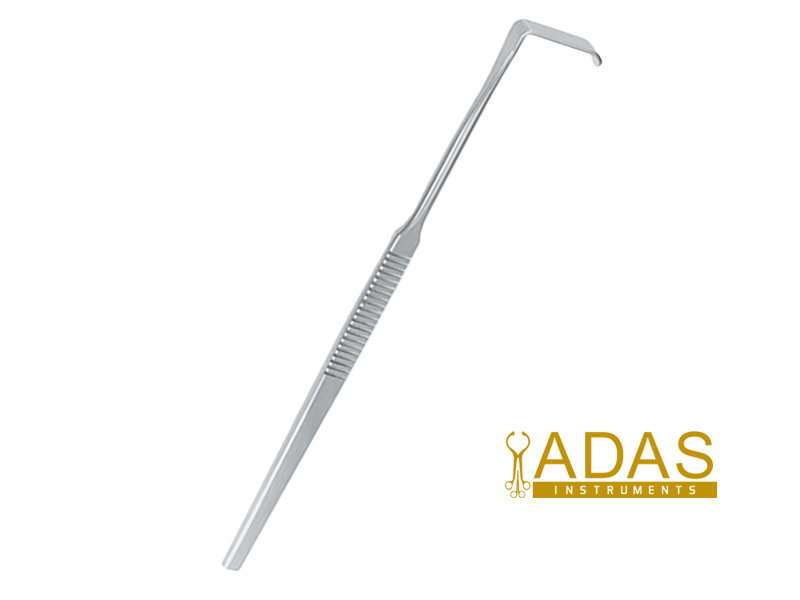
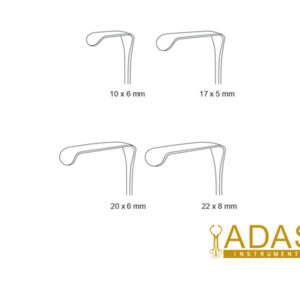
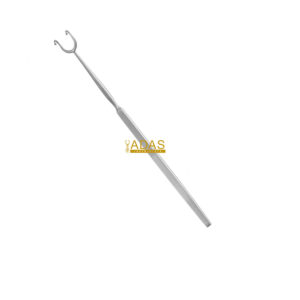
Langenbeck retractors hold soft tissue, muscle, skin and subcutaneous fat back on a single blunt blade set at a right angle to a long straight shaft, and what we make is the mini pattern, the small blade member of that family. Our own record carries four blade sizes, from 10 mm by 6 mm up to 22 mm by 8 mm, and that narrow profile is the point: it reaches into confined channels where a full size blade will not pass, past fine skin margins, tendons, small nerves and neurovascular bundles. The lip of the blade is entirely blunt, so it grips a tissue edge firmly without piercing it.
Key Features
- A single blunt blade at a right angle to a long straight shaft
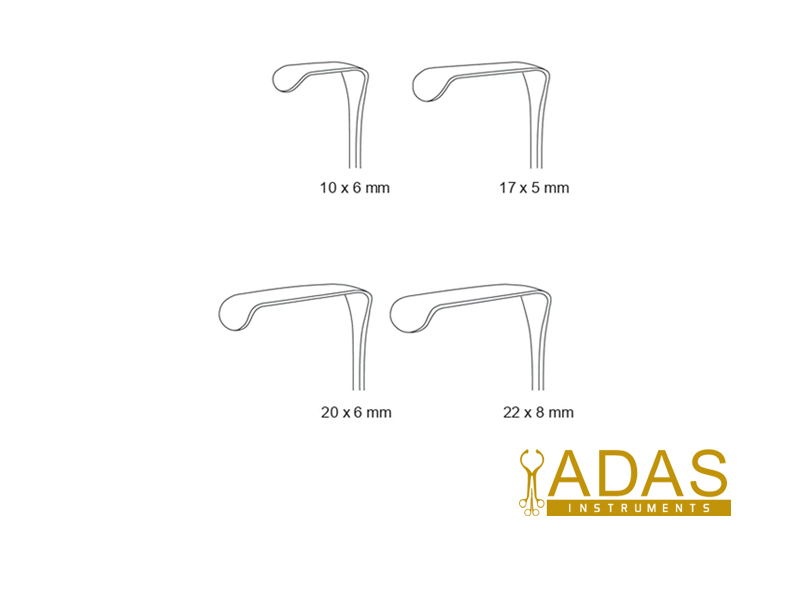
- Four blade sizes from our own record: 10×6, 17×5, 20×6 and 22×8 mm
- The mini pattern, cut narrow for confined surgical channels
- An entirely blunt blade lip, which holds without puncturing
- Used in hand and wrist, facial, maxillofacial, ENT and small joint surgery
- High quality medical grade stainless steel, autoclavable and made to be used again
- Three year replacement warranty against manufacturing defects. Item code AN-79.17

What the langenbeck retractor is
The langenbeck retractor is a single blunt blade set at a right angle to a long straight shaft. It holds soft tissue, muscle, skin and subcutaneous fat back so the surgeon can see past them, and the lip of the blade is entirely blunt, so it grips a tissue edge firmly and cannot pierce it.
What we make is the MINI pattern, and that is worth saying in the first paragraph rather than in the small print. The full size Langenbeck is a general surgical instrument with a broad blade. The mini has the same geometry cut narrow, and our own record carries four blade sizes from 10 mm by 6 mm up to 22 mm by 8 mm.
Narrow is the whole point. The blade has to pass into a channel that a full size blade cannot enter, past fine skin margins, tendons, small nerves and neurovascular bundles, and hold once it is there.
Key design features of this mini langenbeck retractor
Four features, and the first is the ordering decision.
- Four blade sizes. 10×6, 17×5, 20×6 and 22×8 mm, all in our own record. That is the only choice to make.
- A single right angled blade. One working end on a long straight shaft.
- An entirely blunt lip. It holds without puncturing, which is what a confined field demands.
- A narrow profile. Cut to enter channels a full size blade will not.
Langenbeck retractor sizes
Every blade size in this table is our own product record, which is unusual on a page in this category and is the reason the sizes section sits this high.
| Blade size | Width by depth | Typical use | Where it comes from | Item code |
|---|---|---|---|---|
| 10×6 mm | 10 mm wide, 6 mm deep | The narrowest channel we hold a blade for | Our own product record | AN-79.17 |
| 17×5 mm | 17 mm wide, 5 mm deep | Wider hold, shallowest reach | Our own product record | AN-79.17 |
| 20×6 mm | 20 mm wide, 6 mm deep | General purpose in the mini range | Our own product record | AN-79.17 |
| 22×8 mm | 22 mm wide, 8 mm deep | The widest and deepest we hold | Our own product record | AN-79.17 |
| Overall length | Not carried | Others publish about 160 mm. Not repeated here as ours |
Four sizes and nothing else to decide. The two dimensions are the blade width and its depth, and they do not move together: 17×5 is narrower and shallower than 20×6, while 22×8 is the widest and deepest we hold. Our record gives no overall length; others publish about 160 mm and that is not repeated here as ours.
Langenbeck retractor uses
langenbeck retractor uses is searched almost as much as the instrument itself, so it gets answered properly here rather than left to a product photograph.
| Specialty | What the langenbeck retractor is used for |
|---|---|
| Hand and wrist surgery | The field this mini pattern was cut for |
| Plastic and facial surgery | Narrow exposure where a broad blade will not pass |
| Maxillofacial and dental surgery | Confined channels in bone and soft tissue |
| ENT, head and neck surgery | Deep narrow fields |
| Small joint surgery | Soft tissue held off a joint being approached |
| Pediatric orthopedics | Small fields, and nothing that may be pierced |
| Blepharoplasty and eyelid surgery | The smallest blades, on very fine margins |
What the blade holds, and what it does not
A narrow blunt blade is the right answer in a tight channel and the wrong answer almost everywhere a broad one would do.
| Structure | How the blade takes it |
|---|---|
| Skin and fine margins | Held on a blunt lip that cannot pierce |
| Subcutaneous fat | Held flat |
| Muscle and narrow muscle bands | Held without engaging the fibers |
| Tendons | Shielded and held clear |
| Small nerves and neurovascular bundles | PROTECTED. The reason the lip is blunt |
| Periosteum | Held off bone on the deeper blades |
| Anything needing a grip | NOT this one. A solid blade cannot grip. Use a rake |
How this small blade langenbeck retractor compares with the rest of the family
Five of the six rows are instruments we make. The comparison that decides most orders for a small blade langenbeck retractor is the first one, against the Senn Miller, because they work the same small fields by opposite means.
| Pattern | How it differs | When you reach for it instead |
|---|---|---|
| Senn Miller retractor | Double ended, a three prong rake at one end | When the tissue has to be gripped, not just held |
| US Army retractor | Two blades, two depths, far broader | A broad wound rather than a narrow channel |
| Insulated US Army retractor | The same broad pattern, coated | A broad wound with cautery running |
| Farabeuf double end retractor | A blade at BOTH ends, 12 or 15 cm | Both wound edges held by a pair of instruments |
| Ribbon retractor malleable | A flat blade with no fixed shape | Deep exposure needing a shape bent by hand |
| Full size Langenbeck retractor | The same geometry with a broad blade | A general surgical wound rather than a channel |
Materials and finish
Made from high quality medical grade stainless steel, satin finished so nothing reflects back out of a channel that is already hard to see into. The steel itself is made to a German specification. The blade lip is rolled and polished, because on a blade this narrow the load is carried on a very short edge and a square one would mark everything it held.
Care and sterilization
Clean with a soft brush under running water, working into the inside of the right angle where tissue lodges and is easy to miss on a small blade, then rinse in deionized water and dry fully before autoclaving. Store on a rack. Check the blade sits square to the shaft against a known good instrument: a narrow blade levered hard bends more easily than a broad one, and a Langenbeck that has lost its right angle has lost the only thing that makes it work.
Ordering and wholesale
Adas Instruments makes the langenbeck retractor sizes to order and supplies hospitals, surgical centers and distributors across the United States, Latin America, Europe and Asia. Item code AN-79.17. State the blade size. Bulk and wholesale pricing is available, and instruments held on backorder ship in 10 to 12 working days. Every instrument carries a three year replacement warranty against manufacturing defects. Certifications: CE. Production is controlled under an ISO 13485 quality management system.
Frequently asked questions
What is a langenbeck retractor used for?
Holding soft tissue, muscle, skin and subcutaneous fat back to open a path to a deeper site. The mini pattern we make does that in confined channels: hand and wrist surgery, facial and maxillofacial work, ENT, small joints and pediatric orthopedics, where the blade has to pass fine skin margins, tendons and neurovascular bundles to get where it is going.
What langenbeck retractor sizes are there?
Our own record carries four, and both figures are blade dimensions: 10 by 6 mm, 17 by 5 mm, 20 by 6 mm and 22 by 8 mm. The first number is the width across the blade and the second is how deep it reaches. Pick the width from the channel you have to enter and the depth from how far in the tissue sits.
Is a mini langenbeck retractor different from a standard one?
Same geometry, smaller blade. The full size Langenbeck is a general surgical instrument with a broad blade for a broad wound. The mini takes the identical single right angled blunt blade and cuts it narrow, so it reaches into places the full size version physically cannot enter. What we make is the mini, in the four sizes above.
Langenbeck or senn miller?
Langenbeck when nothing may be pierced and the field is a narrow channel, because it is a solid blade with a blunt lip. Senn Miller when the tissue has to be gripped, because it carries a three prong rake at one end. They cover the same size of field and they are not substitutes so much as opposite answers.
Why is the blade lip blunt?
Because of where it works. A blade that can puncture is a hazard in a channel holding tendons, small nerves and neurovascular bundles, and there is no version of this instrument where a point would help. A blunt lip still grips a tissue edge firmly; it just cannot go through it.
Related products and categories
Buyers who order the mini langenbeck retractor usually order alongside it the senn miller retractor, the us army retractor and the farabeuf double end retractor. The whole family sits in hooks and retractors, and the finer patterns are also listed under micro surgery instruments.
| Weight | 0.06 kg |
|---|---|
| Tip options | 10mm x 6mm, 17mm x 5mm, 20mm x 6mm, 22mm x 8mm |
Be the first to review “Mini Langenbeck Retractor, 4 Blade Sizes, 10 mm to 22 mm”
Shipping & Delivery Policy
Processing Time: In-stock items are dispatched within 24-48 hours. For custom or out-of-stock items, production time is approximately 10-15 days.
Global Delivery Estimates
We partner with world-class couriers (DHL, FedEx) to ensure fast, tracked delivery.
- USA & Canada: 3-5 Business Days
- Europe & UK: 4-6 Business Days
- Rest of World: 5-7 Business Days
*We offer Air Cargo and Sea Freight options for bulk wholesale orders.
Customs & Duties
International buyers are responsible for any customs duties or taxes imposed by their country. Adas Instruments is not responsible for delays caused by customs clearance.
Lost Packages & Insurance
If your package is lost in transit, please contact us immediately. We offer full support and replacements for confirmed lost shipments. Note: You must report non-delivery within 3 weeks to be eligible for an insurance claim.
Related products
Reviews
There are no reviews yet.