
Cottle Dorsal Scissors, Angled Rhinoplasty Scissors with Tungsten Carbide and Ceramic Coating
Price range: $ 10.00 through $ 48.00
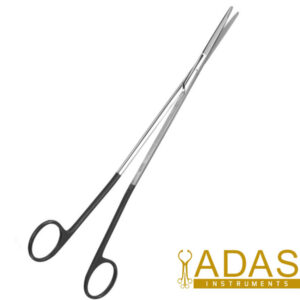
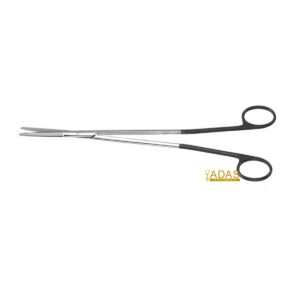
Cottle dorsal scissors are angled surgical scissors used to divide nasal bridge cartilage in septorhinoplasty and septoplasty. A single bend before the joint keeps the rings clear of the nostril while narrow straight blades work inside. The pattern belongs to Maurice Cottle’s septorhinoplasty range and is supplied blunt tipped in six edge builds.
- Made for dividing dorsal and caudal cartilage through a closed approach
- Both pairs shown here carry the gold rings that mark carbide edges
- Shares its geometry with the rest of our Cottle nasal range on a shared tray

What Cottle dorsal scissors are
Cottle dorsal scissors are the bent nasal scissor from Maurice Cottle’s septorhinoplasty instruments, made for cutting the cartilage of the nasal bridge while the surgeon’s hand stays clear of the nostril. Suppliers also list them as Cottle scissors or Cottle nasal scissors, and all three names describe one instrument.
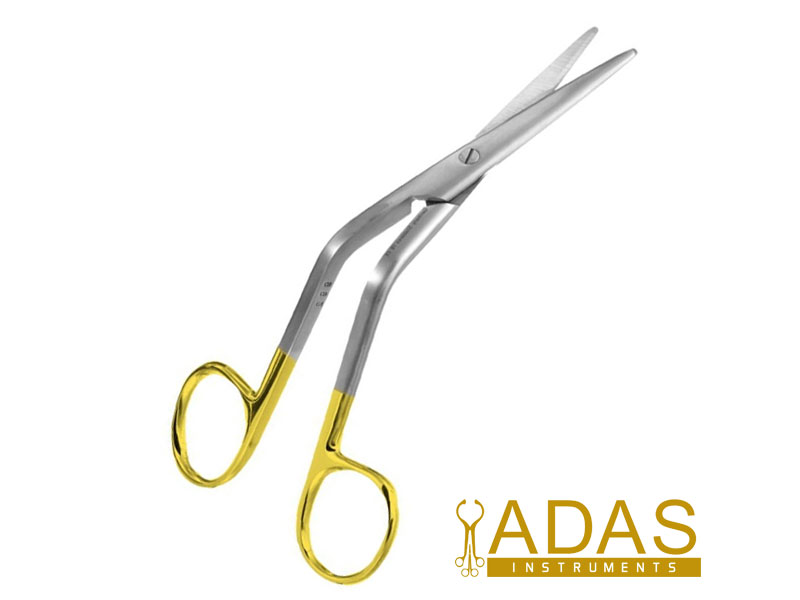
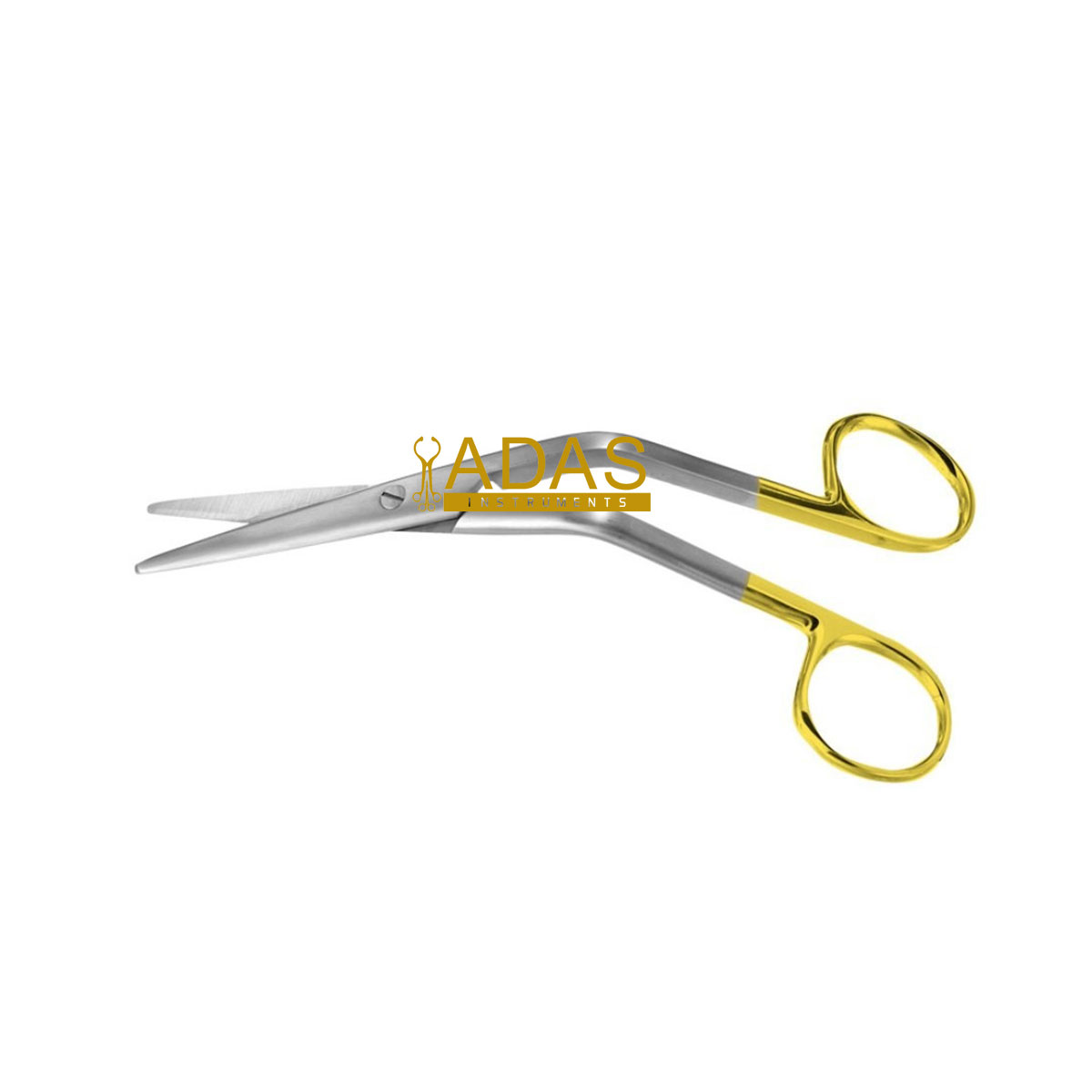
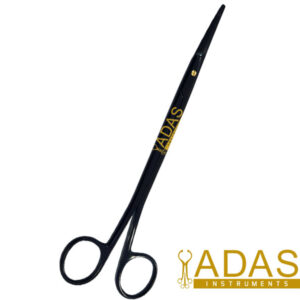
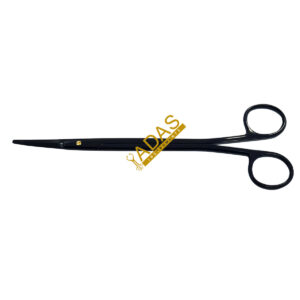
Look at either photograph on this page and the shape explains itself. A single bend sits between the finger rings and the joint, and beyond the joint the blades run straight and narrow. Nothing is curved, nothing is serrated. On Cottle dorsal scissors the bend does all the work, which is why this pattern and its relatives are sold as angled rhinoplasty scissors rather than under a blade description.
Both pairs photographed here have gold finished rings and shanks. That colour is how the instrument trade marks carbide cutting edges, so both pairs shown are carbide rather than plain steel. Adas Instruments produces Cottle dorsal scissors in six edge specifications, all of them shelf stock.
Where Cottle dorsal scissors sit in the Cottle system
Maurice Cottle did not design a scissor. He designed a way of operating on the nose from inside it, and then had instruments built so that each step of the operation had a tool shaped for it. That is the reason so many nasal instruments still carry his name, and it is the reason surgeons who use one Cottle instrument tend to end up using several.
In that system, cartilage is the job of Cottle dorsal scissors. The elevator raises the mucoperichondrial flap, the knife scores, the osteotome and the mallet deal with bone, the crusher softens a graft, and the cutting of cartilage along the bridge belongs to this pair. Cottle dorsal scissors are not a general purpose nasal scissor and they are not meant to be one.
The practical argument for staying inside one system is that the angles agree with each other. An instrument tray assembled from four different designers has four different ideas about where a surgeon’s hand should be, and the hand has to keep relearning the geometry. A tray built around the Cottle patterns presents the same bend and the same working depth to the hand every time, and a familiar angle is a faster angle. Cottle dorsal scissors are part of that logic rather than a standalone purchase.
Clinical applications
Cottle dorsal scissors earn their place wherever cartilage on the nasal bridge has to be divided through a small opening.
| Procedure | Role of the instrument |
|---|---|
| Septorhinoplasty | Cuts the dorsal and caudal cartilage inside the closed nose, the step the pattern was built for |
| Nasal hump reduction | Lowers the cartilaginous hump along the bridge while the rings stay outside the nostril |
| Septoplasty | Divides the septum and releases the cartilage from its attachments at depth |
| Cartilage graft preparation | Trims a harvested strut or a spreader graft to the dimension the surgeon has marked |
| Revision nasal surgery | Cuts through fibrous tissue and previous graft material where the plane is no longer clean |
| Nasal reconstruction | Adjusts cartilage after it has been placed, without the hand blocking the view of it |
| ENT procedures | Cutting inside the nasal cavity in general ENT work, alongside the rest of the Cottle range |
Blade and edge options for Cottle dorsal scissors
There are six edge specifications on this page, and which one you want depends on how often the pair will be used and what it will be cutting.
A standard edge is ground in stainless and sharpened the conventional way. Supercut grinds one of the two edges like a razor, which lets the blades part cartilage instead of squeezing it first. That difference matters most on a piece that is about to be replaced in the nose as a graft. Tungsten carbide replaces the working edges with brazed carbide inserts. Carbide is much harder than surgical stainless, so a carbide pair holds an edge for many more procedures, and it is also the reason carbide instruments carry gold rings as a warning to whoever sharpens them.
On Cottle dorsal scissors, ceramic coating is a surface treatment rather than an edge. It darkens the shanks and blades so they do not throw light back at the surgeon or into a camera lens, which matters in a documented or a taught case. Pair it with carbide and you get long edge life without the glare.
If this is your first pair of Cottle dorsal scissors, buy the standard edge and find out whether the bend suits your hand before spending on carbide.
Technical specification
Every line here describes the Cottle dorsal scissors held in stock, not a figure copied from a general catalogue.
| Detail | Specification |
|---|---|
| Instrument type | Cottle dorsal scissors, angled pattern for nasal cartilage |
| Geometry | Single bend between the finger rings and the joint, blades straight beyond it |
| Blade | Narrow and straight, not serrated |
| Tips | Blunt |
| Edge options | Standard, standard supercut, tungsten carbide, tungsten carbide supercut, ceramic coated with tungsten carbide, ceramic coated supercut with tungsten carbide |
| Handle | Standard finger ring |
| Material | High quality medical grade stainless steel |
| Sterilisation | Reusable, fully autoclavable, supplied non-sterile |
| Rust prevention | Passivated and boil tested, ultrasonically cleaned before packing |
| Marking | Laser marked with the pattern name and the Adas Instruments reference |
| Reference | AD-211.36 |
| Price | From 10 dollars |
Care and sterilisation of Cottle dorsal scissors
Three things ruin Cottle dorsal scissors, and none of them happen while the pair is cutting.
The first is the bend. It carries every bit of leverage the surgeon applies, so it is where metal fatigues and where a knock shows up later as blades that no longer meet along their full length. Store the pair supported, and never let a mallet or an osteotome sit on top of it.
The second is cartilage left in the joint. Cartilage dries into something close to glue, and once it is inside a box lock the action goes heavy. On an angled instrument you notice a heavy joint late, because the bend already dulls what the fingers feel at the tips. Flush the pair under cold water as soon as it leaves the field, put it through the ultrasonic bath, then autoclave it with the joint wide open so steam gets into the lock. Dry it properly and oil the screw weekly.
The third is the wrong sharpening. Send a carbide pair to someone who grinds steel and they will take the insert off. Ask specifically for carbide service, and if a supercut edge is involved say so, because the razor grind has to be reproduced rather than flattened.
Made by Adas Instruments
We manufacture Cottle dorsal scissors ourselves, so all six edge specifications are things you select rather than things you request, and the standard edge begins at 10 dollars.
The rest of the Cottle range is made here too, which matters if you are equipping a tray rather than replacing one instrument: the osteotomes, the chisel, the mallet, the crusher and the forceps come from the same benches and the same steel as the scissors. Ask for an evaluation pair, or a sample set, before committing to a purchase order. Distributors can have instruments supplied plain or marked to their own reference.
Frequently asked questions
What are Cottle dorsal scissors used for?
Dividing cartilage along the bridge of the nose during septorhinoplasty and septoplasty, and trimming cartilage grafts. The bend is what makes that possible through a closed approach, because it puts the finger rings outside the nostril while the blades work inside it.
How are Cottle dorsal scissors different from the Fomon pattern?
Both are angled dorsal scissors and both cut cartilage on the bridge. They came out of different systems, so the bend and the proportion of the blade to the shank are not identical, and surgeons usually have a clear preference once they have held both. If you already own other Cottle instruments, the Cottle scissor will feel consistent with them.
Do the blades finish in a point?
No. Both photographs show rounded ends. Cottle dorsal scissors do their cutting along the length of the blade, so a point would add nothing, and a rounded end is kinder to the nasal lining that sits immediately behind whatever cartilage is being divided.
What does the gold on the rings mean?
Gold is how carbide edges are marked across the industry. It is not decoration. It exists so nobody puts a carbide instrument on a wheel meant for steel. Both pairs in the photographs on this page are the carbide version.
Can I order these as part of a Cottle set?
Yes. We make the osteotomes, chisel, mallet, cartilage crusher, columella forceps and retractors as well, and sets are assembled to whatever list you send us rather than to a fixed catalogue kit.
Related instruments and categories
This pattern is listed under rhinoplasty instruments with the rest of the nasal range, and under plastic surgery scissors with our other scissor patterns.
Our other angled dorsal option is the Fomon dorsal scissor. Where the cutting happens right at the tip of the nose, a 10 cm instrument suits it better, and that is the Converse pattern.
Instruments from the same Cottle family: the Cottle nasal osteotome and the Cottle nasal mallet for bone, the Cottle cartilage crusher for graft preparation, the Cottle nasal knife, the Cottle columella forceps and the Cottle alar nasal retractor.
| Weight | 0.05 kg |
|---|---|
| Blade Type | Ceramic coated + TC, Ceramic coated Super cut + TC, Standard, Standard Supercut, Tungsten Carbide, Tungsten Carbide Supercut |
Be the first to review “Cottle Dorsal Scissors, Angled Rhinoplasty Scissors with Tungsten Carbide and Ceramic Coating”
Shipping & Delivery Policy
Processing Time: In-stock items are dispatched within 24-48 hours. For custom or out-of-stock items, production time is approximately 10-15 days.
Global Delivery Estimates
We partner with world-class couriers (DHL, FedEx) to ensure fast, tracked delivery.
- USA & Canada: 3-5 Business Days
- Europe & UK: 4-6 Business Days
- Rest of World: 5-7 Business Days
*We offer Air Cargo and Sea Freight options for bulk wholesale orders.
Customs & Duties
International buyers are responsible for any customs duties or taxes imposed by their country. Adas Instruments is not responsible for delays caused by customs clearance.
Lost Packages & Insurance
If your package is lost in transit, please contact us immediately. We offer full support and replacements for confirmed lost shipments. Note: You must report non-delivery within 3 weeks to be eligible for an insurance claim.
Related products

Reviews
There are no reviews yet.