
Gorney Scissors, Titanium Coated Facelift Dissecting Scissors
Price range: $ 33.00 through $ 41.00
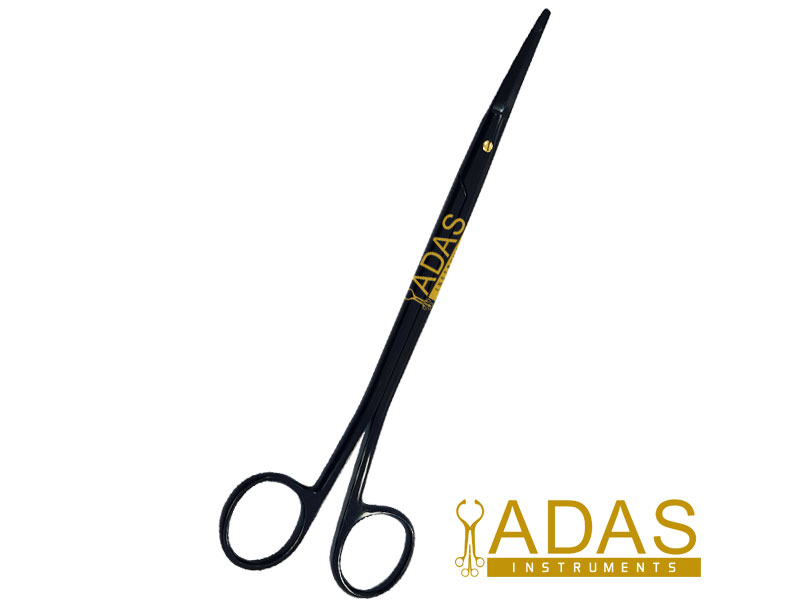
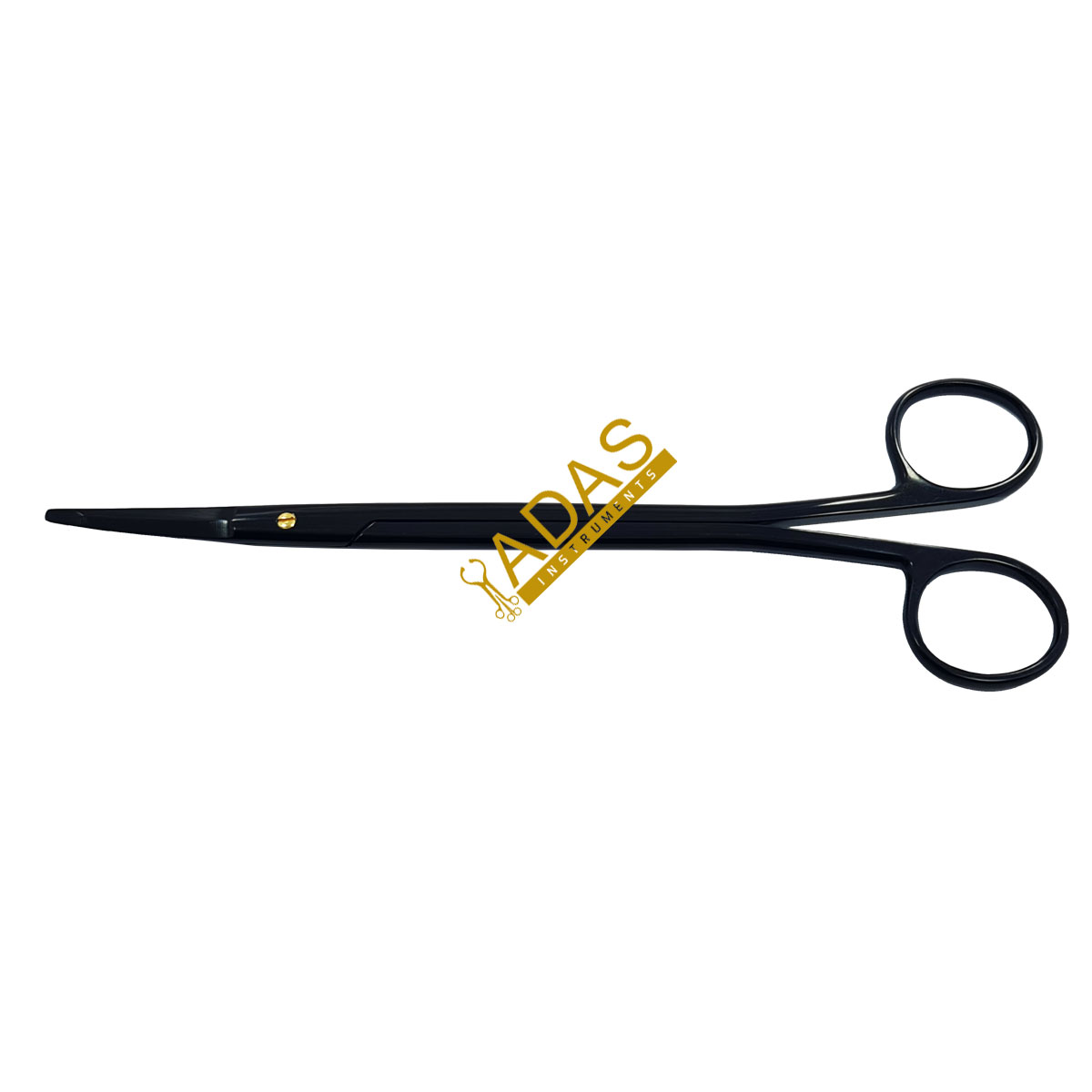
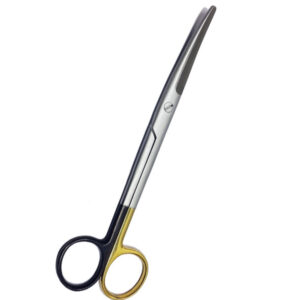
Titanium coated Gorney scissors in five lengths from 14.5 cm to 23 cm, curved or straight. Long slim blades that separate a skin flap from the tissue beneath without buttonholing the skin, for facelift, neck lift and brow work.
- Matt titanium nitride, no glare under a headlight
- Curved or straight, five lengths
- Fully autoclavable at 134 C
- Manufactured by Adas Instruments, Sialkot
- OEM and private label available

What are Gorney scissors?
Gorney scissors are long bladed facelift dissecting scissors, 14.5 cm to 23 cm, with slim tapered blades and a fine blunt tip, used to separate a skin flap from the tissue beneath it without buttonholing the skin. Mark Gorney designed the pattern for rhytidectomy, where the surgeon works blind under a flap and has to feel the plane rather than see it. Adas Instruments manufactures them in Sialkot from German surgical stainless steel with a titanium coating, in five lengths, curved or straight.
Why the titanium coating on these
- No glare under the flap. Facelift dissection happens in a narrow tunnel lit by a headlight. A polished blade throws light back at the surgeon. The titanium coating is matt and dark, so the tip stays visible.
- Harder surface. Titanium nitride is harder than the steel beneath it, so the edge lasts longer between sharpenings on a pattern that is used for long, continuous cutting.
- Distinguishable on the tray. The coated pair is instantly separable from the uncoated dissecting scissors sitting next to it in a facelift set.
- Five lengths, not one. The plane changes depth as it moves from the preauricular area back into the neck. Most surgeons carry two lengths, not one.
- Made, not resold. Forged, ground, coated and inspected in our own workshop.
Clinical applications
| Where it is used | What it does there | Usual length |
|---|---|---|
| Facelift, preauricular flap | Raising the skin flap from the SMAS in the visible cheek area | 16 cm |
| Facelift, neck extension | Continuing the plane under the mandible and into the neck | 20 cm or 23 cm |
| Temporal lift | Short controlled dissection where the flap is thin | 14.5 cm |
| Neck lift and platysma work | Reaching the midline from a submental incision | 20 cm |
| Brow and forehead lift | Subcutaneous release above the orbital rim | 16 cm or 18 cm |
| Revision surgery | Working through scar where the plane is not clean | 18 cm |
Size chart
| Length | Imperial | Blade shape | Chosen for |
|---|---|---|---|
| 14.5 cm | 5 3/4 in | Curved or straight | Temporal and short flap work |
| 16 cm | 6 1/4 in | Curved or straight | The general facelift length, most ordered |
| 18 cm | 7 in | Curved or straight | Deeper cheek and jawline dissection |
| 20 cm | 8 in | Curved or straight | Neck dissection from a submental incision |
| 23 cm | 9 in | Curved or straight | Full neck reach in a single pass |
Curved Gorney scissors are the usual choice, because the curve follows the contour of the face and keeps the tip travelling in the plane rather than into the dermis. Straight blades are chosen for the flat run across the neck. Surgeons who buy one pair take 16 cm curved. These titanium coated scissors are listed in some catalogues as Freeman Gorney scissors, after the two surgeons whose names the pattern carries.
Technical specifications
| Specification | Detail |
|---|---|
| Instrument | Gorney scissors, facelift dissecting pattern, titanium coated |
| Lengths | 14.5 cm, 16 cm, 18 cm, 20 cm and 23 cm |
| Blade shapes | Curved or straight |
| Material | German surgical stainless steel, AISI 420 grade |
| Coating | Titanium nitride, matt non reflective |
| Tips | Fine blunt, tapered |
| Handle | Ring handle, box joint |
| Sterilisation | Fully autoclavable, 134 C for 3 minutes |
| Reusable | Yes, supplied non sterile |
| Origin | Manufactured by Adas Instruments, Sialkot, Pakistan |
| OEM and private label | Available, laser marking on request |
Care and sterilisation
- Rinse Gorney scissors in cool water immediately. Blood dried in the box joint is the usual cause of a stiff action, and it is what we see most often on pairs sent back for service.
- Clean ultrasonically with a neutral pH detergent, joint fully open.
- Do not use abrasive pads or acidic detergent on the coating. One wash with a chlorine detergent will mark a set of coated Gorney scissors for the rest of its working life. Titanium nitride is hard but thin, and once it is scratched through, the steel underneath corrodes at that point.
- Lubricate the joint with instrument milk before each autoclave cycle.
- Autoclave at 134 C for 3 minutes. Dry fully before storage.
- Check the tips meet along their whole length. A pair that cuts at the tip and not the heel needs setting, not sharpening.
Frequently asked questions
What is the difference between Gorney scissors and Metzenbaum scissors?
Both dissect bluntly. Metzenbaum scissors have short blades on long shanks for reaching into a deep cavity. Gorney scissors have long blades for travelling a long distance in one plane just under the skin, which is what facelift dissection is.
Which length should I order first?
16 cm curved. It covers the cheek and jawline, which is where most of the dissection happens. Add 20 cm if you routinely extend into the neck.
Why are these coated when the dissecting version is not?
The coating removes glare under a headlight and lasts longer under heavy use. The uncoated Freeman Gorney facelift dissecting scissors is the same geometry at a lower price, and many surgeons carry both.
Are Gorney scissors only for facelifts?
No. Any procedure that raises a long subcutaneous flap uses them: neck lift, brow lift, and reconstructive flap work on the trunk.
Can I order these under my own brand?
Yes. We manufacture for distributors and hospital groups and laser mark your brand, catalogue number and regulatory details on request.
Related instruments
Browse the full plastic surgery scissors range, or the wider plastic surgery instruments catalogue.
- Freeman Gorney Facelift Dissecting Scissors, the uncoated version of this exact geometry.
- Freeman Gorney Facelift Scissors Set of 3, three graduated lengths in one purchase.
- Metzenbaum Scissors Razor Edge, for blunt dissection deeper than a skin flap.
Where the plane is thinnest and the flap is at risk, the Kaye Rhytidectomy Dissecting Scissors takes over with blunt tips and a finer blade.
| Weight | 0.05 kg |
|---|---|
| Select Size | 14.5cm / 5 3/4", 16cm / 6 1/4", 18cm / 7", 20cm / 8", 23 cm / 9" |
| Select Scissors Blades | Curved Blades, Straight Blades |
Be the first to review “Gorney Scissors, Titanium Coated Facelift Dissecting Scissors”
Shipping & Delivery Policy
Processing Time: In-stock items are dispatched within 24-48 hours. For custom or out-of-stock items, production time is approximately 10-15 days.
Global Delivery Estimates
We partner with world-class couriers (DHL, FedEx) to ensure fast, tracked delivery.
- USA & Canada: 3-5 Business Days
- Europe & UK: 4-6 Business Days
- Rest of World: 5-7 Business Days
*We offer Air Cargo and Sea Freight options for bulk wholesale orders.
Customs & Duties
International buyers are responsible for any customs duties or taxes imposed by their country. Adas Instruments is not responsible for delays caused by customs clearance.
Lost Packages & Insurance
If your package is lost in transit, please contact us immediately. We offer full support and replacements for confirmed lost shipments. Note: You must report non-delivery within 3 weeks to be eligible for an insurance claim.
Related products



Reviews
There are no reviews yet.