
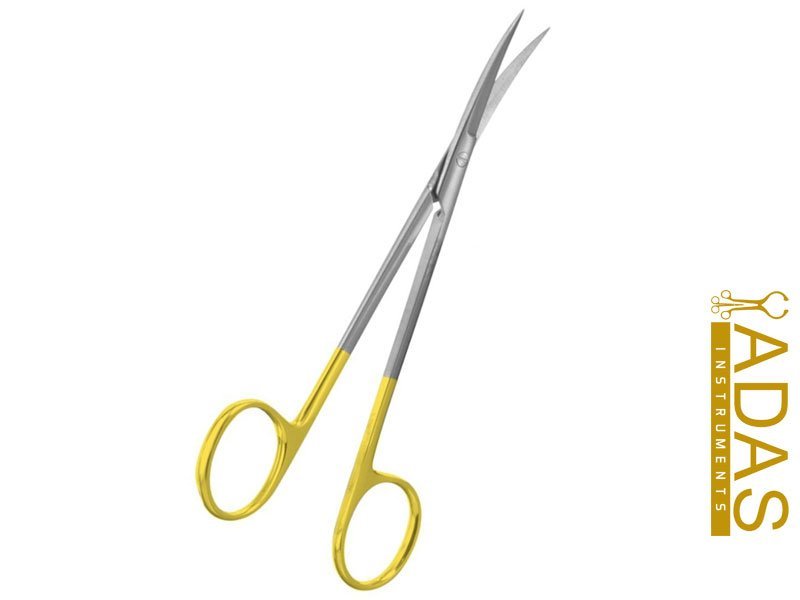

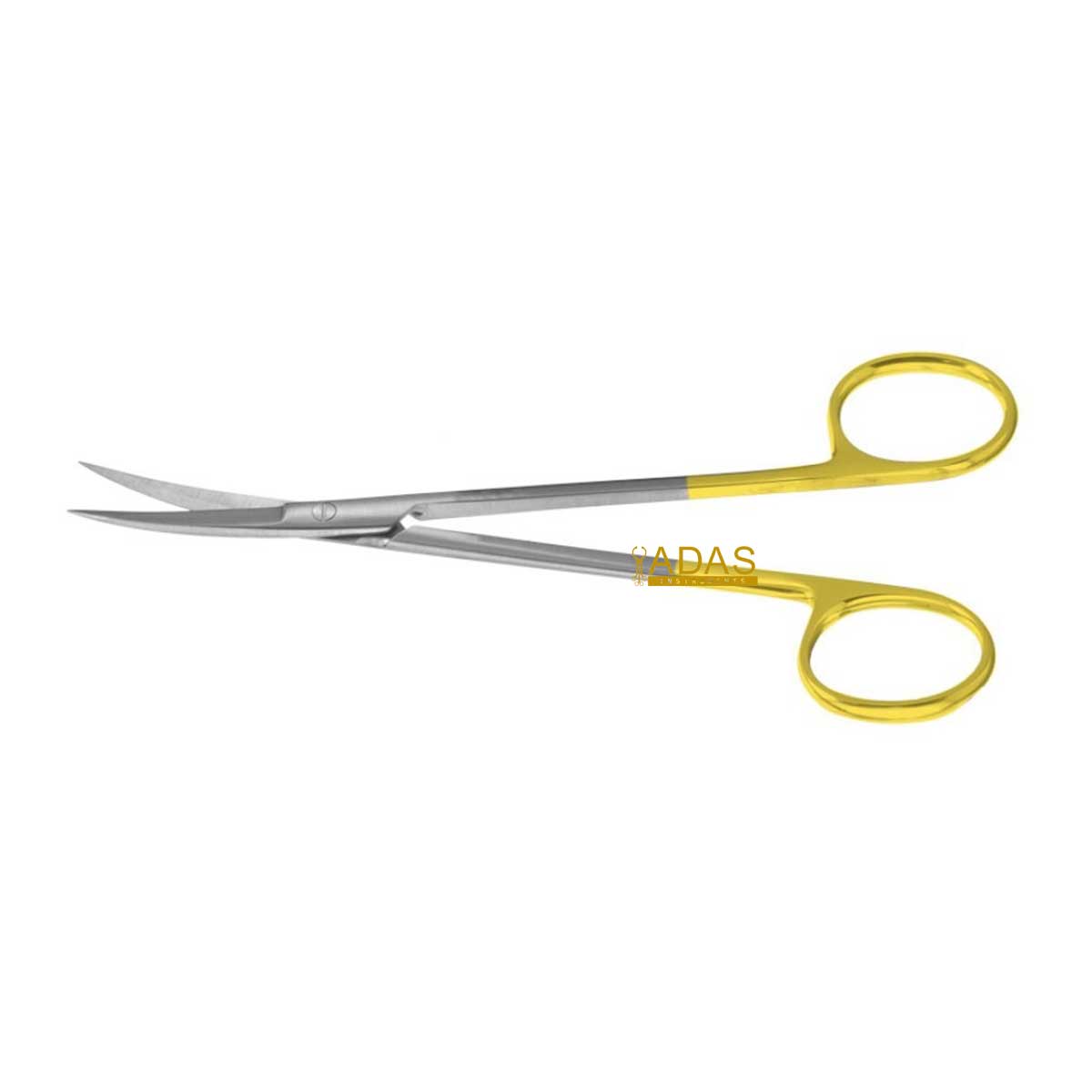
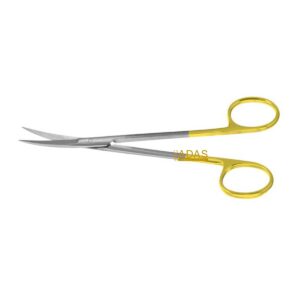
Joseph Dissecting Scissors, Fine Nasal and Facial Rhinoplasty
Price range: $ 9.50 through $ 38.00
Joseph dissecting scissors are fine tipped surgical scissors made for delicate tissue dissection in a narrow field: the nasal cavity, and the thin tissue planes of facial plastic surgery. The blades stay slim along their whole length rather than only at the point, which is what lets the tips stay visible inside the nose.
- Straight blades for the nose, curved for the cheek and the orbital rim
- Supercut, with one blade micro serrated, for fibrous or scarred tissue
- Tungsten carbide inserts where the pair cuts on every list
- Ceramic coated blades for deep planes worked under a headlight

What Joseph dissecting scissors are
From the first cut at the nasal tip to the release of the alar cartilages, Joseph dissecting scissors do the fine work of a rhinoplasty. Theatre lists and catalogues both shorten the name, so you will see the same instrument sold as Joseph nasal scissors. The blades are slim and tapered with sharp tips, thin along their whole length so they enter a narrow field without lifting the tissue above them. The pattern takes a standard finger ring handle, comes curved or straight, and is built by Adas Instruments from high quality medical grade stainless steel. A surgeon reaches for a pair when a Metzenbaum is too heavy for the plane and an iris scissor is too small for the cut. Blade length is confirmed on the order, because the options in the shop cover the blade build and the curve rather than the length.
Why this pattern rather than a heavier scissor
The blades are thin along their whole length, not just at the tip, so they enter a narrow field without lifting the tissue above them. That is the whole point of Joseph surgical scissors: the surgeon can see past the instrument. A heavier dissecting scissor blocks the view at exactly the moment the cut matters, and the plane gets found by feel instead of by sight.
The trade-off is edge life. A thin blade has less steel behind the edge, so it dulls sooner than a general scissor and it cannot be used as a suture scissor even once. On a busy list the carbide builds below are what keep a pair of Joseph dissecting scissors cutting for years instead of months, and fine nasal scissors of any make live or die on that one choice.
Clinical applications
Joseph dissecting scissors turn up on four kinds of list, and the build that suits each one is not the same.
| Where it is used | What it does there | Usual build |
|---|---|---|
| Rhinoplasty | Dissecting the nasal tip and columella, releasing the alar cartilages | Straight, standard or supercut |
| Facial plastic surgery | Fine plane work around the eyelid and cheek where a heavier scissor tears | Curved, tungsten carbide |
| ENT and septal work | Trimming soft tissue in a narrow field with the tips kept under direct view | Straight, tungsten carbide supercut |
| Revision and scar tissue | Cutting fibrous tissue that a plain edge slides off instead of holding | Supercut, with or without carbide |
Blade and edge guide, the six builds we make
All six builds are offered on Joseph dissecting scissors, and the choice moves the price more than anything else on this page.
| Build | What it is | When it is the right choice |
|---|---|---|
| Standard | Plain ground edge on both blades | Routine work and low case volume |
| Standard Supercut | One blade micro serrated along the cutting edge | Fibrous tissue that slides away from a plain edge |
| Tungsten Carbide | Carbide inserts at the cutting surfaces, gold rings on the handle | Instruments used on every list |
| Tungsten Carbide Supercut | Carbide inserts plus the micro serration | High volume rhinoplasty practice |
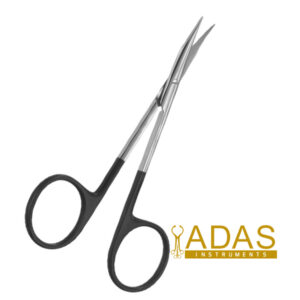
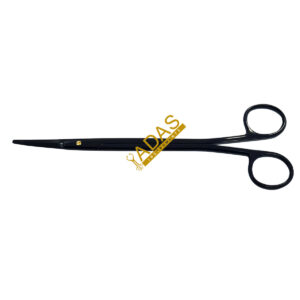
| Ceramic coated with TC | Matt dark coating over a carbide pair | Deep planes under a headlight, where a polished blade throws glare back |
| Ceramic coated Supercut with TC | The coating, the serration and the carbide together | The longest working life, and the highest price |
Curved or straight
Straight blades follow the line of the nose and are what most surgeons use for tip and columellar work. Curved blades follow the contour of the cheek and the orbital rim, which is why they end up on facelift and blepharoplasty trays more often than on rhinoplasty ones. Both curves are stocked on Joseph dissecting scissors, and a practice doing both kinds of list usually keeps one of each rather than compromising on one.
Technical specification
| Detail | Specification |
|---|---|
| Instrument type | Fine dissecting scissors, Joseph pattern |
| Blade tip | Fine point, sharp and sharp |
| Blade builds | Six, from standard to ceramic coated supercut with tungsten carbide |
| Curve options | Curved or straight |
| Combinations stocked | Twelve |
| Handle | Standard finger ring |
| Material | high quality medical grade stainless steel |
| Finish | Polished or satin |
| Length | Confirmed on the order |
| Sterilisation | Reusable, fully autoclavable, supplied non-sterile |
| Rust prevention | Passivated and boil tested, ultrasonically cleaned before packing |
| Marking | Laser marking to order, OEM available |
| Packaging | Individually packed |
| SKU | AD-19.14 |
Care and sterilisation
Rinse Joseph dissecting scissors in cool water before anything dries on them. Blood left in the box joint of a fine pair is what turns a light action heavy, and on a scissor this small a brush cannot reach the joint once it has set. Clean ultrasonically with a neutral pH detergent, joint fully open, then lubricate with instrument milk before every cycle. Autoclave at 134 C for 3 minutes and dry fully before storage, because a damp fine tip pits before anything else on the tray does.
Never close these blades on a needle, a wire or a suture. One pass through nylon costs more edge than a whole case of tissue, and on a blade this thin it shows in the next case rather than next month. Keep chlorine detergents away from the ceramic coated builds: the coating is hard but thin, and a mark in it stays for the life of the instrument. When the tips stop meeting cleanly, see our guide on how to sharpen surgical scissors before sending the pair anywhere.
Frequently asked questions
What are Joseph dissecting scissors used for?
Dissecting the nasal tip and columella, releasing the alar cartilages, and fine plane work on the face where a heavier scissor would tear the tissue instead of cutting it. They are rhinoplasty scissors and a facial plastic surgery instrument rather than a general theatre scissor.
Curved or straight for rhinoplasty?
Straight, for most surgeons. The blades follow the line of the nose and the tips stay visible. Curved blades suit the cheek and the orbital rim, so they are the ones that end up on facelift and blepharoplasty trays.
Are the supercut blades worth it on a pattern this fine?
On fibrous or scarred tissue, yes, because the micro serration holds the tissue instead of pushing it ahead of the blade. Remember that a supercut edge costs more to renew, since the serration has to be re-cut to the original wheel profile rather than flat stoned.
Do the ceramic coated pairs lose their coating in the autoclave?
No. Standard cycles do not touch it. What marks a coating is a chlorine detergent, an abrasive pad, or a drop onto a hard floor, in that order.
How are Joseph scissors different from iris scissors?
Iris scissors are shorter with finer tips and were designed for eye work, so they run out of blade in a nasal plane. Joseph scissors carry the same fineness over a longer blade, which is what lets them reach the tip and still close cleanly.
Related instruments and categories
Joseph dissecting scissors sit in plastic surgery scissors, alongside every other pattern we grind, and in rhinoplasty instruments, which is the tray most buyers of this pattern are building.
For the heavier plane work that a fine pair should not be asked to do, see the Metzenbaum Scissors Razor Edge, which takes the deep blunt dissection this pattern is too light for. For cutting suture and dressings, keep a Mayo Scissors Razor Edge on the tray so the Joseph pair never has to. And where the field is smaller still, the Iris Scissors, Sharp Fine Tip is the pattern that takes over. For the finest intranasal trimming the Converse scissors are only 10 cm long.
| Weight | 0.05 kg |
|---|---|
| Blade Type | Ceramic coated + TC, Ceramic coated Super cut + TC, Standard, Standard Supercut, Tungsten Carbide, Tungsten Carbide Supercut |
| Select Scissors Blades | Curved Blades, Straight Blades |
Be the first to review “Joseph Dissecting Scissors, Fine Nasal and Facial Rhinoplasty”
Shipping & Delivery Policy
Processing Time: In-stock items are dispatched within 24-48 hours. For custom or out-of-stock items, production time is approximately 10-15 days.
Global Delivery Estimates
We partner with world-class couriers (DHL, FedEx) to ensure fast, tracked delivery.
- USA & Canada: 3-5 Business Days
- Europe & UK: 4-6 Business Days
- Rest of World: 5-7 Business Days
*We offer Air Cargo and Sea Freight options for bulk wholesale orders.
Customs & Duties
International buyers are responsible for any customs duties or taxes imposed by their country. Adas Instruments is not responsible for delays caused by customs clearance.
Lost Packages & Insurance
If your package is lost in transit, please contact us immediately. We offer full support and replacements for confirmed lost shipments. Note: You must report non-delivery within 3 weeks to be eligible for an insurance claim.
Related products
Reviews
There are no reviews yet.