
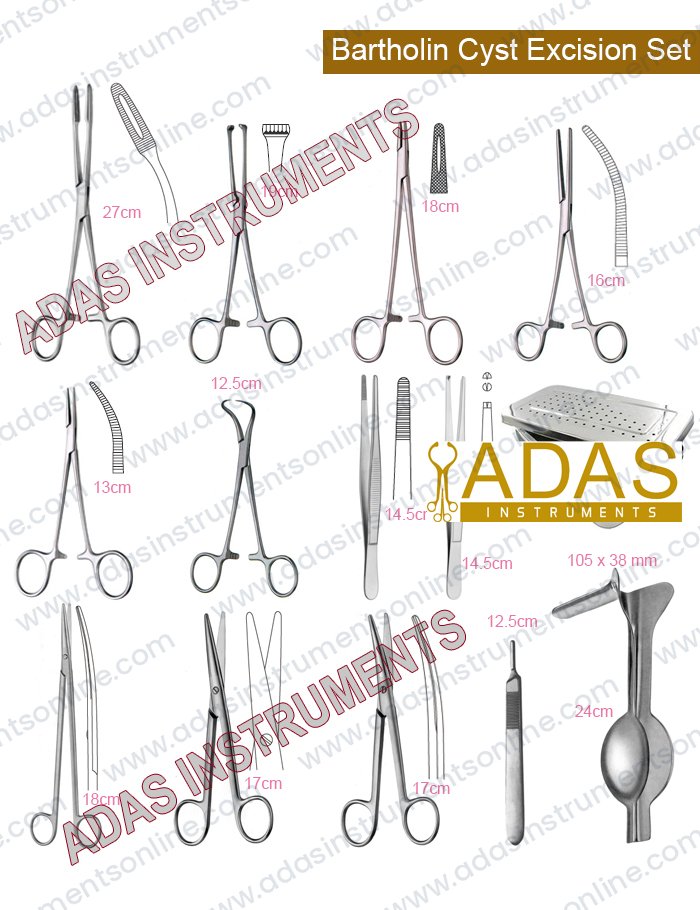
Bartholin Cyst Excision Instrument Set, 28 Pieces
$ 199.50
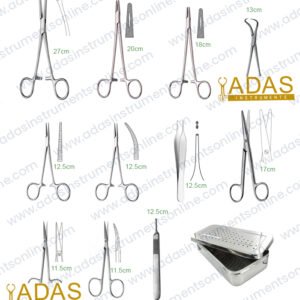
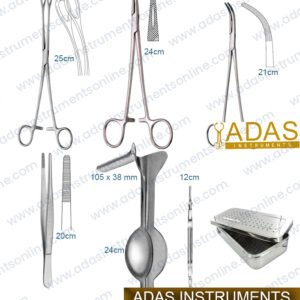
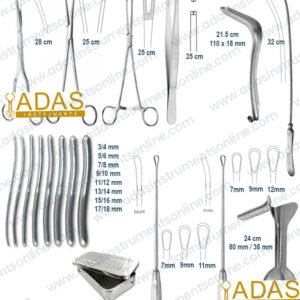
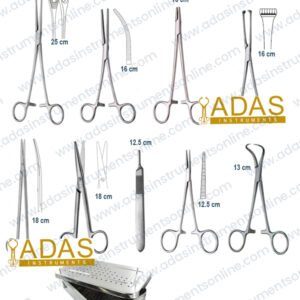
Our Bartholin cyst excision instrument set is a 28 piece tray for removing a Bartholin cyst or gland, or opening it for marsupialization, at the vaginal vestibule. It carries an Auvard weighted speculum, four Allis forceps, a curved Metzenbaum-Nelson scissors and ten artery forceps, because the vestibule is one of the most vascular places in minor gynecology and every bleeder needs catching.
Key Features
- 28 pieces across 13 lines, in a stainless steel instrument box
- Auvard vaginal speculum, 80 by 38 mm
- Four Allis tissue forceps, 19 cm, 5×6 teeth
- Metzenbaum-Nelson scissors 18 cm curved, Mayo-Stille 17 cm straight and curved
- Four Halsted-Mosquito 12.5 cm and two Rochester-Pean 16 cm artery forceps
- Made from high quality medical grade stainless steel, fully autoclavable
- Three year replacement warranty against manufacturing defects
- Item code AD-95545
Available on backorder

What a Bartholin cyst excision instrument set is
A Bartholin cyst excision instrument set is the tray used to remove a cyst of the Bartholin gland, or the gland itself, through a small incision at the vaginal vestibule. Google’s own summary describes it as built to manage the highly vascular vestibular wall and fragile mucosa during cyst removal, marsupialization and abscess drainage. Ours is 28 pieces, above the 6 to 22 pieces Google gives as the usual range.
The extra pieces are mostly forceps, and that is deliberate. The bulbocavernosus area bleeds freely, and a Bartholin cyst excision surgery that runs short of artery forceps becomes a slow one. Four Mosquitoes catch the fine vessels, two Rochester-Pean take the bigger ones, and six towel forceps keep the drapes square on a small field.
Google names Adson forceps in some versions of this tray. We carry Allis forceps instead, four of them, which hold the cyst wall without puncturing it. Puncturing the cyst halfway through the dissection is what turns a clean excision into a messy one. An Adson can be added to the order.
The tray also suits the simpler procedure. Bartholin cyst excision vs marsupialization is a choice the surgeon makes on the day, depending on recurrence and infection. Marsupialization opens the cyst and stitches its edges to the skin; excision removes it. Both need the same exposure, the same holding forceps and the same needle holder, so one set covers either.
Most Bartholin operations are short day cases, and that shapes how the tray is used. A unit may run several gland procedures on one list, each needing a fresh sterile set, so the box has to wash and pack quickly. Keeping the tray to 28 pieces, with one speculum and no retractor, keeps that turnaround short. Units that run long Bartholin lists may want three or four trays so that one is always ready. If your unit does the excision under general anesthesia in the main operating room, the Bartholin cyst excision instrument set still fits on one Mayo stand.
Key design features
A weighted speculum for a lateral field
The Auvard, 80 by 38 mm, sits on the posterior wall by its own weight. On a Bartholin case it opens the lower vestibule so the gland, which lies low and to the side, can be reached without an assistant holding a retractor.
Four Allis for the cyst wall
Allis tissue forceps, 19 cm, 5×6 teeth. They grip the cyst wall at several points and spread the pull, so the cyst comes out whole. The interlocking teeth hold firmly without cutting through.
Fine scissors for the dissection
The Metzenbaum-Nelson, 18 cm, curved with blunt tips, separates the cyst from the tissue round it. The Mayo-Stille pair, 17 cm, straight and curved, handles sutures and heavier tissue so the Metzenbaum stays sharp.
Swab forceps and a needle holder
Four Gross-Maier dressing forceps, 27 cm, curved, prepare the skin and press swabs into the cavity. A Mayo-Hegar needle holder, 18 cm, closes the bed or stitches the edges for marsupialization. A No.3 scalpel handle and a pair of 14.5 cm dressing and tissue forceps complete the set.
What is in the tray, piece by piece
Read off our own pattern record for item AD-95545. Twenty eight pieces, the box counted separately.
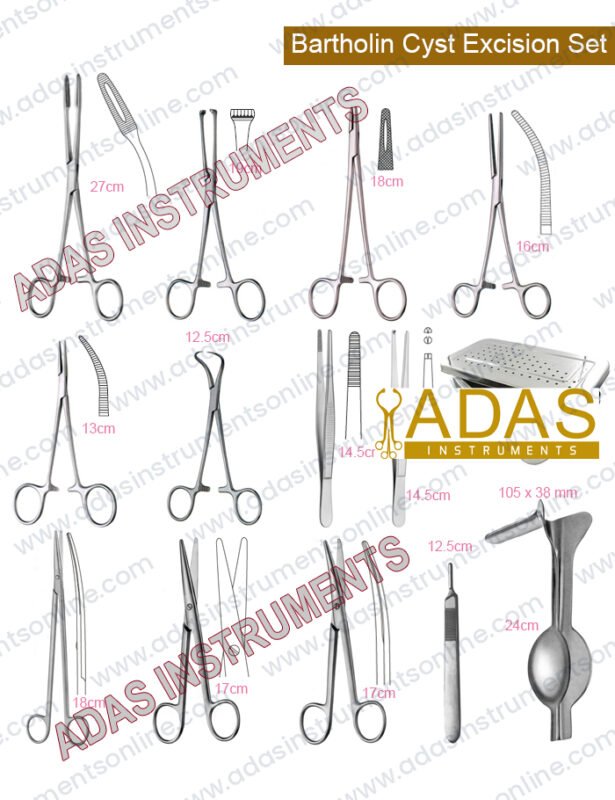
| Instrument | Size or pattern | Qty |
|---|---|---|
| Scalpel handle | No.3 | 1 |
| Backhaus towel forceps | 13 cm | 6 |
| Halsted-Mosquito artery forceps | 12.5 cm, curved | 4 |
| Rochester-Pean artery forceps | 16 cm, curved | 2 |
| Mayo-Stille operating scissors | 17 cm, straight and curved | 2 |
| Metzenbaum-Nelson scissors | 18 cm, curved | 1 |
| Standard dressing forceps | 14.5 cm, straight | 1 |
| Standard tissue forceps | 14.5 cm, straight, 1×2 teeth | 1 |
| Allis tissue seizing forceps | 19 cm, 5×6 teeth | 4 |
| Auvard vaginal speculum | 80 mm by 38 mm | 1 |
| Mayo-Hegar needle holder | 18 cm | 1 |
| Gross-Maier dressing forceps | 27 cm, curved | 4 |
| Stainless steel instrument box | Holds the full set | 1 |
Where the set is used
The Bartholin cyst excision procedure is one of several operations on the gland. The same tray covers them all.
| Operation | What the set does | Pieces doing the work |
|---|---|---|
| Bartholin cyst excision | Removes the cyst whole | Allis forceps, Metzenbaum, artery forceps |
| Bartholin gland excision | Removes the gland after repeated recurrence | Allis forceps, Rochester-Pean, needle holder |
| Marsupialization | Opens the cyst and stitches its edges to the skin | Scalpel, Allis forceps, needle holder |
| Abscess drainage | Opens and drains an infected gland | Scalpel, dressing forceps, Mosquito forceps |
| Minor vulval excision | Removes a small lesion on the vulva | Allis forceps, Metzenbaum, needle holder |
What it does, and what it must not be asked to do
Fine work in a vascular field. These are the limits that keep it fine.
| Instrument | What it does | What it must not do |
|---|---|---|
| Allis forceps | Hold the cyst wall under even tension | Clamp hard enough to puncture the cyst |
| Metzenbaum-Nelson scissors | Dissect the cyst free | Cut sutures or drapes. That blunts the tips |
| Halsted-Mosquito forceps | Catch small vessels in the cyst bed | Clamp the larger vessels. Use the Rochester-Pean |
| Auvard speculum | Opens the lower vestibule by its weight | Stay in place on a long case without being checked |
| The set as a whole | Excision, marsupialization and drainage | Reach deep into the vagina. It is a vestibule tray |
How it compares with the other vaginal sets
Our vaginal and vulval trays share some instruments. This is the one with exposure built in.
| Set | Pieces | What it carries | Buy it when |
|---|---|---|---|
| Bartholin cyst excision, this page | 28 | Auvard speculum, four Allis, Metzenbaum, ten artery forceps | The work is on the gland or the vestibule |
| Vaginal closure | 24 | Eight toothed Mosquitoes, two needle holders | You need a closure tray with no exposure |
| Vaginal construction | 26 | Iris scissors, Adson forceps, eight Mosquitoes | Skin graft vaginoplasty |
| Major vaginal repair | 63 | Five specula, four retractors, twelve heavy clamps | Prolapse, fistula or vaginal hysterectomy surgery |
Materials and finish
Every piece in this Bartholin cyst excision instrument set is made from high quality medical grade stainless steel. The steel itself is made to a German specification. We do not publish a grade number. What matters is whether the Allis teeth still meet cleanly after many cycles, because teeth that have shifted cut through a cyst wall instead of holding it.
The Metzenbaum-Nelson blades are set to meet along their full length, and the tips are blunt so they push tissue apart rather than piercing it. The speculum blade is polished smooth where it touches the mucosa. Everything else has a satin finish to cut glare from the lamp.
Caring for it
Rinse the tray after the case, paying attention to the Allis teeth and the Mosquito jaws, where blood and tissue gather. Open every ratchet before washing and for the autoclave.
Every few months, close each Allis on a dry swab and pull. If it slides out, the teeth no longer meet and the forceps will tear a cyst wall. We realign and reset forceps; send them back with the item code. Store the Metzenbaum in its own slot so its blunt tips are not knocked out of line.
Ordering and wholesale
Every piece of the Bartholin cyst excision instrument set is made by Adas Instruments in our own workshop and sold direct, which is why the price sits where it does against the catalog houses. Order one for a single tray, or in quantity for a hospital list or a distributor line. We do OEM work under your own brand and your own item numbers. Send us a sample and we will hold a run to your pattern rather than ours. Stock items ship from our own workshop. Backorder items take 10 to 12 working days to make. Every instrument carries a three year replacement warranty against manufacturing defects. Production is controlled under an ISO 13485 quality management system.
Frequently asked questions
What instruments are used for cyst removal?
For a Bartholin cyst: a speculum or retractor for exposure, a scalpel, tissue forceps such as the Allis to hold the cyst wall, fine scissors such as the Metzenbaum, artery forceps and a needle holder. This tray carries all of them.
What is the procedure for excision of a Bartholin cyst?
An incision is made over the cyst at the vestibule, the cyst wall is held and dissected free from the tissue round it, bleeding points are caught, and the bed is closed in layers. The cyst is removed whole where possible.
How is a Bartholin cyst permanently removed?
By excising the cyst or the whole gland, which is usually kept for cysts that keep coming back after marsupialization. Our Bartholin cyst excision instrument set is made for that operation.
Is excision or marsupialization better?
That is a clinical decision. Marsupialization is simpler and keeps the gland; excision removes it and is used when cysts recur. The same instruments are used for both.
Does the set include Adson forceps?
No. It carries four Allis forceps instead, which hold the cyst wall without puncturing it. An Adson can be added to the order.
Related products and categories
For skin graft work, see the vaginal construction instrument set. The vesicovaginal fistula repair instrument set carries the fine fistula instruments, and the major vaginal repair instrument set is our full vaginal surgery tray.
All of our trays for this specialty sit under gynecology and obstetrics instrument sets, and the full range of procedure trays is under surgical instrument sets.
| Weight | 1.99 kg |
|---|
Be the first to review “Bartholin Cyst Excision Instrument Set, 28 Pieces”
Shipping & Delivery Policy
Processing Time: In-stock items are dispatched within 24-48 hours. For custom or out-of-stock items, production time is approximately 10-15 days.
Global Delivery Estimates
We partner with world-class couriers (DHL, FedEx) to ensure fast, tracked delivery.
- USA & Canada: 3-5 Business Days
- Europe & UK: 4-6 Business Days
- Rest of World: 5-7 Business Days
*We offer Air Cargo and Sea Freight options for bulk wholesale orders.
Customs & Duties
International buyers are responsible for any customs duties or taxes imposed by their country. Adas Instruments is not responsible for delays caused by customs clearance.
Lost Packages & Insurance
If your package is lost in transit, please contact us immediately. We offer full support and replacements for confirmed lost shipments. Note: You must report non-delivery within 3 weeks to be eligible for an insurance claim.
Reviews
There are no reviews yet.