
MicroAire Compatible Cannulas: 19 PAL Patterns and How They Fit

Oct
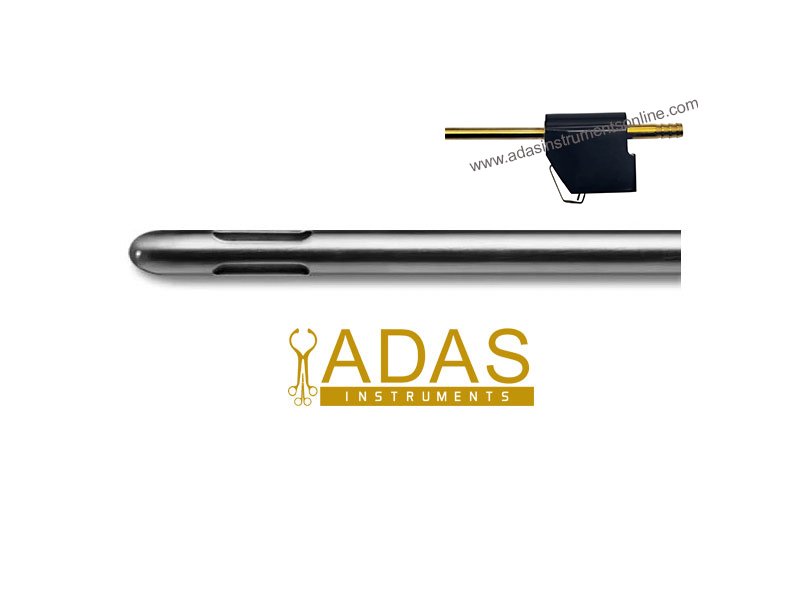
MicroAire compatible cannulas are reusable liposuction cannulas with a hub machined to lock into a MicroAire style power assisted liposuction (PAL) handpiece, so the handpiece can drive them back and forth during the case. Adas Instruments makes 19 tip patterns of this kind, from the classic Mercedes to the Cobra and the Grater Plus, all listed under our MicroAire type PAL cannulas range.
One line before anything else. MicroAire is a registered trademark of MicroAire Surgical Instruments LLC. Adas Instruments is an independent manufacturer and is not affiliated with that company. Our cannulas are compatible, or “type”, instruments made to fit the same handpiece interface, and every product page says so in the same words.
Key takeaways
- A PAL cannula only works if the hub locks tight. A loose hub soaks up the stroke instead of passing it to the tip.
- All 19 of our MicroAire type patterns share one hub design, so a practice can mix tips on one handpiece.
- Manual threaded cannulas and luer lock infiltration cannulas do not fit a PAL handpiece, and a PAL cannula is a poor choice on a manual handle.
- Pick by job: Mercedes family for general debulking, tri-port family for even takes, fine tips for finishing, cutting tips for fibrous areas.
How a PAL Handpiece Drives the Cannula
A power assisted handpiece moves the cannula in a short, fast reciprocating stroke while the surgeon guides it through the fat. The surgeon still decides the path. The motor adds the small in and out motion that loosens fat in front of the ports, which is why surgeons who do a lot of fibrous areas, such as the back or the male chest, like PAL in the first place.
That stroke is the reason the hub matters more here than on any manual cannula. On a manual handle, a slightly loose fit only means a wobble the surgeon can feel and correct. On a powered handpiece, every bit of play in the hub turns into rattle and wear on the fitting, and less of the stroke reaches the tip. So the first question a buyer asks about MicroAire compatible cannulas is the right one: will this lock solid on my handpiece?
What Our Hub Is Made Of
Every pattern in the range uses the same construction: a high quality medical grade stainless steel shaft with an anodized aluminium hub, machined to fit MicroAire style reciprocating handpieces. The aluminium keeps the weight at the back of the instrument low, which matters when a motor is moving that mass back and forth for the whole case. The ports are electropolished so their edges are smooth, and the whole cannula goes through a normal steam autoclave cycle.
Because the hub is shared, one handpiece can run any tip in the range. A practice that starts with the MicroAire type Mercedes cannula can add a cutting tip or a fine finishing tip later without asking whether the new one will fit.
The 19 Patterns, Grouped by the Job They Do
Nineteen patterns sounds like a lot until you sort them by what they are for. Most trays only need one or two from each group below.
| Group | Patterns | What they are for |
|---|---|---|
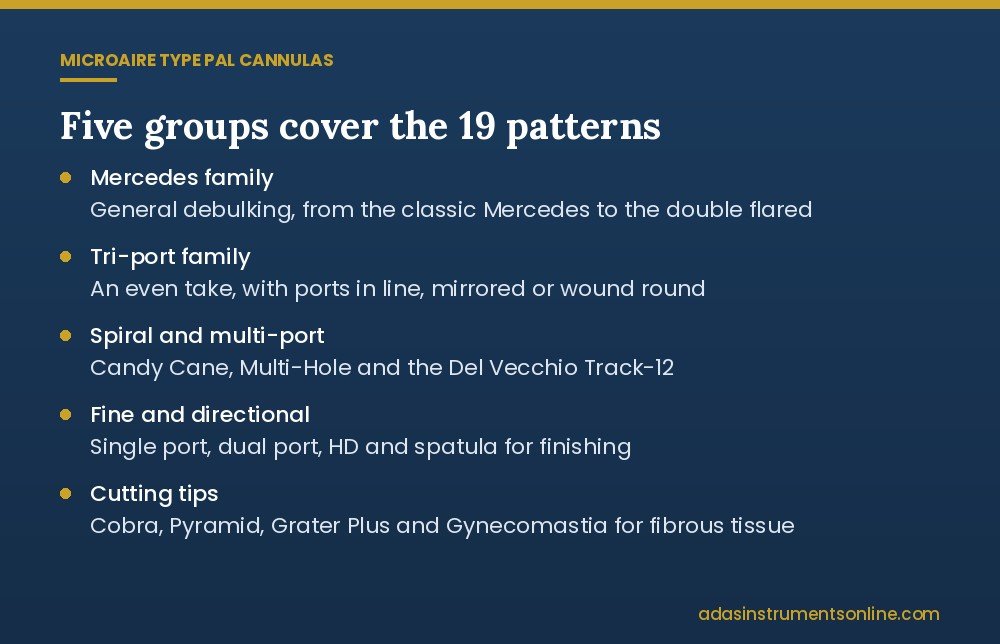
| Mercedes family | Mercedes, Flared Mercedes, Double Mercedes, Double Flared Mercedes | General debulking. Three ports staggered round the tip, with flared and doubled versions for more open area |
| Tri-port family | Tri-Port II, Tri-Port III, Mirrored Tri-Port II, Helixed Tri-Port III | An even take. Ports in line, mirrored on both faces or wound round the shaft |
| Spiral and multi-port | Candy Cane, Multi-Hole, Del Vecchio Track-12 | Spreading suction along the shaft. The Track-12 carries twelve ports for high volume fat grafting |
| Directional and fine | Single-Port, Dual Port, HD, Spatula | Targeted work and finishing close to the skin |
| Cutting tips | Cobra, Pyramid, Grater Plus, Gynecomastia | Fibrous and resistant tissue, including the male chest |
Count them and you get 19. The Mercedes family is where most practices start, because the three staggered ports give a predictable, moderately aggressive take across the abdomen, flanks, back and thighs.
Sizes on the Mercedes Pattern
Our MicroAire type Mercedes cannula is listed in diameters from 3.0 to 6.0 mm and working lengths from 26 to 32 cm, chosen from the options on the product page. The other patterns carry their own size options, and each product page lists exactly what is available, so check the page for the tip you want rather than assuming every pattern comes in every size.
| Size choice | Typical reason |
|---|---|
| Smaller diameter | Finer passes, finishing, smaller areas |
| Larger diameter | Faster debulking in large areas |
| Shorter working length | Closer control near the entry point |
| Longer working length | Reaching across a large area from one incision |
Run PAL cases on cannulas made by the maker
Every pattern in the table above is made in the Adas Instruments workshop. Most MicroAire type PAL cannulas are 80 dollars, the Grater Plus is 120 dollars. Order single tips or build a full PAL tray.
What Does Not Fit a PAL Handpiece
This is where most ordering mistakes happen. Standard cannulas from our aspiration cannula range use threaded or luer style connections and are made for manual work on fix handles, not for a powered handpiece. Luer lock infiltration cannulas connect to tubing or syringes, not to a motor. If a practice does both manual and PAL cases, it needs both hub types on the shelf, and the two are not interchangeable.
It works the other way too. A MicroAire type cannula is built for the handpiece and is not a good manual instrument; it does not balance well in the hand without the motor body behind it. Our guide to liposuction cannula handles explains which handle goes with which hub, and the liposuction cannula types guide covers the manual tip patterns.
Checking Fit Before You Order
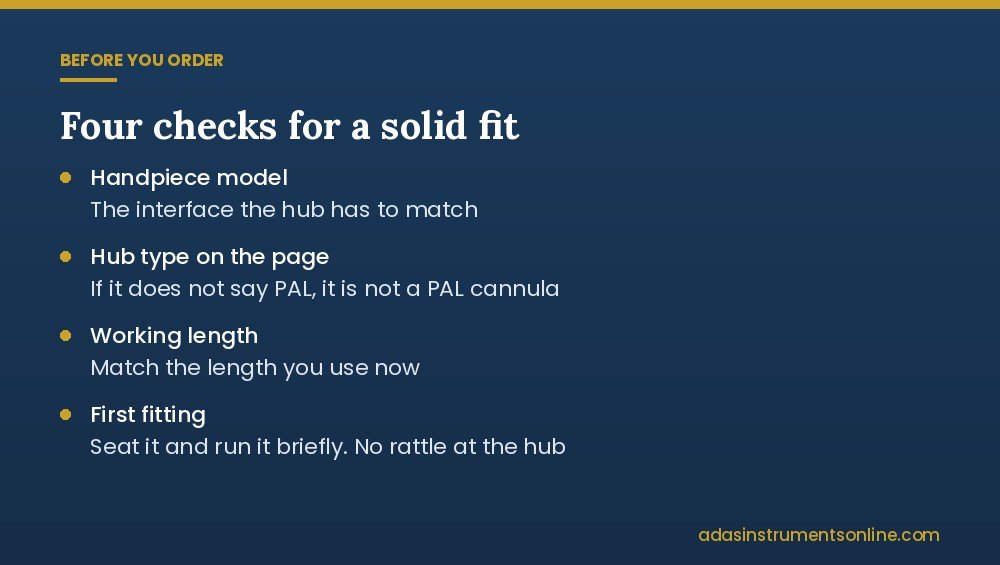
- Handpiece model. Note the exact model of the PAL handpiece in use. That is the interface the hub has to match.
- Hub type on the page. Every one of our MicroAire type product pages states the fitting in the specification block. If the page does not say PAL, it is not a PAL cannula.
- Working length. Measure the length you use now. A tip that suits the case but sits 4 cm too short is still the wrong cannula.
- First fitting. When the cannula arrives, seat it in the handpiece and run it briefly before the first case. It should feel solid, with no rattle at the hub.
Shipping is by DHL or FedEx; for quotes, message +92 321 6126225 on WhatsApp.
Looking After a PAL Cannula
Flush the lumen straight after the case, before fat dries in the ports. Clean with an enzymatic detergent and a brush sized to the bore, then rinse and dry it before it goes into the steam autoclave. Look at the hub threads every time: the vibration that makes PAL work also finds any worn thread first. Our article on when to replace a liposuction cannula lists the signs that a shaft or hub has reached the end of its life. For the clinical side of the procedure itself, the ASPS practice advisory on liposuction is a useful reference.
Frequently Asked Questions
What are MicroAire compatible cannulas?
They are liposuction cannulas made by an independent manufacturer with a hub that locks into a MicroAire style power assisted liposuction handpiece. Adas Instruments makes 19 such patterns and is not affiliated with MicroAire Surgical Instruments LLC.
Do all your MicroAire type cannulas fit the same handpiece?
Yes. All 19 patterns in our MicroAire type range share one hub design, machined to fit MicroAire style reciprocating handpieces, so tips can be swapped on the same handpiece.
Can I use a MicroAire type cannula on a manual handle?
It is not designed for that. For manual liposuction, a threaded cannula on a fix handle balances better in the hand. Practices that do both kinds of case keep both types.
Which MicroAire type pattern should I buy first?
The Mercedes is the usual first choice for general debulking in large areas such as the abdomen. Many trays then add a tri-port for an even take and a cutting tip such as the Cobra for fibrous areas.
Can MicroAire compatible cannulas be autoclaved?
Yes. The stainless steel shaft and anodized aluminium hub go through standard steam autoclave cycles. Flush and clean the lumen first, and check the hub threads before every case.
