 Enquiry Cart
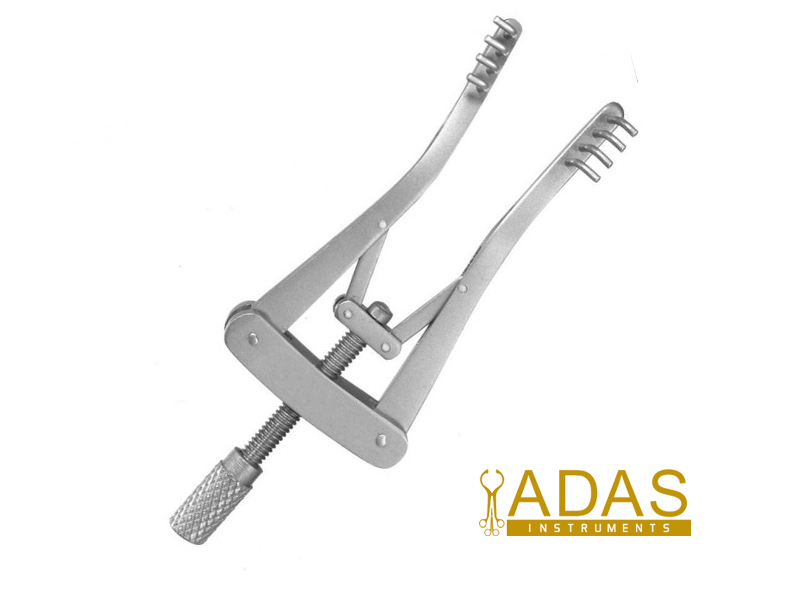
Alm Self-Retaining Retractor – 4×4 Prong – Blunt or Sharp
Original price was: $ 28.00.$ 22.00Current price is: $ 22.00.
The Alm Self-Retaining Retractor is an essential tool for microsurgery and small-incision procedures where stable, hands-free exposure is required. Featuring a 4×4 prong configuration and a smooth-action thumb screw, this instrument allows for gradual and controlled tissue expansion. At Adas Instruments, we manufacture this retractor from German stainless steel to provide the durability and corrosion resistance necessary for delicate surgical environments. Its lightweight design and compact frame make it the gold standard for intricate work in small anatomical regions.
- Microsurgical Precision: Specifically designed for hand surgery, podiatry, and small-site dissections.
- Adjustable Tension: Thumb screw mechanism provides effortless expansion and secure locking.
- Clinical Application: Ideal for orthopedic hand surgery, spinal procedures, and neurosurgical approaches.
- Versatile Prongs: Available in both sharp and blunt tip patterns to accommodate various tissue types.
- Service & Quality: Includes a 3-Year Technical Warranty and fast 3-5 day global shipping via DHL/FedEx.
Fast Global Shipping
3-5 Days to USA, UK & Europe via DHL/FedEx.
3-Year Warranty
German Stainless Steel. Free replacement guarantee.
Direct Manufacturer
Factory Direct Prices. Wholesale & OEM available.
Alm Self-Retaining Retractor: Precision Exposure for Microsurgery
The Alm Self-Retaining Retractor is a highly specialized instrument engineered to provide stable, hands-free surgical access in confined operative fields. Widely utilized in hand and foot surgery, this high quality instrument allows surgeons to maintain a clear view without the need for an assistant to hold manual retractors. At Adas Instruments, our manufacturing process ensures that the screw mechanism operates with extreme fluidity, providing the Alm retractor with the reliability needed for delicate maneuvers. This tool is indispensable for achieving precise microsurgical results in outpatient and hospital settings alike.
Technical Engineering and Material Excellence
Forged from premium grade German stainless steel, our Alm surgical retractor models undergo a rigorous passivation process to ensure maximum longevity. This premium grade instrument features a 4×4 prong spread that can be adjusted with a central knurled thumb screw for tailored tension. Every self-retaining retractor is boil tested and ultrasonic cleaned to guarantee clinical sterility and performance. The high quality finish reduces glare under the surgical microscope, which is a critical requirement for advanced microsurgery and small-site orthopedic work.
Surgical Application
- Hand Surgery: Acting as a critical Alm retractor for carpal tunnel release and tendon repairs.
- Podiatry: Facilitating the retraction of skin and soft tissue during bunionectomies and toe corrections.
- Spinal Procedures: Serving as a reliable micro self-retaining retractor for small-incision laminectomies.
- Vascular Access: Providing precise and stable exposure for creating arteriovenous fistulas.
Care and Maintenance Section
To maintain the reliability of this high quality surgical tool, it is essential to keep the thumb screw and guide rails free from debris. We recommend lubricating the moving parts with medical-grade lubricant after every sterilization cycle. These instruments are fully reusable and designed for repeated autoclaving. Adas Instruments proudly ships USA, Europe & worldwide, ensuring that premium microsurgical tools are available to surgeons everywhere.
People Also Ask
When should I choose sharp vs blunt prongs for an Alm retractor?
Sharp prongs are ideal for securing a firm grip on tough connective tissue or skin edges, while blunt prongs are preferred when working near delicate nerves and blood vessels to prevent accidental puncture.
What is the typical size and spread of the Alm retractor?
The Alm retractor usually has a total length of approximately 7cm to 10cm, with a prong spread of about 4cm to 5cm, making it perfect for small, superficial incisions.
Is this retractor suitable for use under a microscope?
Yes, the compact design and anti-glare satin finish make it one of the most popular micro self-retaining retractor choices for surgeons performing microsurgical reconstructions.
Technical Specifications Table
| Instrument Type | Alm Self-Retaining Retractor |
| Application | Microsurgery, Hand Surgery, Podiatry, Small-Site Orthopedics |
| Prong Configuration | 4×4 Prongs (Sharp or Blunt Options) |
| Material | German Stainless Steel (Passivated) |
| Mechanism | Adjustable Thumb Screw Lock |
| Sterilization | Reusable / Fully Autoclavable |
| Finish Options | Satin (Anti-Glare) / Matte |
| Warranty | 3-Year Technical Warranty |
| Quality Standards | ISO 13485, CE Mark Compliant |
| Rust Prevention | Passivated & Boil Tested |
| Ultrasonic Cleaned | Yes |
| Marking | Laser Marking Available (Custom/OEM) |
| Packaging | Individually Packed |
| Weight | Approx. 60g (0.06 kg) |
| Spread Range | Adjustable up to 57mm (Approx.) |
| Corrosion Resistance | High Quality Passivated Finish |
Procedural Pairings
Surgical Category: Browse our full range of Micro Surgery Instruments for specialized procedures.
Complementary Tool: Often used with the Castroviejo Suture Forceps for meticulous wound closure.
Vascular Work: Pair this retractor with our DeBakey Vascular Forceps for delicate tissue handling during micro-vessel repair.
| Weight | 0.06 kg |
|---|---|
| Tip options | Blunt End Prong, Sharp Prongs end |
Be the first to review “Alm Self-Retaining Retractor – 4×4 Prong – Blunt or Sharp”
Shipping & Delivery Policy
Processing Time: In-stock items are dispatched within 24-48 hours. For custom or out-of-stock items, production time is approximately 10-15 days.
Global Delivery Estimates
We partner with world-class couriers (DHL, FedEx) to ensure fast, tracked delivery.
- USA & Canada: 3-5 Business Days
- Europe & UK: 4-6 Business Days
- Rest of World: 5-7 Business Days
*We offer Air Cargo and Sea Freight options for bulk wholesale orders.
Customs & Duties
International buyers are responsible for any customs duties or taxes imposed by their country. Adas Instruments is not responsible for delays caused by customs clearance.
Lost Packages & Insurance
If your package is lost in transit, please contact us immediately. We offer full support and replacements for confirmed lost shipments. Note: You must report non-delivery within 3 weeks to be eligible for an insurance claim.
Related products



Reviews
There are no reviews yet.