
Laryngoscope Battery Size, Blades and Handles: The Complete Guide
Aug
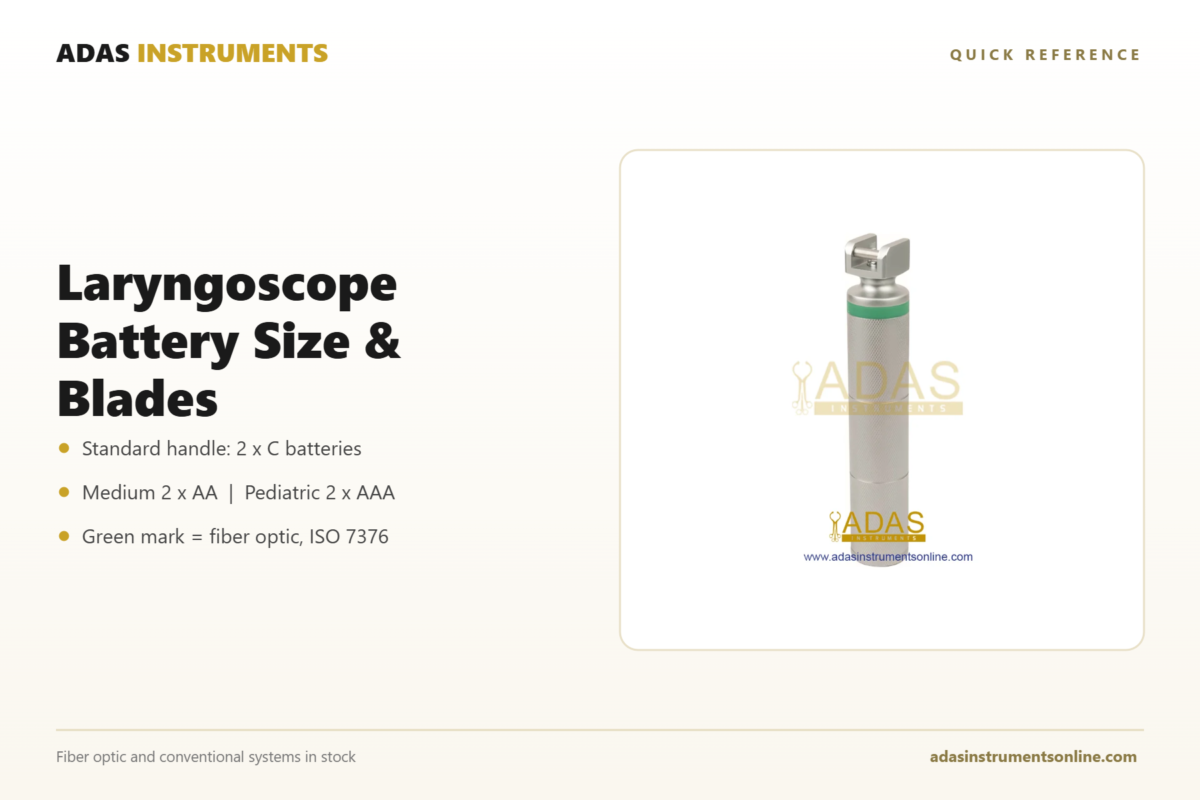
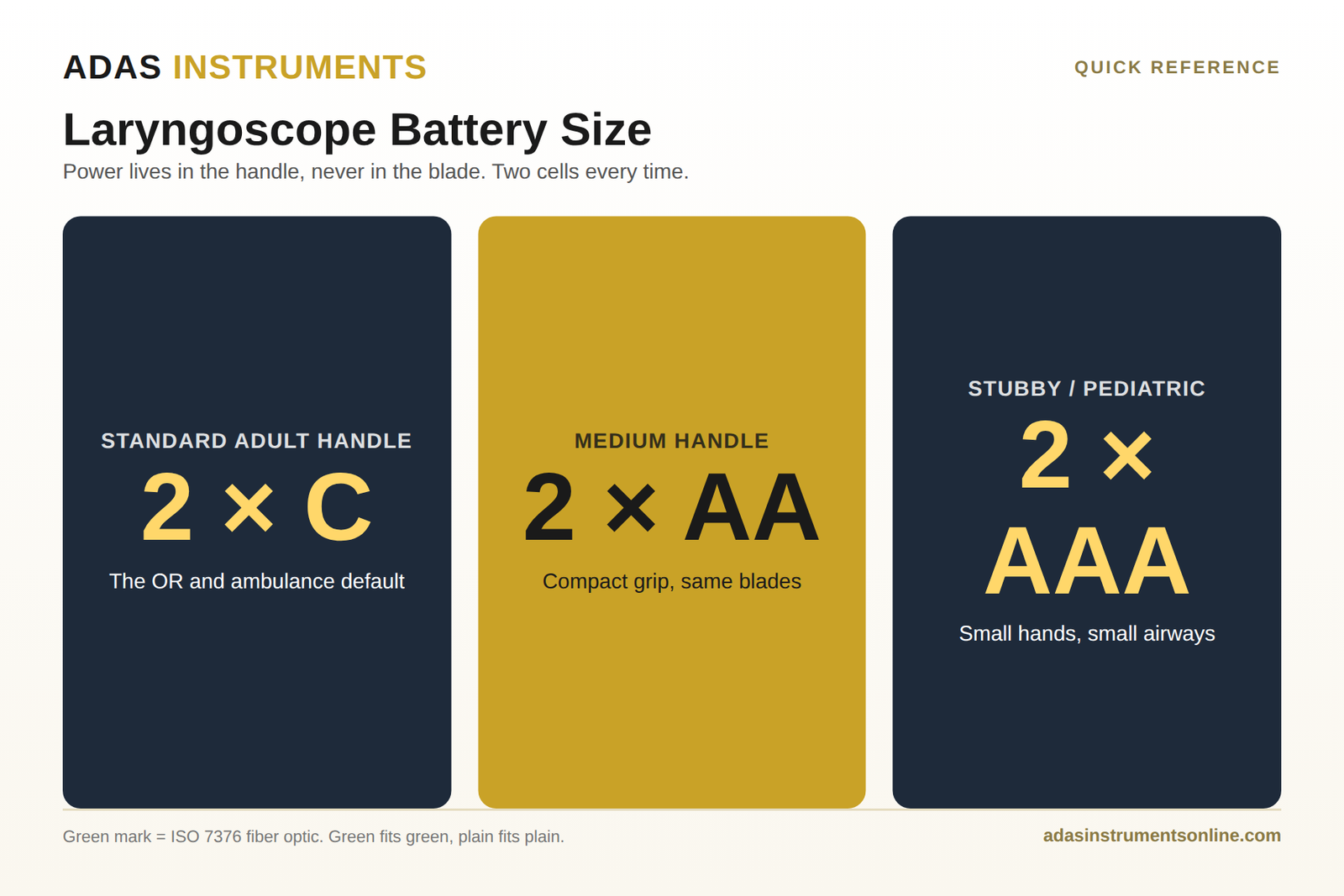
What laryngoscope battery size do I need? It is the single most common question people bring to our site, so here is the direct answer first: standard adult laryngoscope handles take two C size batteries, medium handles take two AA, and small pediatric or penlight handles take two AAA. The blade does not take batteries at all; power always lives in the handle. The rest of this guide covers blades, fittings, bulbs versus fiber optic light, and how to buy a set that actually fits together.
Laryngoscope Battery Size by Handle, in Detail
Standard adult handles, the wide-grip pattern in most ORs and ambulances, run on two C cells. Medium (sometimes called stubby-alternative) handles run two AA. True stubby and pediatric handles run two AAA. Rechargeable inserts exist for all three sizes and pay for themselves quickly in daily-use settings. If the light dims or flickers before anything else, replace the batteries and clean the contacts; nine of ten light complaints end there.
Conventional vs Fiber Optic: The Real Difference
Conventional (bulb-on-blade) systems put a small screw-in bulb on the blade itself; electricity flows through a contact between handle and blade. They are cheap and field-serviceable, but the bulb sits in the airway view and the contact point corrodes. Fiber optic systems put the lamp inside the handle and pipe light through a fiber bundle in the blade: brighter, whiter, nothing electrical at the blade tip, and the standard for modern practice. Our fiber optic LED handle and conventional handle cover both systems.
The Critical Compatibility Rule: Green Line vs Non-Standard
Fiber optic blades and handles that follow ISO 7376, the green standard, carry a green marking and interchange across brands. Conventional blades and handles use the older hook-on fitting without the green mark. The rule that prevents wasted orders: green goes with green, plain goes with plain. A fiber optic blade will latch onto a conventional handle but will not light.
Blade Patterns and Sizes
Two shapes rule the airway: the curved Macintosh, sizes 1 through 4, the adult default worldwide, and the straight Miller, sizes 00 through 4, the pediatric standard and the choice for difficult anterior airways. A complete airway cart carries Mac 3 and 4 plus Miller 0 through 2. Our blade sets bundle the common sizes with a matching handle.
[Photo placeholder: laryngoscope handle with C batteries beside it, Mac and Miller blades fanned out]
Care Notes
Blades autoclave; handles usually do not (battery contacts and lamp). Wipe-disinfect handles per your protocol, remove batteries before storage, and keep one spare bulb taped inside every conventional kit. Technique background lives in the laryngoscopy overview.
Equipping airway carts? Fiber optic and conventional handles, Mac and Miller blades, sold singly or as sets.
Frequently Asked Questions
What battery size does a laryngoscope use?
Standard adult handles: two C batteries. Medium handles: two AA. Stubby and pediatric handles: two AAA. The blade never holds batteries; if there is no light, check the handle cells and contacts first.
Can I use any blade with any handle?
Only within the same system. Green-marked (ISO 7376) fiber optic blades fit green-marked handles across brands; conventional hook-on blades fit conventional handles. Mixing systems latches mechanically but gives no light.
Macintosh or Miller: which blade do I need?
Macintosh (curved) is the adult standard, sizes 3 and 4 covering most patients. Miller (straight) rules pediatrics and difficult anterior airways. Complete carts stock both.
Why is my laryngoscope light dim or flickering?
In order of likelihood: tired batteries, corroded contacts, a loose bulb (conventional), or a cracked fiber bundle (fiber optic, visible as dark patches in the light output). The first two fixes cost nothing.
Are laryngoscope blades autoclavable?
Stainless steel blades, yes, both conventional and fiber optic. Handles are wipe-disinfected unless the manufacturer states otherwise, and batteries always come out first.
