 Enquiry Cart
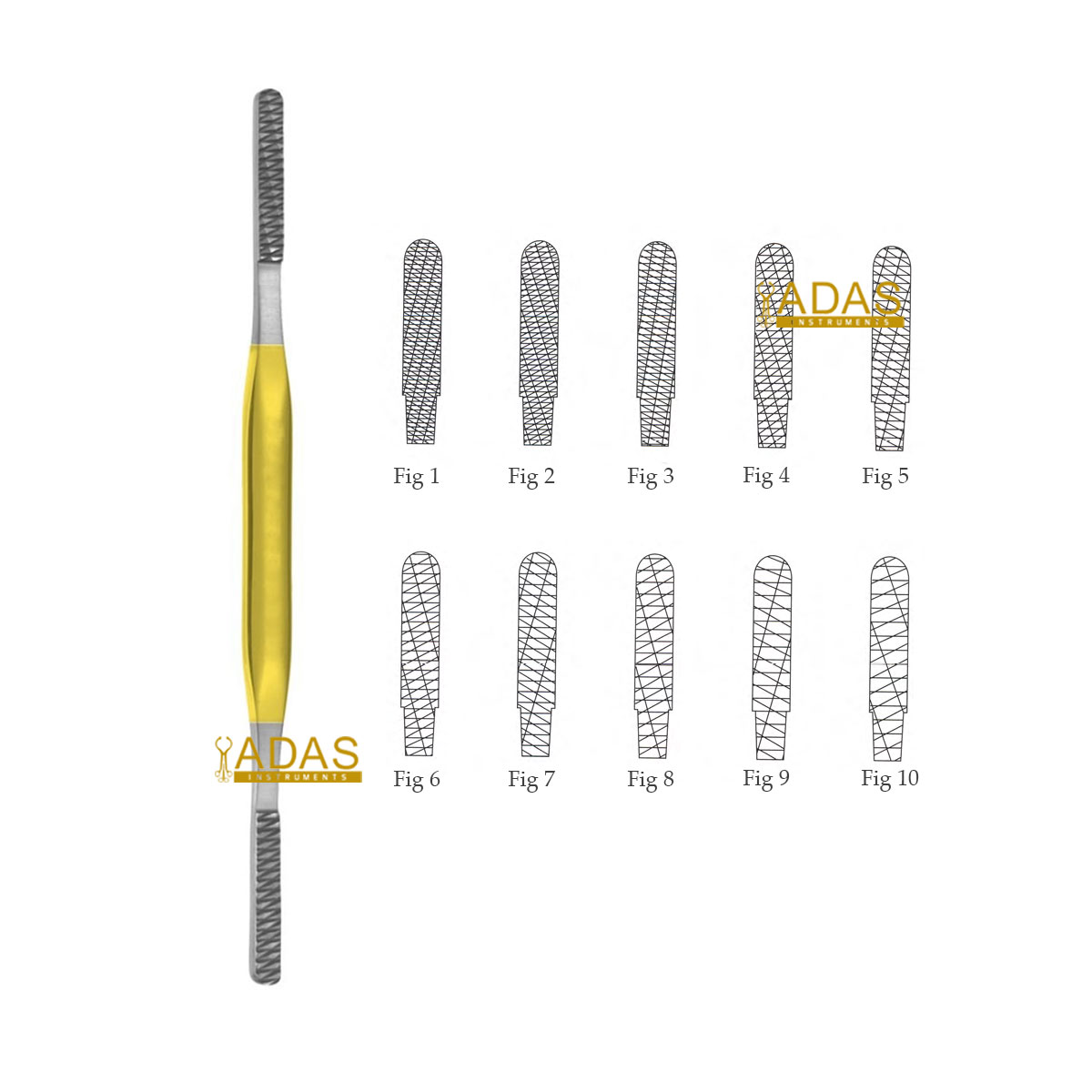
Fomon Nasal Raspatory – Double-Ended Tungsten Carbide Rasp
$ 65.00
The Fomon Nasal Raspatory is a high-performance double-ended surgical instrument specifically designed for precision bone contouring in rhinoplasty. Featuring Tungsten Carbide (TC) inlays, this raspatory provides exceptional durability and a superior cutting surface for smoothing nasal bone irregularities.
- Tip Configuration: Double-ended design with Tungsten Carbide inlays; available in grits from 1/2 (Very Coarse) to 9/10 (Very Fine).
- Applications: Primarily used in Rhinoplasty and Septoplasty for nasal hump reduction and bone surface smoothing.
- Warranty: Supported by a 3-Year Technical Warranty against manufacturing defects.
- Shipping: Reliable global shipping via DHL and FedEx ensures your instruments arrive within 3-5 business days.
Fast Global Shipping
3-5 Days to USA, UK & Europe via DHL/FedEx.
3-Year Warranty
German Stainless Steel. Free replacement guarantee.
Direct Manufacturer
Factory Direct Prices. Wholesale & OEM available.
Fomon Nasal Raspatory: Tungsten Carbide Precision for Rhinoplasty
The Fomon Nasal Raspatory is the gold standard for surgeons requiring long-lasting sharpness and efficiency in bone sculpting. This double-ended tool provides unparalleled surgical precision, allowing for a seamless transition between different grit levels during complex nasal reconstruction. At Adas Instruments, our manufacturing process integrates high-density Tungsten Carbide inlays into a German steel frame, ensuring that the abrasive surfaces remain effective through countless sterilization cycles. The gold-plated handles signify TC quality and provide a balanced ergonomic grip for delicate maneuvers.
Forged from high-grade German stainless steel and reinforced with TC, each Fomon raspatory is hand-finished with a satin-matte polish to eliminate distracting glare under surgical lamps. To preserve its structural integrity, every unit undergoes comprehensive ultrasonic cleaned protocols and deep passivation to resist the corrosive effects of standard sterilization. By utilizing these premium materials, we ensure maximum longevity of the rasp’s cutting capability, providing surgeons with a reliable, non-slip surface for smoothing dorsal humps and bony irregularities.
Care and Maintenance Section
To maintain the effectiveness of the Tungsten Carbide inlays, it is essential to clean the rasp immediately after use with a soft-bristle brush to remove bone fragments. We recommend using neutral pH detergents and standard autoclave cycles. To guarantee its safe arrival at your surgical facility, each instrument is supplied in a protective pack. Adas Instruments offers reliable shipping through top-tier couriers like DHL and FedEx, supporting the global surgical community with high-performance tools.
Surgical Applications OF Fomon Nasal Raspatory
- Nasal Hump Reduction: Smoothing the nasal bridge after osteotomy procedures.
- Bone Contouring: Refining the nasal side walls for a symmetrical aesthetic profile.
- Septal Smoothing: Addressing bony deviations within the nasal cavity for improved airway flow.
- Versatile Sculpting: Using varied grit options (1/2 to 9/10) to achieve specific bone finishes.
People Also Ask
What is the benefit of Tungsten Carbide inlays in a Fomon Rasp?
Tungsten Carbide (TC) is significantly harder than standard stainless steel, meaning the rasp teeth stay sharp much longer and provide a more precise, consistent cut.
What do the grit numbers (1/2 to 9/10) mean?
These numbers represent the coarseness of the teeth. 1/2 is Very Coarse for heavy bone removal, while 9/10 is Very Fine for final polishing and smoothing.
Is the Fomon Nasal Raspatory autoclavable?
Yes, it is made of German stainless steel with TC inlays and is fully autoclavable, passivated, and ultrasonically cleaned for professional reuse.
Technical Details
| Feature | Specification |
|---|---|
| Instrument Type | Fomon Nasal Raspatory (Double-Ended), Tungsten Carbide Rasp |
| Application | Rhinoplasty, Septoplasty, Bone Sculpting |
| Blade/Tip Configuration | Tungsten Carbide (TC) Inlays – Double Ended |
| Material | German Stainless Steel with TC Inlays |
| Sizes Available | 21cm (8.25″) Total Length |
| Ergonomic Feature | Gold-plated handles for TC identification and grip |
| Sterilization | Reusable / Fully Autoclavable |
| Finish Options | Satin (Matte) Finish with Gold accents |
| Warranty | 3-Year Manufacturer’s Warranty |
| Quality Standards | ISO 9001-2000, CE Mark Compliant |
| Rust Prevention | Passivated, Boil Tested |
| Ultrasonic Cleaned | Yes |
| Marking | Laser Marking (OEM available) |
| Packaging | Individually Packed |
| Sterility | Non-Sterile |
Procedural Pairings & Internal Links
Surgical Category: Explore our wide range of Raspatories & SAW.
Essential Pairings: Often used with Joseph Skin Hooks and Aufricht Nasal Rasps for total nasal reconstruction.
| Weight | 0.9 kg |
|---|---|
| Tip options | 1/2 Very Coarse Grits, 3/4 Coarse Grits, 5/6 Fine & Coarse Grits, 7/8 Fine Grits, 9/10 Very Fine Grits |
Be the first to review “Fomon Nasal Raspatory – Double-Ended Tungsten Carbide Rasp”
Shipping & Delivery Policy
Processing Time: In-stock items are dispatched within 24-48 hours. For custom or out-of-stock items, production time is approximately 10-15 days.
Global Delivery Estimates
We partner with world-class couriers (DHL, FedEx) to ensure fast, tracked delivery.
- USA & Canada: 3-5 Business Days
- Europe & UK: 4-6 Business Days
- Rest of World: 5-7 Business Days
*We offer Air Cargo and Sea Freight options for bulk wholesale orders.
Customs & Duties
International buyers are responsible for any customs duties or taxes imposed by their country. Adas Instruments is not responsible for delays caused by customs clearance.
Lost Packages & Insurance
If your package is lost in transit, please contact us immediately. We offer full support and replacements for confirmed lost shipments. Note: You must report non-delivery within 3 weeks to be eligible for an insurance claim.
Related products

Reviews
There are no reviews yet.