

Nerve Hook, 24 cm, Blunt Half Curve, Left and Right
$ 27.00
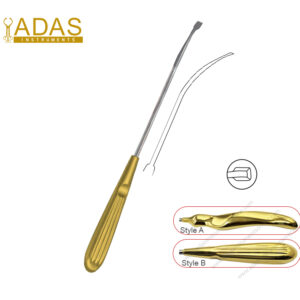
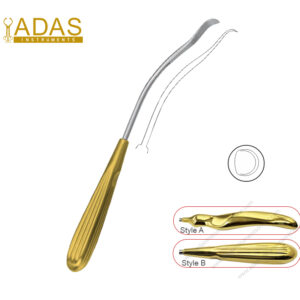
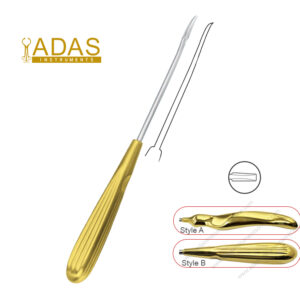
A nerve hook is a slender handheld surgical instrument used to lift, retract and isolate nerves and small vessels, so the surgeon can work around them without stretching or tearing them. Ours is 24 cm long with a blunt, half curved hook on a thin shaft, which lets it reach under the forehead and brow during endoscopic brow lift and facial surgery and ease a nerve aside gently. It is made in left and right angled versions, so the hook can meet the nerve from either side of the face.
Key Features
- Length: 24 cm (about 9.5 in)
- Tip: blunt, half curved hook that lifts tissue without cutting it
- Left and right angled versions
- Slender shaft for endoscopic forehead and facial work
- High quality medical grade stainless steel, reusable and steam autoclavable
- 3 year replacement against manufacturing defects
- Item code: ADE-14.24
Available on backorder

What a Nerve Hook Is Used For
A nerve hook is one of the quietest instruments on a tray, and one of the most useful. Its job is to find a nerve or a small vessel, slip underneath it and hold it out of the way while the surgeon dissects, cuts or sutures nearby. Because the hook supports the nerve from below instead of squeezing it, the nerve is moved without being crushed or stretched.
Our 24 cm nerve hook is made for plastic and cosmetic surgery of the face and forehead. Its long, thin shaft fits through the small incisions used in endoscopic brow lift, and its blunt half curved tip is shaped to pass around the sensory nerves of the forehead and brow so they can be seen and protected. It is also used in open facial and neck surgery, and in peripheral nerve work where a fine, blunt hook is needed.
Design Features
Blunt, half curved hook
The working end is a small hook bent in a half curve with a rounded, blunt tip. The curve lets the tip pass under a nerve and come back up on the far side, and the blunt end means it can be moved along tissue planes without catching or cutting. This is the main difference from a sharp dura hook, which is made to catch tougher tissue.
24 cm slender shaft
At 24 cm the hook is long enough to reach deep under a forehead flap from an incision in the hairline, and thin enough to work beside an endoscope in the same port. A short hook would not reach the brow from the scalp; a thick one would crowd the view.
Left and right angled versions
The hook is angled to one side, and it is made in both a left and a right version. During brow lift and facial surgery the surgeon works on both sides of the face, so having both angles means the hook always meets the nerve from the side the instrument comes in, without twisting the wrist.
Handle and finish
The round handle gives a light, fingertip hold so the surgeon can feel resistance through the instrument. The whole hook is made in one piece from high quality medical grade stainless steel with a satin finish that keeps glare down under operating room lights.
Specifications
| Feature | Detail |
|---|---|
| Length | 24 cm (about 9.5 in) |
| Tip | Blunt, half curved hook |
| Versions | Left angle and right angle |
| Material | High quality medical grade stainless steel |
| Finish | Satin, low glare |
| Sterilization | Steam autoclavable, reusable |
| Warranty | 3 year replacement against manufacturing defects |
| Item code | ADE-14.24 |
Where It Is Used
- Endoscopic brow and forehead lift: to find and protect the sensory nerves of the forehead and brow while the flap is released.
- Facial plastic surgery: to ease small nerve branches and vessels aside during dissection.
- Neck surgery: to lift and isolate small nerves and vessels before nearby tissue is cut.
- Peripheral nerve surgery: to hold a nerve gently while it is freed from scar or surrounding tissue.
Nerve Hook Patterns Compared
Nerve hooks are made in several patterns. They differ mostly in length, tip shape and the part of the body they are designed for. The table below shows where our 24 cm blunt hook sits among the common ones.
| Pattern | Tip | Typical use |
|---|---|---|
| Adas 24 cm nerve hook | Blunt, half curved, left or right | Endoscopic brow lift, facial and neck surgery |
| Cushing nerve hook | Small ball at the tip | Neurosurgery, retracting nerves and delicate tissue |
| Dandy nerve hook | Blunt, right angled | Spine surgery and deeper sites |
| Adson dura and nerve hook | Sharp or blunt | Catching dura or moving nerve tissue |
| Microsurgical nerve hooks | Very fine tips | Cranial and microsurgery under the microscope |
How to Choose a Nerve Hook
- Blunt or sharp: choose blunt for moving nerves and soft tissue, sharp only when the tissue is tough and must be caught.
- Length: match the length to the depth of the field. Endoscopic forehead work needs a long shaft like this 24 cm hook; open skin surgery can use a shorter one.
- Angle: for work on both sides of the face, order the left and right versions together.
- Tip size: a small hook moves fine nerves; a larger hook is better for bigger structures.
Care and Sterilization
Rinse the hook straight after use so blood does not dry on the tip, then clean it by hand or in an ultrasonic cleaner with a neutral pH detergent. Dry it fully before steam sterilization. Store it in a slot or on a silicone mat so the fine hook is not bent by heavier instruments, and check the tip before each case: a bent or nicked hook should be repaired or replaced, not straightened by hand.
Ordering and Wholesale
Adas Instruments makes this nerve hook in its own workshop and ships to hospitals, clinics and distributors worldwide. It can be supplied plain or laser marked with your own brand, from a single piece to bulk quantities. For a quote, larger orders or a matching set of endoscopic brow lift instruments, contact us on WhatsApp at +92 321 6126225 or by email at adas.surgical@gmail.com.
Frequently Asked Questions
What is a nerve hook used for?
A nerve hook is used to lift, retract or isolate a nerve or a small vessel during surgery, so the surgeon can see it, protect it and work around it. The blunt hook slides under the nerve and holds it aside instead of gripping it, which keeps pressure low and spreads it over a wider area.
Is a nerve hook sharp or blunt?
Both exist. Blunt hooks, like this one, are made to move nerves and delicate tissue without cutting them. Sharp hooks are used on tougher tissue such as dura or scar, where a point is needed to catch the tissue. For work near facial and forehead nerves a blunt tip is the normal choice.
Why does this nerve hook come in left and right versions?
The hook is angled to one side. During endoscopic brow lift and facial surgery the surgeon works on both sides of the face, so a left and a right version let the hook meet the nerve from the side it is approached, without twisting the wrist or the port.
What is the difference between a nerve hook and a skin hook?
A skin hook holds the edge of the skin or a flap so it can be lifted and kept under tension. A nerve hook is longer and thinner, and its job is to pass gently under a nerve or vessel deep in the wound and move it out of the way.
Can a nerve hook be autoclaved?
Yes. It is made from high quality medical grade stainless steel and can be steam sterilized like other reusable instruments. Clean it straight after use, dry it fully, and store it so the fine hook is not bent by heavier instruments in the tray.
Related Products and Categories
- Nerve Protector, 17 cm, to shield a nerve while nearby tissue is cut
- Endoscopic Forehead Orbital Rim Dissector, 24 cm, for releasing the brow at the orbital rim
- Corrugator and Procerus Muscle Dissector, 19.5 cm, for frown muscle work in brow lift
- Endoscopy Forehead and Facial Instruments
- Instruments by Procedure
| Weight | 0.1 kg |
|---|
Be the first to review “Nerve Hook, 24 cm, Blunt Half Curve, Left and Right”
Shipping & Delivery Policy
Processing Time: In-stock items are dispatched within 24-48 hours. For custom or out-of-stock items, production time is approximately 10-15 days.
Global Delivery Estimates
We partner with world-class couriers (DHL, FedEx) to ensure fast, tracked delivery.
- USA & Canada: 3-5 Business Days
- Europe & UK: 4-6 Business Days
- Rest of World: 5-7 Business Days
*We offer Air Cargo and Sea Freight options for bulk wholesale orders.
Customs & Duties
International buyers are responsible for any customs duties or taxes imposed by their country. Adas Instruments is not responsible for delays caused by customs clearance.
Lost Packages & Insurance
If your package is lost in transit, please contact us immediately. We offer full support and replacements for confirmed lost shipments. Note: You must report non-delivery within 3 weeks to be eligible for an insurance claim.
Related products

Reviews
There are no reviews yet.