
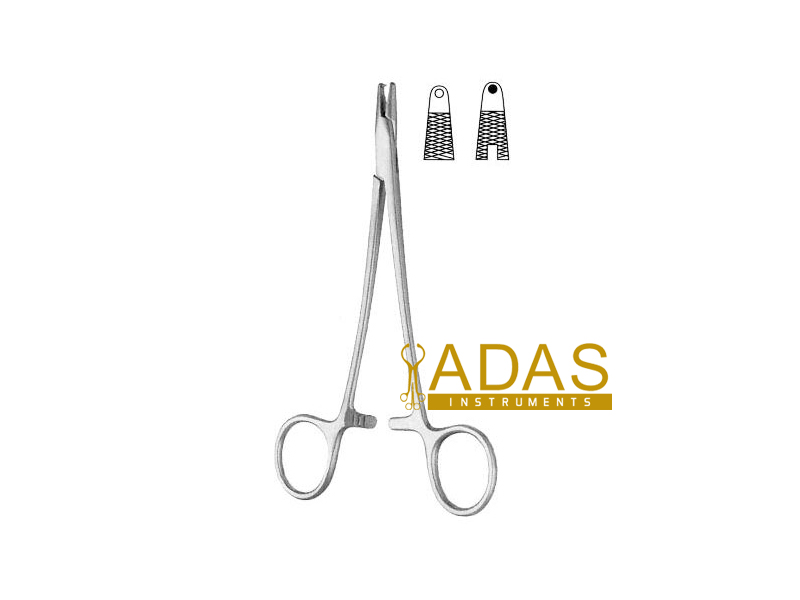
Obwegeser Wire Loop Forceps 15 cm
$ 24.00
Obwegeser wire loop forceps are oral and maxillofacial instruments made to grasp, guide, bend and twist the fine metal wires used in jaw surgery. AI Mode places them in intermaxillary fixation and blocking, where small loops of wire hold the upper and lower teeth together while a fracture or an osteotomy heals. Ours is the 15 cm pattern with grooved tips, ring handles and a ratchet, at 24 dollars.
Key Features
- 15 cm overall length
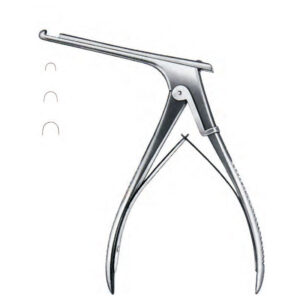
- Narrow grooved tips with a hole near the point
- Steel ring handles with a ratchet between them
- Made for the small wire loops of jaw fixation
- Made from high quality medical grade stainless steel, reusable
- 24 dollars, one size
- Three year replacement warranty against manufacturing defects
- Item code ADM-650.15
Available on backorder

What Obwegeser wire loop forceps are
Obwegeser wire loop forceps are the fine wire forceps of jaw surgery. When a broken jaw is held in place by tying the teeth together, or a cut jaw is held in its new position after an osteotomy, the work is done with thin stainless steel wire. That wire is bent into small loops, passed round teeth and arch bars, and twisted tight in a space no bigger than the mouth. The forceps for that job need a narrow tip that holds thin wire without slipping and without nicking it.
Google AI Mode, read on 4 November 2026, describes the Obwegeser wire loop forceps as a specialized oral and maxillofacial instrument made to grasp, guide, bend and manipulate metal wire during reconstructive surgery, and names intermaxillary fixation, IMF, and blocking as the main cases.
Gemini, read the same day, gives the Obwegeser wire clamping forceps, the Obwegeser intraoral wire twister and the obwegeser wire loop forceps 15cm as catalog names. It places them in oral and maxillofacial and orthognathic surgery, on intermaxillary fixation loops, osteotomy wiring and arch bar ties. Buyers who do not know the name type wire loop forceps.
Key design features
Grooved tips
The tip drawings on our listing show narrow jaws with a groove running along the inner face. Thin wire lies in the groove when the jaws close, so it is held along a line rather than squeezed at a single point. Gemini puts the point of a grooved tip in the same words: it holds and twists small loops without nicking the wire.
A hole near the point
The same drawings show a small hole through the jaws near the tip. With the jaws shut, the hole gives a place for a wire to pass through or sit in while a loop is formed. We describe it from the drawing only and give it no size. Brush it through after each case, because that is where debris collects first.
Fifteen centimeters
At 15 cm the forceps sit comfortably in the mouth with the rings outside the lips. The short length keeps the tip under close control, which is what fine wire needs. For a thicker wire on a larger bone, the self-locking twister or the 20 cm Baumgartner in the same family take over.
Ring handles with a ratchet
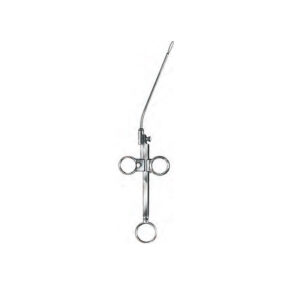
Our photograph shows plain steel ring handles with a ratchet between them. Lock the tips on a wire end and the hand can rest while the wire is guided round a tooth. The same lock holds two ends together while they are twisted into a tight loop. A further squeeze on the rings lets it go. In a mouth that is being wired shut, that free hand is the one that holds the cheek back or steadies the arch bar, which is why a lock on a fine wire forceps earns its place.
Which one to order
This listing carries one size, read on 4 November 2026. The wire forceps on our site are set out below, so the tray carries one for fine loops and one for heavier wire.
| What you get | Length | Working end | Price |
|---|---|---|---|
| Obwegeser wire loop forceps, this page | 15 cm | Narrow grooved tips with a hole | 24 dollars |
| Wire twisting forceps | 15 cm | Narrow jaws with a cross-hatched face | 28 dollars |
| Self-locking wire twisting forceps | 14, 15, 16 or 18 cm | Narrow jaws, ratchet that locks itself | 40 dollars each |
| Baumgartner sternal wire twisting forceps | 20 cm | Short jaws with a hole and a serrated face | 20 dollars |
Where it is used
AI Mode and Gemini, read on 4 November 2026, name these cases for the Obwegeser pattern.
| Case | What it handles | Why this one |
|---|---|---|
| Intermaxillary fixation of a jaw fracture | Wire loops between upper and lower teeth | Grooved tips hold thin wire |
| Fixation after orthognathic surgery | Loops that hold the bite while bone heals | 15 cm works inside the mouth |
| Arch bar ties | Ligature wires round each tooth and the bar | Ratchet holds the ends while they twist |
| Osteotomy wiring | Fine interosseous wire | Hole near the tip helps form small loops |
What it does, and what it must not do
It handles fine wire. It does not cut wire and it is not made for the heavy wire of the chest or long bones.
| Job | Use the Obwegeser? | What to use instead or beside it |
|---|---|---|
| Forming and twisting small wire loops in the mouth | Yes | This is the job it is made for |
| Trimming the ends of the loops | No | A wire cutter |
| Twisting thick cerclage wire | No | The self-locking wire twisting forceps, 16 or 18 cm |
| Closing the breastbone with wire | No | The Baumgartner sternal wire twisting forceps |
| Holding a suture needle | Never | A needle holder |
How it compares with the rest of the family
Seven wire, bone and scalp forceps make up this part of the maxillofacial range on our site. The working ends are read off each listing’s own photograph, the options off the variations, the lengths off the name and the item code, and the prices off the order form, on 4 November 2026.
| Forceps | Working end, from our photograph | Options on the listing | Length | Price |
|---|---|---|---|---|
| Wire twisting 15 cm | narrow jaws with a cross-hatched face, ring handles, ratchet | one size | 15 cm | 28 dollars |
| Self-locking wire twisting | narrow jaws, ring handles, ratchet that locks itself | 14, 15, 16 or 18 cm | 14 to 18 cm | 40 dollars each |
| Baumgartner sternal | short jaws with a hole and a serrated face, long ring handles, ratchet | one size | 20 cm | 20 dollars |
| Obwegeser wire loop (this page) | narrow grooved tips with a hole, ring handles, ratchet | one size | 15 cm | 24 dollars |
| Tessier bone contouring | angled jaws with serrated faces on heavy handles, no rings | one size | 22 cm | 46 dollars |
| Willet-Martel scalp | T-shaped cross-serrated plate jaws, ring handles, ratchet | one size | not given on the listing | 28 dollars |
| Dandy artery | curved jaws serrated along their length, ring handles, ratchet | curved or straight tip | 14 cm | 12.50 dollars |
Materials and finish
Every Obwegeser wire loop forceps we make is formed from high quality medical grade stainless steel. The steel itself is made to a German specification. We do not publish a grade number.
The finish is plain steel. The groove is the working part, so look along it before each case. A groove that has been pressed open by heavy wire no longer holds thin wire, and that pair should go back for replacement. Keep this pattern for fine wire only, so the groove keeps the shape it left the workshop with.
Caring for it
Rinse the forceps straight after the case, before saliva and blood dry in the groove, the hole and the joint. Open the jaws, brush along the groove and push a fine brush through the hole, then brush the joint and the ratchet. Wash it with the joint open, dry it, oil the joint with instrument lubricant, and steam sterilize it on the normal cycle with the ratchet unlocked.
Ordering and wholesale
The Obwegeser wire loop forceps is made by Adas Instruments in our own workshop and sold direct, which is why the price sits where it does against the catalog houses. Order one for a single tray, or in quantity for a hospital list or a distributor line. We do OEM work under your own brand and your own item numbers. Send us a sample and we will hold a run to your pattern rather than ours. Stock items ship from our own workshop. Backorder items take 10 to 12 working days to make. Every instrument carries a three year replacement warranty against manufacturing defects. Production is controlled under an ISO 13485 quality management system.
Frequently asked questions
What are Obwegeser wire loop forceps used for?
They grasp, guide, bend and twist the fine wire used in jaw surgery. AI Mode names intermaxillary fixation and blocking, where loops of wire hold the teeth together while a fracture or osteotomy heals. Ours is the 15 cm pattern with grooved tips and a ratchet, at 24 dollars.
What makes the Obwegeser tips different?
The drawings on our listing show a groove along the inner face of each jaw and a small hole near the point. Thin wire lies in the groove when the jaws close. Gemini describes grooved tips as the way to hold and twist small loops without nicking the wire.
Are wire loop forceps the same as a needle holder?
No. Gemini compares the Obwegeser with a Crile-Wood needle holder and puts the difference in the tips: a needle holder grips a curved needle, while the grooved tips of wire loop forceps are made for wire. Use each one for its own job.
Can the Obwegeser twist heavier wire?
It is made for fine wire, and heavy wire will press the groove open. For cerclage of a larger bone use the self-locking wire twisting forceps in 16 or 18 cm, and for the breastbone use the 20 cm Baumgartner sternal wire twisting forceps.
Can it be autoclaved?
Yes. It is stainless steel with no coating, and it goes through the normal steam cycle with the rest of the tray. Brush along the groove and through the hole, oil the joint, and sterilize it with the ratchet unlocked.
Related products and categories
Three more forceps from the same tray: the Tessier bone contouring forceps, the Willet-Martel scalp forceps and the Dandy artery forceps. The rest of the range is under maxillofacial instruments, which sits inside our ENT instruments.
| Weight | 0.05 kg |
|---|
Be the first to review “Obwegeser Wire Loop Forceps 15 cm”
Shipping & Delivery Policy
Processing Time: In-stock items are dispatched within 24-48 hours. For custom or out-of-stock items, production time is approximately 10-15 days.
Global Delivery Estimates
We partner with world-class couriers (DHL, FedEx) to ensure fast, tracked delivery.
- USA & Canada: 3-5 Business Days
- Europe & UK: 4-6 Business Days
- Rest of World: 5-7 Business Days
*We offer Air Cargo and Sea Freight options for bulk wholesale orders.
Customs & Duties
International buyers are responsible for any customs duties or taxes imposed by their country. Adas Instruments is not responsible for delays caused by customs clearance.
Lost Packages & Insurance
If your package is lost in transit, please contact us immediately. We offer full support and replacements for confirmed lost shipments. Note: You must report non-delivery within 3 weeks to be eligible for an insurance claim.
Related products

Reviews
There are no reviews yet.