
Back and Bra Roll Liposuction: Tools for the Toughest Fat
Nov
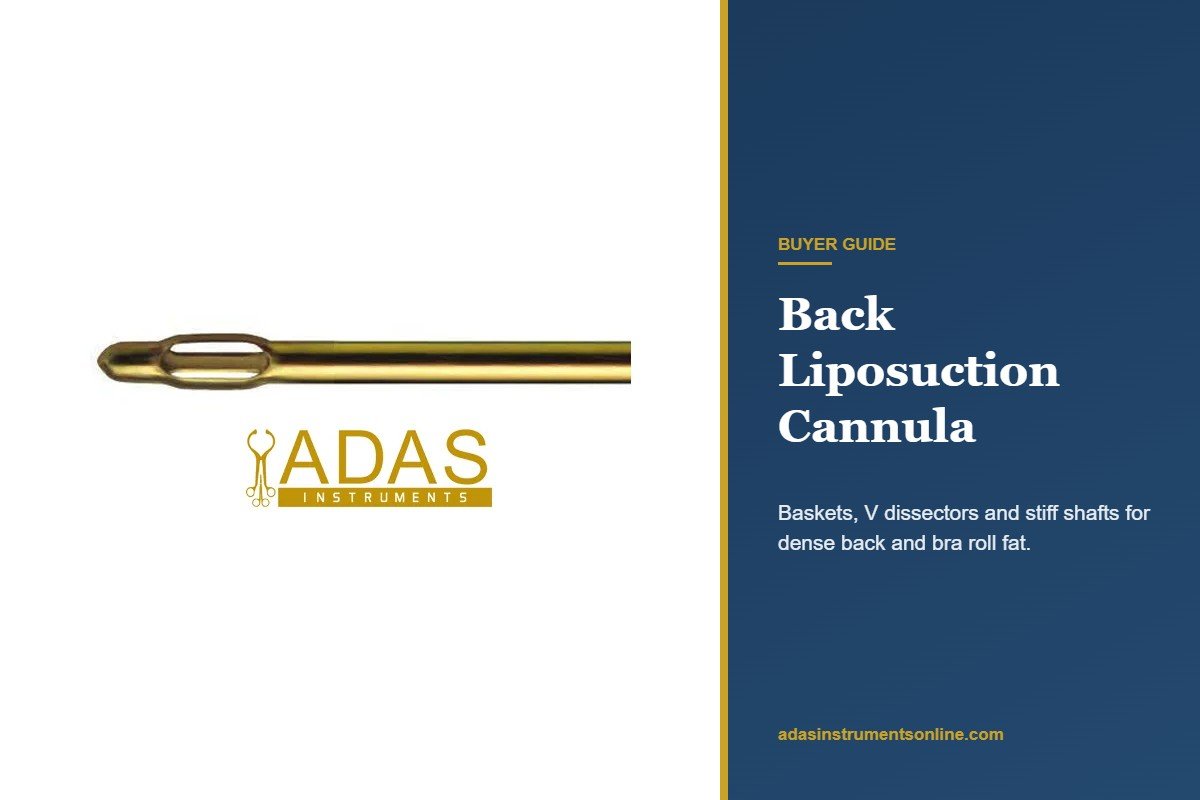
A back liposuction cannula is a stiff, thick walled aspiration cannula with a cutting tip, such as a basket or a V dissector, made for the dense, septated fat of the back and bra roll. Most back work runs at 3 mm to 5 mm bores. Adas Instruments makes the Becker basket in 3, 4, 5 and 6 mm, in lengths from 20 cm to 45 cm, as part of its aspiration cannulas range.
Back and bra roll fat is the most fibrous on the body, and it defeats the cannulas that sail through an abdomen. Treating it well is an instrument problem as much as a technique one: the back rewards aggression the arm would never tolerate, because thick skin and dense tissue forgive what thin zones punish. Here is the back and bra roll toolkit.
Key takeaways
- Back fat is dense and septated, so a soft fat tip like the Mercedes stalls where a basket keeps cutting.
- Open the plane first with a V dissector or basket, then debulk at 4 mm to 5 mm, then even out with a 3 mm pass.
- Wall thickness matters as much as bore: a thin shaft flexes in fibrous tissue and the surgeon loses depth.
- The bra roll is the most fibrous part of the back and needs short passes from more than one port.
Why the Back Is Different
Back skin is thick and adherent, the fat dense and septated, and the classic Mercedes tip stalls where soft-fat cannulas expect flow. But the same thickness that resists extraction also hides minor irregularity, so the back tolerates the aggressive instruments the face and arm forbid. It is the one zone where more cutting power is the right answer.

The Aggressive Toolkit
Baskets lead per the basket guide: cutting crossbars shear the septa that bridge standard ports. V-dissector pre-tunneling earns its place in the densest bra-roll fibrosis. Bores for back work usually sit at 3 mm to 5 mm, and power assistance is close to mandatory; vibration plus basket is the fibrous-fat combination, per the PAL cannula guide. Rigid shafts matter: the back’s resistance whips a soft cannula off plane.
The Bra Roll Detail
The bra roll (the fat bulging over the band at the mid-back) is the most fibrous sub-zone and the one patients notice most in clothing. It needs the most aggressive tips and cross-tunneling from lateral and central ports, feathered into the flank below with the same cannulas.
Buying Notes
Stock 3 mm to 5 mm baskets and a V-dissector in your hub standard, all in stiff high quality medical grade stainless steel. The back is where cannula rigidity and cutting geometry earn their keep most visibly; underspecified instruments simply skid.
Back Liposuction Cannula Sizes and Tip Choices
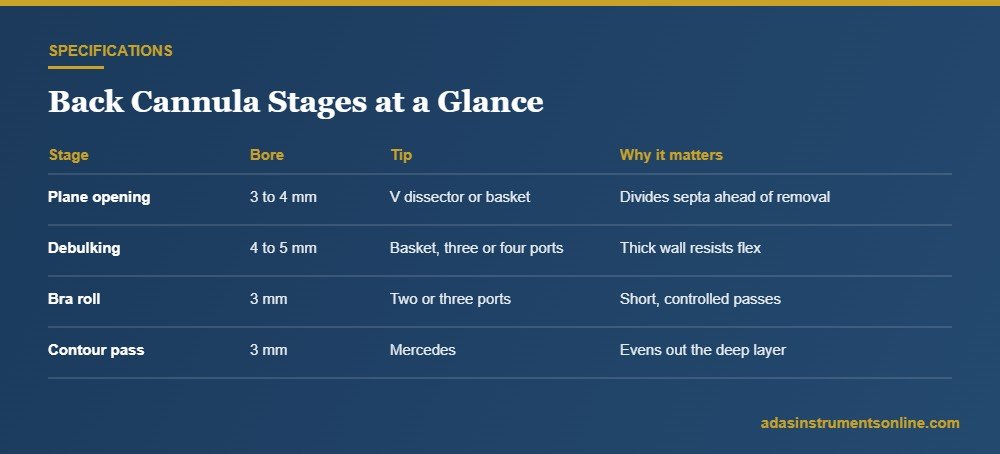
A back liposuction cannula has to be stiffer and more aggressive than the abdominal equivalent, because posterior trunk fat is dense, heavily septated and unforgiving of a flexible shaft.
| Stage | Bore | Tip | Note |
|---|---|---|---|
| Wetting | 2 mm | Multi port infiltration | Wet generously and wait |
| Plane opening | 3 to 4 mm | V dissector or basket | Divides septa ahead of removal |
| Debulking | 4 to 5 mm | Three or four ports | Thick wall to resist flex |
| Bra roll | 3 mm | Two or three ports | Short, controlled passes |
| Contour pass | 3 mm | Mercedes | Even out the deep layer |
| Refinement | 2.5 mm | Single face | Only where the skin is thicker |
| Ports | 3 to 4 | Midline and lateral | Crossed access, prone position |
Shop back liposuction cannulas direct from the maker
Adas Instruments makes the Becker basket cannula in 3, 4, 5 and 6 mm bores and 20 cm to 45 cm lengths, standard or titanium nitride coated, from 55 dollars, and the V-dissector cannula from 32 dollars. Plain or laser marked with your brand.
Common Mistakes on the Posterior Trunk
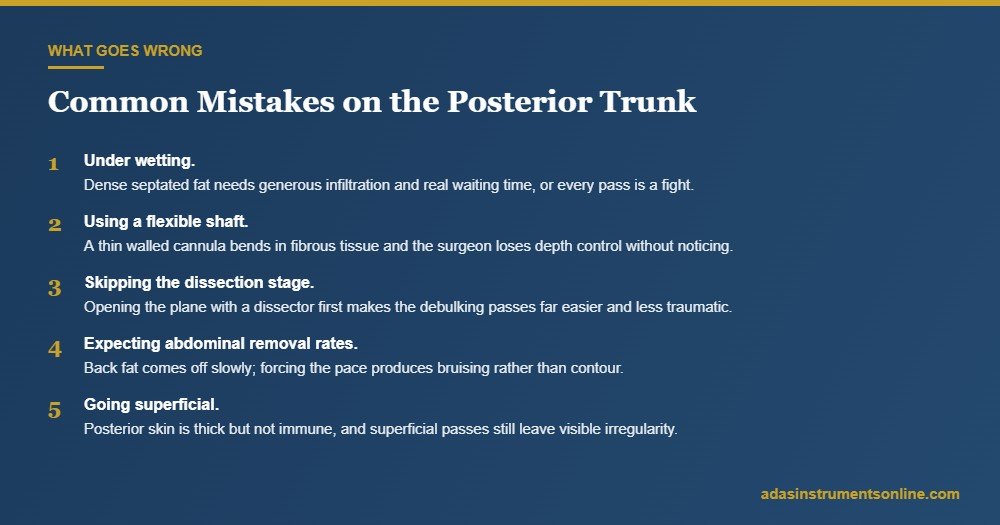
Back work fails in predictable ways, most of them decided before the first pass. Five points matter.
- Under wetting. Dense septated fat needs generous infiltration and real waiting time, or every pass is a fight.
- Using a flexible shaft. A thin walled cannula bends in fibrous tissue and the surgeon loses depth control without noticing.
- Skipping the dissection stage. Opening the plane with a dissector first makes the debulking passes far easier and less traumatic.
- Expecting abdominal removal rates. Back fat comes off slowly; forcing the pace produces bruising rather than contour.
- Going superficial. Posterior skin is thick but not immune, and superficial passes here still leave visible irregularity.
Specifying Cannulas Built for Fibrous Tissue
Wall thickness is the specification that separates a back cannula from a body cannula, and it is worth naming explicitly alongside bore, length and port pattern. Adas Instruments makes these to order in high quality medical grade stainless steel, matched to your hub standard, assembled into sets to a surgeon’s own list, and available with OEM or white label marking. Production time on custom work is 10 to 15 working days, depending on order size.
Technique papers on fibrous and posterior trunk liposuction are indexed on PubMed and are useful reading before settling on a dissection approach. On the buying side, keep the aggressive tips in the same hub family as the rest of your liposuction cannula set.
How the Back Set Sits With the Rest of Your Cannulas
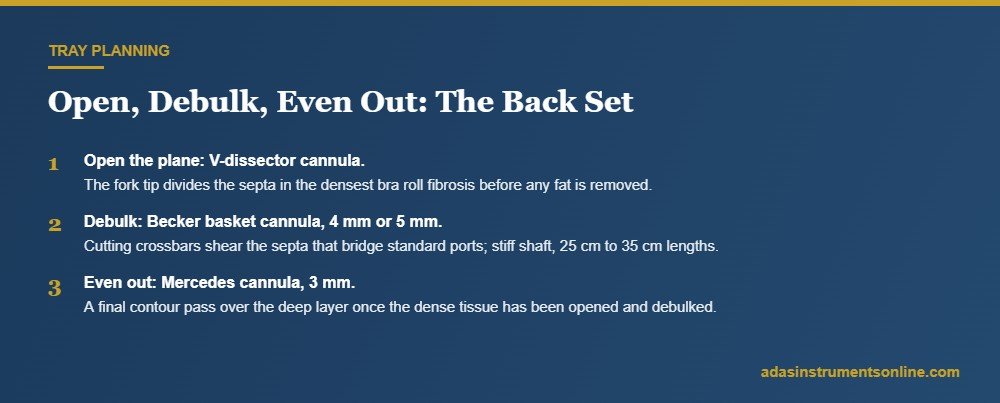
A back liposuction cannula rarely works alone, because a dense case runs in three clear stages: open the plane, debulk it, then even it out. Stock all three from the aspiration cannula range so the surgeon is never improvising with the wrong tip.
For a side by side comparison of how basket, V dissector, Mercedes and spatula tips differ in aggressiveness, our liposuction cannula types guide lays the families out together. The same guide is a useful reference when a distributor asks you to justify why the back set costs more than the abdominal one.
Frequently Asked Questions
What cannula is best for back and bra roll liposuction?
Aggressive tips for fibrous tissue: 3 mm to 5 mm basket cannulas, often after V-dissector pre-tunneling and with power assistance, on a rigid steel shaft that holds its plane against the resistance of back fat.
Why can the back take aggressive cannulas when the arm cannot?
Thick, adherent back skin hides minor irregularity that thin arm skin would show. The same density that resists extraction also forgives the aggressive tips it needs, so the back takes cutting power the arm cannot.
Why is the bra roll so hard to treat?
It is the most fibrous sub-zone of the back, dense and septated, and it sits right where clothing shows every ridge. It needs cutting tips and cross-tunneling from more than one port to come out smooth.
What cannula size is best for back liposuction?
Three to five millimeters for the main work, with a thicker wall than a comparable abdominal cannula. The tissue is dense enough that a thin walled shaft flexes, and flex is what costs the surgeon depth control.
Why is back fat harder to remove?
Posterior trunk fat is heavily septated, so it resists a tip that relies on suction alone. That is why dissection tips are used to open the plane first and why the removal rate is slower than on the abdomen.
What is a bra roll and how is it treated?
The bra roll is the fold of fibrous fat across the lateral back where a band sits. It is treated with short, controlled passes using a 3 mm tip, usually after the plane has been opened with a dissection cannula.
Do I need a special cannula for the back?
Not a different design, but a stiffer version of a familiar one, plus at least one dissection tip. Many practices find that adding a V dissector and a heavier walled 4 mm shaft transforms how posterior cases run.
