 Enquiry Cart
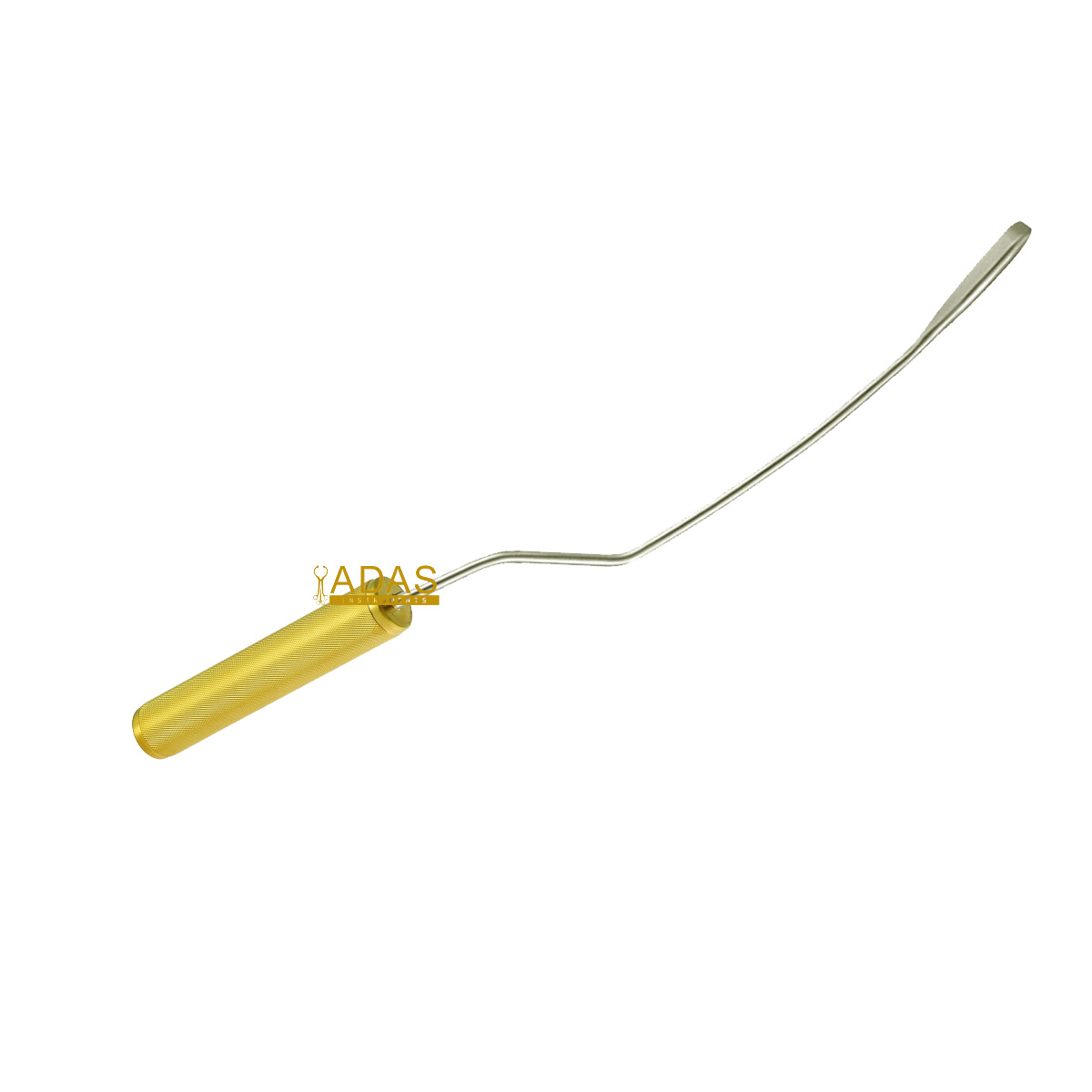
Jacobs Transaxillary Dissector – Curved Shaft Breast Dissector for Axillary Approach
$ 35.00
Specialized Jacobs Transaxillary Dissector Curved Shaft is designed for safe tissue dissection and pocket creation in transaxillary procedures, offering a smooth curved shaft and ergonomic handle in a high‑quality stainless‑steel design by Adas Instruments.
- Curved shaft for controlled transaxillary access and dissection
- Smooth working end to minimize tissue trauma
- Ergonomic handle for secure grip and precise control
- High‑grade, corrosion‑resistant stainless steel
- Reusable and fully autoclavable for operating theatre use
- Size: 17″ (432mm) length, 1/2″ (13mm) Wide Blade
- ideal for Breast Dissection
- Modification on shaft size and tip sizes available
Available on backorder
Fast Global Shipping
3-5 Days to USA, UK & Europe via DHL/FedEx.
3-Year Warranty
German Stainless Steel. Free replacement guarantee.
Direct Manufacturer
Factory Direct Prices. Wholesale & OEM available.
Jacobs Transaxillary Dissector – Curved Shaft Breast Dissector
The Jacobs Transaxillary Dissector – Curved Shaft from Adas Instruments is a dedicated instrument for blunt tissue dissection during breast augmentation and other reconstructive breast procedures performed through a transaxillary approach. Its curved, elongated shaft is designed to reach from a small incision in the axilla to the breast pocket, allowing surgeons to position implants while minimizing visible scarring on the breast itself.
This breast dissector features a chisel-style working end that gently separates tissue planes and helps define a uniform implant pocket. The curvature of the shaft follows the natural contour from axilla to breast, improving access and visualization while reducing the need for excessive force. An ergonomic handle offers a secure grip and precise control, supporting safe manipulation of soft tissues around critical neurovascular structures.
Design and features
The Jacobs Transaxillary Dissector has a long, curved shaft that helps surgeons work at depth through a limited axillary incision. A broad, blunt or chisel-edged tip (model dependent) distributes pressure over a wider area, promoting controlled blunt dissection and reducing the risk of perforation of the skin flap or chest wall. The instrument is typically available in lengths around 33–43 cm, providing the reach required for subglandular or submuscular breast pocket creation from the axilla. A solid, well-balanced handle improves tactile feedback so the surgeon can feel tissue resistance during dissection.
Clinical applications of breast augmentation transaxillary dissector
- Creation of dissection tunnels for breast implants in transaxillary breast augmentation.
- Pocket development in breast reconstruction procedures using an axillary approach.
- Elevation of soft tissue flaps in aesthetic and reconstructive breast surgery.
- Controlled blunt dissection near the axilla where protection of nerves and vessels is critical.
Technical details
| Specification | Detail |
|---|---|
| Instrument name | transaxillary breast dissector |
| Primary use | Blunt tissue dissection and tunnel creation for transaxillary breast augmentation and reconstruction |
| Shaft design | Long curved shaft for access from axillary incision to breast pocket |
| Working end | Blunt / chisel-style dissector tip for controlled separation of tissue planes |
| Typical length | Approx. 33–43 cm overall length (model dependent) |
| Width at tip | Around 13 mm working width (model dependent) |
| Material | Surgical-grade stainless steel |
| Finish | Satin / matte finish to reduce glare under operating lights |
| Reusability | Reusable, autoclavable instrument |
| Specialty | Plastic and reconstructive breast surgery, thoracic and axillary surgery |
Related instruments and categories
Browse more plastic and breast surgery tools in our Plastic Surgery Instruments and Breast Surgery Instruments categories, including breast dissectors, elevators, and retractors.
You may also like the McCollum Dingman Breast Dissector and the Lockwood Underminer Dissector for complementary flap elevation and pocket creation techniques.
People also ask
Q: What is the Jacobs Transaxillary Dissector used for?
A: It is primarily used to create and refine the dissection tunnel for breast implants or reconstructive pockets through an axillary incision, helping to keep scars off the breast.
Q: Why does the dissector have a curved shaft?
A: The curved shaft follows the anatomical path from the axilla to the breast, improving access and control while reducing stress on the incision and surrounding tissues.
Q: Is the Jacobs Transaxillary Dissector suitable for blunt dissection?
A: Yes, its blunt or chisel-style tip and long shaft are designed for controlled blunt tissue separation, minimizing the risk of perforation during pocket creation.
Q: In which procedures is this dissector commonly used?
A: It is commonly used in transaxillary breast augmentation, breast reconstruction and other plastic or thoracic procedures requiring access through the axilla.
Q: What sizes of Jacobs Transaxillary Dissector are available?
A: Many suppliers offer lengths around 33 cm and 42–43 cm with a working tip width of about 13 mm, allowing surgeons to choose the reach that best fits their technique.
| Weight | 0.1 kg |
|---|
Be the first to review “Jacobs Transaxillary Dissector – Curved Shaft Breast Dissector for Axillary Approach”
Shipping & Delivery Policy
Processing Time: In-stock items are dispatched within 24-48 hours. For custom or out-of-stock items, production time is approximately 10-15 days.
Global Delivery Estimates
We partner with world-class couriers (DHL, FedEx) to ensure fast, tracked delivery.
- USA & Canada: 3-5 Business Days
- Europe & UK: 4-6 Business Days
- Rest of World: 5-7 Business Days
*We offer Air Cargo and Sea Freight options for bulk wholesale orders.
Customs & Duties
International buyers are responsible for any customs duties or taxes imposed by their country. Adas Instruments is not responsible for delays caused by customs clearance.
Lost Packages & Insurance
If your package is lost in transit, please contact us immediately. We offer full support and replacements for confirmed lost shipments. Note: You must report non-delivery within 3 weeks to be eligible for an insurance claim.
Related products




Reviews
There are no reviews yet.