

Obwegeser Freer Periosteal Elevator 20 cm, Double Ended
$ 21.00
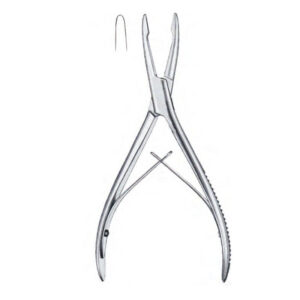
The obwegeser freer periosteal elevator is a double ended instrument for oral, maxillofacial and craniofacial surgery, made for work under the periosteum along the upper jaw, the lower jaw and the skull. AI Mode describes one end as a Freer tip that lifts the soft tissue flap and the other as an Obwegeser end that strips the tough periosteum from the bone. Ours is the 20 cm pattern with a strongly curved and a gently curved blade on a knurled grip, at 21 dollars.
Key Features
- 20 cm overall length
- Double ended: a strongly curved blade and a gently curved flat blade
- Knurled middle grip
- One instrument for lifting the flap and stripping the bone
- Made from high quality medical grade stainless steel, reusable
- 21 dollars, one size
- Three year replacement warranty against manufacturing defects
- Item code ADM-614.21
Available on backorder

What the Obwegeser Freer periosteal elevator is
The Obwegeser Freer periosteal elevator puts two jobs on one instrument. Opening a flap over the jaw starts with a light touch, lifting the soft tissue edge without tearing it, and goes on to a firmer one, stripping the periosteum where it holds hard to the bone. A Freer end is made for the first and an Obwegeser end for the second. With both on one shaft, the surgeon turns the instrument round instead of changing it.
Google AI Mode, read on 4 November 2026 under the name Obwegeser Freer elevator, describes the Obwegeser-Freer periosteal elevator as a double ended instrument for oral, maxillofacial and craniofacial surgery, for work under the periosteum along the upper jaw, the lower jaw and the skull. In its words, one end is a Freer tip that gently lifts the soft tissue flap, and the other an Obwegeser end that strips the periosteum from the bone.
Gemini, read the same day, places it in oral and maxillofacial, facial plastic and general surgery, and lists the Obwegeser modified Freer elevator and the obwegeser freer periosteal elevator 20cm as catalog names. It sets it against a standard Freer, which is shorter, and puts the 20 cm length down to deeper fields. Buyers type obwegeser freer elevator, or the longer obwegeser freer double ended elevator.
Key design features
Two different ends
Our photograph shows a strongly curved blade at one end and a gently curved, flatter blade at the other, and the drawings beside it show both. The two shapes are what make it a two job instrument. We do not say which end is the Freer and which the Obwegeser, because the listing does not.
A knurled middle grip
The middle of the shaft is knurled, where the fingers hold it. Either end can be used while the other rests against the palm, and the knurling keeps the grip steady with wet gloves when the strong end is pressed against bone.
Twenty centimeters
At 20 cm it is longer than a standard Freer, and Gemini puts that down to work in deeper fields. The length lets either end reach the back of the mouth or a deep facial incision with the hand outside it.
A Freer end for a light touch
AI Mode describes the Freer end as the one that lifts the soft tissue flap and exposes the structures under it. That is the gentle half of the job, and it is done first, before the firmer end takes the periosteum off the bone. Working in that order keeps the flap whole, because its edge is free before any force goes on the periosteum underneath.
Which one to order
This listing carries one size, read on 4 November 2026. The double ended periosteal elevators in this family are set out below.
| What you get | Length | Working ends | Price |
|---|---|---|---|
| Obwegeser Freer periosteal elevator, this page | 20 cm | A strongly curved and a gently curved blade | 21 dollars |
| Obwegeser periosteal elevator, double ended | 20 cm | A rounded spoon blade at each end, one wider | 21 dollars |
| Seldin periosteal elevator | 19 cm | A curved blade at each end, bending opposite ways | 25 dollars |
| Salzburg periosteal elevator | 24 cm | A small curved blade at each end | 25 dollars |
Where it is used
AI Mode and Gemini, read on 4 November 2026, name these cases for the Obwegeser Freer pattern.
| Case | What it lifts | Why this one |
|---|---|---|
| Surgery on the upper jaw | The flap, then the periosteum on the maxilla | Two jobs on one shaft |
| Surgery on the lower jaw | The flap, then the periosteum on the mandible | 20 cm reaches the back of the mouth |
| Craniofacial surgery | Periosteum over the skull | The strong end for adherent tissue |
| Facial plastic surgery | Fine mucoperiosteum | The gentle end for the first lift |
What it does, and what it must not do
The Obwegeser Freer periosteal elevator lifts the flap and strips the periosteum. It is not the nasal Freer and not a lever.
| Job | Use the Obwegeser Freer? | What to use instead or beside it |
|---|---|---|
| Lifting a flap and then stripping the bone under it | Yes | This is the job it is made for |
| Fine work on the nasal septum | No | A Freer septum elevator |
| Stripping round the lower border of the jaw | Beside it | The Obwegeser J-stripper |
| Clearing broad, flat bone before a split | Beside it | The Obwegeser flat cutting elevator |
| Levering bone | Never | A bone lever |
How it compares with the rest of the family
Ten periosteal elevators and raspatories make up this family on our site. The working ends are read off each listing’s own photograph, the options off the variations, the lengths off the name and the prices off the order form, on 4 November 2026.
| Instrument | Working end, from our photograph | Options on the listing | Length | Price |
|---|---|---|---|---|
| Tessier dissector | single narrow blade curving back at the tip, fluted handle | 30 or 60 pattern | 18 cm | 25 dollars |
| Seldin | a curved blade at each end, bending opposite ways, flat handle | one size | 19 cm | 25 dollars |
| Salzburg | a small curved blade at each end, knurled middle grip | slightly or strongly curved | 24 cm | 25 dollars |
| Obwegeser flat cutting | straight flat blade with a rounded end, fluted handle | 6, 7, 9 or 11 mm | 18 cm | 25 dollars |
| Obwegeser angled cutting | blade end cut on a slant, smooth round handle | 6, 7, 9 or 11 mm | 18 cm | 25 dollars |
| Obwegeser J-stripper | blade curling back into a J at the tip, fluted handle | 5, 7 or 9 mm | 20 cm | 25 dollars |
| Obwegeser Freer (this page) | a strongly curved blade and a gently curved blade, knurled grip | one size | 20 cm | 21 dollars |
| Obwegeser swallowtail | forked tip with a V notch between two points, fluted handle | one size | 17 cm | 25 dollars |
| Obwegeser double ended | a rounded spoon shaped blade at each end, one wider, knurled grip | one size | 20 cm | 21 dollars |
| Hargis | hooked cupped tip on a curved shank, solid handle with a finger rest | 6.5 or 9.0 mm, left or right | not given on the listing | 30 dollars |
Materials and finish
Every Obwegeser Freer periosteal elevator we make is formed from high quality medical grade stainless steel. The steel itself is made to a German specification. We do not publish a grade number.
The finish is plain steel. Look at both ends before each case. The gentle end should be smooth along its edge, and the strong end should keep its curve. A bent end will skate over the bone instead of following it. Lay the instrument on the drawing on the listing to check that both curves still match it.
Caring for it
Rinse the Obwegeser Freer periosteal elevator as soon as the case ends, before blood dries on the blades and in the knurling. Brush both ends and the grip, wash it, dry it, and steam sterilize it on the normal cycle. Store it so neither blade rests on other steel.
Ordering and wholesale
The Obwegeser Freer periosteal elevator is made by Adas Instruments in our own workshop and sold direct, which is why the price sits where it does against the catalog houses. Order one for a single tray, or in quantity for a hospital list or a distributor line. We do OEM work under your own brand and your own item numbers. Send us a sample and we will hold a run to your pattern rather than ours. Stock items ship from our own workshop. Backorder items take 10 to 12 working days to make. Every instrument carries a three year replacement warranty against manufacturing defects. Production is controlled under an ISO 13485 quality management system.
Frequently asked questions
What is the Obwegeser Freer periosteal elevator used for?
It lifts the soft tissue flap and then strips the periosteum from the bone, along the upper jaw, the lower jaw and the skull. AI Mode names oral, maxillofacial and craniofacial surgery. Ours is the 20 cm double ended pattern, at 21 dollars.
Is the Obwegeser Freer the same as a nasal Freer elevator?
No. A Freer septum elevator is a delicate, shorter instrument for the nasal septum. Gemini describes the Obwegeser Freer as a modified, longer pattern for deeper maxillofacial fields, with a second end made for stripping the bone.
Why does the Obwegeser Freer have two different ends?
Because opening a flap takes two kinds of work. AI Mode describes a Freer end that lifts the soft tissue gently, and an Obwegeser end that strips the periosteum hard against the bone. Our photograph shows a strongly curved and a gently curved blade.
How is it different from the double ended Obwegeser periosteal elevator?
The two cost the same and are both 20 cm. In our photographs the double ended Obwegeser has a rounded spoon blade at each end, one wider. This pattern has two different blade shapes, a strongly curved one and a gently curved one.
Can it be autoclaved?
Yes. It is stainless steel with no coating, and it goes through the normal steam cycle with the rest of the tray. Brush the knurled grip clean, dry both ends, and store it so the blades do not knock against other steel.
Related products and categories
Three more periosteal instruments from the same tray: the Obwegeser swallowtail raspatory, the Obwegeser periosteal elevator, 20 cm and the Hargis periosteal elevator. The rest of the range is under maxillofacial instruments, which sits inside our ENT instruments.
| Weight | 0.08 kg |
|---|
Be the first to review “Obwegeser Freer Periosteal Elevator 20 cm, Double Ended”
Shipping & Delivery Policy
Processing Time: In-stock items are dispatched within 24-48 hours. For custom or out-of-stock items, production time is approximately 10-15 days.
Global Delivery Estimates
We partner with world-class couriers (DHL, FedEx) to ensure fast, tracked delivery.
- USA & Canada: 3-5 Business Days
- Europe & UK: 4-6 Business Days
- Rest of World: 5-7 Business Days
*We offer Air Cargo and Sea Freight options for bulk wholesale orders.
Customs & Duties
International buyers are responsible for any customs duties or taxes imposed by their country. Adas Instruments is not responsible for delays caused by customs clearance.
Lost Packages & Insurance
If your package is lost in transit, please contact us immediately. We offer full support and replacements for confirmed lost shipments. Note: You must report non-delivery within 3 weeks to be eligible for an insurance claim.
Related products


Reviews
There are no reviews yet.