
Sterilization Tray Guide: Sizes, Materials and Loading for Surgical Sets
Oct
More instruments are damaged in the tray than in surgery. A sterilization tray decides how steam reaches every surface, whether fine tips knock together on the way to the department, and whether the set comes out of the autoclave dry. For plastic surgery sets full of fine forceps and scissors, the choice of tray matters as much as any care habit.
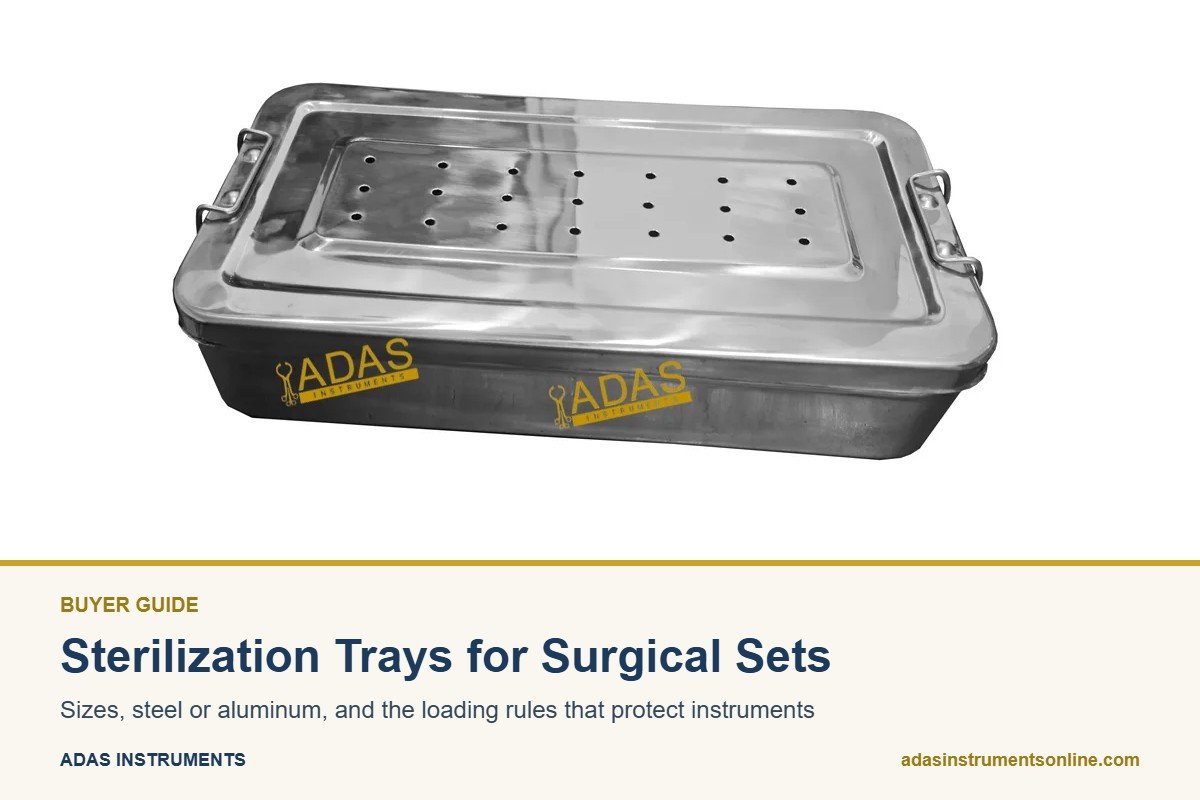
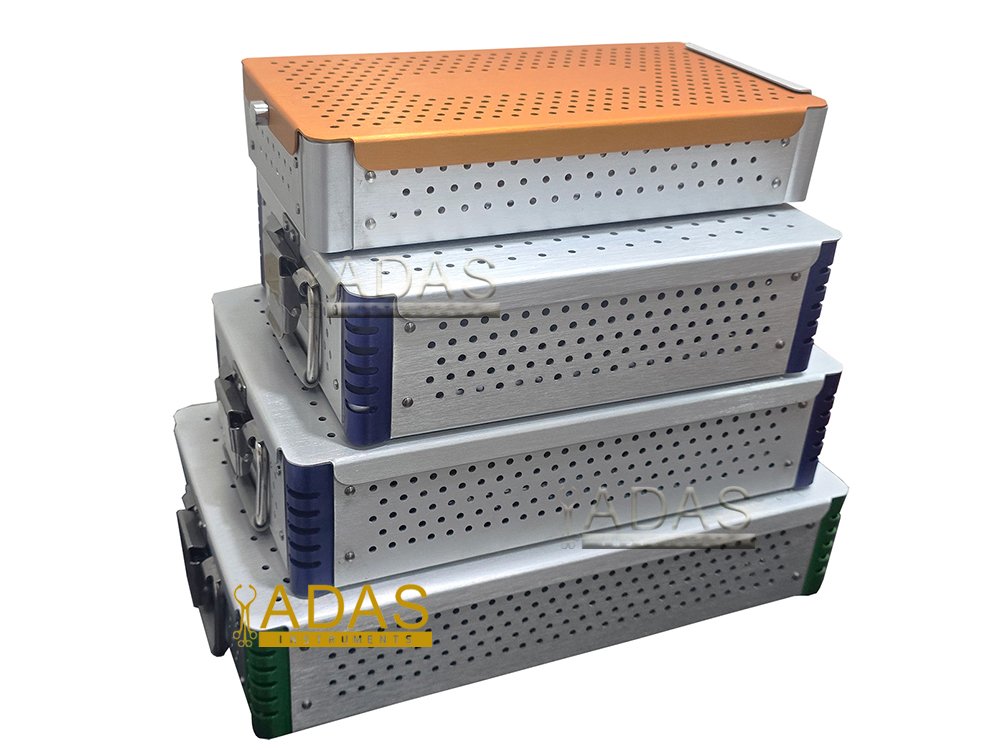
A sterilization tray is the perforated case a set of surgical instruments is laid in for the autoclave, carried in between the operating room and the sterile department, and stored in until the next case. Adas Instruments makes stainless steel sterilization boxes in nine sizes from 150 x 100 x 40 mm to 500 x 250 x 100 mm, and lighter anodized aluminum boxes in four sizes, all autoclavable. Both sit in our holloware and sterilization range.
Key takeaways
- Choose the outside size to fit the sterilizer chamber first, then the depth to fit the tallest instrument in the set.
- A perforated lid and base let steam in and moisture out. A solid lid is for storage, not for the cycle.
- A silicone mat in the base keeps fine tips apart, which prevents most chipping in transit.
- Pack ratcheted instruments open or on the first tooth, never closed, so steam reaches the box lock.
What a Good Sterilization Tray Does
It has three jobs. It lets steam reach every surface, so the base and lid are perforated rather than solid. It holds each instrument still, so nothing grinds against its neighbor while the tray is carried. And it drains, so condensate runs out instead of pooling in a corner.
The failure points are easy to spot. Corners without holes pool water and start the staining described in our guide to removing rust. Mats that harden and crack stop holding instruments apart. Lids that do not stay shut spill a set on the trolley.

Stainless Steel or Anodized Aluminum
Steel is the workhorse. It takes knocks, it lasts for years of cycles, and the Adas Instruments steel box comes with a perforated lid for the autoclave or a solid lid for dry storage, with or without a silicone mat. Prices run from 9 dollars for the smallest size to 55 dollars for the largest.
Aluminum is chosen for weight. An anodized aluminum box weighs about a third of a steel one, which matters when a full set has to be carried. The anodized finish is what lets aluminum take a steam cycle instead of pitting in it. Ours come in four shallow sizes for sets laid out in one layer, from 75 to 110 dollars.
Sterilization Tray Sizes and What Fits
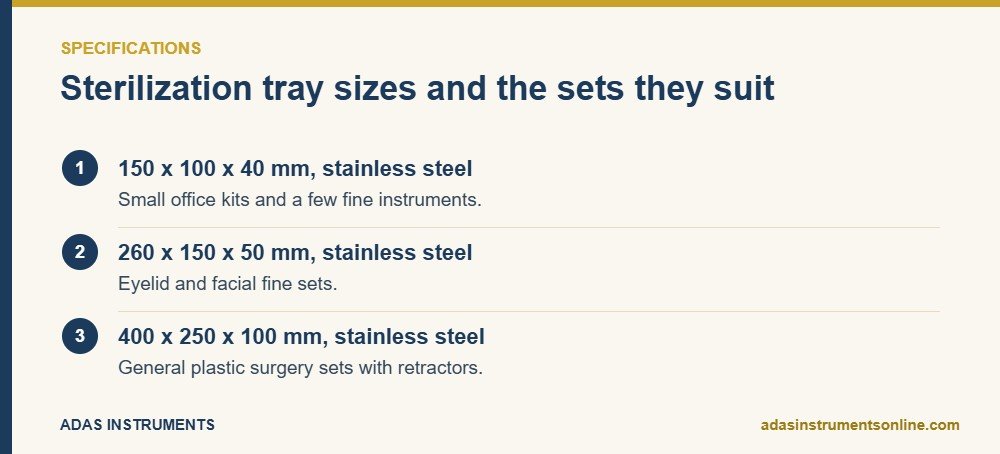
Three numbers decide the box: outside size, internal depth and whether the lid is perforated. These are the sizes we make, read from our own order forms.
| Size (mm) | Material | Suits |
|---|---|---|
| 150 x 100 x 40 | Stainless steel | Small office kits and a few fine instruments |
| 260 x 150 x 50 | Stainless steel | Eyelid and facial fine sets |
| 400 x 250 x 100 | Stainless steel | General plastic surgery sets with retractors |
| 500 x 250 x 100 | Stainless steel | Large sets and long instruments |
| 254 x 178 x 38 (10 x 7 x 1.5 in) | Anodized aluminum | Light single layer sets |
| 305 x 203 x 76 (12 x 8 x 3 in) | Anodized aluminum | Larger sets that have to be carried full |
The steel box is made in nine sizes in all, and the aluminum box in four. The full lists are on the stainless steel box page and the aluminum box page.
Wrapped Trays or Rigid Containers
A perforated tray wrapped in sterilization wrap is cheap and works in any department. A rigid container with a filter lid costs more at the start, but it protects the set from crushing, stacks neatly and saves the cost of wrap on every cycle.
Busy practices tend to end up with both. Rigid containers go to the sets used every day, and wrapped trays to the ones used once a month. The sum is simple: the more cycles a set runs, the sooner the container pays for itself.
Loading Mistakes That Cost Instruments
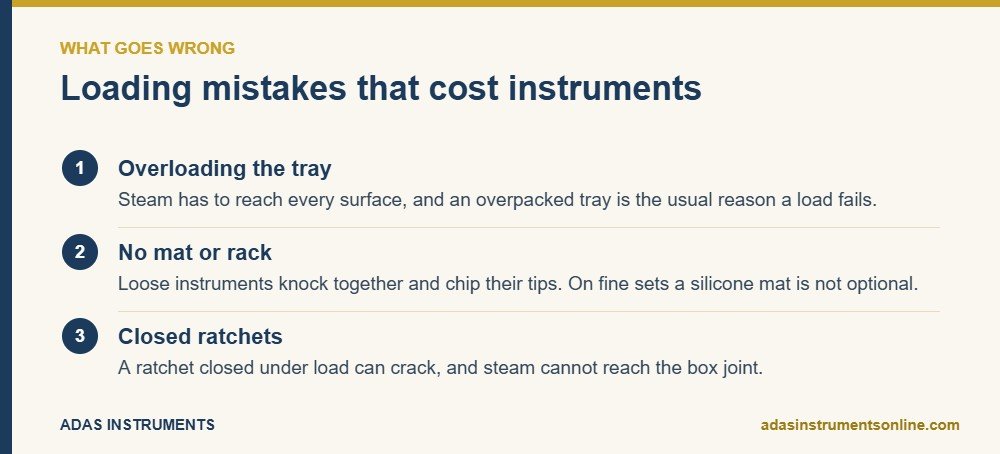
Most instruments that come back bent, chipped or unsterile were loaded badly rather than used badly.
- Overloading the tray. Steam has to reach every surface, and an overpacked tray is the usual reason a load fails.
- No mat or rack. Loose instruments knock together and chip their tips. On fine sets a silicone mat is not optional.
- Closed ratchets. A ratchet closed under load can crack, and steam cannot reach the box joint.
- A tray too shallow. A retractor lying at an angle presses on the lid and distorts. Match the depth to the tallest item.
- Cutting the drying time. A wet pack is an unsterile pack. A heavier tray needs a longer dry, not only a longer exposure.
Buy sterilization boxes direct from the maker
Stainless steel boxes in nine sizes with a perforated or solid lid and an optional silicone mat, from 9 dollars. Anodized aluminum boxes in four sizes from 75 dollars. Wholesale pricing for clinics and distributors.
Loading Rules for Every Cycle
Open every ratchet. Put heavy instruments below fine ones and never let instruments lie touching. Keep the total weight within what your autoclave is rated to dry, and let the drying phase finish before the tray is opened or stacked. A perfect cycle in an overloaded tray still delivers wet packs. Cycle times and temperatures are set out in our autoclave temperature and time guide, and perioperative packaging practice is published by AORN.
Buy the instruments first and the box second, because the box has to fit the list. Practices ordering a complete set from our plastic surgery instrument sets can size the box at the same time, so the layout is right on the first cycle.
Frequently Asked Questions
What size sterilization tray do I need?
Match the outside size to your sterilizer chamber first, then the internal depth to the tallest instrument in the set. A general plastic surgery set with retractors usually needs a deep box, such as 400 x 250 x 100 mm, while a fine eyelid set fits a much smaller one.
Should a sterilization tray have holes?
For the autoclave, yes. A perforated lid and base let steam reach the instruments and let moisture escape during drying. A box without holes is for dry storage after the cycle, not for sterilizing in.
Is aluminum or stainless steel better for a sterilization box?
Stainless steel is tougher and cheaper, and lasts for years of cycles. Anodized aluminum weighs about a third as much, which helps when a large set has to be carried full. Both are autoclavable.
Should instruments be locked closed in the tray?
No. Ratcheted instruments are packed open or on the first tooth only. A fully closed ratchet stops steam reaching the box joint and keeps the instrument under strain through every heating cycle, which can crack it over time.
Are silicone mats worth it in a sterilization tray?
For fine and micro instruments, yes. A silicone mat holds each instrument apart so tips never touch, which prevents most of the chipping and bending that happens to fine instruments in a busy department.
