
Maxillofacial Instrument Set, 23 Pieces
$ 667.00
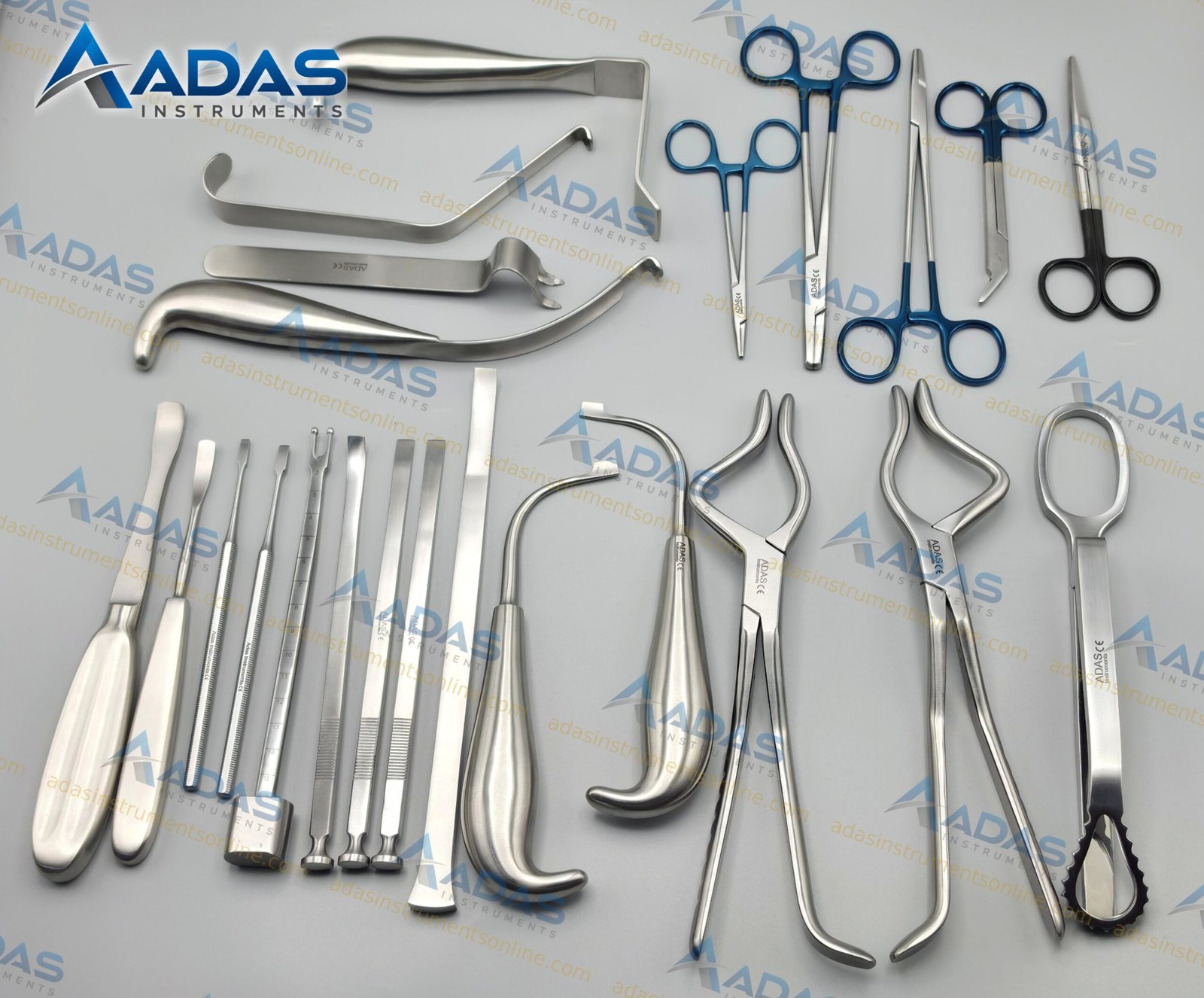
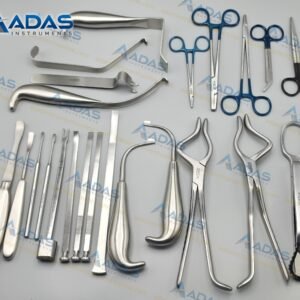
A maxillofacial instrument set is a surgical tray for work on the jaws and the bones of the face: corrective jaw surgery, the reduction of facial fractures and other reconstruction of the facial skeleton. Ours has 23 pieces, built around seven Obwegeser and Epker osteotomes, a pair of Smith sagittal split separators, a pair of Rowe disimpaction forceps and two zygoma elevators. The full set is 667 dollars.
Key Features
- 23 instruments for jaw and facial bone surgery
- Four Obwegeser and three Epker osteotomes
- Smith sagittal split separators and Rowe disimpaction forceps, right and left
- Gillies and Rowe zygoma elevators
- Four retractors, wire pliers, wire scissors and three tungsten carbide instruments
- Made from high quality medical grade stainless steel, reusable
- Three year replacement warranty against manufacturing defects
- Item code ADM-1001
Available on backorder

Video: the 23 instruments of the set, 42 seconds.
What a maxillofacial instrument set is
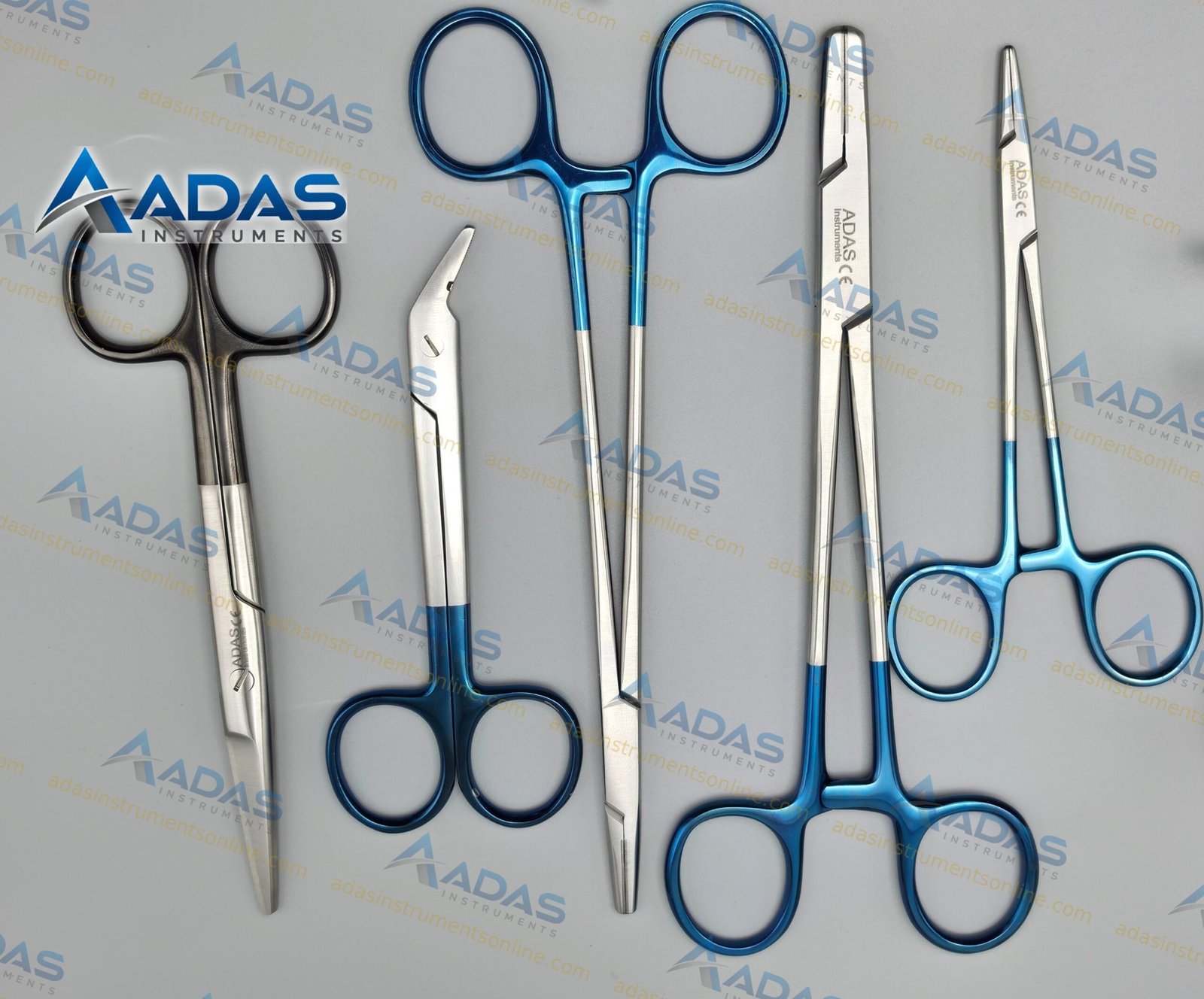
Jaw surgery is bone surgery. The instruments in this set are made to cut bone along a planned line, split it, move it and hold it in place while it is fixed. Soft tissue work needs only a few pieces at the end of the case, and the set carries those too: one pair of scissors and two needle holders.
Google’s AI Overview, read on 30 October 2026, describes a maxillofacial instrument set as a collection for oral and facial reconstruction, corrective jaw surgery and trauma. It names Rowe disimpaction forceps, used in pairs to grasp and move the upper jaw when a fracture is reduced, Smith sagittal separators for the sagittal split osteotomy, osteotomes used with a bone mallet, and Obwegeser retractors for the chin, the ramus and the mandibular channel. All of those are in ours. It also names rongeurs, mouth gags and Adson forceps, and this set does not carry them.
Buyers also look for it under maxillofacial surgery instruments, or as orthognathic surgery instruments, and students ask which are the instruments used in maxillofacial surgery. The contents table further down answers that for this tray, line by line. A hospital equipping a new unit with oral and maxillofacial surgery instruments can start from it and add its own plating system.
Key design features
Seven osteotomes, two patterns
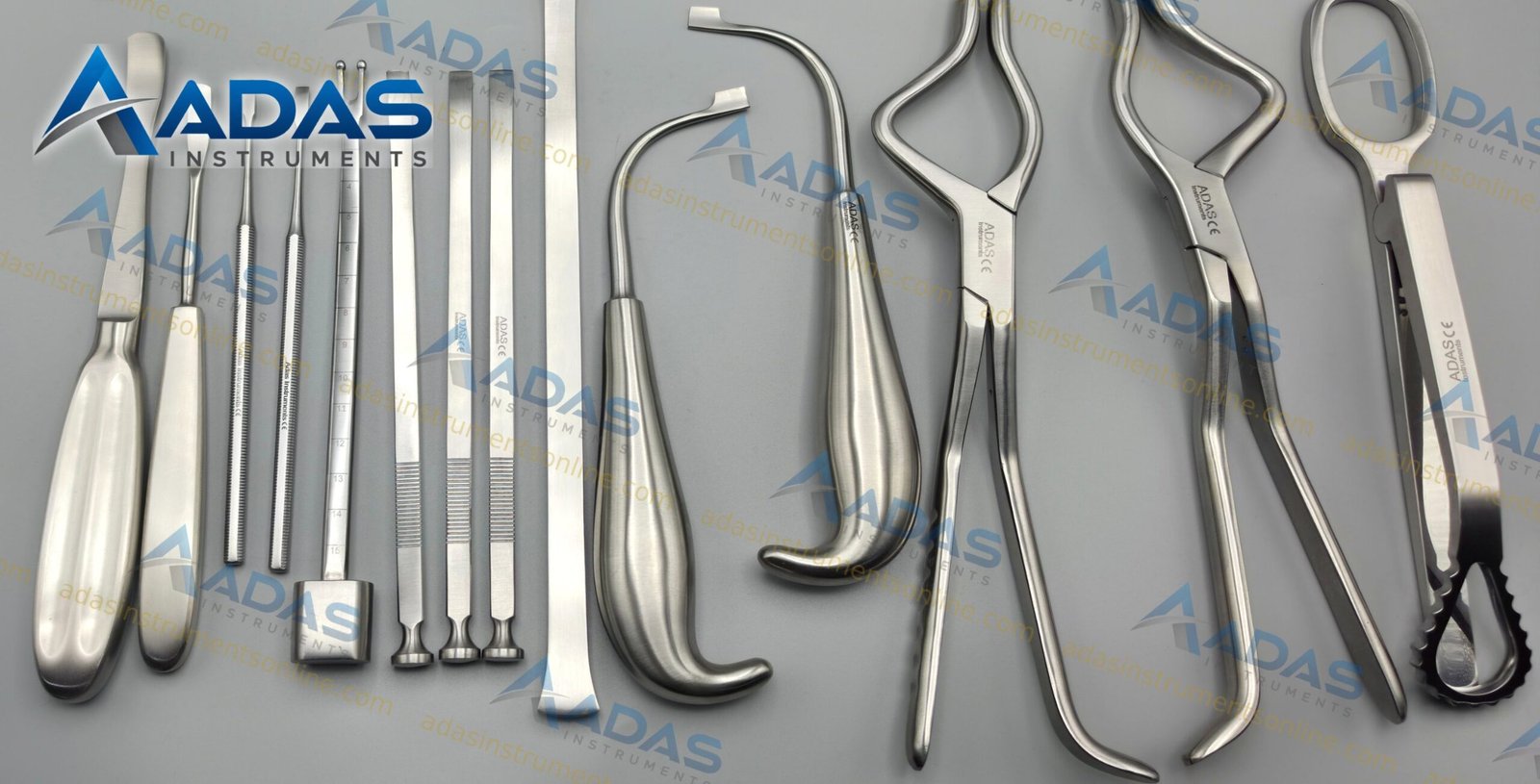
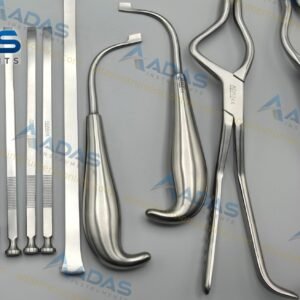
Four Obwegeser osteotomes come in four widths: 3 mm at 15.5 cm, 4 mm at 15 cm, 6 mm at 18.5 cm and 11 mm at 23.5 cm. The narrow ones work in a tight cut, and the 11 mm blade covers a long one. Three Epker osteotomes, all 18 cm with a blade 6 mm wide and 1.2 mm thin, come straight, with a slight curve and with a strong curve, so the blade can follow the bone it is cutting. There is no mallet in the set; order one with it if your tray does not have one.
Splitting and moving the bone
The two Smith sagittal split separators, 18.5 cm with a 9 mm blade, come as a right and a left. The AI Overview gives their job as controlled separation of the bone during a sagittal split osteotomy of the lower jaw. The two Rowe disimpaction forceps, 24 cm, are also a left and a right, and they work as a pair on the upper jaw. A set with only one of each would leave the surgeon short on the second side.
Two zygoma elevators
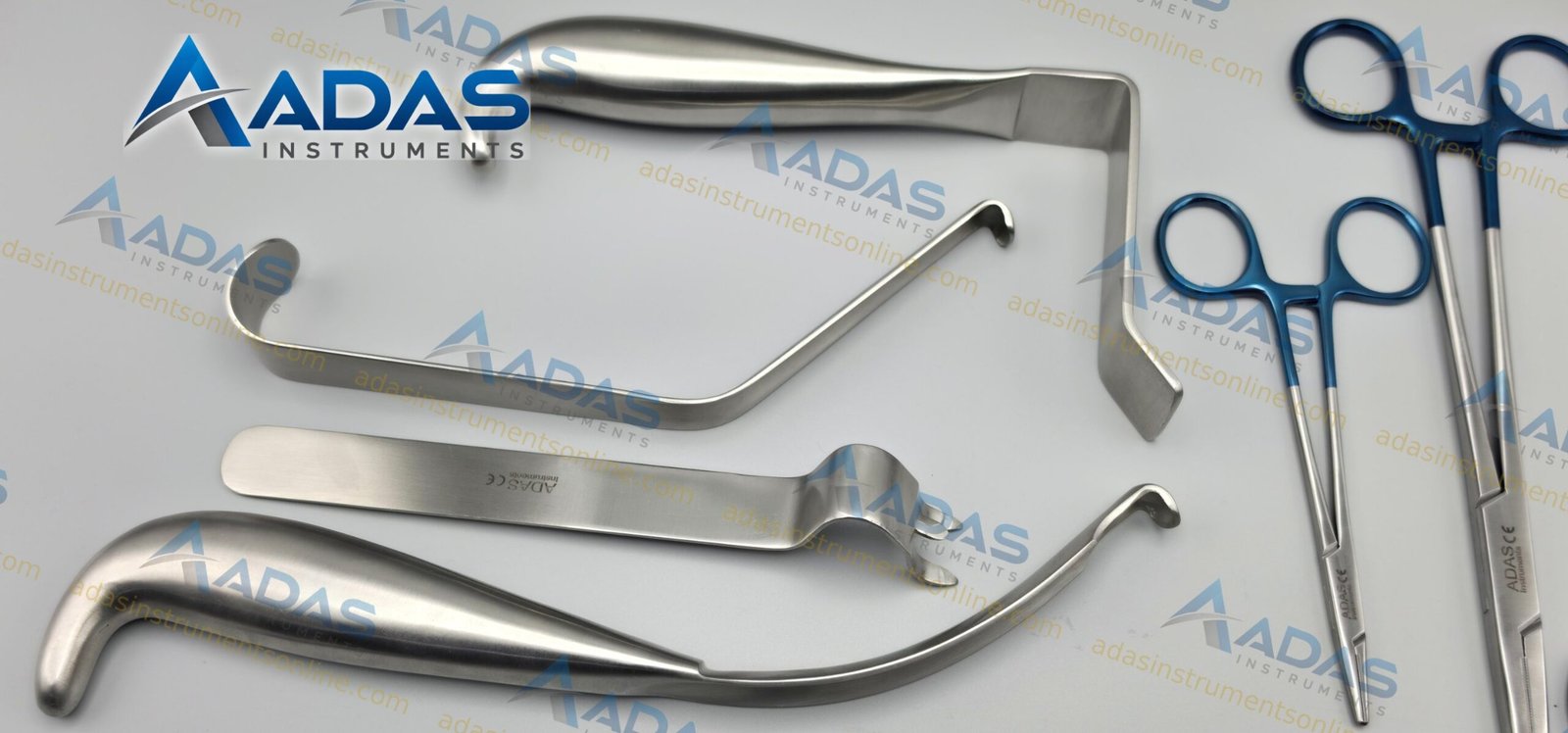
A Gillies zygoma elevator, 20 cm, and a Rowe zygoma elevator, 25.5 cm, lift a depressed cheekbone or zygomatic arch back into place from behind. The Rowe is the longer of the two, which gives more reach from the incision to the bone. Both are also sold on their own, so a tray that loses one can be made whole again without buying the set twice.
Retractors, wire and the soft tissue pieces
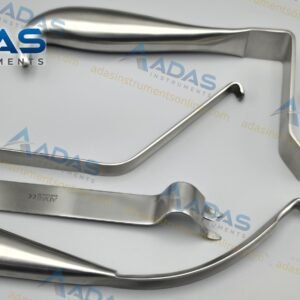
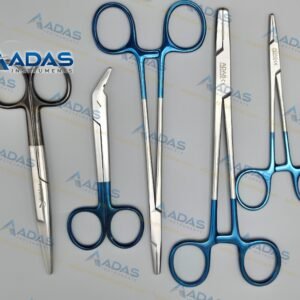
Four retractors hold the field. The Kinnhalter chin retractor is 16 cm with a 16.5 mm tip, and the Obwegeser progenie channel retractor is 16.5 cm and 8 mm. The Munro ramus retractor has a 25 x 80 mm blade, and a 22 cm retractor works outside and inside the mouth. A periosteal elevator, 18 cm and 9 mm, raises the flap. Berry wire twisting pliers and a wire cutting scissors handle wire fixation. The Mayo scissors and the Baumgartner and New Orleans needle holders carry tungsten carbide inserts for closure.
The maxillofacial instrument set list
All 23 instruments, one of each, read off our own list on 30 October 2026. The set comes without an instrument box.
| Instrument | Size and pattern | Qty |
|---|---|---|
| Obwegeser Osteotome | 15.5 cm, 3 mm tip | 1 |
| Obwegeser Osteotome | 15 cm, 4 mm | 1 |
| Obwegeser Osteotome | 18.5 cm, 6 mm | 1 |
| Obwegeser Osteotome | 23.5 cm, 11 mm | 1 |
| Epker Osteotome | 18 cm, 6 x 1.2 mm, Straight | 1 |
| Epker Osteotome | 18 cm, 6 x 1.2 mm, Slight curve | 1 |
| Epker Osteotome | 18 cm, 6 x 1.2 mm, Strong curve | 1 |
| Smith Sagittal Split Separator | 18.5 cm, 9 mm, Right | 1 |
| Smith Sagittal Split Separator | 18.5 cm, 9 mm, Left | 1 |
| Rowe Disimpaction Forceps | 24 cm, Left | 1 |
| Rowe Disimpaction Forceps | 24 cm, Right | 1 |
| Gillies Zygoma Elevator | 20 cm | 1 |
| Rowe Zygoma Elevator | 25.5 cm | 1 |
| Periosteal Elevator | 18 cm, 9 mm | 1 |
| Kinnhalter Chin Retractor | 16 cm, 16.5 mm tip | 1 |
| Obwegeser Progenie Channel Retractor | 16.5 cm, 8 mm | 1 |
| Munro Ramus Retractor | 16 cm, 25 x 80 mm | 1 |
| Extra Oral and Intra Oral Retractor | 22 cm | 1 |
| Berry Wire Twisting Pliers | 19 cm | 1 |
| Wire Cutting Scissors | One size | 1 |
| Mayo Scissors | 17 cm, Tungsten carbide | 1 |
| Baumgartner Needle Holder | 14 cm, Tungsten carbide | 1 |
| New Orleans Needle Holder | 18 cm, Tungsten carbide | 1 |
Where it is used
The first two columns come from the Google AI Overview read on 30 October 2026, the last from our list. Gemini, read on 3 November 2026, places a set like this in oral and maxillofacial surgery, plastic and reconstructive surgery and ENT, on the mandible, the maxilla, the zygomatic arch and the alveolar bone.
| Job in the case | What the overview says it needs | What this set gives you |
|---|---|---|
| Sagittal split osteotomy | Smith sagittal separators for controlled separation | Smith separators, right and left, Epker osteotomes, channel and ramus retractors |
| Reducing an upper jaw fracture | Rowe disimpaction forceps, used in pairs | Rowe forceps, left and right, 24 cm |
| Cutting and contouring bone | Osteotomes used with a bone mallet | Seven osteotomes; no mallet in the set |
| Retraction | Obwegeser retractors for the chin, ramus and channel | Kinnhalter chin, progenie channel, ramus, extra and intra oral |
| Raising the flap | Periosteal elevators | One, 18 cm with a 9 mm blade |
What it is for, and what it is not for
A bone tray does bone work. The table says what it covers and what has to come from elsewhere.
| Job | Use this set? | What to use instead or beside it |
|---|---|---|
| Corrective jaw surgery | Yes | This is the job it is made for |
| Upper jaw or cheekbone fracture | Yes | Rowe forceps and the two zygoma elevators |
| Plate and screw fixation | Not on its own | It holds no plates, screws or drivers; use your plating system |
| Cleft lip and palate repair | No | Our cleft lip and palate instrument set |
| Tooth extraction | No | Dental forceps and elevators |
How it compares with our other sets for the face
Four complete sets of ours work on the face and head. The counts and prices are read off each product’s own listing on 30 October 2026.
| Set | Pieces | Surgery | Price |
|---|---|---|---|
| Maxillofacial instrument set (this page) | 23 | Jaw and facial bone surgery | 667 dollars |
| Cleft lip and palate instrument set | 35 | Cleft lip and palate repair | 490 dollars |
| Blepharoplasty instrument set | 30 | Eyelid surgery | 380 dollars |
| Rhinoplasty instruments set | 72 | Nose surgery | 1,345 dollars |
Materials and finish
Every instrument in the set is made from high quality medical grade stainless steel. The steel itself is made to a German specification. We do not publish a grade number. The Mayo scissors and the two needle holders carry tungsten carbide inserts at the working end.
The osteotome edges are the part of the set that wears. Keep them apart from the other instruments in the tray, and send a blade with a chipped or rolled edge to be ground before the next case rather than pushing it through bone.
Caring for it
Rinse the set as soon as the case ends, before blood and bone dust dry on it. Open the forceps, the pliers, the scissors and the needle holders so the brush reaches the joints. Never use an osteotome as a lever: the blade is made to cut, and prying chips it. Dry everything, oil the joints lightly, steam sterilize the set on the normal instrument cycle, and count the 23 pieces against the contents list before it is put away.
Ordering and wholesale
The maxillofacial instrument set is made by Adas Instruments in our own workshop and sold direct, which is why the price sits where it does against the catalog houses. Order one for a single tray, or in quantity for a hospital list or a distributor line. We do OEM work under your own brand and your own item numbers. Send us a sample and we will hold a run to your pattern rather than ours. Stock items ship from our own workshop. Backorder items take 10 to 12 working days to make. Every instrument carries a three year replacement warranty against manufacturing defects. Production is controlled under an ISO 13485 quality management system.
Frequently asked questions
What is a maxillofacial instrument set used for?
It is used for surgery on the jaws and the bones of the face: corrective jaw surgery such as the sagittal split osteotomy of the lower jaw, the reduction of upper jaw and cheekbone fractures, and other reconstruction of the facial skeleton. It holds the osteotomes, separators, forceps, elevators and retractors for that work.
What instruments are used in maxillofacial surgery?
Osteotomes and a mallet to cut bone, sagittal split separators, disimpaction forceps and zygoma elevators to move it, retractors for the chin, ramus and channel, periosteal elevators to raise the flap, wire instruments, and scissors and needle holders to close. Every group except the mallet is in this set, listed in the contents table.
What is the difference between Obwegeser and Epker osteotomes?
In this set the four Obwegeser osteotomes change in width and length, from 3 mm at 15.5 cm to 11 mm at 23.5 cm. The three Epker osteotomes share one thin 6 mm blade, 1.2 mm thick and 18 cm long, and change in curve: straight, slight and strong.
Does the maxillofacial instrument set include a mallet or plates?
No. It holds no mallet, no plates, no screws and no drivers. The osteotomes need a mallet beside them, and fixation comes from your own plating system. Write to us if you want a mallet added to the order before it ships.
Can I buy the instruments in the maxillofacial instrument set one at a time?
Several of them, yes. The Rowe zygoma elevator, the Gillies zygoma elevator and the Obwegeser channel retractor are each sold on their own on our site, and the links are at the foot of this page. For any other piece, write to us with the name and size.
Related products and categories
Three pieces from this set are also sold on their own, for a tray that needs a spare: the Rowe zygoma elevator, the Gillies zygoma elevator and the Obwegeser channel retractor. Our single instruments for this work are in maxillofacial instruments, and our other complete trays for the face are under plastic surgery sets.
Be the first to review “Maxillofacial Instrument Set, 23 Pieces”
Shipping & Delivery Policy
Processing Time: In-stock items are dispatched within 24-48 hours. For custom or out-of-stock items, production time is approximately 10-15 days.
Global Delivery Estimates
We partner with world-class couriers (DHL, FedEx) to ensure fast, tracked delivery.
- USA & Canada: 3-5 Business Days
- Europe & UK: 4-6 Business Days
- Rest of World: 5-7 Business Days
*We offer Air Cargo and Sea Freight options for bulk wholesale orders.
Customs & Duties
International buyers are responsible for any customs duties or taxes imposed by their country. Adas Instruments is not responsible for delays caused by customs clearance.
Lost Packages & Insurance
If your package is lost in transit, please contact us immediately. We offer full support and replacements for confirmed lost shipments. Note: You must report non-delivery within 3 weeks to be eligible for an insurance claim.
Related products



Reviews
There are no reviews yet.