


Toledo V Dissector Double Port Cannula, 2 to 5 mm
$ 32.00
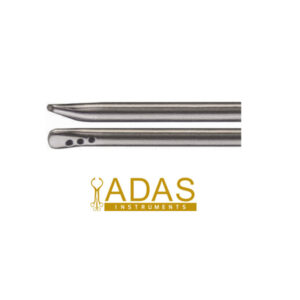
A Toledo V dissector double port cannula is a cannula built to release fibrous connective tissue and aspirate or inject fat in a single pass. Its fork shaped tip with a V notch cuts through fibrous septa and adhesions, and two long ports in a line behind it collect the fat, which surgeons use in secondary liposuction, gynecomastia and acne scar subcision. We make it from 2 to 5 mm and from 15 to 35 cm, with seven hub and handle choices on the order form.
Key Features
- Fork tip with a V notch between two prongs
- Two long ports in a line behind the fork
- Diameters 2, 2.4, 3, 4 and 5 mm
- Lengths 15 to 35 cm, depending on the hub
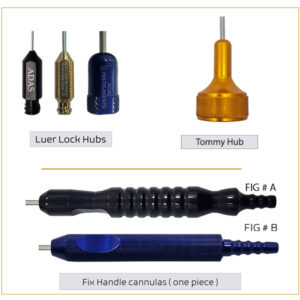
- Super fix handle A or B, aluminum or steel Luer lock, super Luer lock, Toomey hub or threaded fitting
- Made from high quality medical grade stainless steel and reusable
- Three year replacement warranty against manufacturing defects
- Item code A-27.01
Available on backorder

What a Toledo V dissector double port cannula is
Put this cannula next to the single port Toledo and the front end is the same: a fork, two prongs, a V notch between them. The difference is behind the fork. In our photograph two long ports sit one after the other along the shaft, where the single port Toledo has one.
Google AI Mode, read on 18 November 2026, describes the Toledo V dissector double port cannula as an instrument engineered to release fibrous connective tissue and aspirate or inject fat in a single pass. It says the notched tip cleaves fibrous septa and subdermal adhesions, and that the two openings near the end collect tissue or place fat as the plane is opened. It names secondary liposuction, gynecomastia surgery, subcision of depressed acne scars, release of the nasolabial fold, and harvesting from fibrous regions.
Catalogs shorten it to a Toledo double port cannula, and Gemini, read the same day, lists it as a double port Toledo V cannula, setting it against the single port version.
Key design features
A fork with a V notch
The prongs in our photograph are blunt outside and the notch between them does the work. Fibrous bands ride into the V as the cannula moves forward and are released.
Two ports in a line
Behind the fork two long ports open one after the other. They draw fat from the plane the fork has just opened over a longer stretch than a single port, or let fat out into it when the cannula is used for grafting.
Seven ways to finish the back end
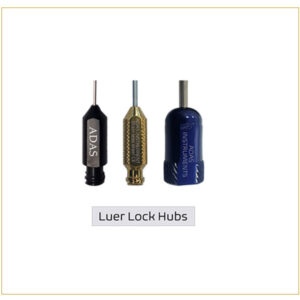
The order form offers seven ways to finish the back end: a super fix handle in style A or style B, an aluminum Luer lock, a steel Luer lock, a super Luer lock, a Toomey hub, or a threaded fitting. The Luer locks screw onto a syringe or a Luer handle. The Toomey hub takes a 60 cc Toomey syringe for harvesting or grafting by hand, and the super fix handles make the cannula one piece for a suction line. The hub sets the price: 22 dollars with the aluminum or steel Luer lock, 32 with the super Luer lock or the threaded fitting, 37 with the Toomey hub, and 45 or 55 with a super fix handle.
The hub decides the lengths
Our form keeps two size lists. With a Luer lock, the Toomey hub or the threaded fitting the 2 mm comes in 15 and 18 cm and the 4 mm in 20 to 35 cm. With a super fix handle the 3 mm comes in 15 to 35 cm and the 4 mm in 15 to 30 cm.
Which size to order
Every size below was read off our own order form on 18 November 2026. The size does not change the price; only the hub does. Pick the hub first, because it decides which lengths the form shows.
| Diameter | Lengths with a Luer, Toomey or threaded hub | Lengths with a super fix handle |
|---|---|---|
| 2 mm | 15 cm, 18 cm | 15 cm |
| 2.4 mm | 15 cm, 20 cm | 25 cm |
| 3 mm | 15 cm, 20 cm, 25 cm, 30 cm | 15 cm, 20 cm, 25 cm, 30 cm, 35 cm |
| 4 mm | 20 cm, 25 cm, 30 cm, 35 cm | 15 cm, 20 cm, 25 cm, 30 cm |
| 5 mm | 25 cm, 30 cm, 35 cm | 25 cm, 30 cm, 35 cm |
Where it is used
The first two columns come from the AI Mode answer and from Gemini, both read on 18 November 2026. They describe the pattern in general, not our measurements. The last column is our own guide to our sizes.
| Use | What the answers say it is for | Where our sizes fit |
|---|---|---|
| Secondary liposuction | Fibrous, scarred planes from earlier surgery | 3 and 4 mm, 20 to 30 cm |
| Gynecomastia | Firm tissue in the male chest | 3 and 4 mm, 15 to 25 cm |
| Acne scar subcision | Releasing depressed scars | 2 mm, 15 or 18 cm |
| Nasolabial fold release | Opening the fold before grafting | 2 mm, 15 cm, on a Luer lock |
| Harvesting from fibrous regions | Taking fat where it is bound by septa | 3 and 4 mm on a Toomey hub |
What it is for, and what it is not for
The double port is a fork with more open area behind it. The table names the jobs where another cannula of ours suits better.
| Job | Use the double port Toledo? | What to use instead or beside it |
|---|---|---|
| Release and aspiration in one pass | Yes | This is the job it is made for |
| A single port behind the fork | Beside it | The Toledo V dissector |
| A gentler notch | Beside it | The V dissector with the shallower fork |
| Plain debulking of soft fat | Not its job | A Mercedes or an accelerator |
| A motor driven handpiece | Not this listing | Our power assisted cannulas, which carry their own hub |
How it compares with the rest of the dissector and spatula family
Five patterns make up this family on our site. The second column is read off each listing’s own photograph, and the last off each product’s order form, on 18 November 2026.
| Pattern | What the tip carries, from our own photograph | What that is for | On our order form |
|---|---|---|---|
| Toledo V dissector | a fork of two prongs with a V notch, one long port behind it | releasing fibrous bands while it aspirates | 2 to 5 mm, 15 to 35 cm, 7 hub styles |
| Toledo V dissector, double port (this page) | the same fork and V notch, with two long ports in a line | the same release with more open area behind it | 2 to 5 mm, 15 to 35 cm, 7 hub styles |
| V dissector, fork tip | a fork with a shallower V notch, one long port behind it | release and aspiration with a gentler notch | 2 to 5 mm, 15 to 35 cm, 7 hub styles |
| Spatula, dual port | a flattened, rounded spatula tip, two long ports in a line | separating planes and drawing fat from one side | 2 to 5 mm, 15 to 35 cm, 7 hub styles |
| Spatula, single port | a flattened, rounded spatula tip, one long port behind it | controlled work in small areas such as the neck | 2 to 5 mm, 15 to 35 cm, 7 hub styles |
Materials and finish
Every Toledo double port cannula we make is formed from high quality medical grade stainless steel. The steel itself is made to a German specification. We do not publish a grade number.
The fork and its notch are formed from the end of the tube itself, and both ports are cut through the wall behind it. Look at the notch before each case: a burred or opened V no longer releases cleanly. On the aluminum Luer lock the hub is aluminum, and on the steel Luer lock it is steel. The hub changes how the cannula connects and nothing about the tip.
Caring for it
Flush the Toledo V dissector double port cannula as soon as it comes out of use, before fat sets in the lumen. Clear the V notch with a fine brush first, then both ports from the outside, then push a brush through the full length of the lumen. Look through the tube against a light to be sure it is clear. Dry it, steam sterilize it on the normal instrument cycle, and store it straight.
Ordering and wholesale
The Toledo V dissector double port cannula is made by Adas Instruments in our own workshop and sold direct, which is why the price sits where it does against the catalog houses. Order one for a single tray, or in quantity for a hospital list or a distributor line. We do OEM work under your own brand and your own item numbers. Send us a sample and we will hold a run to your pattern rather than ours. Stock items ship from our own workshop. Backorder items take 10 to 12 working days to make. Every instrument carries a three year replacement warranty against manufacturing defects. Production is controlled under an ISO 13485 quality management system.
Frequently asked questions
What is a Toledo V dissector double port cannula used for?
It is used to release fibrous tissue and aspirate or inject fat in one pass. The AI Mode answer we read names secondary liposuction, gynecomastia, acne scar subcision, nasolabial fold release and harvesting from fibrous regions. The case is the surgeon’s call.
Why does a Toledo V dissector double port cannula have two ports?
Two long ports behind the fork open more of the tube to the plane the notch has just released. Fat is collected, or placed, over a longer stretch than one port allows, in the same pass that does the release.
What size Toledo V dissector double port cannula should I order?
That depends on the area and the surgeon. We make it from 2 to 5 mm and from 15 to 35 cm, and the size table above shows which lengths come with which hub. The 2 mm suits scars and facial folds.
How do liposuction cannulas work?
A cannula is a hollow steel tube with one or more ports near its end. Connected to suction, a syringe or a pump, it draws fat in through the ports as the surgeon moves it back and forth. A fork tip adds a notch that releases fibrous bands on the way.
How is it different from the single port Toledo?
The fork and notch are the same. The single port Toledo has one long port behind them; this one has two in a line, so more of the tube is open behind the fork. The size lists differ a little on the form.
Related products and categories
Three more patterns from the dissector and spatula family: V dissector cannula, spatula dual port cannula and spatula liposuction cannula. The whole range is in aspiration cannulas, and the handles, adapters and sets that go with it are under liposuction cannulas and accessories.
| Weight | 0.06 kg |
|---|
Be the first to review “Toledo V Dissector Double Port Cannula, 2 to 5 mm”
Shipping & Delivery Policy
Processing Time: In-stock items are dispatched within 24-48 hours. For custom or out-of-stock items, production time is approximately 10-15 days.
Global Delivery Estimates
We partner with world-class couriers (DHL, FedEx) to ensure fast, tracked delivery.
- USA & Canada: 3-5 Business Days
- Europe & UK: 4-6 Business Days
- Rest of World: 5-7 Business Days
*We offer Air Cargo and Sea Freight options for bulk wholesale orders.
Customs & Duties
International buyers are responsible for any customs duties or taxes imposed by their country. Adas Instruments is not responsible for delays caused by customs clearance.
Lost Packages & Insurance
If your package is lost in transit, please contact us immediately. We offer full support and replacements for confirmed lost shipments. Note: You must report non-delivery within 3 weeks to be eligible for an insurance claim.




Reviews
There are no reviews yet.