
Desmarres Lid Retractor, 10 mm 12 mm and 14 mm, Insulated Shaft Option
Price range: $ 18.50 through $ 25.00
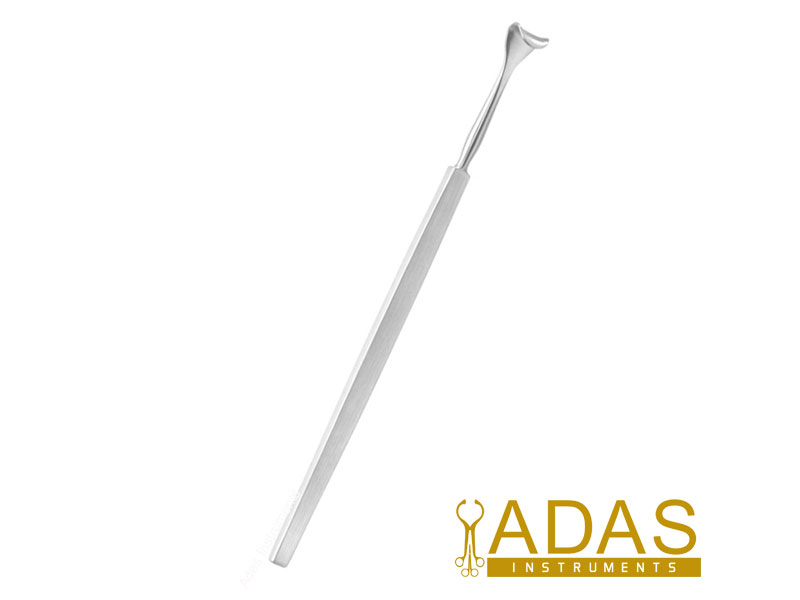
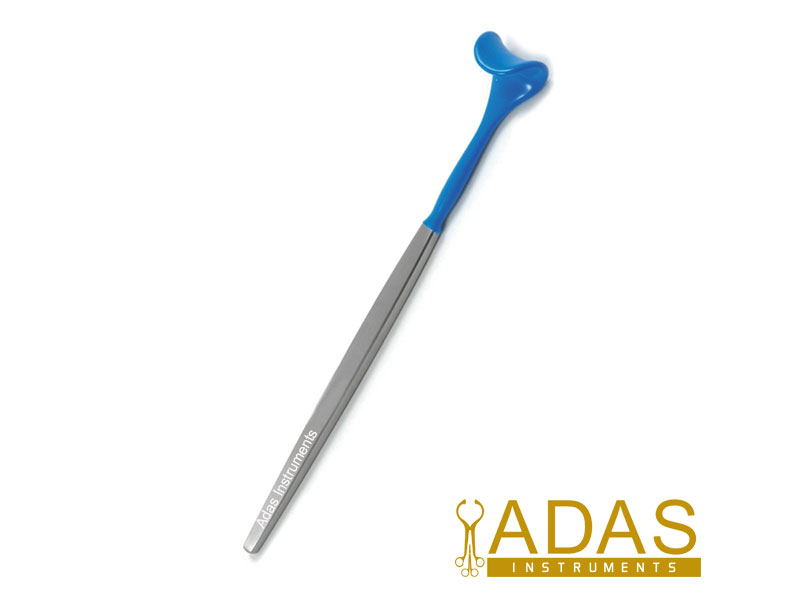
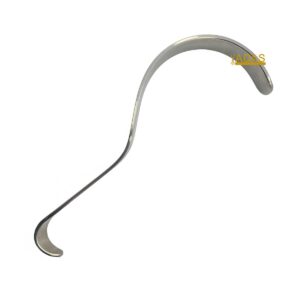
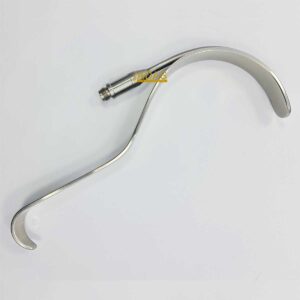
Desmarres lid retractors have a curved saddle shaped blade that follows the contour of the eye, and that shape is doing two jobs at once: it turns the eyelid back far enough to work behind it, and it keeps the eyelashes out of the field while it does so. Our own record carries three blade widths, 10 mm, 12 mm and 14 mm, and an insulated shaft option for work done with electrosurgery, where a bare steel shaft close to the globe is a path for current nobody wants. It is an ophthalmic and oculoplastic instrument, used for eyelid eversion, for lifting the conjunctiva clear of the cornea, and in blepharoplasty.
Key Features
- Curved saddle shaped blade that matches the contour of the eye
- Blunt smooth blade edge, and the curve keeps eyelashes out of the field
- Three blade widths from our own record: 10 mm, 12 mm and 14 mm
- Insulated shaft option for electrosurgical work such as transconjunctival blepharoplasty
- Retracts upper and lower eyelid and the lid margin, and shields the cornea while it does
- Used in ophthalmology, oculoplastic surgery and eyelid eversion at the slit lamp
- High quality medical grade stainless steel, autoclavable and made to be used again
- Three year replacement warranty against manufacturing defects. Item code AP-42.10

What the desmarres lid retractor is
The desmarres lid retractor is a handheld retractor with a curved saddle shaped blade that follows the contour of the eye, and that single shape is doing two jobs at once.
It turns the eyelid back far enough to work behind it. At the same time the curve keeps the blade off the cornea and keeps the eyelashes out of the field, which is why a flat blade has never worked for this job.
Our own record carries three blade widths, 10 mm, 12 mm and 14 mm, and an insulated shaft option. Those four choices are the ordering decision, and the insulated one exists for a specific operation rather than as a general upgrade.
Key design features of this desmarres retractor
Four features, and three of them are ordering choices on our own record.
- A curved saddle shaped blade. It matches the globe, so it everts the lid without pressing into the eye underneath.
- A blunt smooth blade edge. The instrument is held against conjunctiva and lid margin for minutes at a time. Nothing on it is allowed to be sharp.
- Three blade widths. 10 mm, 12 mm and 14 mm, from our own Select Size attribute.
- An insulated shaft option. From our own Tip options attribute, for work done with electrosurgery close to the globe.
Desmarres eyelid retractor sizes, and what the size numbers mean
This is the fullest size table in the set, because this is the product with the fullest attribute data behind it.
| What | Option | Where it comes from | Item code |
|---|---|---|---|
| Blade width | 10 mm | Our own Select Size attribute | AP-42.10 |
| Blade width | 12 mm | Our own Select Size attribute | AP-42.10 |
| Blade width | 14 mm | Our own Select Size attribute | AP-42.10 |
| Shaft | Insulated, or standard | Our own Tip options attribute | AP-42.10 |
| Blade shape | Curved, saddle shaped, blunt edge | Our own product record | |
| Size numbers | 0, 1 and 2 in the usual catalogue numbering | Other catalogues number 10 to 11 mm as 0, 12 to 13 mm as 1 and 14 to 15 mm as 2. OUR figure is the millimeter | |
| Overall length | Not carried | Others publish about 137 mm. Not repeated here as ours |
Read the sixth row carefully. OUR record carries millimeters: 10, 12 and 14. Other catalogues number the same instrument 0, 1 and 2, where 0 is 10 to 11 mm, 1 is 12 to 13 mm and 2 is 14 to 15 mm. So our three widths land on those three numbers, and that mapping is given here so a buyer working from a set list can order the right one. The millimeter is ours. The number is theirs.
Where an eyelid retractor of this pattern is used
Two specialties, and one of the procedures is the reason the insulated version exists.
| Procedure | What the desmarres lid retractor is used for |
|---|---|
| Eyelid eversion | Turning the upper lid back to look under it for a foreign body |
| Blepharoplasty | Holding the lid through upper and lower lid surgery |
| Transconjunctival blepharoplasty | The insulated version, because cautery is in the field |
| Oculoplastic surgery | General lid and periorbital work |
| Ophthalmic examination | Lifting the conjunctiva clear of the cornea to see the anterior segment |
| Ptosis repair | Lid retraction through the approach |
| Entropion and ectropion repair | Holding the lid margin while it is reset |
| Chalazion and lid lesion surgery | Steady exposure of the tarsal surface |
What the blade holds, and what it protects
There is no instrument on this site where the protecting column matters more. The cornea is a millimeter from the blade for the whole procedure.
| Structure | What this instrument does with it |
|---|---|
| The upper eyelid | HOLDS, and everts it |
| The lower eyelid | HOLDS |
| The eyelid margin | HOLDS, on a blunt smooth edge |
| The conjunctiva | EXPOSES, by lifting it clear of the cornea |
| The globe and the ocular surface | EXPOSES. The reason the blade is curved is to clear this, not to touch it |
| The cornea | PROTECTS. The saddle curve keeps the blade off it |
| Eyelashes | PROTECTS, and keeps them out of the surgical field |
| Heat sensitive tissue near cautery | PROTECTS, on the insulated version only |
| The orbit and deep orbital fat | NEITHER. Not what this blade reaches |
How this insulated desmarres retractor compares with the rest of the family
Three of the seven rows are our own pages, and the last two rows are this same product in a different width.
| Pattern | How it differs | When you reach for it instead |
|---|---|---|
| Kawamoto double ended insulated retractor | A Desmarres style curved blade at BOTH ends, both insulated | Facial and craniofacial flap work rather than the lid itself |
| Jaeger lid plate | A plate that SUPPORTS and shields the lid from behind, it does not retract it | When you need something to cut against rather than something to pull with |
| Freeman flap retractor | A larger fixed curved blade with a fiberoptic option | A facial or breast flap, not an eyelid |
| Volkman retractor | Prongs, sharp or blunt, one to four of them | Superficial tissue where a blade would be wrong |
| Desmarres chalazion forceps | A clamp, not a retractor, from the same surname | Holding a chalazion, not holding a lid |
| Insulated Desmarres, the 10 mm | The narrowest of our three widths | A pediatric lid or a narrow palpebral aperture |
| Insulated Desmarres, the 14 mm | The widest of our three widths | An adult upper lid where the 12 mm will not reach the fornix |
Materials and finish
Made from high quality medical grade stainless steel, satin finished so the operating microscope light and the overhead lamp do not come back off a curved blade into the surgeon eye. The steel itself is made to a German specification. The blade edge is rolled and polished, and on the insulated version the coating is applied along the shaft and is checked for continuity, because a coating with a gap in it is worse than no coating at all.
Care and sterilization
Clean with a soft brush under running water, working along the concave face of the blade where tissue and fluid sit. Rinse in deionized water and dry fully before autoclaving. On the insulated version inspect the coating every time and take the instrument out of service at the first chip or crack: the whole reason it exists is an unbroken layer. Store on a rack or in a tray with the blade protected, because the edge that touches an eye has to stay perfect.
Ordering and wholesale
Adas Instruments makes the desmarres lid retractor to order and supplies hospitals, surgical centers and distributors across the United States, Latin America, Europe and Asia. State the blade width, 10 mm, 12 mm or 14 mm, and whether you want the insulated shaft. Bulk and wholesale pricing is available, and instruments held on backorder ship in 10 to 12 working days. Every instrument carries a three year replacement warranty against manufacturing defects. Certifications: CE. Production is controlled under an ISO 13485 quality management system.
Frequently asked questions
What is a desmarres lid retractor used for?
Holding and everting the eyelid so the surgeon can work behind it or look under it. It is used for eyelid eversion, blepharoplasty, ptosis repair, entropion and ectropion surgery, chalazion surgery and ophthalmic examination.
How do you use a desmarres lid retractor?
The curved blade goes against the outside of the lid at the margin and the lid is rolled back over it, so the blade ends up behind the lid with the concave face toward the globe. The curve holds the lashes down and away. It is pulled, not pushed, and the pull is along the plane of the lid rather than into the orbit.
Which desmarres lid retractor size should I order?
Our record carries 10 mm, 12 mm and 14 mm. The 12 mm is the usual adult width. The 10 mm is for a narrow palpebral aperture or a pediatric lid. The 14 mm is for an adult upper lid where a narrower blade will not reach the fornix. In catalogues that number rather than measure, those are sizes 0, 1 and 2.
When do I need the insulated version?
When electrosurgery is in the field, which in practice means transconjunctival blepharoplasty and similar lid work done with cautery. A bare steel shaft held against the lid, a millimeter from the globe, is a path for current and heat into tissue that was only being retracted. The insulated shaft removes that path.
Is a desmarres lid retractor the same as a Jaeger lid plate?
No, and it is a useful distinction. The Desmarres RETRACTS: it pulls the lid back and holds it there. The Jaeger plate SUPPORTS: it slides behind the lid and gives a firm surface to cut or inject against. They are often on the same tray and they are not substitutes for each other.
Related products and categories
Buyers who order the desmarres lid retractor usually look next at the kawamoto double ended insulated retractor, the freeman flap retractor and the volkman retractor. The whole family sits in hooks and retractors, and this pattern is also listed under blepharoplasty instruments.
| Weight | 0.06 kg |
|---|---|
| Tip options | Insulated Shaft, Standard |
| Select Size | 10 mm, 12 mm, 14 mm |
Be the first to review “Desmarres Lid Retractor, 10 mm 12 mm and 14 mm, Insulated Shaft Option”
Shipping & Delivery Policy
Processing Time: In-stock items are dispatched within 24-48 hours. For custom or out-of-stock items, production time is approximately 10-15 days.
Global Delivery Estimates
We partner with world-class couriers (DHL, FedEx) to ensure fast, tracked delivery.
- USA & Canada: 3-5 Business Days
- Europe & UK: 4-6 Business Days
- Rest of World: 5-7 Business Days
*We offer Air Cargo and Sea Freight options for bulk wholesale orders.
Customs & Duties
International buyers are responsible for any customs duties or taxes imposed by their country. Adas Instruments is not responsible for delays caused by customs clearance.
Lost Packages & Insurance
If your package is lost in transit, please contact us immediately. We offer full support and replacements for confirmed lost shipments. Note: You must report non-delivery within 3 weeks to be eligible for an insurance claim.
Related products

Reviews
There are no reviews yet.