

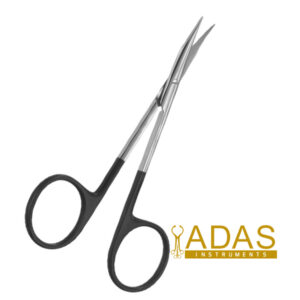
Hartmann Mosquito Forceps, Straight or Curved, 10 cm
$ 12.00
Hartmann mosquito forceps (also spelled Hartman) clamp small blood vessels and hold delicate tissue in shallow wounds, and at 10 cm they are the shortest clamp in the mosquito pattern. That short frame is the point: in a pediatric incision or a facial repair a 12.5 cm instrument stands out of the wound and into the surgeon’s line of sight, while the ratchet on the handle holds these jaws closed once they are set.
Key Features
- Clamps small blood vessels and holds delicate tissue in shallow wounds
- 10 cm overall, the shortest length in the mosquito pattern
- Straight or curved tips
- Fully serrated jaws so the grip does not slip
- Ratchet on the ring handle holds the jaws closed
- Suits pediatric incisions, facial repair and other shallow, confined sites
- High quality medical grade stainless steel
- Item code AE-01.09

What hartmann mosquito forceps are
Hartmann mosquito forceps are the short end of the mosquito family. At 10 cm they sit below the regular 12.5 cm pattern, and every part of the instrument is scaled to a wound you can see the bottom of: short jaws, slender shanks and small ring handles that a gloved hand can turn without hiding the field. Catalogues also list them as hartmann mosquito hemostatic forceps, as Hartmann hemostatic clamps and as Hartmann artery forceps, and the one letter spelling Hartman is the same instrument.
Length is the whole argument for this pattern. In a pediatric incision or a facial repair the surgeon is working in a few centimeters of depth, and a clamp built for an abdomen stands out of the wound and blocks the view. Take 2.5 cm off the frame and the same hold costs nothing in sight lines.
Key design features of the hartmann mosquito forceps
Three features carry the work, and none of them is about the length.
- Fully serrated jaws. The serrations run the whole working face, so the hold is spread along a vessel instead of biting at one point.
- A ratchet on the ring handle. Set the clamp and it stays set, which matters most when the other hand is tying in a field this small.
- A box lock joint. The halves pass through each other so the tips meet square and stay square.
Straight or curved is the only build choice. Order mosquito forceps straight when the vessel is in a direct line and curved when it sits behind an edge.
Hartmann mosquito forceps sizes and build options
One length, two tips. Nothing below is listed that we do not build.
| Length | Tip | Item code | Where it fits |
|---|---|---|---|
| 10 cm | Straight | AE-01.09 | A direct line onto a vessel in a shallow field |
| 10 cm | Curved | AE-01.09 | The same short frame with a curve, for reaching around an edge |
Where hartmann mosquito forceps are used
What these specialties share is a shallow field. The instrument is chosen for what it does not do, which is get in the way.
| Specialty | What surgeons do with them |
|---|---|
| Pediatric surgery | Small incisions where a longer clamp fills the wound |
| Plastic and reconstructive surgery | Facial repair, eyelid work and fine flap edges |
| Ophthalmic surgery | Periocular bleeding points and fine tissue handling |
| Vascular surgery | Small superficial branches during exposure |
| Dermatologic surgery | Shallow excisions and small skin repairs |
| ENT surgery | Nasal and aural fields where depth is limited |
What hartmann mosquito forceps jaws hold
A hemostat is judged on what it can take hold of without damaging it, and hartmann mosquito forceps are built for the small and the superficial. The list below is what the jaws are meant for, not everything they will close on.
| What the jaws take | How they take it |
|---|---|
| Small superficial blood vessels | Fully serrated jaws spread the hold along the wall |
| Subcutaneous tissue bleeding points | A short bite that reaches without opening the wound wider |
| Delicate mucosal margins | Light closure pressure held by the ratchet, not by the hand |
| Fine suture threads | Used as a tag clamp where a longer handle would be in the way |
| Skin edges during closure | Brief hold while the first stitch is placed |
How hartmann mosquito forceps compare with the other patterns
Four clamps in the same family, separated by length and jaw weight. The table says where each one stops. Buyers who are choosing between hartmann mosquito forceps and the regular pattern are usually deciding how much instrument they want standing out of a shallow wound, and that is the only question the length answers.
| Pattern | How it differs | When to choose it |
|---|---|---|
| This page, the Hartmann at 10 cm | 10 cm, the shortest frame in the family | Shallow, compact sites and pediatric fields |
| Mosquito forceps, Halsted | 12.5 cm and 14.5 cm, the regular size | The default choice on a general tray |
| Micro mosquito forceps | Thinner tapered jaws, serrated to the tip | Arteriole branches and venules under magnification |
| Delicate mosquito forceps, 18 cm | The long reach with small jaws | A small bleeding point that sits deep |
| Crile artery forceps | Heavier jaws, longer frame, partial serrations | Larger vessels and deeper planes |
Materials and finish
Each pair is made from high quality medical grade stainless steel, hardened at the jaws and at the box lock so the serrations hold their profile and the joint does not slacken. The steel itself is made to a German specification. The finish is satin, which keeps operating light from bouncing back at the surgeon. On a clamp this small the jaw surface is the part that wears first, which is why the hardening matters more here than the polish does.
Hartmann mosquito forceps care and sterilization
Open the ratchet before cleaning and before the autoclave. A clamp sterilized closed traps soil in the box lock and holds the joint under load at temperature. Rinse cool first, brush along the serrations rather than across them, dry fully and store open. On an instrument this small the joint is the first thing to go, and a weekly drop of instrument milk is what stops it.
Ordering and wholesale
Order by item code AE-01.09, naming the tip you want. Adas Instruments supplies hospitals, surgery centers, distributors and instrument resellers across the United States, and wholesale quantities are quoted on the set rather than the piece. Backorder items dispatch in 10 to 12 working days. Every instrument carries a three year replacement against manufacturing defects. Production is controlled under an ISO 13485 quality management system.
Frequently asked questions
What are hartmann mosquito forceps used for?
They clamp small superficial blood vessels and hold delicate tissue in shallow wounds. The 10 cm frame puts them on pediatric, facial, eyelid and ENT trays, where the working depth is a few centimeters and a longer clamp would sit in the line of sight. They are also used as a tag clamp on fine suture.
Is hartman mosquito forceps with one n the same instrument?
Yes. Hartman and Hartmann are the same pattern and most of the trade carries both spellings, so a search for either returns the same clamp. We list it as Hartmann. If a purchase order arrives spelled with one n, it is this item code.
What is the difference between mosquito forceps and artery forceps?
Scale, not function. Both clamp a bleeding vessel. A mosquito is the small end of the range with fine jaws serrated their full length, while a full artery clamp such as the Crile is longer, heavier and serrated only part way, for larger vessels and deeper planes. Most trays carry both and reach for the mosquito first.
What are the key differences between Halstead and Hartman mosquito forceps?
Length. The hartmann mosquito forceps is 10 cm; the Halsted is the regular size at 12.5 cm and 14.5 cm. The jaws and the ratchet work the same way on both, so the choice is about how deep the wound is and how much instrument you want standing out of it.
Do hartmann mosquito forceps lock?
Yes. A ratchet on the ring handle holds the jaws closed once they are set, and a light squeeze releases it. That is what lets a surgeon clamp a mosquito hemostat onto a bleeding point and then use both hands to tie.
Related products and categories
Surgeons who keep hartmann mosquito forceps on the tray usually keep the regular mosquito forceps beside it, the micro mosquito forceps for work under magnification, and the 18 cm delicate clamp for a bleeding point that sits deep. The whole family sits in hemostats and grasping forceps, and this pattern is also listed under facelift and neck lift instruments.
| Weight | 0.05 kg |
|---|---|
| Tip options | Curved Tip, Straight Tip |
Be the first to review “Hartmann Mosquito Forceps, Straight or Curved, 10 cm”
Shipping & Delivery Policy
Processing Time: In-stock items are dispatched within 24-48 hours. For custom or out-of-stock items, production time is approximately 10-15 days.
Global Delivery Estimates
We partner with world-class couriers (DHL, FedEx) to ensure fast, tracked delivery.
- USA & Canada: 3-5 Business Days
- Europe & UK: 4-6 Business Days
- Rest of World: 5-7 Business Days
*We offer Air Cargo and Sea Freight options for bulk wholesale orders.
Customs & Duties
International buyers are responsible for any customs duties or taxes imposed by their country. Adas Instruments is not responsible for delays caused by customs clearance.
Lost Packages & Insurance
If your package is lost in transit, please contact us immediately. We offer full support and replacements for confirmed lost shipments. Note: You must report non-delivery within 3 weeks to be eligible for an insurance claim.
Related products
Reviews
There are no reviews yet.