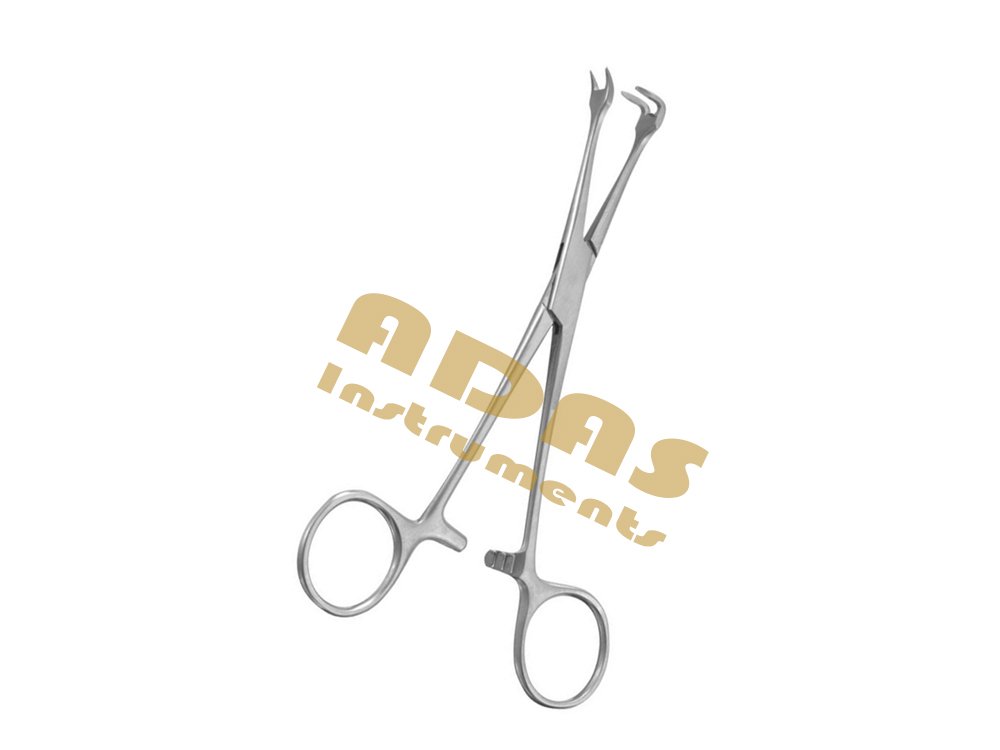
Kurtay D’Assumpcao Facelift Marker | Skin Flap Marking Forceps
$ 32.00
The Kurtay D’Assumpcao facelift marker is a ratcheted marking forceps that takes hold of a dissected skin flap and shows the surgeon exactly how much of it is spare. The jaws close on the overlap, the ratchet holds them there with no hand on the instrument, and the line that has to be cut is then marked along a flap that is sitting under the same tension it will be closed under. It is used in facelift and neck lift surgery, where the amount removed on the left and the right has to match within a millimeter or two.
Key Features
- Integrated ratchet that locks on the flap for a hands free hold
- Marks the flap under the tension it will be closed under
- Parallel tines that hold skin without tearing it
- 152 mm, or 6 inches, overall
- Cut from high quality medical grade stainless steel and fully autoclavable
- Reusable, with no ink reservoir and no cartridge
- Three year replacement warranty against manufacturing defects
- Item code AA-31.73
Available on backorder

What a Kurtay D’Assumpcao facelift marker is
A facelift is a problem of subtraction. The skin has been lifted, it now overlaps itself, and the question is how much of the overlap comes off. Guess high and the closure is tight. Guess low and the result is loose within a year. Guess differently on the two sides and the patient sees it in a mirror.
This instrument answers the question by measuring it rather than estimating it. It is an instrument that finds the measurement, because the overlap the jaws take up is itself the answer to how much skin is spare. The jaws take the overlapping flap, the ratchet holds them, and the overlap the jaws have closed on is the skin that is spare.
Two surnames are on it because two surgeons contributed to the pattern, and that is also why the same instrument turns up in catalogues under three or four slightly different names. The item code at the bottom of this page is the only sure way to order the exact instrument, because a search on either surname alone will return markers with and without a ratchet and in two different lengths.
The spelling moves about as well. Catalogues write the surname with the apostrophe and without it, so a Kurtay Dassumpcao facelift marker and a Kurtay D’Assumpcao facelift marker are the same instrument, and so is a Kurtay D’Assumpcao marking forceps.
What it is, plainly, is a facelift skin flap marker, and a rhytidectomy flap marker is the same thing said in the operative word. It is also the only facelift marker with ratchet fitted as standard that we make, which is the reason most people choose it over the plain pattern.
Key design features
The ratchet, and what hands free actually buys
Once the ratchet is engaged the instrument holds the flap on its own. That frees both hands, and the hand that matters is the one now holding the marker. Marking a flap that somebody else is holding, or that you are holding with the same hand, is how a line ends up a few millimeters out.
It marks under tension
Skin measured relaxed and closed under tension does not give the same answer. The jaws put the flap under the tension it will be closed at, and the mark goes on while it is there. That is the whole argument for a clamping marker over a ruler and a free hand estimate.
Parallel tines
The holding face is a row of parallel tines rather than a flat plate or a single tooth. The load spreads across several points, so a thin facelift flap is held rather than perforated, and the flap is not dragged sideways as the jaws close.
152 mm, which is a working length not a size
Six inches is enough to reach from a hand outside the field to a flap at the temple or behind the ear, and short enough to be controlled at the tip. A longer instrument in a facelift is an instrument whose jaws you cannot feel.
Which marker to order
We make two facelift markers and one abdominal pair, and the difference between them is the ratchet and the reach.
| Instrument | Ratchet | Length | Our price |
|---|---|---|---|
| Kurtay D’Assumpcao facelift marker | Integrated, hands free | 152 mm | 32 dollars |
| D’Assumpcao face lift marker | Optional, with or without | 150 mm | 24 dollars |
| Pitanguy small flap demarcator | No ratchet | 156 mm | 22 dollars |
| Lockwood abdominal demarcator | No ratchet, angled shafts | 320 mm | 32.50 dollars |
Where it is used
Face and neck, and specifically the parts of a lift where two sides have to agree.
| Procedure | What it marks | Why the ratchet helps there |
|---|---|---|
| Facelift, or rhytidectomy | The redundant skin at the temple, preauricular and postauricular flaps | Both hands free to mark a long line |
| Neck lift | The submental and lateral neck flap overlap | A flap held under tension while the line is drawn |
| Brow lift | The overlap at the hairline | Small amounts where a few millimeters show |
| Secondary or revision lift | A flap over previous scarring | Held rather than pulled, on skin with less give |
What it marks, and what it must not do
A ratchet that holds a flap by itself is the whole value of the instrument and also the source of the one real hazard, which is row two.
| The task | What the marker does | What it must not do |
|---|---|---|
| Finding the spare skin | Closes on the overlap and holds it | It does not decide how much comes off. The surgeon does |
| Holding the flap | Keeps tension while both hands are elsewhere | It is not left clamped on a thin flap longer than the mark takes |
| Marking the line | Gives a line along a flap at closing tension | It is not a cutting instrument and the tines are not pressed through skin |
| Matching the two sides | Repeats the same hold on the second side | It cannot correct a difference in how far the two sides were dissected |
How it compares with the rest of the family
Six instruments in this category clamp a flap and mark it. They differ in reach, in whether they lock, and in how wide a bite they take.
| Instrument | Field | Locks on its own | Our price |
|---|---|---|---|
| Kurtay D’Assumpcao facelift marker | Face and neck | Yes, integrated ratchet | 32 dollars |
| D’Assumpcao face lift marker | Face and neck | Only if ordered with a ratchet | 24 dollars |
| Pitanguy small flap demarcator | Face | No | 22 dollars |
| D’Assumpcao abdominoplasty flap marker | Abdomen | Yes | 28.60 dollars |
| Pitanguy large flap demarcator | Abdomen and torso | No | 48 dollars |
Materials and finish
Every Kurtay D’Assumpcao facelift marker we make is cut from high quality medical grade stainless steel. The steel itself is made to a German specification. We do not publish a grade number. The number on a certificate tells a surgeon nothing about whether the ratchet still holds a flap at the first notch after two hundred autoclave cycles, and the answer to that is in the making rather than in the alloy.
The ratchet is cut, not stamped. A stamped ratchet on a marking instrument rounds off within a couple of years and then slips off its first notch under load, which on this instrument means losing a flap halfway through a line. A cut ratchet still catches after years of being closed with wet gloves on.
The tines are finished after the jaws are aligned, so the rows meet each other squarely. Tines that miss hold a flap on one side of the jaw and let it slide on the other.
Caring for it
Release the ratchet before it goes in the autoclave and store it open. A ratchet left engaged through a cycle is a ratchet under load for the whole cycle, and it is the one part of this instrument that will not forgive that twice a week for five years.
Clean between the tines with a soft brush. Skin, ink and fluid dry between them and a tine row with debris in it stops gripping evenly. Autoclave with the rest of the tray, check the ratchet catches on its first notch when it comes back, and store it where the tines are not pressed against anything.
Ordering and wholesale
The Kurtay D’Assumpcao facelift marker is made in our own workshop and sold direct, which is why the price sits where it does against the catalogue houses. Order one for a single tray, or in quantity for a hospital list or a distributor line. We do OEM work under your own brand and your own item numbers. Send us a sample and we will hold a run to your pattern rather than ours. Stock items ship from our own workshop. Backorder items take 10 to 12 working days to make. Every instrument carries a three year replacement warranty against manufacturing defects. Production is controlled under an ISO 13485 quality management system.
Frequently asked questions
What is a Kurtay D’Assumpcao facelift marker used for?
Marking the dissected skin flap in a facelift or a neck lift. The jaws take hold of the overlapping skin, the ratchet holds them, and the line of excision is marked along a flap sitting under the tension it will be closed at.
Why does a facelift marker need a ratchet?
So the instrument holds the flap without a hand on it. That leaves both hands free, and the one that matters is the hand now drawing the line. Marking a flap that is being held at the same time is where the millimeters go.
What is the difference between the Kurtay and the plain facelift marker?
The ratchet. The Kurtay pattern has it integrated, so it always locks; the plain D’Assumpcao can be ordered with or without one. Ours are 32 dollars and 24 dollars respectively.
How long is the Kurtay facelift marker?
152 mm, or six inches. That is long enough to reach a flap behind an ear from outside the field, and short enough that the jaws can still be felt.
Can a facelift marker be used on an abdominal flap?
Not well. Six inches does not reach across a mobilised abdominal flap and the bite is too narrow for a thick layer of fat and skin. The abdominal patterns are 26 to 32 cm long with a wider jaw, and the Lockwood adds angled shafts for the depth.
Related products and categories
The version where the ratchet is optional is the D’Assumpcao face lift marker at 24 dollars. Without a ratchet at all, the Pitanguy small flap demarcator is the simpler facial instrument. For an abdominal flap, the Pitanguy large flap demarcator 311mm has the reach and the wider bite.
The rest of the family sits under marking and measuring instruments, and the wider set for this operation is under facelift and neck lift instruments.
| Weight | 0.05 kg |
|---|
Be the first to review “Kurtay D’Assumpcao Facelift Marker | Skin Flap Marking Forceps”
Shipping & Delivery Policy
Processing Time: In-stock items are dispatched within 24-48 hours. For custom or out-of-stock items, production time is approximately 10-15 days.
Global Delivery Estimates
We partner with world-class couriers (DHL, FedEx) to ensure fast, tracked delivery.
- USA & Canada: 3-5 Business Days
- Europe & UK: 4-6 Business Days
- Rest of World: 5-7 Business Days
*We offer Air Cargo and Sea Freight options for bulk wholesale orders.
Customs & Duties
International buyers are responsible for any customs duties or taxes imposed by their country. Adas Instruments is not responsible for delays caused by customs clearance.
Lost Packages & Insurance
If your package is lost in transit, please contact us immediately. We offer full support and replacements for confirmed lost shipments. Note: You must report non-delivery within 3 weeks to be eligible for an insurance claim.
Related products

Reviews
There are no reviews yet.