

D’Assumpcao Face Lift Marker | Marking Forceps With or Without Ratchet
$ 24.00
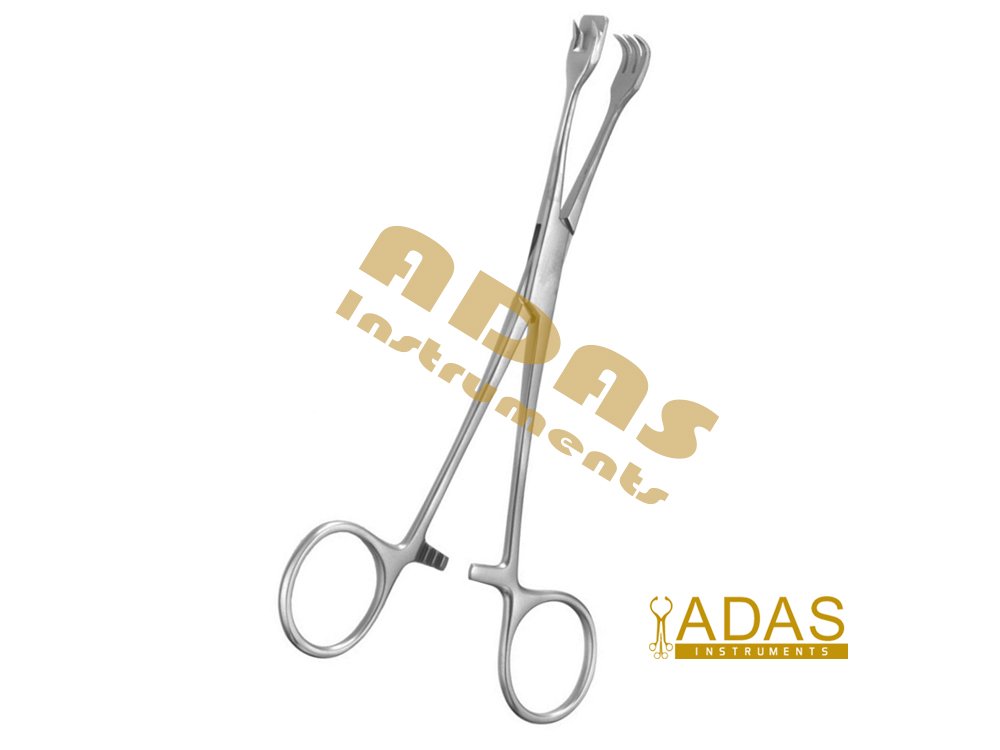
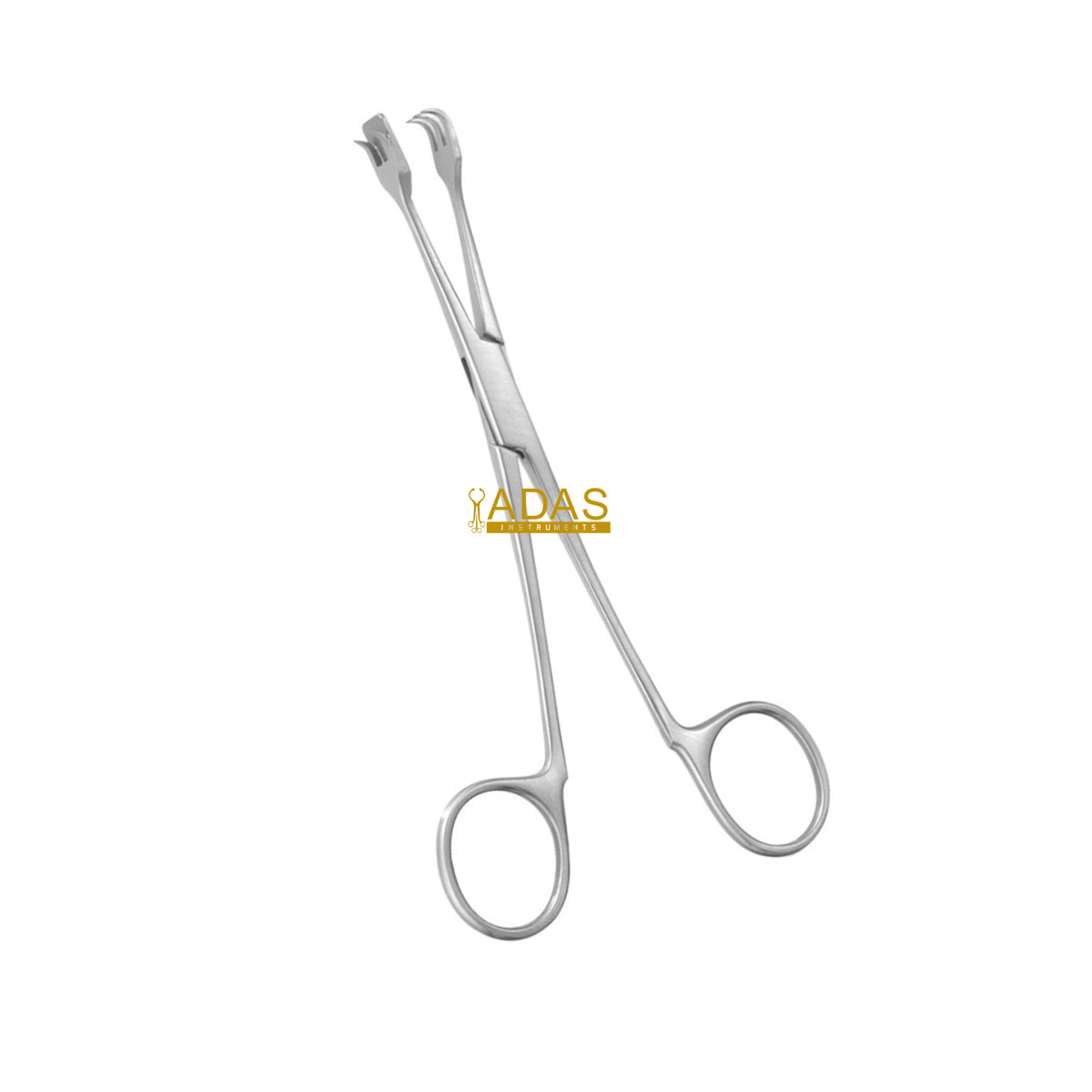
The D’Assumpcao face lift marker is a marking forceps that closes on a dissected skin flap and leaves a line of dots along the skin that has to come off. One jaw carries the marking face and the other backs it, so the flap is held at closing tension while the mark goes on, which is the difference between measuring spare skin and estimating it. It can be ordered with a ratchet, which locks on the flap and leaves both hands free, or without one for surgeons who would rather feel the grip the whole time.
Key Features
- Ordered with or without a ratchet, your choice
- Marks the flap under the tension it will be closed under
- Jaws that lock gently on a flap edge rather than crushing it
- 15 cm, or 6 inches, overall
- 8 mm wide working end for a stable contact area on skin
- Cut from high quality medical grade stainless steel and fully autoclavable
- Three year replacement warranty against manufacturing defects
- Item code AA-31.79

What a D’Assumpcao face lift marker is
Catalogues also list this as D’Assumpcao marking forceps, and the second name is the more honest one, because it is a forceps that happens to mark rather than a marker that happens to grip. It is an instrument that finds the measurement, because the overlap the jaws take up is itself the answer to how much skin is spare.
What it does is simple to say and hard to do any other way. A facelift flap has been lifted and now overlaps itself. The jaws take the overlap, the flap goes to the tension it will be closed at, and the marking face leaves a row of points along the line of excision. The surgeon has measured the spare skin rather than judged it, and the second side gets the same treatment rather than the same guess.
There is no demand for the name. The seed returned seven ideas and none of them carried a number worth recording, which tells us who reads this page: a surgeon or a buyer who already knows the instrument and wants to know whether it comes with a ratchet and what it costs. Both answers are near the top of this page for that reason.
One more thing about the name, because it costs people time. The surname is written both ways in the trade, so a Dassumpcao face lift marker without the apostrophe and a D’Assumpcao face lift marker with it are one and the same instrument.
It is ordered either way. A face lift marker without ratchet is held the whole time and released the instant you want it released; the ratcheted one holds the flap by itself. On a neck lift skin marker the no-ratchet choice is the commoner of the two, because submental skin is thin. Either way it is an inked marking forceps rather than anything you draw with.
Key design features
The ratchet is a choice, and it is the choice on this instrument
With a ratchet the jaws lock on the flap and both hands come free. Without one the grip is held the whole time, which some surgeons prefer because the hand feels how much tension is on a thin flap. We make both and it is decided at order; it cannot be added afterwards.
A marking face and a backing jaw
One jaw carries the row of marking points and the other is the plate they close against. That is what gives a clean row rather than a smear: the skin is supported from behind while the points come down, instead of being pushed away from them.
An 8 mm working end
Eight millimeters is a wide enough contact to hold a facelift flap without perforating it, and narrow enough to follow the curve of a line in front of an ear. A wider jaw takes a bigger bite and loses the curve; a narrower one concentrates the load on less skin.
15 cm, which is a working length
Six inches reaches a flap at the temple or behind the ear from a hand outside the field, and stays controllable at the tip. The abdominal patterns are nearly twice as long because they have nearly twice as far to reach.
With a ratchet, or without
This is the one real decision on this product and it cannot be changed later, so it is worth a moment.
| Option | What you get | Suits |
|---|---|---|
| With ratchet | The jaws lock on the flap and hold it hands free | Marking a long line single handed |
| Without ratchet | Grip held the whole time, released instantly | A surgeon who reads tension through the hand |
| Both, one of each | For a unit where two surgeons mark differently | 48 dollars for the pair |
| Either | Same jaws, same 8 mm face, same 15 cm length | Only the locking differs |
Where it is used
Face and neck work, on flaps thin enough that a crushing grip would show afterwards.
| Procedure | What it marks | Note |
|---|---|---|
| Facelift, or rhytidectomy | The redundant skin at the temple and in front of the ear | The operation it was made for |
| Neck lift | The submental and lateral neck flap overlap | Thinner skin, lighter grip |
| Brow lift | The overlap at the hairline | Small amounts, where a few millimeters show |
| Eyelid and periorbital work | Small skin excisions on a lifted flap | The 8 mm face is about the limit here |
What it marks, and what it must not do
Rows two and three are the ones that protect a thin flap.
| The task | What the marker does | What it must not do |
|---|---|---|
| Finding the spare skin | Closes on the overlap and holds it at closing tension | It does not decide how much comes off. The surgeon does |
| Holding the flap | Grips across an 8 mm face so the load is spread | The jaws are not closed harder than the mark needs |
| Marking the line | Leaves a row of points along the line of excision | The points are not pressed through the skin. It is not a cutting instrument |
| Matching the two sides | Repeats the same hold and the same mark | It cannot correct a difference in how far each side was dissected |
How it compares with the rest of the family
Six clamping markers in this category. Reach and bite are what separate them.
| Instrument | Field | Ratchet | Our price |
|---|---|---|---|
| D’Assumpcao face lift marker | Face and neck | With or without, your choice | 24 dollars |
| Kurtay D’Assumpcao facelift marker | Face and neck | Integrated, always | 32 dollars |
| Pitanguy small flap demarcator | Face | None | 22 dollars |
| D’Assumpcao abdominoplasty flap marker | Abdomen | Yes | 28.60 dollars |
| Lockwood abdominal demarcator | Abdomen, deep or thick flaps | None, angled shafts instead | 32.50 dollars |
Materials and finish
Every D’Assumpcao face lift marker we make is cut from high quality medical grade stainless steel. The steel itself is made to a German specification. We do not publish a grade number. The number on a certificate tells a surgeon nothing about whether the jaws still meet evenly across the full 8 mm after two hundred autoclave cycles, and the answer to that is in the making rather than in the alloy.
Where a ratchet is fitted it is cut rather than stamped. A stamped ratchet rounds off over a couple of years and then slips off its first notch under load, which here means losing a flap halfway through a line.
The jaws are aligned after the joint is set, so the marking face and the backing plate meet across the whole 8 mm rather than at one end of it. Jaws that meet at one end mark well there and smear at the other, and the smear is always at the end nobody was watching.
Caring for it
Clean the marking face properly and get the ink out of it before it dries. Dried ink in a marking face is the commonest reason one of these stops leaving a clean row, and it is entirely preventable with warm water and a soft brush straight after the case.
Release the ratchet, if it has one, before the autoclave, and store the instrument open. A ratchet left engaged through a cycle spends the whole cycle under load. Autoclave with the rest of the tray and check the jaws still meet evenly when it comes back.
Hold it closed against a light every few months and look along the marking face. A gap at one end is an instrument that will smear a mark at that end, and it should come back to us rather than go onto the next list.
Ordering and wholesale
The D’Assumpcao face lift marker is made in our own workshop and sold direct, which is why the price sits where it does against the catalogue houses. Order one for a single tray, or in quantity for a hospital list or a distributor line. We do OEM work under your own brand and your own item numbers. Send us a sample and we will hold a run to your pattern rather than ours. Stock items ship from our own workshop. Backorder items take 10 to 12 working days to make. Every instrument carries a three year replacement warranty against manufacturing defects. Production is controlled under an ISO 13485 quality management system.
Frequently asked questions
What is a D’Assumpcao face lift marker used for?
Marking the line of excision on a dissected facelift or neck lift flap. The jaws close on the overlapping skin, hold it at the tension it will be closed at, and the marking face leaves a row of points to cut to.
Do you prefer a face lift marker with or without a ratchet?
With, if you want the instrument to hold the flap by itself so both hands are free for the mark. Without, if you would rather feel the tension through your hand the whole time, which matters on a thin flap. It is decided at order and cannot be changed later.
Is a D’Assumpcao face lift marker the same as D’Assumpcao marking forceps?
Yes, the two names describe the same instrument and catalogues use both. Marking forceps is arguably the better description, since it is a forceps whose jaws happen to mark.
What is the working end width and length of this marker?
An 8 mm wide working end on a 15 cm, six inch instrument. The width is the contact area on the skin and the length is what lets you reach behind an ear from outside the field.
Can it be used on an abdominal flap?
Not sensibly. Fifteen centimeters does not reach across a mobilised abdominal flap and an 8 mm face is too narrow for a thick layer of fat and skin. The abdominal patterns are 26 to 32 cm long with a wider jaw.
Related products and categories
The version with the ratchet always fitted is the Kurtay D’Assumpcao facelift marker at 32 dollars. Without a ratchet at all, the Pitanguy small flap demarcator is the simpler facial instrument at 22 dollars. For an abdominal flap, the Lockwood abdominal demarcator 32cm has the reach and the angled shafts.
The rest of the family sits under marking and measuring instruments, and the wider set for this operation is under facelift and neck lift instruments.
| Weight | 0.05 kg |
|---|---|
| More Option | With Ratchet, Without Ratchet |
Be the first to review “D’Assumpcao Face Lift Marker | Marking Forceps With or Without Ratchet”
Shipping & Delivery Policy
Processing Time: In-stock items are dispatched within 24-48 hours. For custom or out-of-stock items, production time is approximately 10-15 days.
Global Delivery Estimates
We partner with world-class couriers (DHL, FedEx) to ensure fast, tracked delivery.
- USA & Canada: 3-5 Business Days
- Europe & UK: 4-6 Business Days
- Rest of World: 5-7 Business Days
*We offer Air Cargo and Sea Freight options for bulk wholesale orders.
Customs & Duties
International buyers are responsible for any customs duties or taxes imposed by their country. Adas Instruments is not responsible for delays caused by customs clearance.
Lost Packages & Insurance
If your package is lost in transit, please contact us immediately. We offer full support and replacements for confirmed lost shipments. Note: You must report non-delivery within 3 weeks to be eligible for an insurance claim.
Related products

Reviews
There are no reviews yet.