

Masing Septum Elevator
$ 24.00
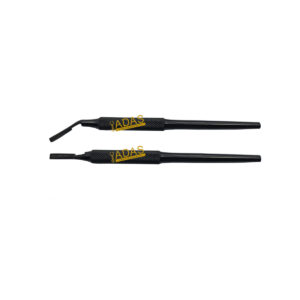
The Masing Septum Elevator, also called a Masing elevator, a Masing periosteal elevator or a Masing nasal elevator, is a surgical instrument for septoplasty, rhinoplasty, deep septal elevation and periosteal work.
It is double ended with a 5 mm blade and a 22 cm shaft, which is long enough to work the posterior septum without the handle fouling the nostril rim.
Key Features
- Double ended, a working blade at each side of the shaft
- Blade width 5 mm, for broad elevation rather than fine release
- Overall length 22 cm, about 8.75 in, for deep septal reach
- Raises mucoperichondrium and mucoperiosteum in the same pass
- Flat knurled handle that takes a firm grip under load
- High quality medical grade stainless steel, reusable and autoclavable
- Item code ADR-154.21
Available on backorder

What the Masing septum elevator is
The Masing septum elevator is a hand instrument used to separate soft tissue from cartilage and bone inside the nose. Surgeons also call it a Masing elevator, a Masing periosteal elevator or a Masing nasal elevator. It is made by Adas Instruments in high quality medical grade stainless steel, and it is reusable and fully autoclavable.
It is double ended with a 5 mm blade and a 22 cm shaft, which is long enough to work the posterior septum without the handle fouling the nostril rim.
The work an elevator does is always the same in principle. A layer of soft tissue is stuck to the cartilage or bone under it, and it has to come off in one sheet without a hole in it. Get that right and the rest of the operation has a dry field and a flap that will lie back down. Get it wrong and you are repairing a tear for the next ten minutes. That is why the shape of the working end, the stiffness of the blade and the length of the shaft are the three things that decide which pattern a surgeon picks up.
Key design features of the Masing septum elevator
- Double ended, a working blade at each side of the shaft
- Blade width 5 mm, for broad elevation rather than fine release
- Overall length 22 cm, about 8.75 in, for deep septal reach
- Raises mucoperichondrium and mucoperiosteum in the same pass
- Flat knurled handle that takes a firm grip under load
- High quality medical grade stainless steel, reusable and autoclavable
The handle is flat and knurled rather than round. A flat handle tells you where the blade is facing without looking at it, and the knurling holds when a glove is wet. The shaft runs straight into the blade with no step, so there is no shoulder to catch on the rim of a nostril and nothing for protein to sit in after a case.
Masing elevator sizes and build options
Every size below is a size we actually ship. Imperial figures are given beside the metric because United States buyers search in inches.
| Overall length | Imperial | Tip or blade | Build | Item code |
|---|---|---|---|---|
| 22 cm | 8.75 in | 5 mm | Double ended | ADR-154.21 |
Nothing is listed above that we do not hold. If a length you need is not in the table, ask, because a pattern like this is often made to order for an OEM run and a different length is a tooling change rather than a new instrument.
Uses of the Masing septum elevator by specialty
The Masing septum elevator appears on the same trays across these specialties because the job is the same one each time, lifting a tissue plane cleanly off what lies under it.
| Specialty | Procedure |
|---|---|
| ENT surgery | Deep septal flap elevation |
| Plastic surgery | Rhinoplasty and septorhinoplasty |
| Oral and maxillofacial surgery | Periosteal elevation over facial bone |
| Facial plastic surgery | Posterior septal access |
| Sinus surgery | Inferior tunnel at the maxillary crest |
| Trauma surgery | Exposure in septal fracture |
| Pediatric ENT | Broad elevation where the plane allows |
The specialty name and the procedure name are both worth knowing when you order, because catalogues file this pattern under whichever of the two the buyer used. An operating room manager searches by procedure and a purchasing office searches by specialty, and they are looking for the same instrument.
Tissue planes the Masing septum elevator works in
An elevator handles no suture and no needle. What decides the choice of pattern is the plane it has to open and how much force that plane takes.
| Tissue plane | How this pattern works it |
|---|---|
| Mucoperichondrial flap | Either end, broad 5 mm elevation |
| Mucoperiosteum over the bony septum | Either end, firm elevation |
| Posterior septum | Long 22 cm shaft reaches it |
| Inferior tunnel at the maxillary crest | Either end, broad sweep |
| Periosteum over facial bone | Either end, periosteal elevation |
Force is the part nobody writes down. Perichondrium on young cartilage lifts with almost nothing. Mucoperiosteum on the bony septum needs a firm push and a stiff blade behind it. Scarred tissue in a revision case needs more again, and that is the point at which a light blade starts to flex and the plane is lost. Match the blade to the plane and the instrument does the work instead of your wrist.
How the Masing septum elevator compares with other patterns
These four sit next to each other on a nasal tray and they are not interchangeable.
| Pattern | What is different | When you reach for it |
|---|---|---|
| Masing septum elevator | Double ended, 22 cm, 5 mm blades | Deep septal and periosteal elevation |
| Cottle septum elevator | Spatulate both ends, 23 cm | Blunt elevation with no sharp edge |
| Halle septum elevator | Single curved 3.5 mm blade, 16.5 cm | The anterior septum |
| Howarth septum elevator | Stiffer periosteal blade, 21 cm | Periosteum off bone |
Surgeons who use this pattern usually also hold the Cottle septum elevator graduated, the McKenty nasal septum elevator double ended and the Gorney septum suction elevator. The closest relative in the range is the Halle septum elevator. For the curve of the nasal floor the spoon shaped nasal elevator is the easier shape to work with.
On the same tray you will usually also find the Joseph Masing septum elevator.
If you are building a nasal tray from scratch, the usual answer is two elevators rather than one. Something light for cartilage and something stiffer for bone covers almost every case, and the third and fourth patterns get added for the particular operations a unit does often.
Materials and finish
The instrument is made in high quality medical grade stainless steel. The steel itself is made to a German specification. The blade is flat ground and satin finished, which cuts glare under the lights in an operating room and keeps the working end readable against wet tissue. There is no coating to chip and nothing on the shaft to trap protein.
Stainless steel is chosen here for a reason that has nothing to do with appearance. An elevator is levered, and a levered instrument that is too hard will crack at the neck while one that is too soft will take a set and stay bent. The grade used for this pattern sits between the two, which is why the blade can be thinned at the working end without losing the shaft.
Masing septum elevator care and sterilization
Rinse the instrument in cool water straight after use so blood does not dry on the blade. Clean it with a soft brush and a neutral pH enzymatic detergent, rinse in deionized water, then dry it completely. Steam autoclave at 134 degrees Celsius. Lay it in the tray so the blades do not rest against other instruments, because a bruised edge on an elevator is what tears a flap.
Look at the working end against the light before every case. A blunt end should be smooth with no flat spot and no nick, and a sharp end should still take a clean line. An elevator that has been dropped on a tiled floor is the one that buttonholes a flap two cases later, and it costs nothing to check.
Ordering and wholesale
This pattern is supplied by Adas Instruments to hospitals, surgical distributors and OEM buyers, in single units and in bulk. The item code is ADR-154.21 and it is printed in the size table above so a procurement search finds it. Backorder items dispatch in 10 to 12 working days. Every instrument carries a three year replacement against manufacturing defects.
For wholesale and OEM orders, instruments ship unpackaged in bulk or individually poly bagged, and laser marking with a distributor code or a hospital asset number is available on the shaft. Tell us the quantity and the marking you need and the quotation comes back with the lead time for that run rather than a stock figure.
Production is controlled under an ISO 13485 quality management system.
Frequently asked questions
What is a Masing septum elevator used for?
The Masing septum elevator raises the mucoperichondrial and mucoperiosteal flaps off the nasal septum, and its 22 cm shaft is long enough to work the posterior septum. The 5 mm blades suit broad elevation rather than fine release.
Is the Masing elevator double ended?
Ours is. This build carries a working blade at each side of the shaft, which is why it is listed as a double ended septum elevator. The pattern is made single ended by some makers, so check the build when you order anywhere.
Is a Masing elevator the same as a Masing periosteal elevator?
They are the same pattern. Surgeons name it after the plane they are working, so the periosteal form of the name appears as often as the septum form.
How long is the Masing septum elevator?
This pattern is 22 cm overall, about 8.75 in, with a 5 mm blade at each side of the shaft.
How do you clean a Masing nasal elevator?
Rinse in cool water immediately after use, clean with a soft brush and a neutral pH enzymatic detergent, rinse in deionized water and dry fully before steam autoclaving at 134 degrees Celsius.
Related products and categories
Surgeons who work with the Masing septum elevator usually compare it against the Cottle septum elevator graduated, the McKenty nasal septum elevator double ended and the Gorney septum suction elevator. The whole family sits in dissectors and elevators, and this pattern is also listed under rhinoplasty instruments.
| Weight | 0.08 kg |
|---|
Be the first to review “Masing Septum Elevator”
Shipping & Delivery Policy
Processing Time: In-stock items are dispatched within 24-48 hours. For custom or out-of-stock items, production time is approximately 10-15 days.
Global Delivery Estimates
We partner with world-class couriers (DHL, FedEx) to ensure fast, tracked delivery.
- USA & Canada: 3-5 Business Days
- Europe & UK: 4-6 Business Days
- Rest of World: 5-7 Business Days
*We offer Air Cargo and Sea Freight options for bulk wholesale orders.
Customs & Duties
International buyers are responsible for any customs duties or taxes imposed by their country. Adas Instruments is not responsible for delays caused by customs clearance.
Lost Packages & Insurance
If your package is lost in transit, please contact us immediately. We offer full support and replacements for confirmed lost shipments. Note: You must report non-delivery within 3 weeks to be eligible for an insurance claim.
Related products
Reviews
There are no reviews yet.