
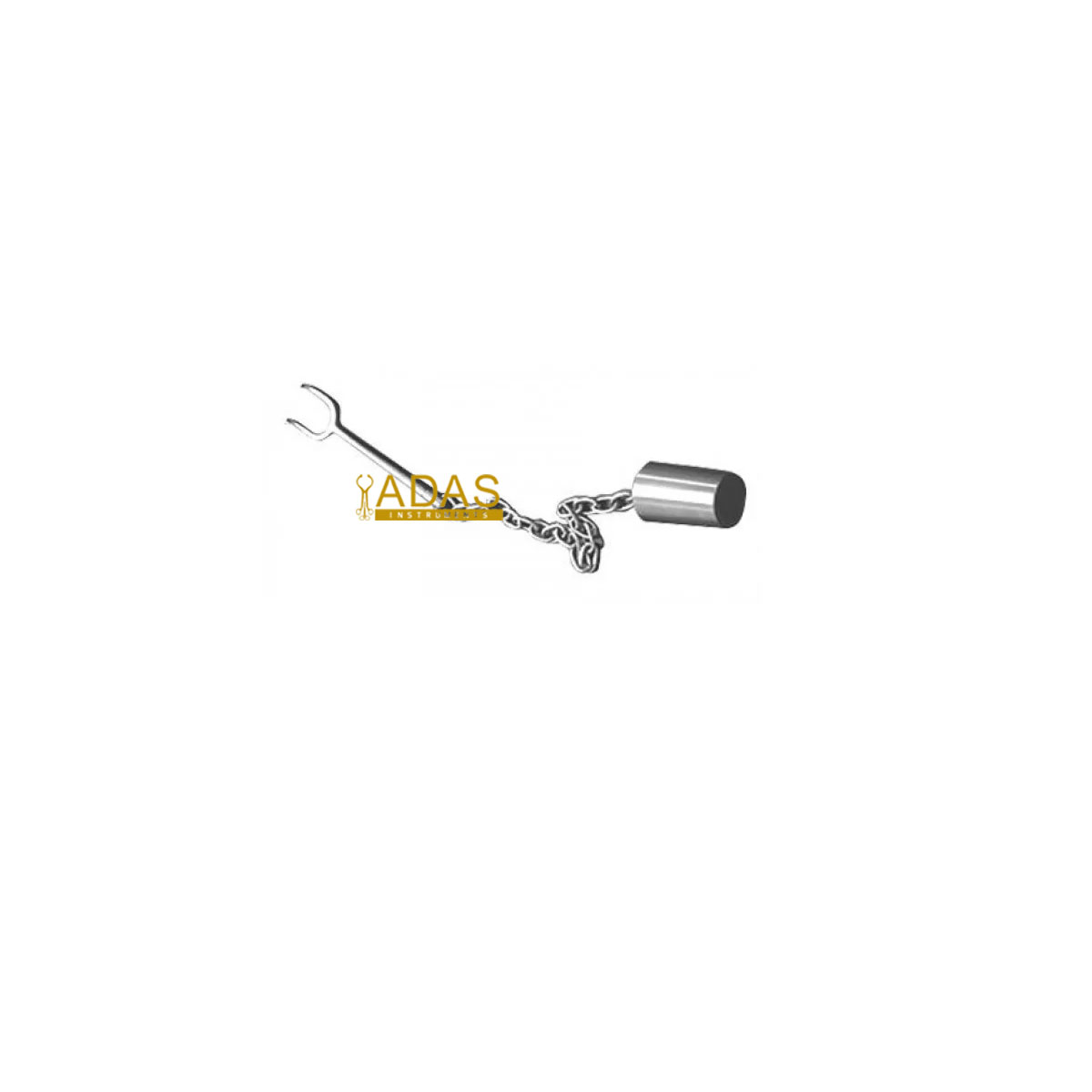
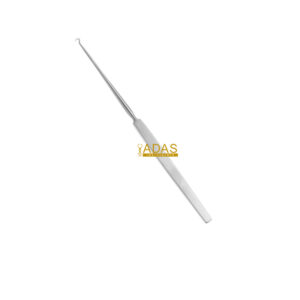
Gruber Columella Retractor with Weight, Chain and Double Hook
$ 28.00
Gruber columella retractors hold the columella back during open rhinoplasty using a weight rather than a hand. A double hook takes the columella, a chain runs from it to a counterweight, and the weight is laid on the patient forehead over the drape so gravity does the pulling. That is the whole idea: the retraction is steady, it never tires, and it gives the assistant their hands back for the length of the case.
Key Features
- A weight and chain rather than a hand, so the traction is self retaining
- The counterweight rests on the forehead over the drape and gravity does the work
- Steady pull that does not vary as an assistant tires
- Used on the columella, the nasal tip soft tissue and the skin envelope
- Used in open rhinoplasty, septoplasty, nasal reconstruction and ENT
- High quality medical grade stainless steel, autoclavable and made to be used again
- Three year replacement warranty against manufacturing defects
Available on backorder

What the gruber columella retractor is
The gruber columella retractor holds the columella back during open rhinoplasty using a weight instead of a hand. A double hook takes the columella, a chain runs from the hook to a counterweight, and the weight lies on the patient forehead over the drape.
Gravity then does the pulling. That is the entire idea and it is worth saying plainly, because it is the one thing this instrument does that no handheld retractor can: the traction is exactly as strong in the fortieth minute as it was in the first.
What it buys is not comfort but consistency. An assistant holding a hook gets tired, and a tiring hand lets the tip drift. A weight does not.
Key design features of the gruber retractor
Four features, and the first three are really one idea expressed three ways.
- Double hook. The columella is taken on two points so it cannot rotate off under a steady pull.
- Chain and counterweight. The gruber retractor is self retaining without any frame or ratchet.
- The weight sits on the forehead. Over the drape, clear of the field, where the pull line is natural.
- Nothing to lock or release. It is placed and it is lifted off. There is no mechanism to fail.
Gruber columella retractor size
This is the honest part of the page, and it is short.
| Pattern | Hook | Weight | What our record carries | Item code |
|---|---|---|---|---|
| Gruber columella retractor with weight | Double hook on a chain | Counterweight, laid on the forehead over the drape | No hook width and no weight figure. Made to the weight you ask for | AP-82.10 |
Our own record carries no hook width and no weight figure for this pattern, so neither is stated. Other catalogs publish figures of their own and none of them is repeated here. Tell us the weight you want and it will be made to suit, and ask for the hook width and it will be measured.
Where a weighted columella retractor is used
A weighted columella retractor earns its place in any case long enough that a held hook would drift.
| Specialty | What the gruber columella retractor is used for |
|---|---|
| Open rhinoplasty | Holding the columella back for the length of the case, which is the work this pattern exists for |
| Septoplasty | Steady columellar retraction while the septum is approached |
| Nasal reconstruction | Long cases where a held hook would drift |
| Revision rhinoplasty | Exposure that has to stay identical while the plane is worked out |
| ENT nasal surgery | Any open approach through the columellar incision |
| Facial plastic surgery | Nasal tip work needing both assistant hands elsewhere |
| Teaching sets | A trainee sees the same exposure the surgeon sees, because it does not move |
What the hook holds, and what it does not
Steady traction is also relentless traction, so the limits matter more on this pattern than on a handheld one.
| Structure | How the weighted hook takes it |
|---|---|
| The columella | The tissue this pattern exists for. Held on two points under a constant pull |
| Nasal tip soft tissues | Drawn back with the columella as one unit |
| The nasal skin envelope | Opened by the columellar retraction rather than lifted separately |
| The nasal framework | Exposed, not touched |
| A long case | The pull is the same at the end as at the start, which is the whole argument |
| Tissue that is already marginal | CARE. A steady pull is relentless. Check the columella periodically and lift the weight off if it blanches |
| Anything other than the columella | NOT this instrument. The chain has one line of pull and it runs one way |
How this gruber rhinoplasty retractor compares
Four of the rows below are our own. A gruber rhinoplasty retractor is the only one of them that holds without a hand on it, and that is the whole basis for choosing it.
| Pattern | How it differs | When you reach for it instead |
|---|---|---|
| Millard Cottle thumb hook | Worn on the thumb, held by a hand | Short steps, and where the angle of pull has to change |
| Martinez Kilner nasal retractor | Handheld, 7.5 mm prongs on an 11.5 cm shaft | Nasal tip and alar work rather than the columella |
| Swivel ring double hook | A ring that turns, so the angle of pull changes | Dissection where the direction of traction keeps moving |
| Fomon ball end retractor | Blunt ball tips rather than hooks | Mucosa and anything that must not be pierced |
| Cerkes weighted nasal retractor | The same weighted pattern under another name | Named because catalogs sell this instrument under both |
| A self retaining frame retractor | Locks open on a ratchet rather than hanging on a weight | A wound that has to be held open rather than a structure pulled back |
Materials and finish
Made from high quality medical grade stainless steel, satin finished so the operating light does not reflect off the chain or the hook into the surgeon eye. The steel itself is made to a German specification. The chain links are closed and smoothed, because a chain that snags on a drape transmits that snag straight to the columella.
Care and sterilization
Clean with a soft brush under running water, working the hook, every link of the chain and the junction where the chain meets the weight, then rinse in deionized water and dry fully before autoclaving. A chain is the hardest part of any instrument to dry, so give it time and move the links while it dries. Check that every link still runs free before the instrument goes back into the set, because a stiff chain pulls in jerks rather than steadily and that is the opposite of what it was bought for.
Ordering a gruber columella retractor and wholesale
Adas Instruments makes this pattern to order. Buyers who search for the gruber columella retractor by that name, or for the Cerkes weighted nasal retractor, will find the same pattern here. We supply hospitals, surgical centers and distributors across the United States, Latin America, Europe and Asia, bulk and wholesale pricing is available, and instruments held on backorder ship in 10 to 12 working days. Every instrument carries a three year replacement warranty against manufacturing defects. Certifications: CE. Production is controlled under an ISO 13485 quality management system.
Frequently asked questions
What is the columella?
The strip of skin and cartilage between the two nostrils, running from the nasal tip down to the upper lip. In an open rhinoplasty the incision crosses it, and holding it back is what opens the whole nasal framework to view. That is the job this retractor exists for.
How does the weight work?
The hook takes the columella, a chain runs from the hook over the edge of the field, and a counterweight hangs or rests on the patient forehead on top of the drape. Gravity pulls the chain, the chain pulls the hook, and the retraction holds itself for as long as the weight is in place.
Is a Gruber columella retractor the same as a Cerkes nasal retractor?
In practice the two names are used for the same weighted pattern, and catalogs sell it under both. If you have been quoted a Cerkes weighted nasal retractor, this is the instrument you are looking at.
What weight does it come with?
Our own record does not carry a weight figure, so none is stated on this page. Other catalogs publish their own and we do not repeat them. Tell us what your surgeons are used to and it will be made to suit.
Does it replace an assistant?
For this one job, yes, and that is the point of it. It holds the columella so that nobody has to, which frees a pair of hands for the rest of the exposure. It does not hold anything else, and everything else in the field still needs the instruments it always needed.
Related products and categories
Buyers who order the gruber columella retractor usually order alongside it the martinez kilner nasal retractor, the fomon ball end retractor and the millard cottle thumb hook. The whole family sits in hooks and retractors, and this pattern is also listed under rhinoplasty instruments.
| Weight | 0.09 kg |
|---|
Be the first to review “Gruber Columella Retractor with Weight, Chain and Double Hook”
Shipping & Delivery Policy
Processing Time: In-stock items are dispatched within 24-48 hours. For custom or out-of-stock items, production time is approximately 10-15 days.
Global Delivery Estimates
We partner with world-class couriers (DHL, FedEx) to ensure fast, tracked delivery.
- USA & Canada: 3-5 Business Days
- Europe & UK: 4-6 Business Days
- Rest of World: 5-7 Business Days
*We offer Air Cargo and Sea Freight options for bulk wholesale orders.
Customs & Duties
International buyers are responsible for any customs duties or taxes imposed by their country. Adas Instruments is not responsible for delays caused by customs clearance.
Lost Packages & Insurance
If your package is lost in transit, please contact us immediately. We offer full support and replacements for confirmed lost shipments. Note: You must report non-delivery within 3 weeks to be eligible for an insurance claim.
Related products


Reviews
There are no reviews yet.