

Cottle Walsham Septum Straightening Forceps | 23 cm, Nasal Bone Reduction
$ 35.00
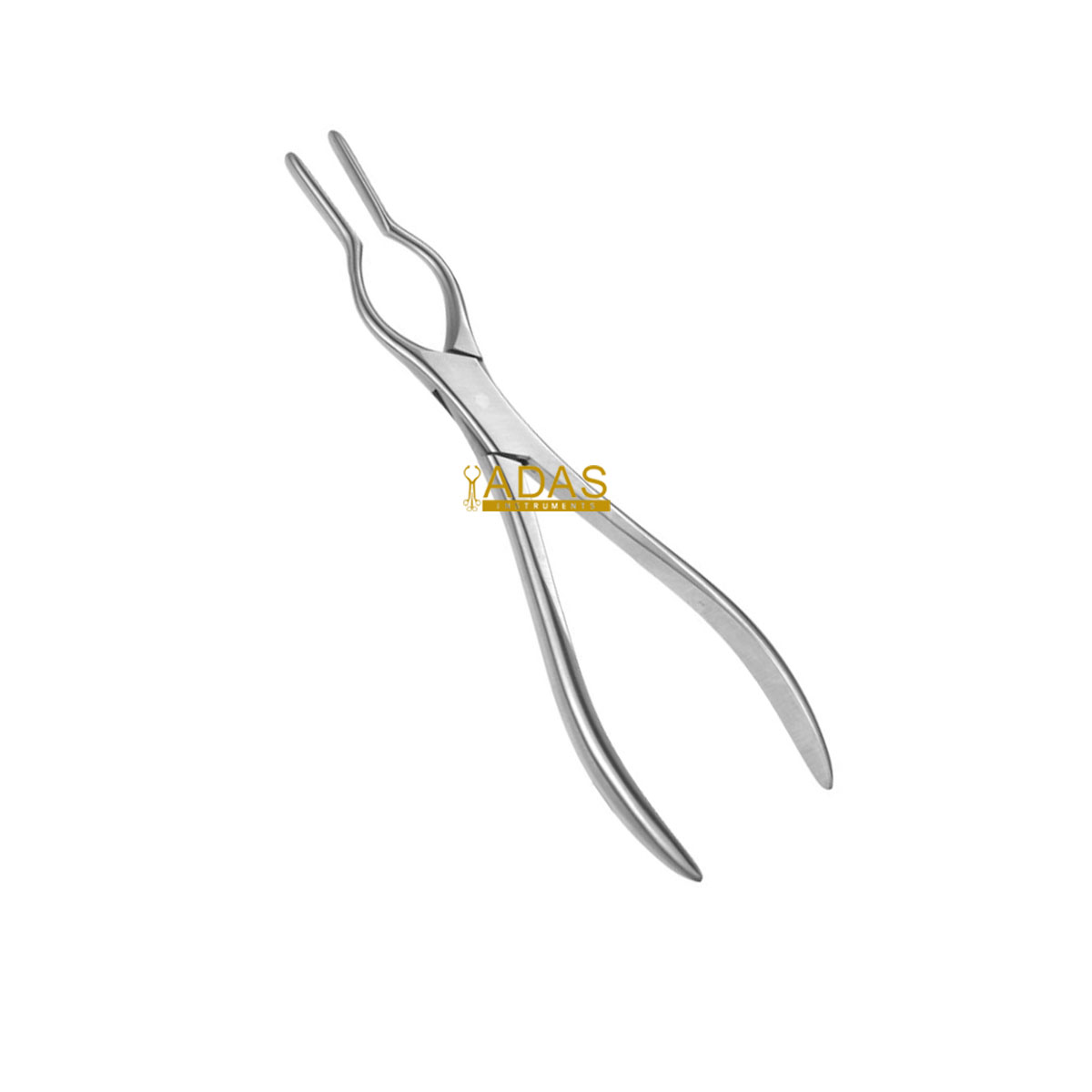
Cottle Walsham septum straightening forceps are the longer eponym of the Walsham family, and they work on the bony base of the septum rather than on the cartilage alone. The blades reach along the base and reduce a displaced nasal bone back into line, which is the step that has to happen before a septum will sit straight and stay there. 23 cm, one pattern, no sides.
Key Features
- Reduces the bony base of the septum, not just the cartilage
- 23 cm, the standard working length for the pattern
- One pattern, with no left and right handed versions
- For nasal bone reduction and fractured septum repair
- Cut from high quality medical grade stainless steel and fully autoclavable
- Three year replacement warranty against manufacturing defects
- Item code AQ-10.86
Available on backorder

What Cottle Walsham septum straightening forceps are
There are two Walshams on this site and the reason is not marketing. The plain Walsham takes the lateral nasal wall rather than the septum, which is why it comes left and right and is used as a pair. The Cottle Walsham reaches further in and works on the bony base of the septum, which is where a badly broken nose usually fails to come straight.
Cartilage will often spring back into line once it is moved. Bone will not. If the base is displaced, the septum can be straightened perfectly at the cartilage and will still look deviated when the swelling goes down, because the thing it is standing on is in the wrong place. This is the instrument for that.
It is worth saying plainly that this page earns almost nothing on its own name. Across 1,000 Search Console query rows for this site, “walsham forceps” appears with 19 impressions and the phrase “cottle walsham” appears NOT ONCE. The short eponym has the demand and the long one has the specific job, so this page is written for the surgeon who knows what he is looking for rather than for a search.
Listed as a Cottle Walsham forceps, as Walsham septum forceps, as a septum bone straightening forceps, as a nasal bone reduction forceps and as a Walsham fracture forceps. One pattern, 23 cm, no left and right.
Our record carries the 23 cm and nothing else. There is no attribute set on this product, so no jaw figure and no angle appears on this page.
Key design features
A reach that gets to the base
The blades are long enough in the working section to pass the cartilage and sit on the bony base of the septum. That is the single thing that separates this pattern from the plain Walsham, and it is why the two are not interchangeable even though they share a name.
One pattern, not left and right
The plain Walsham comes handed because each lateral wall needs its own angle. The septal base is a midline structure, so there is nothing to hand. One instrument does both sides of it and a pair would be two of the same thing.
23 cm, measured the same way
The same overall length as the plain Walsham, which matters on a tray: the two sit together and a surgeon reaching for one knows the other is the same size in his hand. The difference is at the business end.
Nothing plumbed into it
Steel and a box joint. No coating, no insert, no ratchet, no light. Nothing to flush and nothing to wear through, which is what you want on an instrument that gets used hard a few times a year rather than gently every day.
What to order, and what we do not publish
One pattern, so the table is about the figures.
| Specification | What we publish | Why |
|---|---|---|
| Overall length | 23 cm | From our own product name and our own existing description |
| Handing | None. One pattern | The septal base is a midline structure and there is nothing to hand |
| Jaw size | NOT published by us | There is no attribute set on this product. Ask us before ordering if a figure has to be matched |
| Blade angle | NOT published by us | Same answer. It is on our list to measure |
Where it is used
The trauma list, and revision work where a previous repair did not hold.
| Procedure | What this forceps does | Note |
|---|---|---|
| Closed reduction of a nasal fracture | Reduces the displaced bony base of the septum | Often the step that decides whether the result holds |
| Septoplasty on a fractured septum | Moves the base so the cartilage has something straight to sit on | The Asch handles the cartilage itself |
| Revision after a reduction that did not hold | Addresses the base, which is usually why it did not | The commonest reason a straight septum looks deviated at six weeks |
| Septorhinoplasty | Reduces the base before the walls are reset | Then the plain Walsham for the walls |
What it holds back, and what it must not do
A longer reach means more leverage, and leverage is the thing to be careful with.
| The task | What this forceps does | What it must not do |
|---|---|---|
| Reducing the bony base | Reaches past the cartilage and moves bone | It is NOT a bone cutter. Bone that will not move needs an osteotome and a mallet, not more force on this |
| Straightening cartilage | It will do it, but without a protective gap | The Asch is the instrument with the permanent gap between the blades, which is what keeps the mucoperichondrium from being crushed while the cartilage is moved. Where the lining is thin or scarred, use that instead |
| Working the lateral walls | Nothing. There is no handing and no concave neck | The plain Walsham is the wall instrument and it comes left and right |
| Holding a reduction | Holds under finger pressure | It does not lock. There is no ratchet and nothing holds it shut for you |
How it compares with the rest of the family
The four septal and wall instruments, side by side.
| Instrument | What it moves | Handed | Buy it when |
|---|---|---|---|
| Cottle Walsham, this page | The septum and its bony base | No | The base is displaced and the cartilage alone will not fix it |
| Walsham | The lateral nasal wall | Left, right, pair, universal | A wall has been pushed in |
| Asch | The septal cartilage, with a protective gap | No | The lining has to survive the move |
| Rubin, tungsten carbide | The septum, with a carbide grip | No | Daily septal work and a jaw that has to keep its bite |
Materials and finish
Every Cottle Walsham septum straightening forceps we make is cut from high quality medical grade stainless steel. The steel itself is made to a German specification. We do not publish a grade number. The number on a certificate tells a surgeon nothing about whether a long reaching blade is still true to its own line after two hundred autoclave cycles and a few hundred reductions on bone, and the answer to that is in the making rather than in the alloy.
The working section is forged and stress relieved rather than bent cold. On an instrument that is used to move bone, a blade that has been cold set will slowly take a new shape under the load, and on this pattern the shape is the reach.
No sharp external edge anywhere along either blade, inside or out. The joint is lapped so it opens cleanly with blood in it, which is the state it is normally used in.
Caring for it
Wash the joint open. This instrument is used on fractures and fractures bleed, and a box joint with dried blood in it is stiff by the third cycle and worn by the thirtieth.
Warm water and a soft brush along both faces. Autoclave with the tray. Store it beside the plain Walsham so the two are never picked up in mistake for each other, and look along the working section against the light now and then: a blade that has taken a set no longer reaches where it was made to reach.
Ordering and wholesale
Every Cottle Walsham septum straightening forceps is made by Adas Instruments in our own workshop and sold direct, which is why the price sits where it does against the catalog houses. Order one for a single tray, or in quantity for a hospital list or a distributor line. We do OEM work under your own brand and your own item numbers. Send us a sample and we will hold a run to your pattern rather than ours. Stock items ship from our own workshop. Backorder items take 10 to 12 working days to make. Every instrument carries a three year replacement warranty against manufacturing defects. Production is controlled under an ISO 13485 quality management system.
Frequently asked questions
What are Cottle Walsham forceps used for?
Reducing the bony base of the septum and straightening a fractured septum. They reach past the cartilage to the base, which is the part that has to be right before a septum will sit straight and stay there.
How is this different from the plain Walsham forceps?
The plain Walsham resets the lateral WALL of the nose and comes left handed and right handed for that reason. This one works on the SEPTUM and its bony base and comes in one pattern. Same family, different structures.
Does it come left and right?
No, and it should not. The septal base is in the midline, so there is nothing to hand. A pair would be two of the same instrument.
What length is it?
23 cm, the same as the plain Walsham. We publish the length because it is on our own record, and we do not publish a jaw figure, because that is not.
Should I buy this or the Asch?
If the problem is the bony base, this one. If the problem is cartilage and the lining is thin or already scarred, the Asch, because its blades hold a permanent gap that keeps the lining out of the squeeze. Plenty of trays carry both.
Related products and categories
For the lateral wall, the Walsham septum straightening forceps in left, right or a pair. For cartilage with the lining protected, the Asch septum straightening forceps. For softening septal cartilage in place instead of moving it, the Gorney septal morselizer.
The rest of this family sits under nasal cutting, crusher and septum forceps, and the wider set for the operation is under rhinoplasty instruments.
| Weight | 0.15 kg |
|---|
Be the first to review “Cottle Walsham Septum Straightening Forceps | 23 cm, Nasal Bone Reduction”
Shipping & Delivery Policy
Processing Time: In-stock items are dispatched within 24-48 hours. For custom or out-of-stock items, production time is approximately 10-15 days.
Global Delivery Estimates
We partner with world-class couriers (DHL, FedEx) to ensure fast, tracked delivery.
- USA & Canada: 3-5 Business Days
- Europe & UK: 4-6 Business Days
- Rest of World: 5-7 Business Days
*We offer Air Cargo and Sea Freight options for bulk wholesale orders.
Customs & Duties
International buyers are responsible for any customs duties or taxes imposed by their country. Adas Instruments is not responsible for delays caused by customs clearance.
Lost Packages & Insurance
If your package is lost in transit, please contact us immediately. We offer full support and replacements for confirmed lost shipments. Note: You must report non-delivery within 3 weeks to be eligible for an insurance claim.
Related products
Reviews
There are no reviews yet.