
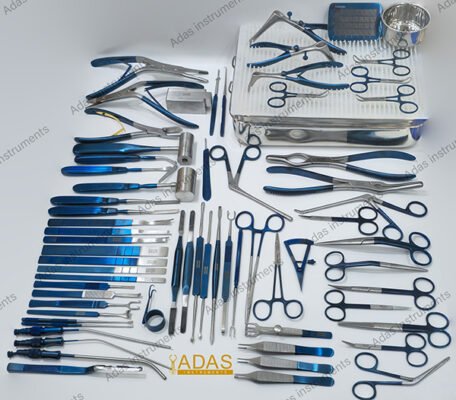
Essential Guide to Rhinoplasty Instruments: A Surgeon’s Toolkit
Frequently Asked Questions About Rhinoplasty Instruments What instruments are used in rhinoplasty surgery? A complete [...]
Mar

How Many Holes Should a Liposuction Cannula Have?
How many holes should a liposuction cannula have: 1-3 for aspiration with Mercedes three-port standard, [...]
Nov

Bishop Harmon Forceps: Why Eyelid Surgeons Swear by Them
Bishop Harmon forceps uses explained: why the fenestrated arms matter, toothed vs smooth variants, and [...]
Nov

Mercedes, Keel and Tri-Port: Decoding Cannula Tip Names
Cannula tip names decoded: Mercedes, Keel, Tri-port, basket, cobra and spatula translated into what they [...]
Nov

Spatula Tip Cannulas for Neck and Superficial Work
Spatula cannulas explained: flat directional tips for neck, jawline and HD superficial work, sizes, orientation [...]
Nov
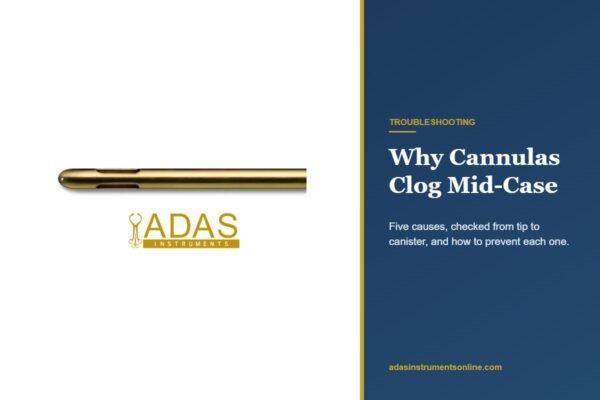
Why Cannulas Clog Mid-Case and How to Prevent It
Why cannulas clog mid-case: the five causes in diagnostic order, from fibrous plugs to vacuum [...]
Nov
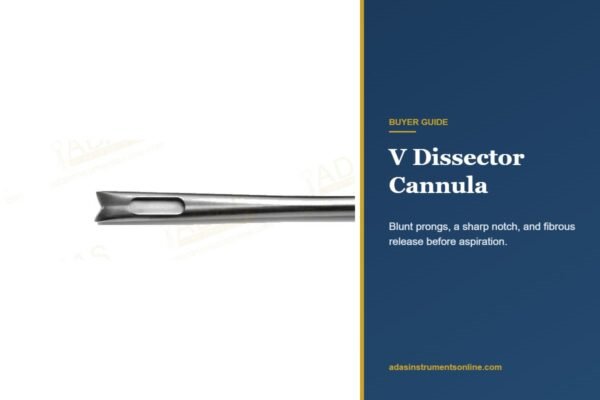
V-Dissector Cannulas: Fibrous Release Before Aspiration
V-dissector cannulas explained: blunt-prong sharp-notch geometry, pre-tunneling workflow for fibrous and revision fields, buying checks.
Nov
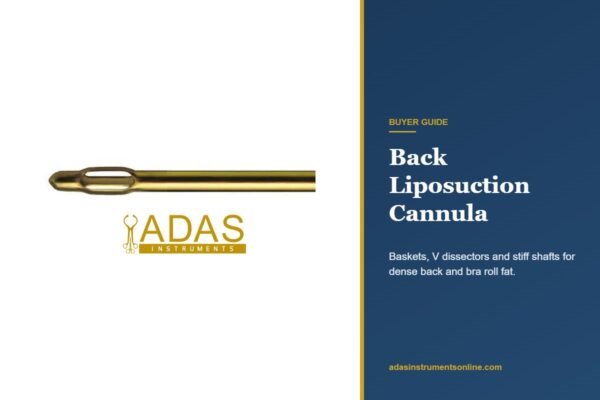
Back and Bra Roll Liposuction: Tools for the Toughest Fat
Back and bra roll liposuction cannulas: why the most fibrous fat needs aggressive baskets, V-dissectors, [...]
Nov

Luer Lock vs Toomey Tip: Syringe Standards Decoded
Luer lock vs Toomey decoded: threaded precision vs wide low-shear volume, when each standard rules [...]
Nov
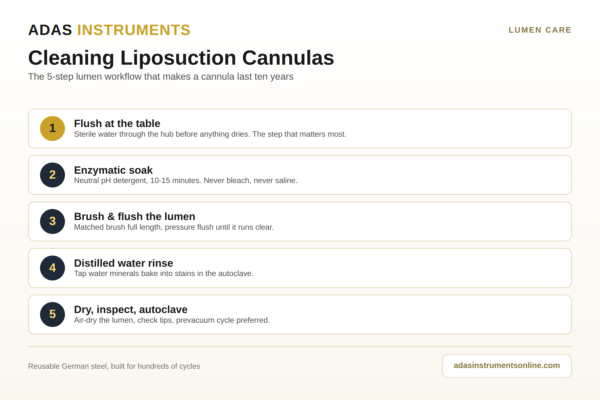
How to Clean Liposuction Cannulas: Lumen Care Step by Step
How to clean liposuction cannulas in five steps: flush at the table, enzymatic soak, brush [...]
Nov
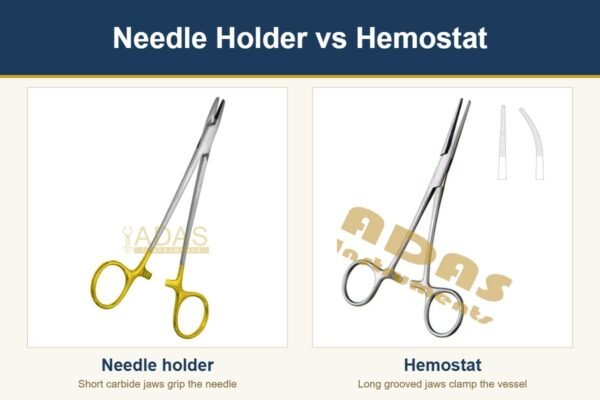
Needle Holder vs Hemostat: How to Tell Them Apart
Needle holder vs hemostat: short carbide jaws that grip a suture needle against long, grooved [...]
Nov