
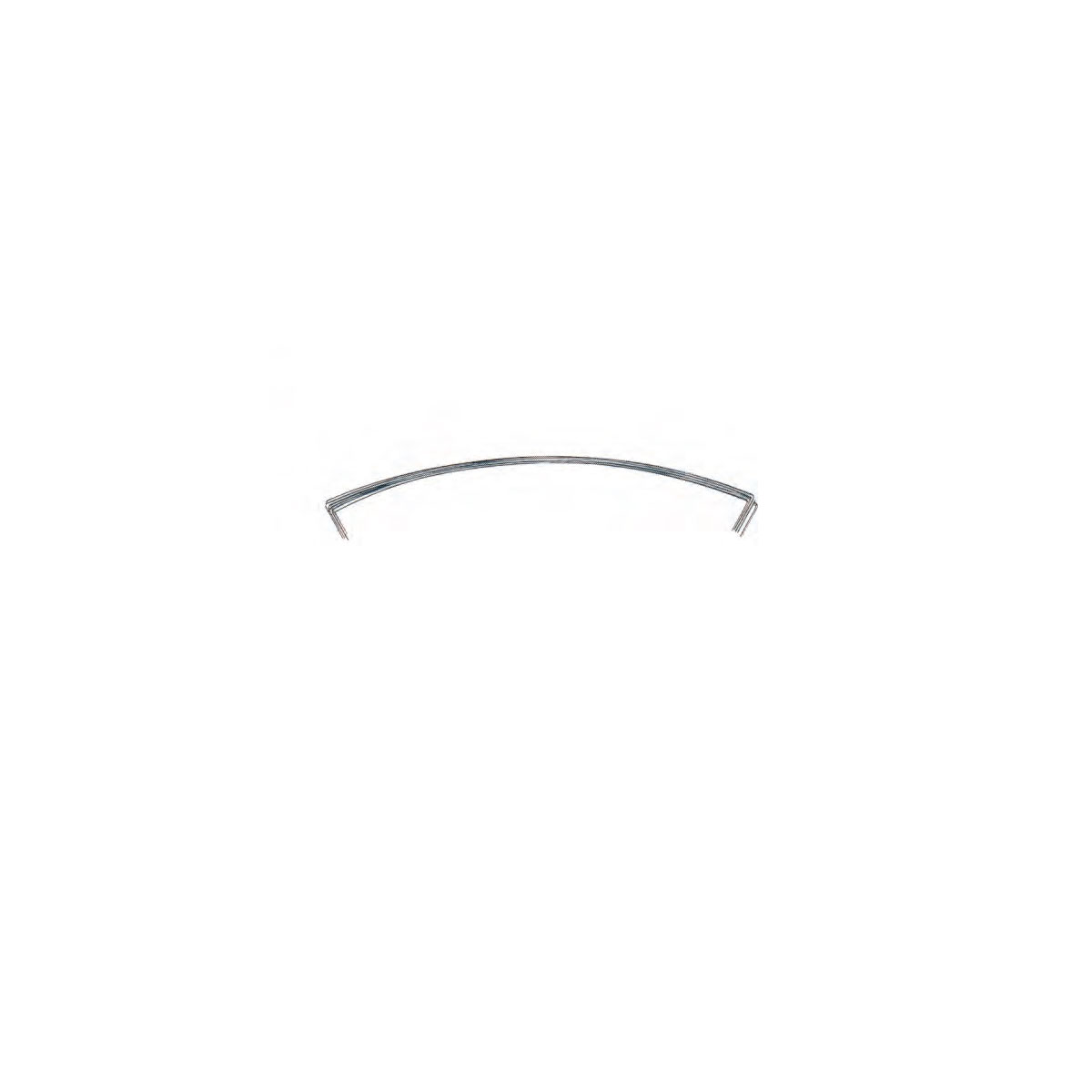
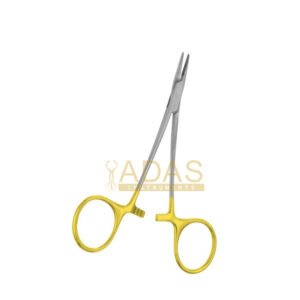
Nasal Polypus Snare Wire | Pack of 12, Fig 0 to Fig 4
$ 3.50
Nasal polypus snare wire in a pack of 12, pre formed in Fig 0 to Fig 4 to fit our Krause and Lange Wilde snares. The wire is the part of a snare that is meant to be used up: it goes dull, it kinks, and then it comes out and a fresh loop goes in. One handle will see out several hundred of these.
Key Features
- Pack of 12, the trade standard unit
- Pre formed loops in Fig 0, 1, 2, 3 and 4
- Made to fit our own Krause and Lange Wilde snare handles
- Replaces a kinked or blunted loop rather than repairing it
- High quality medical grade stainless steel, autoclavable with the handle
- Three year replacement warranty against manufacturing defects
- Item code ADR-449.10
Available on backorder

What nasal polypus snare wire is
Everything else in this category is an instrument. This is a consumable, and it is the only page here where the buyer already knows exactly what the product does and is asking one question instead: will it fit the handle I own.
So that is the question this page answers first. These loops are made to fit our own snares, the Krause three ring pattern and the Lange Wilde bayonet, in the same Fig 0 to Fig 4 range those handles take. If your snare came from us, this pack fits it. If it came from somebody else, write to us with the maker and the figure before you order, because a loop that is a fraction long sits proud of the cannula mouth and a loop that is a fraction short will not close on the stalk at all.
The wire is the working part of a snare and the part that is used up: the loop crushes the stalk as it tightens, and crushing a stalk closes the vessels in it, which is why a snare bleeds less than a blade through the same tissue. Doing that to a fibrous stalk work hardens the loop, and a work hardened loop either kinks or goes slack. Neither is repairable in any way worth the risk, which is why these come twelve at a time and cost what they cost.
Pack of 12 is the trade’s unit for this and it is what we sell. Google’s answer for snare wire names the same unit on three rival listings, one of them at 14.95 dollars for the same count. Ours is 3.50.
One thing we do not publish, and it is the question we get most often on this page: a gauge and a loop dimension. Our record carries the Fig range and nothing else. The rival listings quote 0.4 mm wire, 115 mm overall and a 10.2 cm pre cut length, and those numbers belong to their wires. Ask us and we will measure ours and tell you, which is a better answer than a borrowed figure on a page.
Key design features
Made to fit our own handles
The Krause and the Lange Wilde both take these loops in the matching figure. That is not a general claim about snares: it is a statement about two specific instruments we make, and it is the only compatibility we will state without asking you what you have.
Pre formed, not cut from a reel
Each loop arrives in its shape. A wire you form yourself at the bench is never quite the same twice, and the thing that has to be the same every time is how the loop sits when it is fully open, because that is what you are aiming around the stalk.
Twelve to a pack
The trade unit, and the right one. A clinic that snares polyps uses loops in ones and twos and never wants to be out of them. Twelve is roughly a year for most lists and a month for a busy one.
Five figures, matching the handles
Fig 0 to Fig 4, the same range our snares take. Order the figure your handle is set up for. If your shelf has two snare sizes, two packs is the honest answer rather than trying to make one figure do both jobs.
Which figure to order
Match the figure to the handle you own. If you do not know it, send us the item code off the snare and we will tell you.
| Figure | For the handle set up as | Typical use |
|---|---|---|
| Fig 0 | Fig 0 Krause or Lange Wilde | Pediatric work and the narrowest nostrils |
| Fig 1 | Fig 1 Krause or Lange Wilde | Small anterior polyps |
| Fig 2 | Fig 2 Krause or Lange Wilde | General adult polypectomy, the busiest size |
| Fig 3 | Fig 3 Krause or Lange Wilde | Larger polyps with a clear stalk |
| Fig 4 | Fig 4 Krause or Lange Wilde | Bulky growths you must encircle first |
| Not sure | Any | Send us the item code on your snare and we will tell you |
Where it is used
Nasal snare wire does the work in every row here. The handle only places it.
| Procedure | What the loop does | Figure |
|---|---|---|
| Nasal polypectomy | Encircles the stalk and crushes through it | Fig 2 or Fig 3 |
| Antrochoanal polyp | Takes the stalk at the choana | Fig 3 or Fig 4 |
| Pediatric polypectomy | The same, through a narrow nostril | Fig 0 or Fig 1 |
| Fibrous nasal tags | Cuts the base with no blade near the septum | Fig 0 or Fig 1 |
| Aural polyps | Occasionally, where the stalk can be reached | Fig 0 |
What it holds back, and what it must not do
Three of these four rows are reasons to open a new pack rather than reuse a loop.
| The situation | What the wire does | What it must not do |
|---|---|---|
| A fresh loop on a stalk | Closes evenly and crushes as it closes | It must NOT be dragged. A loop that is pulled rather than closed tears the stalk above the base, and the bleeding you avoided comes back |
| A loop that has been used once on fibrous tissue | Usually still works, sometimes not | Do not gamble on it mid list. Look at it: a flat spot or a kink means it is finished, and it is finished at a cost of pennies |
| A kinked loop | Closes off center and slides off the stalk | Never true a kinked loop by hand. Work hardened steel breaks where it was bent, and breaking inside a nose is the one failure nobody wants |
| Another maker’s handle | It may fit and it may not | Do not assume. Write to us with the maker and the figure first. We would rather answer an email than have you find out during a procedure |
How it fits with the rest of the family
Two handles take this wire. One instrument on this list does not need a wire at all.
| Item | What it is | Takes this wire | Note |
|---|---|---|---|
| Nasal polypus snare wire, this page | The consumable loop | It is the wire | Fig 0 to Fig 4 |
| Krause nasal polypus snare | Three ring handle, one ring rotates | Yes | Order the matching figure |
| Lange Wilde polypus nasal snare | Full bayonet handle, sliding | Yes | Order the matching figure |
| Hartmann polypus forceps | Fenestrated grasping jaws | No | A forceps, not a snare. Nothing to replace on it |
Materials and finish
Every nasal polypus snare wire we make is cut from high quality medical grade stainless steel. The steel itself is made to a German specification. We do not publish a grade number. A certificate says nothing about whether a loop still opens to the same shape out of the twelfth packet as it did out of the first, because a snare is aimed by the shape of its open loop and nothing else. The answer to that is in the making rather than in the alloy.
Nasal polypus snare wire is formed on a jig and then stress relieved, and that step decides whether a loop holds its shape or springs slowly out of it in a drawer. A wire that has relaxed is worse than a kinked one, because a kink is visible and a relaxed loop is not.
The outer edge of the loop is left blunt. The crush does the work, and an edge sharp enough to cut cleanly would also cut whatever the loop touched on its way to the stalk. Every wire in the pack is wiped and dry packed; there is no coating and nothing on the wire that has to come off before use.
Caring for it
A used loop comes out of the handle before the handle is cleaned. That is the one rule on this page that matters more than the rest: a snare autoclaved with a used wire still in it bakes tissue into the only channel you cannot brush.
Unused loops stay in the pack, dry, and go through the autoclave with the tray when they are brought into use. Do not store a loop fitted into a handle under tension for weeks. Look at every loop before you fit it: a flat spot, a kink or a bright work hardened patch means it goes in the bin.
Ordering and wholesale
Every pack of nasal polypus snare wire is made by Adas Instruments in our own workshop and sold direct, which is why the price sits where it does against the catalog houses. Order one for a single tray, or in quantity for a hospital list or a distributor line. We do OEM work under your own brand and your own item numbers. Send us a sample and we will hold a run to your pattern rather than ours. Stock items ship from our own workshop. Backorder items take 10 to 12 working days to make. Every instrument carries a three year replacement warranty against manufacturing defects. Production is controlled under an ISO 13485 quality management system.
Frequently asked questions
Will this snare wire fit my snare?
It fits our own Krause and Lange Wilde snares in the matching figure, Fig 0 to Fig 4. For another maker’s handle, send us the maker, the model and the figure and we will tell you whether it fits rather than guess. A loop that is slightly too long sits proud of the cannula mouth and one that is slightly short will not close on the stalk.
How many wires are in a pack?
Twelve, which is the trade’s standard unit for snare wire and what the US catalog houses sell as well. For most clinic lists that is about a year.
What gauge is the wire?
We do not publish a gauge, because our own record carries the Fig range and no dimension, and we will not copy a figure off a rival listing. Ask us and we will measure a loop and give you the real number for your tray paperwork.
Can a snare wire be reused?
Once, sometimes, on soft tissue. Never after it has been drawn through a fibrous stalk, and never if there is a kink, a flat spot or a bright hardened patch on it. The loop is the cheapest part of the whole procedure and the one that fails worst.
Why does a snare wire bleed less than a blade?
Because of what it does to the stalk on the way through. The loop crushes the stalk as it tightens, and crushing a stalk closes the vessels in it, which is why a snare bleeds less than a blade through the same tissue. A blade leaves those same vessels open.
Related products and categories
The handles these fit are the Krause nasal polypus snare and the Lange Wilde polypus nasal snare. When a polyp has no stalk to snare, the instrument for it is the Hartmann nasal polypus forceps.
The rest of this family sits under nasal speculum and polypus instruments, and the cutting and crushing forceps for the same operation are under nasal cutting, crusher and septum forceps.
| Weight | 0.15 kg |
|---|---|
| Select Fig | Fig 0, Fig 1, Fig 2, Fig 3, Fig 4 |
Be the first to review “Nasal Polypus Snare Wire | Pack of 12, Fig 0 to Fig 4”
Shipping & Delivery Policy
Processing Time: In-stock items are dispatched within 24-48 hours. For custom or out-of-stock items, production time is approximately 10-15 days.
Global Delivery Estimates
We partner with world-class couriers (DHL, FedEx) to ensure fast, tracked delivery.
- USA & Canada: 3-5 Business Days
- Europe & UK: 4-6 Business Days
- Rest of World: 5-7 Business Days
*We offer Air Cargo and Sea Freight options for bulk wholesale orders.
Customs & Duties
International buyers are responsible for any customs duties or taxes imposed by their country. Adas Instruments is not responsible for delays caused by customs clearance.
Lost Packages & Insurance
If your package is lost in transit, please contact us immediately. We offer full support and replacements for confirmed lost shipments. Note: You must report non-delivery within 3 weeks to be eligible for an insurance claim.
Related products

Reviews
There are no reviews yet.